Category Archives: Library

MFDJ 04/30/18: An American Tragedy

Today’s Wiped-Out Yet Truly Morbid Fact!

October 25, 1956, began as an ordinary day for the Hammes family of Keota, Iowa. Father Richard and his two oldest boys, nine-year-old twins Ronnie and Donnie, were up early doing farm chores, and mother Ruth was busy fixing breakfast and getting the six younger children dressed and ready. The twin boys, and their siblings Karrn, 8; Linda, 7; and six-year-old Gary all needed to be in school at nine A.M.

Since their father was busy in the cornfield, Ruth also packed the three youngest children into her 1953 Plymouth for the short trip to the school. The youngest were three-year-old Rosemary and another set of twins, Vicky and Ricky, just a year old.


The Hammes Family

To get to the school, Ruth had to cross the tracks at a rail crossing that was known as a difficult and dangerous one because of its poor visibility. A train was approaching the crossing and the engineer sounded his sirens, but he didn’t see the Plymouth until his train was just 150 feet from it, far too late to stop. Ruth Hammes would remember later that one of the children shouted a warning and she instinctively slammed on her brakes, stopping on the tracks. She would be haunted the rest of her life by the question of what would have happened if she hadn’t braked at that moment.

The train struck the car head-on and dragged it 700 feet down the tracks before it could stop. When Richard Hammes, alerted by a neighbor, got to the scene of the accident, he found Ruth sitting on the ground, badly bruised and cut, holding Vicky and Ricky. The two babies were dead, as were five of their other siblings. Ronnie was still alive, but he died at the hospital 90 minutes later. The accident is one of the worst in the history of the state of Iowa.

Richard and Ruth Hammes were devastated by the loss of their entire family, but their grief was alleviated somewhat by the birth of their son Myron in 1958. However, two years later, Ruth died of heart failure at the age of 42. She was pregnant at the time and the baby did not survive.

And twelve years later, in 1972, Richard Hammes was found dead near the river, having taken his own life by gunshot.

Culled from: The Keota Eagle
Submitted by: Aimee


Wretched Review!

So, while I was on a plane trip recently I actually finished a couple books.  Here’s the first review:

Dr. Mütter’s Marvels: A True Tale of Intrigue and Innovation at the Dawn of Modern Medicine 
by Cristin O’Keefe Aptowicz

Dr. Thomas Dent Mütter is best-known for starting the collection of medical curiosities that fill the museum in Philadelphia that bears his name. When I started reading this book, I thought I’d be learning about the curiosities themselves and how he managed to acquire them. I was surprised to realize that this book doesn’t really talk about that at all; it talks about Mütter, the man. And, far from being disappointed, I found myself captivated from start to finish.

Dr. Mütter is a new hero of mine, and not just because he founded the greatest museum in America. Mütter became a doctor in the early 19th century, when there really weren’t licenses given to doctors. Anyone could hang up a sign and call himself (only men, of course) a doctor. Mütter, however, took his surgical goals seriously and went to Paris to study the greatest surgeons in the world. He came back to America and helped to found the Jefferson Medical College in Philadelphia. Mütter was a technically brilliant surgeon, but it was his philosophy that stood out from his peers.

During the early 19th century, surgery was a brutal activity that was only undertaken in the most desperate of circumstances. There was no anesthesia so the best surgeons were the ones who worked the quickest. Patients were held down by a number of strong men as the surgery was performed. And the philosophy of the physicians was nearly as brutal as the surgery. They believed that patients should not be told of their conditions, that they should not be warned of the pain of surgery. They believed the patients were better off not knowing.

Additionally, the concept of cleanliness during surgeries was unknown at the time. Using the same dirty scalpels with unwashed hands from patient to patient was the normal practice, which led to abundant post-surgical sepsis fatalities. And after-care was unheard-of concept as well. When surgeries were performed on the poor in operating theaters, they were unceremoniously sent home to recover alone afterwards.

Dr. Mütter was appalled at these conditions. His was a voice of humble compassion in a den of arrogance. First, he believed that transparency was essential in all patient treatment. He told the patients the truth about their conditions, however grim, and explained in detail what he would be doing during surgery. He made sure they were aware of how painful it would be and he even massaged the areas in which he would be cutting to make the patient familiar with where the pain would be felt. He earned his patient’s trust and helped them along psychologically as well as physically.

He was also a fastidious man. I’d call him a dandy. He wore immaculate silk suits to his operations. Although no one was aware of the cause of infection, Dr. Mütter instinctively understood that cleanliness was important in the healing process. He made sure to wash his instruments and hands prior to every surgery – and his rate of infection was much lower than average.

Dr. Mütter also believed in after-care, insisting that Jefferson Medical College create a hospital in which to monitor the post-surgical recovery of patients. And he encouraged students to do hospital rounds and learn the importance of after-care as part of their education.

In addition, he was a pioneer in plastic surgery and was known for his groundbreaking work on burn victims. His techniques in skin grafting are still used today. He wanted to help people to live normal lives – assisting women who had been burned in kitchen accidents who could not even close their eyes or mouths due to the pull of the scar tissue to be able to experience the simple pleasure of being able to blink again.

He was also a pioneer in anesthesia techniques. Mütter wanted nothing more than to be able to help people in the best, most painless, and most compassionate manner. It’s really a pity that he isn’t known for more than just his collection of curiosities because what I came away with most of all was that Dr. Mütter was a true American hero.

I highly recommend this book.   (5/5)
MFDJ 04/26/18: The Death of the Yoakum Brothers

I have resolved the malware issues that were plaguing Decidedly Grim during the last week.  The sites should now be safe to access, and should remain malware-free going forward.  At least, they’d better be considering how much I’m paying for protection!   I apologize for any inconvenience.  The internet can be, at times, decidedly grim! – DeSpair

Today’s Brazen Yet Truly Morbid Fact!

Bill and Tom Yoakum were successful miners and businessmen in the Bakersfield, California area in the 1870s. The brothers defended their property, which included the Long Tom, New Years Gift, and Long Hank mines, against claim jumpers and thieves and thought nothing of suing anyone who challenged their right to their lands. The Yoakum brothers were not to be messed with, and their success in the mines and the courts angered many citizens of Kern County. Hamilton J. “Tug” Tucker and his partners, Johnson, Bronough, and Webb, were involved in a long-running lawsuit over the Long Tom mine. The lawsuit became convoluted, and the Yoakums filed a court case against Tucker, Johnson, Bronough, and Webb.

On April 13, 1879, Tucker and Johnson were driving their wagons along the road approximately a half mile from the Long Tom mine. They were returning from Granite Station, where the thirty-year-old Tug had established his family home. Johnson and Tucker’s sister were in the front wagon, with Tucker, his wife Harriet, and their two children in the second wagon, when two shots rang out from a rock outcropping on the hillside. Tucker was shot through the heart and died instantly. Johnson was also hit, and he died almost as quickly. People living nearby heard the commotion and came to their aid, but there was nothing they could do. The men had been shot from a distance that was too far for anyone to have seen their assailants.

The next day, during a Coroner’s inquest, Sheriff W. R. Bowers indicated that the shots came from a large boulder with a natural hole in it that served as a gunport for the sniper. The boulder was located 250 yards from where the men were shot. The inquest dubiously concluded that the men were probably shot by the Yoakum brothers. Bill and Tom Yoakum were charged with the murder, solely because of their ongoing lawsuit and the location of the shooting. Completely disregarded by the inquest panel was the fact that Tucker and Johnson had successfully sent a miner to prison for stealing their gold. The miner had sworn revenge, and he had been seen around Kern County at the time of the ambush.

The Bakersfield newspapers stirred up passions with editorials that suggested the good citizens of Kern County take the law into their own hands and become the judge, jury, and executioner.

Bill Yoakum’s trial started on January 13, 1879. The jury deliberated for only a few minutes before they came back with a not guilty verdict. Sheriff Bowers had to protect Bill Yoakum from the crowd, which was hell-bent for blood, albeit not justice. Bill still had to face another trial on February 13 for the murder of Johnson.

The Johnson murder trial lasted ten days. Even though Bill had been found not guilty in the first trial, he was found guilty of shooting Johnson. The jury heard the same witnesses and evidence as in the first trial. Yoakum’s attorneys immediately filed for a stay of sentencing so that they could appeal the verdict. Any subsequent appeal trial was scheduled to be moved away from Bakersfield. Unfortunately, the Yoakums were still being held in the Bakersfield jail.

At half past midnight on the morning of May 28, 1879, a mob broke down the door of the jail and grabbed guards George Reed and William H. Coons. They took the keys from the jailers and went looking for the Yoakums. Sheriff Bower and a friend were nearby, but they were stopped by the mob and brazenly held at gunpoint.

The Yoakum brothers were in their cells when the lynch mob entered. Bill, who was in leg irons because he wasn’t a model prisoner, fought his attackers like a wildcat, until someone shot him in the chest. They then hung him by the neck in his cell. Tom was murdered the same way.


Kern County jail

The jailers were released and they ran for their lives into the night. A few hours after the mob left, the frightened guards entered the jail and found the Yoakums beaten, lynched, and shot. Even though only a handful of the mob wore masks, and the sheriff and jailers all saw who were involved, the coroner concluded that “unknown persons” had lynched the Yoakums.

Culled from: California Justice: Shootouts, Lynchings, and Assassinations in the Golden State


Arcane Excerpts: Solitary Vice Edition

An urgent warning about the vice of self-pollution from What A Young Boy Ought To Know (1897) by Sylvanus Stall.

CYLINDER XII.
Effect on the Character of Boys.—After the Effects upon the Moral Nature, Those of the Nervous System Appear.—The Spasm of the Nerves.—The Mind Next to Suffer.—The Visible Effects upon the Mind.—Physical Effects Follow.—Character of These Effects Stated.—Competent Physician Can Judge Accurately.—The Habit Grows Strong, and the Will Grows Weak.—Results Where the Practice Is Persisted in.—The Treatment in Extreme Cases.—The Importance of Early Instruction.

MY DEAR FRIEND HARRY: If I had time there are many things I would like to tell you concerning the way in which the effects of vice are manifested upon the moral nature and are seen in the lives of sinning boys and men; but I must hasten on, lest you weary.

After great changes have been effected in the boy’s character, and the bright, frank, happy, and obedient boy has become the fretful, irritable, stolid, and reticent boy, and when he can no longer look people squarely and frankly in the face, but seeks to avoid meeting people, pulls his cap down so as to hide his eyes, and goes about with a shy and guilty bearing, then changes which are mental and physical may be confidently expected.

After the moral nature, the nervous system is the next to suffer. In no other portion of the human body are so large a number of nerves brought so closely together as in the reproductive organ. In the act of masturbation, these nerves are wrought upon in such a manner as to produce most serious results. The pleasurable emotion with which the beginning is attended culminates in a spasm of the nerves, terminating for the time all pleasure, and leaving the nerves as wasted and depleted as the body of a person whose entire physical system has been brought under the influence of a spasm, or fit as it is called. You will easily understand how such violent shocks to these special nerves are communicated to the nerves throughout the entire body, and if such shocks are repeated, or long continued, the entire nervous system will become shattered and ruined beyond all hope of complete recovery.

While the nerves are thus being ruined, the mind is also suffering. The bright boy that stood at the head of the class is losing his power to comprehend and retain his lessons. His memory fails him. His mind begins to lack grasp and grip. He cannot, as formerly, take hold and hold fast. Gradually he loses his place and sinks to the foot of his class. He is no longer positive and self-reliant. He no longer has his accustomed pleasure in the vigorous romp, the hearty laugh, and good fellowship which characterize a boy with a vigorous mind and a strong body.

While these moral and mental changes are taking place, the physical effects do not stop with the nerves. The health declines. The eyes lose their luster. The skin becomes sallow. The muscles become flabby. There is an unnatural languor. Every little effort is followed by weariness. There is a great indifference to exertion. Work becomes distasteful and irksome. He complains of pain in the back; of headache and dizziness.The hands become cold and clammy. The digestion becomes poor, the appetite fitful. The heart palpitates. He sits in a stooping position, becomes hollow-chested, and the entire body, instead of enlarging into a strong, manly, frame, becomes wasted, and many signs give promise of early decline and death. [And here I thought it was just the process of aging!  Oh, I’ve been such a fool! – DeSpair]

These, my dear friend Harry, are some of the more prominent symptoms and effects of masturbation in boys and young men when the habit is frequently indulged, or after being continued for a period. Some of these conditions, it is true, may be produced by other forms of bodily disease, and on that account the unskilled are likely to misjudge, but a competent physician ought, at all times, to be able to judge accurately in any given case of the cause, or causes, which have produced such results.

One serious difficulty with all who become addicted to this terrible and destructive vice is that, while the body, mind, and moral  character become weak, the habit becomes strong. The will itself may become so weak that even when the person is told of the destructive nature and sad consequences of the vice, he may not even desire to discontinue the practice, nor even really desire to escape the fearful consequences which are sure to come later on; and even where there is sufficient manhood and character left to desire to be free, the will is often so weak as to require a fierce struggle for a long period.

You will see, from what I have said, that this secret vice is attended with most serious consequences. But I have not yet told you the worst. If persisted in, masturbation will not only undermine, but completely overthrow the health. If the body is naturally strong, the mind may give way first, and in extreme cases imbecility and insanity may, and often do come as the inevitable results. Where the body is not naturally strong, a general wasting may be followed by consumption, or life may be terminated by any one of many diseases.

The terrible and helpless condition of those upon whom this habit has permanently fastened itself, you may be able to judge from the fact that, in order to prevent the repetition of the act of masturbation, and if possible permanently to cure the victim of this vice, boys often have to be put in a “strait-jacket,” sometimes have their hands fastened behind their backs, sometimes their hands are tied to the posts of the bed, or fastened by ropes or chains to rings in the wall; and in various other ways extreme measures have to be resorted to in the effort to save the individual from total mental and physical self-destruction. And I am sorry to say that even these extreme measures are not always successful in restraining the individual or effecting a cure.

I think you will see, my dear boy, how important it is that all boys should be duly warned, and in good time also, of the terrible results of this destructive vice. You will understand why your own dear Papa should have asked me to continue and send you further Talks in the phonograph, after I had answered you the question which you asked of your Mamma, and which, because of her sickness, I had the honor of being asked to tell you. [What a sentence! – DeSpair] Your parents are too intelligent, and love you too much, to be indifferent to the importance of these serious questions. They have not been willing that, on account of ignorance, you should be exposed to those terrible dangers, and as this knowledge is imparted to you, and as you come to know of the sad results of the sins into which many previously pure-minded and well-meaning boys have fallen through ignorance, you should thank God for the intelligent love of your parents, and for His kind providence, by which you have been kept from this prevalent and destructive vice.

Recognizing what your parents have desired for you in this matter, it will be very proper that to-morrow night I should remind you what injustice would be done them and others, if you were ever to become addicted to sexual vice, in this or any other form.

MFDJ 04/03/18: Unusual Resuscitation

Today’s Too Violent and Exorbitant Yet Truly Morbid Fact!

Jan Baptista van Helmont (1577-1644), a Flemish physician and chemist, earned widespread respect for identifying gases as distinct from air and analyzing the processes of digestion and nutrition. He also argued that water shock, to the brink of death, could extinguish a mad person’s “too violent and exorbitant form of fiery life.”


“Blow It Up Yer Arse!” – Jan Baptista van Helmont

Dr. van Helmont discovered this cure by observing that “many Fools … who accidentally fall into water and are dragged out for dead and remain so for a long time… that when a dagger’s sheath with the tip cut off is thrust in their fundament  [i.e. anus], and someone blows through it till water gushes out of the drowned person’s mouth, they are not only restored to life… but also to the full use of their understanding.”  [I’m glad they don’t teach this technique during CPR class – DeSpair]

Concludes his biographer (his son Francis): “The Doctor did cure several distracted persons this way, there are many in Holland that can verify.” [Sure, kid – I want names and numbers!]

Culled from: An Underground Education


Obituary Du Jour!

“The funeral services of little Bertie Carpenter who died… last week were conducted… in the Congregational Church at Hixton last Sunday. A large gathering of relatives and friends were present, and all mourned and wept with the bereaved ones. He had been an intense but patient little sufferer for a long time before his death, which was really not death but a release from suffering and pain into life and happiness. His remains were sweetly placed in the bosom of the earth at the cemetery here where he will be rocked in God’s great cradle during his peaceful sleep.”

Culled from the October 30, 1890 issue of the Badger State Banner newspaper, as chronicled in Wisconsin Death Trip

MFDJ 03/27/18: Surgery, 19th Century Style

Today’s Skillful Yet Truly Morbid Fact!

I have just started reading Dr. Mütter’s Marvels, about the life of Dr. Thomas Dent Mütter (1811-59), who is responsible for collecting the medical oddities that make up the indispensable Mütter Museum.  This excerpt is about the surgical lectures in Mütter’s native Philadelphia at the time:

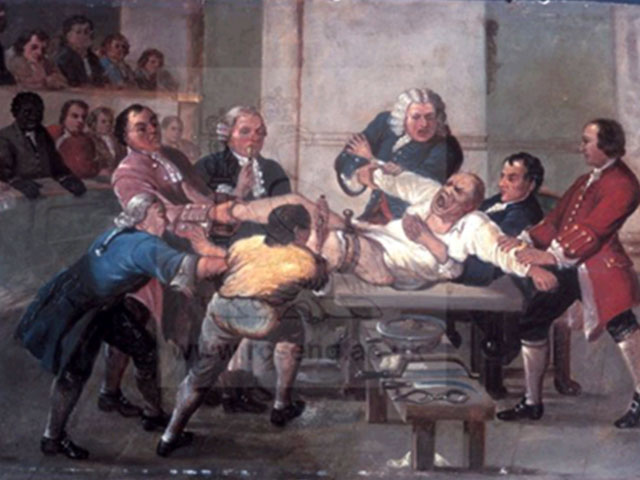
Mütter had always loved surgical lectures and made sure he secured seats as close to the front as possible. In Philadelphia, there were two great medical colleges – the University of Pennsylvania and Jefferson Medical College – and it was customary for the rival schools to hold surgical demonstrations so that prospective students could choose between them, a glorified public relations exercise. Mütter loved the daringness of the surgeries attempted during this time. The lectures were often packed, as eager established and prospective doctors thrilled at the city’s best surgeons attempting to outdo one another with their skill and showmanship. However, the combination of ambitious surgeries and unprepared young men sometimes proved disastrous. On one occasion, a Jefferson Medical College professor attempted a daring removal of a patient’s upper jaw, using marvelous speed to incise the face and rip out the bones with a huge forceps. But the surgery was perhaps too much for a public display. Doctors who were present would later recall the spectacle of it, how the partially conscious patient spat out blood, bones, and teeth, while unnerved students in the audience vomited and fainted in their seats.

But regardless of how brutal or simple the case, all surgical lectures were a challenge to watch. The anxious patient would be publicly examined and forced to listen to his surgery loudly outlined to an audience of strangers. Next, the patient would nervously drink some wine with the hope that it would dull the nerves and lessen the pain. (In Paris, the need for medicinal wine was so great, the hospital system maintained its very own wine vaults, spending more than 600,000 francs a year on an extensive collection of red and white wine housed exclusively for its patients.)

The patient was then instructed to lie on the surgical table, where he would be held down by the surgeon’s assistants and told to stay as still as possible. Everyone – the patient, the doctor, even the students in their seats – knew how impossible this command would be to follow.

The first incision usually brought the patient’s first scream – the first scream of many. Soon came the blood, the struggle, the shock. The patient would beg the surgeon to stop, plead and shout, and yell to the students to come save him, his voice cracking, tears streaming down his face. The surgeon was expected to ignore it all, to move forward swiftly and surely , and to hope that his assistants were strong men with equal resolve. Every student had heard stories of patients who were able to struggle free, who leapt off the table and attacked their doctors – often with the surgeon’s own instruments! – before running out of the room, leaving a trail of their own blood behind them.

Of course, despite the skill and care of the surgeon, the patients often died. Sometimes they died in the middle of surgery, the trauma to their bodies becoming too much. Sometimes they would die after, because their wounds were unable to stop bleeding, or the unwashed tools of their own surgeon had given them a fevered infection that consumed their flesh from the inside out. Under the best circumstances, the patient not only lived but lived a better life.

Culled from: Dr. Mütter’s Marvels

Hey, look: you can visit one of Philadelphia’s old operating theaters!
America’s Oldest Operating Theater

And, wow!  There’s a really cool one in England too!
The Old Operating Theatre Museum


Wretched Review: Cemetery Stories

Cemetery Stories: Haunted Graveyards, Embalming Secrets, and the Life of a Corpse After Death  
by Katherine Ramsland

Okay, on the bright side, if you were reading this book and you didn’t know anything about “creepy” stuff like embalming, funeral rituals, cemeteries, etc. then this book would make for an easy and fun read. It’s a great book for airport reading because the chapters are all short and keep your interest, and it rushes by you. However, on the down side…

If you are an experienced morbiphile, this book will probably annoy you as much as it annoyed me. I guess the title is completely accurate: this is a collection of morbid “stories”. Quite a few of the “stories” I know to be true. However, nothing is documented and everything is presented in a “so I was talking to this undertaker and this is what he told me” casual conversational manner that completely shatters the idea that what you’re reading is anything other than friend-of-a-friend-of-a-friend hearsay. I bookmarked a few items that I’d love to share as Morbid Facts but first I need to research them to see if anything Ramsland shares is factual. Yeah, that’s annoying.

Also annoying – the fact that this paragraph actually exists within this book:

“Classic ghost stories often feature the image of a person who keeps going through the motions of how he or she had died. This type of incident has been reported so many times by enough credible witnesses that there’s no reason to think it does not happen.”

Really. No reason at all to believe it doesn’t happen? Alrighty, then.

I guess I shouldn’t be surprised by that sentence, after all, Ramsland doesn’t see fit to document many of her claims in the book.  And that’s fine, some people will love this book, even the ghost story section. I, personally, expect a bit more accountability with my non-fiction.

BTW: If you want to read a much *better* version of this book, read Mary Roach’s “Stiff”.

1.5/5

Morbid Fact Du Jour for February 18, 2018

Today’s Failing Yet Truly Morbid Fact!

On May 27, 1955, William McCandless and Wayne Wolfe were driving a loaded Mayflower moving van loaded with furniture through the hilly streets of San Francisco. As they started down the steep Nob Hill on the edge of Chinatown, the huge truck’s brakes failed, and the truck was soon careening out of control.

Wayne Wolfe tried to pull the emergency brake but was unfamiliar with this particular truck and couldn’t find it. McCandless pulled a hand brake, which only controlled the trailer’s brakes. The truck roared on, with the trailer “lashing behind it like the tail of a dragon.” After two blocks, McCandless ordered Wolfe to jump from the truck, which he did. Witnesses assumed McCandless would escape too, but incredibly, he slammed the door shut and stayed behind the wheel, fighting to keep his truck in the middle of the narrow street. He continually pounded on his horn, but it too had failed.


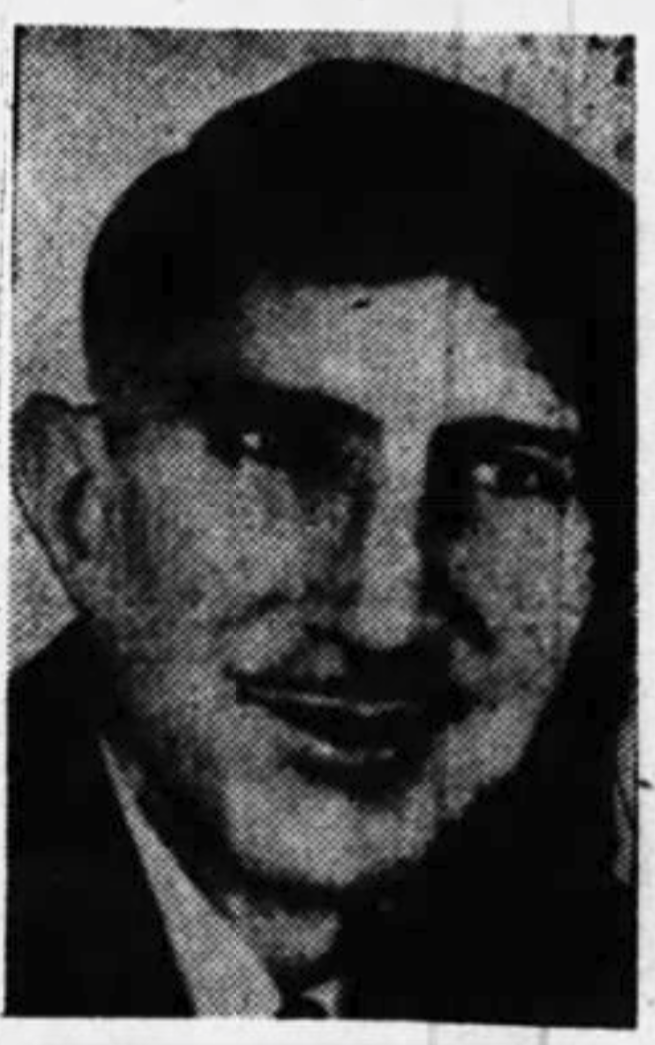
The Valiant Mr. McCandless.

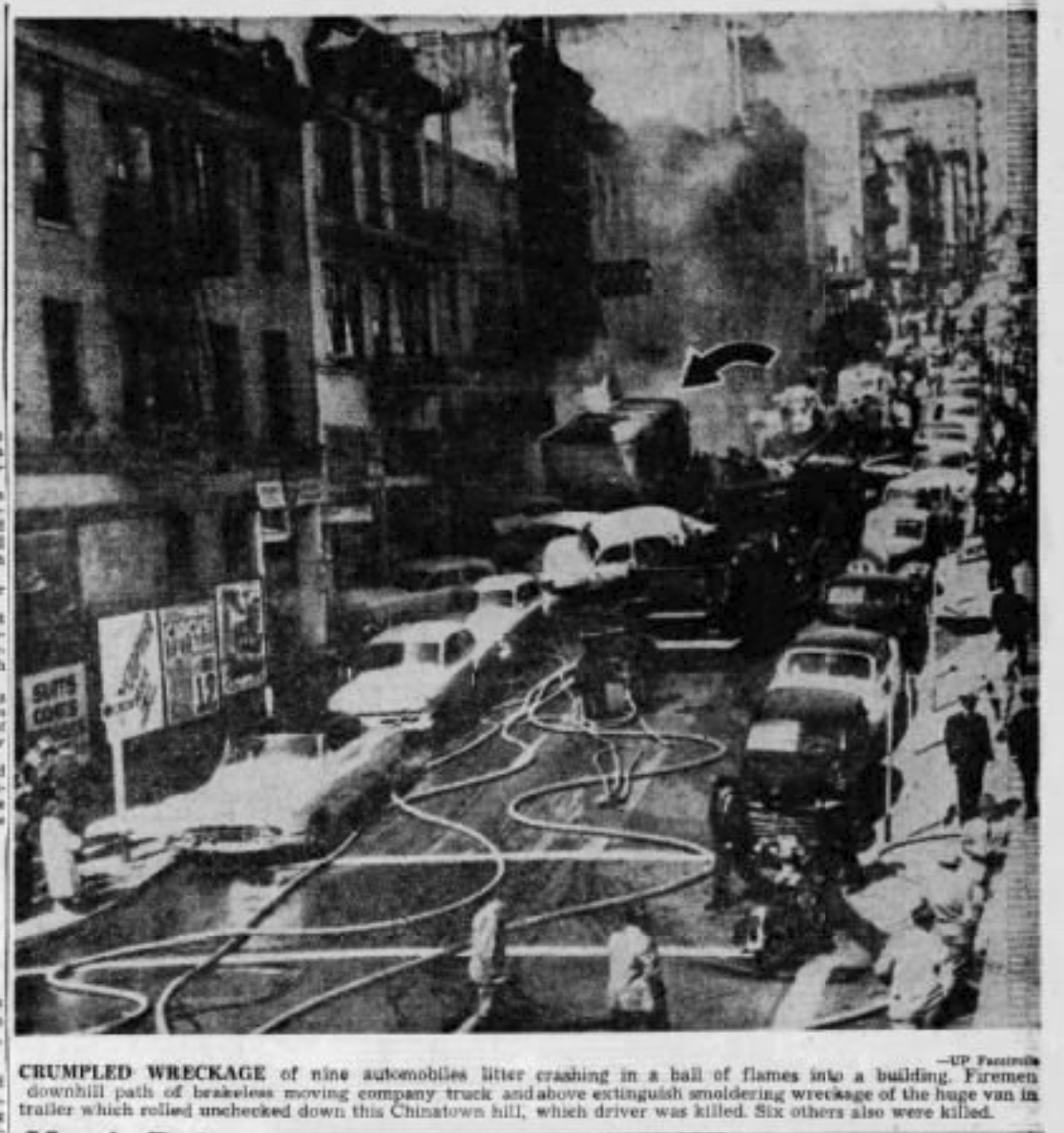
The truck was estimated to be going between 80 and 100 miles per hour as it neared the end of its five-and-a-half block run. Light poles were snapped, cars were crushed, and pedestrians were mowed down or crushed by the other wrecked vehicles. Finally the truck plowed into a storefront, overturned and burst into flames that reached as high as the rooftops.


The trail of destruction.

Six people on the ground were killed and many more were injured. McCandless, 50, from Davenport, Iowa, was also killed, trapped in his burning cab. In the last seconds of his life, he was still desperately trying to bring the truck to a stop and avoid the unavoidable.

Culled from Gendisasters
Submitted by: Aimee

I have it on good authority that the failing-brakes scenario is the ultimate nightmare of anybody who has ever driven a big rig. And to have his horn fail too must have made McCandless’s situation even more terrifying. – Aimee

Morbid Fact Du Jour for February 16, 2018

Today’s Treasonous Yet Truly Morbid Fact!

Tiberius became Roman emperor in AD 14 at the age of 56. At first Tiberius seemed a model ruler, sometimes stern but always fair. This semblance of honor cloaked his debauched private life in which he had sex with women, men, boys, and girls. He was also something of a sadist. If boys spoke out against the sodomy inflicted upon them he had their legs broken.


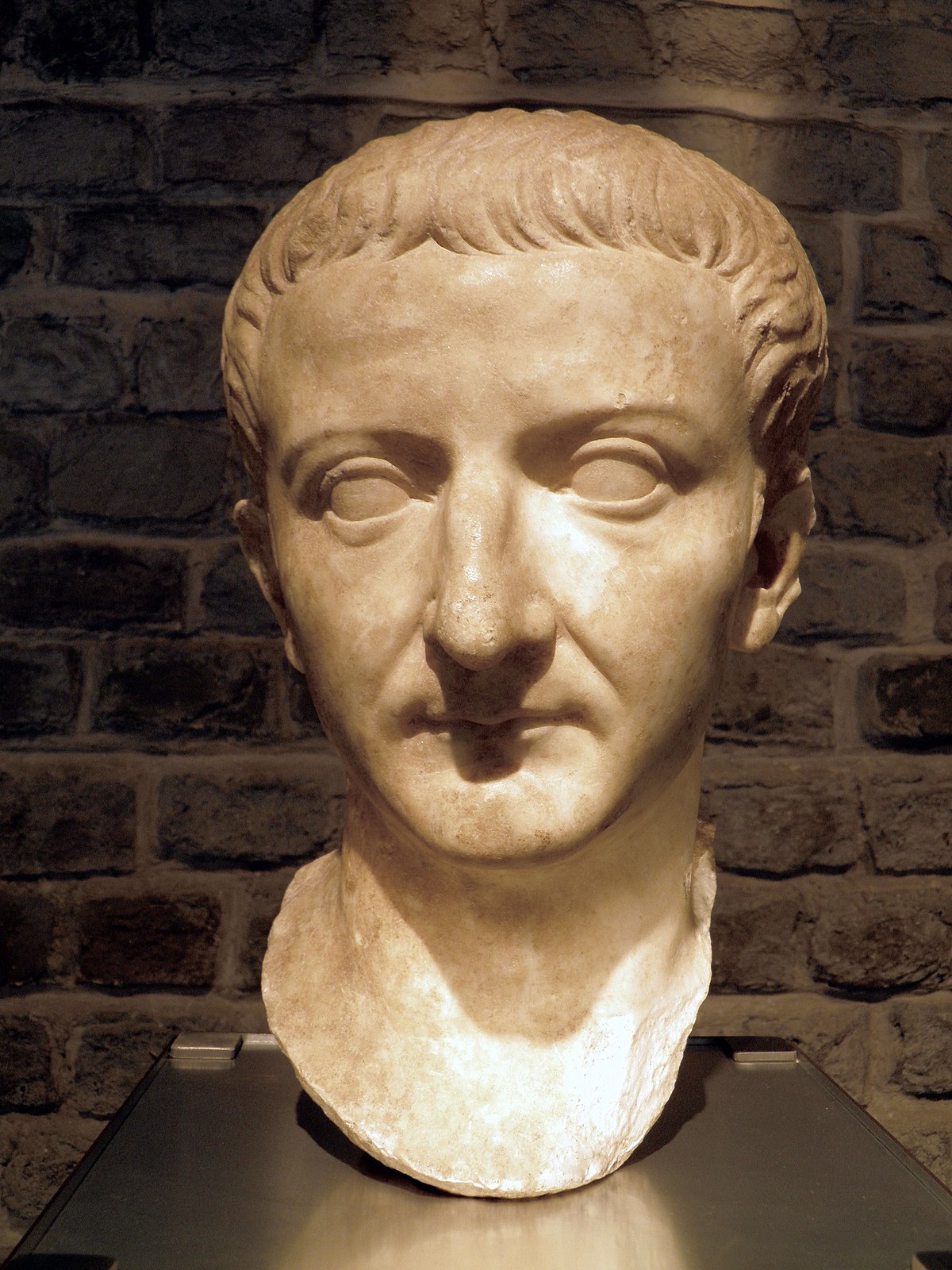
I would imagine Tiberius killed the sculptor for making his nose so authentic.

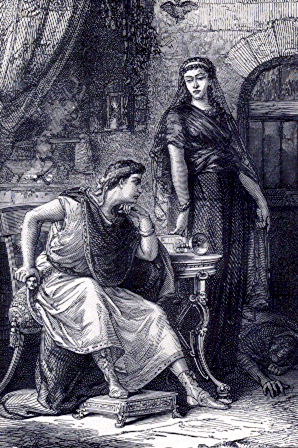
His closet adviser was Sejanus, a clever man who safeguarded his own position by undermining the status of others. Sejanus planted, in Tiberius’ mind, the seeds of doubt about the loyalty of eminent figures of the day. A series of denunciations resulted in the deaths of entire families. In some cases children were compelled to kill their parents before being murdered themselves.

Bolstered by his success, Sejanus set-up the arrest and death of Tiberius’ adopted son  and likely successor, Germanicus. After his other son was poisoned, Tiberius was persuaded by Sejanus to move away from Rome and the adviser was Emperor of Rome in all but name.


Sejanus, plotting his next move.

Tiberius was probably insane by this stage – but lucid enough to spot the maneuverings of his lieutenant. From his hideaway he sent a letter condemning the activities of Sejanus to the Senate. On the day it was read aloud to the politicians Sejanus was carted off to jail and strangled. His body was dragged through the streets and left to rot. His skull was later taken to a public baths and used for ball games.

Characteristically, the bloodshed didn’t end there. Livilla, a mistress of Sejanus, was locked in a room by her own mother and starved to death. His children were slaughtered. The slightest whiff of treason was now enough to spark a wave of killing. A paranoid Tiberius ruled for another five years unchallenged.

Culled from: The History of Punishment and Torture


Arcane Excerpts: Illustrative Case Edition

From his 1908 (reprinted in 1949) book Mental Deficiency, here’s a case study of “Idiocy” from A.F. Tredgold:

E.J. female, aged thirty-two years.  A pronounced history of insanity and epilepsy on the maternal, and alcoholism on the paternal side. Has been in the mental hospital since seven years of age. A repulsive-looking woman, with a muddy, freckled face, coarse red hair, and numerous stigmata; cranial circumference, 21 inches. She can walk, but spends the day sitting in a chair turning her head from side to side, rocking herself to and fro, and biting her hands. She is of unclean habits and unable to do anything for herself. She is quite deaf in the right ear, but listens attentively to the ticking of a watch held close to her left one. She seems to have no knowledge of time or place, and no understanding of anything said to her. But when the piano is played, she at once ceases  her rhythmic movements and listen attentively. She cannot speak, but she will hum the tunes she has heard so accurately that they are readily recognized. As a rule she is harmless, but upon any attempt at examination she makes violent resistance and tries to bite; she is spiteful at times and interferes with the other patients.

Morbid Fact Du Jour for February 15, 2018

Today’s Confessed Yet Truly Morbid Fact!

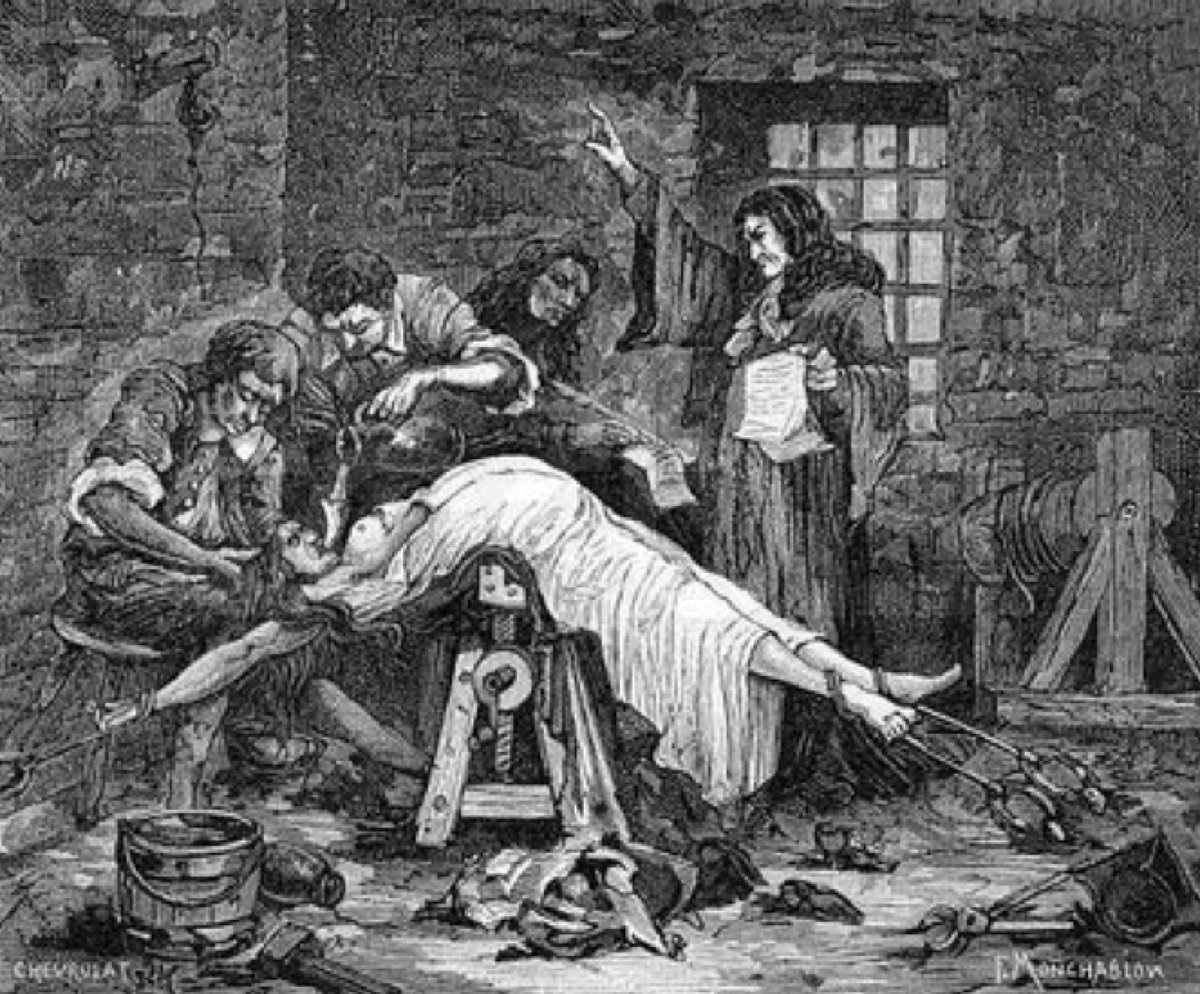
The following is an excerpt from the witch-hunting guidebook Malleus Maleficarum (1486) on how to perform the first stage of torture upon the suspected witch, called the ‘preparatory question’:

First, the gaolers prepare the implements, then they strip the prisoner (if it be a woman, she has already been stripped by other women, upright and of good repute). This stripping is lest some means of witchcraft may have been sewn  into the clothing – such as often, taught by the Devil, they prepare from the bodies of unbaptized infants, that they may forfeit salvation.

And when the implements of torture have been prepared, the judge, both in person and through other good men, zealous in the faith, tries to persuade the prisoner to confess the truth freely; but, if he will not confess, he bids the attendants prepare the prisoner for the strappado or other torture. The attendants obey forthwith, yet with feigned agitation. Then, at the prayer of some of those present, the prisoner is loosed again, and is taken aside and once more begged to confess, being led to believe that he will in that case not be put to death…

But if, neither by threats nor by promises such as these, the witch cannot be induced to speak the truth, then the gaolers must carry out the sentence, and torture the prisoner according to the accepted methods, with more or less severity as the delinquent’s crime may demand.

However, the law allowed torture to be repeated only if new, unconfessed indications of guilt were expected, and so this preliminary stage was often considered not to be torture at all. Many court records contain the phrase ‘the prisoner confessed without torture’. In any case, the lawyers came up with the excuse that further torture was not a repetition, but merely a continuation of the inquiry, designed to make the confessed witch reveal the names of accomplices.For example, in 1597 Clara Geissler, a 69-year-old widow of Gelnhausen in Germany, withstood torture by the thumbscrews, but:

… when her feet were crushed and her body stretched out to greater length, she screamed piteously and said all was true that they demanded of her: she drank the blood of children whom she stole on her night flights, and she had murdered about 60 infants. She named 20 other women who had been with her at the sabbats, and said the wife of a late burgomaster presided over the flights and banquets.

When she was freed from the rack, Clara retracted her confession saying that she had reported rumors spread by other people. Nevertheless, the judges arrested those she had named, and duly tortured them. One woman confessed even worse crimes than Clara had accused her of, so the widow was submitted to torture once more, to force her to admit the truth. But on her release she again denied her confessions, and was put on the rack again. She was tortured ‘with the utmost severity’, and died from the agony: the inquiry concluded ‘the Devil would not let her reveal anything more, and so wrung her neck’.

Culled from: The History of Torture


Wretched Reviews: Beautiful Death

Beautiful Death: Art of the Cemetery
by David Robinson

This is a collection of photographs taken of monuments/headstones in European cemeteries.  That’s pretty much all it is.  There are no  explanations of the photos or information about the different cemeteries;  there is just a strange forward by Dean Koontz that talks about his deceased parents, and an afterword by the photographer, David Robinson, that talks about his discovery of Pere Lachaise, his photographic motivation, and a brief discussion of cemeteries and headstones and what it all means.

The images themselves are nice but largely documentary in nature rather than artistic, so it would have been nice to have some information to go with them.  What it amounts to is just a bunch of photos of really cool monuments.  If that’s enough for you, then you’ll enjoy this book; however, if you want any sort of background information on what you’re seeing you, like me, will find it frustrating.

2/5 – Beautiful but Empty

Morbid Fact Du Jour for February 14, 2018

Today’s Contagious Yet Truly Morbid Fact!

Between August and November 1873 Shreveport, Louisiana lost one-quarter of its population (or about 2,500 out of 10,000) to the third greatest epidemic of yellow fever to strike the United States. About half of these died and the other half fled, never to return. Almost all of the roughly 1,200 victims are buried at Oakland Cemetery, 759 of them in a mass grave called the yellow fever mound, in the cemetery’s southwestern quadrant. The number of victims in this mound may be lower than the true figure, since the number was calculated from newspaper accounts which were not completely accurate.


Marker from Oakland Cemetery.

The following is a circa 1935 account of the epidemic by Mrs. Geo. T. Martin, one of Shreveport’s pioneer citizens:

“It was in August of 1873 when the fever began to rage in Shreveport.  Some of
the families moved away temporarily but those of us who could not leave went
through the most horrible time that Shreveport has ever known.

“I was married on Saturday, Sept. 10, 1873.  On the following Monday my
husband was taken sick with the fever and I nursed him until Thursday
following, when I, too, went to bed with chills and fever.  There were at the
time about fifty people dying each day from this disease.  Dr. Dalzell, one of
the finest men our city has ever known, worked night and day among the sick
trying to check the death rate.  What we would have done without him and the
others who helped him, shall never be known.  Businessmen who could not leave
their work died by the score.  A newspaper clipping of one issue of the
Shreveport Times told of the heavy mortality in the business district.  The
business district was bounded by the levee, Crockett, Spring and Milam Streets
on one day, 12 men were listed as having been claimed by the fever.  Their
names were: Nathan Hoss, Willie Elstner, Jr., John Mundy, O.T. Collins, Henry
Prescott, James Hoss, Paph La Cossit (who married my foster sister), Chas. W.
Pomeroy, H.C. Silver, W. W. McCain, T.L. Walker, and a restaurant man.

“Graves were filled as fast as they could be dug.  All during the night horses
could be heard carrying the dead, and the moans and weeping of the bereaved
families swept over the town.  Girls who were well today were dead from the
terrible fever in a week’s time.  My husband was in the upper story of the
house where we were living at the time and I was downstairs.  ‘There were days
when I watched for them to carry up a casket for him, or maybe bring one to
me.  We were so sick, the plans had been made for our burial together.  As
fast as victims died, they were buried without much ceremony to ease the pain
of those left.  When entire families were swept out by the fever, their
clothes and everything in the house was burned.

“I shall never forget the day Whit McKeller died, I could hear him groaning
and crying out in his fever.  Nothing could be done to ease him.  He was in my
Aunt’s house at the time, and I ask Auntie often if he was dying.  She told me
that he was not, but I knew from her tone of voice that she did not mean it.
He died that day after he moaned and called out all day.  It was a fearful
time.


Caring for the sick

“We lived on Spring Street at the time, and at night I could hear the distant
street car, with its strong horses pulling it, as it went down the street.
The fever continued well into the latter part of September and I remember how
joyful every surviving Shreveport was at the time to see cooler weather
approach.  My husband and I survived the sickness, but it was many months
before we were strong.  Nothing before or since has ever come to Shreveport to
leave such a trail of grief and suffering.”

Culled from: US Gen Web Archives and Oakland Cemetery
Generously submitted by: Jason Cole


Arcane Excerpts: Monsters

Here is another excerpt from Dr. John Harvey Kellogg’s (of Corn Flakes fame) 1877 book,Plain Facts for Young and Old.


Monsters. — Defects and abnormalities in the development of the embryon [sic] produce all degrees of deviation from the typical human form. Excessive development may result in an extra finger or toe, or in the production of some peculiar excrescence. Deficiency of development may produce all degrees of abnormality from the simple harelip to the most frightful deficiency, as the absence of a limb, or even of a head. It is in this manner that those unfortunate individuals known as hermaphrodites are formed. An excessive development of some parts of the female generative organs gives them a great degree of similarity to the external organs of the male. A deficient development of the male organs renders them very similar in form to those of the female. Redundant development of the sexual organism sometimes results in the development of both kinds of organs in the same individual in a state more or less complete. Cases have occurred in which it has become necessary, for legal purposes, to decide respecting the sex of an individual suffering from defective development, and it has sometimes been exceedingly difficult to decide in a given case whether the individual was male or female

Such curious cases as the Carolina twins and Chang and Eng were formerly supposed to be the results of the union of two separate individuals. It is now believed that they are developed from a single ovum. It has been observed that the primitive trace… sometimes undergoes partial division longitudinally. If it splits a little at the anterior end, the individual will have a single body with two heads. If a partial division occurs at each end, the resulting being will possess two heads and two pairs of legs joined to a single body. More complete division produces a single trunk with two heads, two pairs of arms, and two pairs of legs, as in the case of the Caroline twins. Still more complete division may result in the formation of two perfect individuals almost entirely independent of each other, physiologically, but united by a narrow band, as in the remarkable Siamese twins, Chang and Eng.

In a curious case reported not a great while ago, a partially developed infant was amputated from the cheek of a child some time after birth.

The precise cause of these strange modifications of development is as yet, in great degree, a mystery.08

Morbid Fact Du Jour for February 13, 2018

Today’s Brutal Yet Truly Morbid Fact!

On penal flagellation in 18th century England:

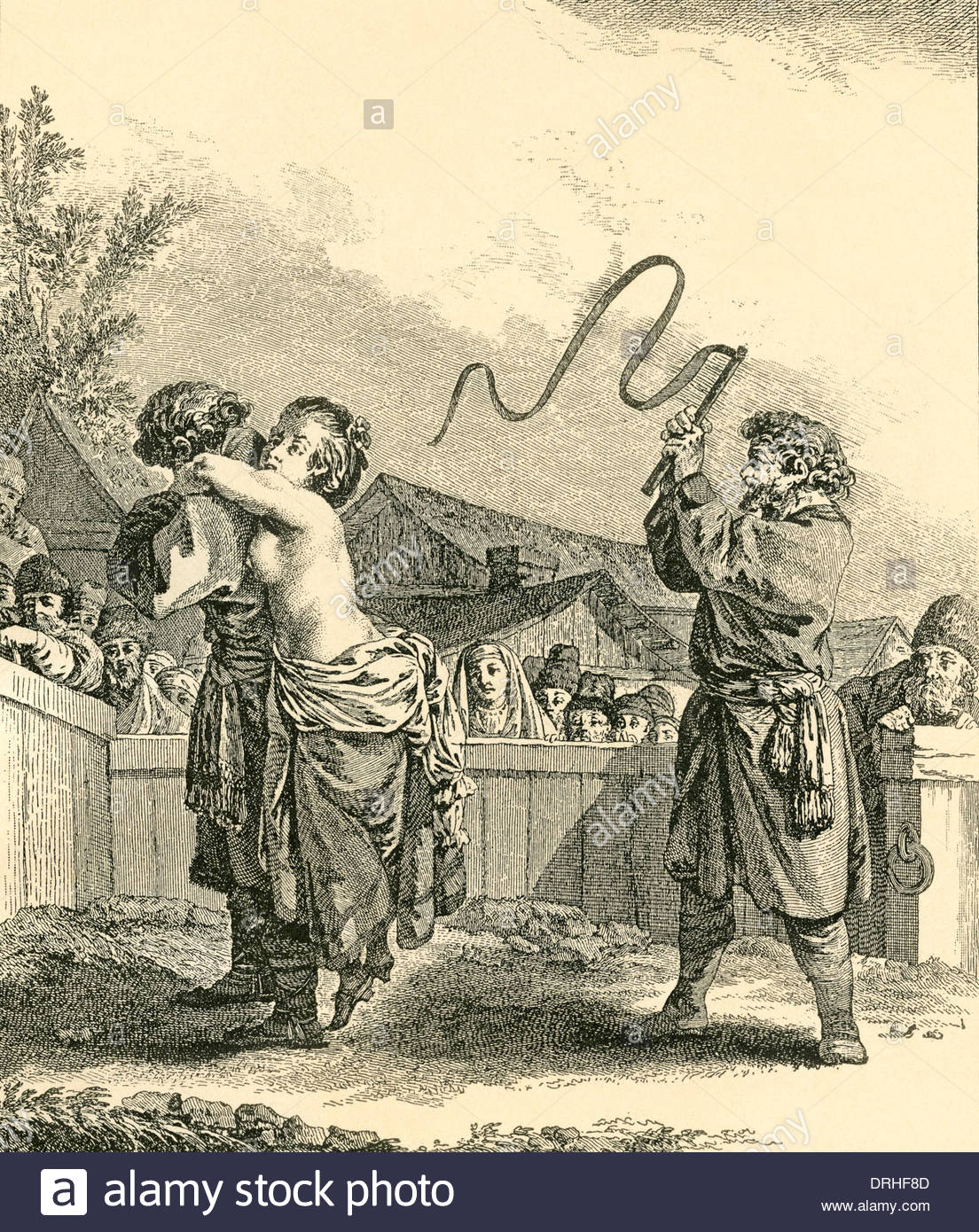
Perhaps one of the most brutal floggings on record was Jeffreys’ sentence of Tutchin to seven years’ imprisonment during which he was to be whipped every year through every Dorsetshire town, a sentence which, it was computed, “amounted to a whipping once a fortnight for seven years”. Then there was the whipping of Dangerfield all the way from Aldgate to Newgate, and with such ferocity that he succumbed some days later; there was the flogging of Titus Oates with a six-thonged whip, in accordance with another brutal sentence ordered by the aforementioned sadistic Judge Jeffreys, a flogging which was continued until the prisoner was unable to stand on his feet.

In certain instances, and especially as public feeling against the whipping of women began to be aroused, female floggings were inflicted in the confines of the prison or its grounds. Thus we find at Launceston, in 1792, a woman thief was ordered “to be stripped to the bare back, and privately whip’d until she be bloody”, where at the same time and in the same court, a male whipping was to take place “in the public street”. there was, however, no Government regulation respecting the corporal punishment of women taking place in private, this being left to the discretion of the local authorities concerned, and in many parts of the country publicly performed female floggings continued until the Act was passed which abolished the corporal punishment of woman altogether.

Culled from: The History of Corporal Punishment


The Library Eclectica: Wretched Review

Never Suck a Dead Man’s Hand: Curious Adventures of a CSI
by Dana Kollmann

Lissa recommended this book for its crazy tales of disgusting crime scene moments, and it did not disappoint in that regard.  There are some disgusting doozies in here!  (I’ve shared one already and I’ll share another soon.)  However, as with most memoirs, there is also a lot of filler that isn’t that interesting to me.  The term “self-indulgent clap-trap” came to mind reading a few paragraphs.  However, considering that my expectations for memoirs are always rather low, and considering a few of the stories are *really* fascinating, it’s definitely worth a read.

3/5

Morbid Fact Du Jour for February 12, 2018

Today’s Golden Yet Truly Morbid Fact!

At exactly 8:15:17 a.m. on August 6, 1945, the ‘Little Boy’ atomic bomb was released from the bomb bay of the Enola Gay as it passed over Hiroshima.  The following are some accounts from the ground:

As the clock ticked toward 8:15 nobody was too concerned about the approach of three American aircraft:

We were so used to observation flights of B-29s that at first we hardly paid any attention to this one. However, when the engine hum changed to a shrill whine we instinctively looked up at the sky. One B-29, bathed in the direct rays of the midsummer sun, gives off a dazzling gleam from its mighty flank, and leaving a fleecy white cloud-train across the blue sky, has just completed a sharp turn and goes climbing upward with a terrific roar.
(Tetsuo Miyata, teacher’s assistant)

Pilot Paul Tibbets had thrown the Enola Gay into its evasive maneuver:

I saw a single enemy airplane flying over Hiroshima. It dropped or fired a brilliant object. I thought at first it was an incendiary bomb…
(Kure dockyard worker)

A flame appeared that was even brighter than the sun. I thought I might get hurt so I fell flat on the ground.
(Kure dockyard worker)

My little brother had just put out his hand to catch [a] red dragon-fly when, in that instant, there was a flash and with my whole body I received a shock as if I had been thrown into a furnace.
(Shintaro Fukuhara, schoolboy)

As I was above to enter the office, I saw through an open window what looked like a golden lightning flash that had blown up out of the earth. The weird light was everywhere. I immediately thought of the air raid and hurled myself prostrate in the passage.
(Kenshi Hirata, accountant)

Kiyoshi Yoshikawa, a survivor of the atomic bombing of Hiroshima in 1945, displays the heavy scarring on his back, soon after leaving hospital, 13th August 1951.

The flash and the ‘weird golden light’ were accompanied by an instantaneous heat pulse:

Its duration was probably less than one tenth of a second and its intensity sufficient to cause nearby flammable objects… to burst into flame and to char poles as far as 4,000 yards away from the hypocenter… At 600-700 yards it was sufficient to chip and roughen granite… the heat also produced bubbling of tile to about 1,300 yards.
(US Strategic Bombing Survey)

Witnesses say that people who were directly under the explosion in the open had their skin burnt so severely that it was immediately charred brown or black; these people died within minutes or at most hours. Both in Hiroshima and Nagasaki, burns on exposed skin were very severe up to about 1,500 yards from the center of the damage.  At this distance, some escaped with less severe burns, although very severe burns were occasionally reported at nearly 1 1/2 miles from the center of damage. Mild burns extended to distances of 2 1/2 miles and more. Stories that white people were unharmed in Hiroshima where the darker skinned Japanese received fatal burns were not substantiated.
(British Mission Report)

Within one mile of ground zero, the heat was sufficient to cause… ‘not only carbonization but also evaporation of the viscera’ in humans; in other words, the heat caused the soft internal organs of the victims simply to boil away, whilst their bones became brittle sticks of charcoal. Another grotesque effect of the heat flash was noted by the British mission to Hiroshima and Nagasaki in November 1945; this was that darker-colored clothing would char at much greater distances than light colors.  Examples of this included:

A white cotton blouse, the pale pink sleeves of which were pattered with small sprays, each about a 3/16 inch in diameter, of green leaves and red flowers. This blouse had been worn in the open well over a mile from the center of damage, and was unscorched; except that over an area on the left shoulder the sprays had burnt out and left holes.

This comparatively dispassionate account neglects to mention the corresponding damage to the skin beneath the blouse.

The US Strategic Bombing Survey noted that:

The large majority of people within 3000 feet of ground zero were killed immediately… Persons in the open were burned on exposed surfaces, and within 3000-5000 feet many were burned to death. In many instances clothing burst into flame and had to be beaten out.

Little Boy’s heat flash caused the instantaneous deaths of thousands of humans and mortal wounding to thousands more:

My little brother was burned on his face and hands and his face was all swollen. He was just three. He was a cute little brother but he died after a week.
He died calling, ‘Mummy!  Mummy!’
(Ruriko Araoka, aged 5 in 1945)

And at the same time as the people were dying, pet dogs and cats, birds, snakes, spiders, rats and rabbits ‘crackled and were gone’. In many cases, they left behind strange shadows where their bodies had shielded the surface of roads and buildings from the charring effect of the flash. Those who were not destined to die from flash burns had, in many cases, the most appalling injuries from them nevertheless. Michihiko Hachiya:

asked Dr. Koyama what his finding had been in patients with eye injuries. ‘
Those who watched the plane had their eye grounds burned,’ he replied. ‘The flash of light apparently went through the pupils and left them with a blind area in the central portion of their visual fields.
Most of the eye-ground burns are third degree, so cure is impossible.


Shadow person.

Culled from: Eye-Witness Hiroshima: First-Hand Accounts of the Atomic Terror That Changed the World


Arcane Excerpts

Here’s an illuminating excerpt from What A Young Boy Ought To Know (1897) by Sylvanus Stall.

My dear friend Harry: No boy can toy with the exposed portions of his reproductive system without finally suffering very serious consequences. In the beginning it may seem to a boy a trifling matter, and yet from the very first his conscience will tell him that he is doing something that is very wrong. It is on this account that a boy who yields to such an evil temptation will seek a secluded, solitary place, and it is because of this fact that it is called “solitary vice.” Because the entire being of the one who indulges in this practice is debased and polluted by his own personal act it is also called “self-pollution.” It is also called “onanism,” because, for a similar offense, nearly four thousand years ago, God punished Onan with death (Genesis xxxviii, 3-10). This sin is also known by another name, and is called “masturbation,” a word which is made from two Latin words which mean “To pollute by the hand.”

Each of these words tells something of the vile character of this sin. But words are scarcely capable of describing the dreadful consequences which are suffered by those who persist in this practice. I do not believe, my dear friend Harry, that you have become a victim of this destructive vice, and I would be glad to believe that you have never accidentally learned or have been deliberately taught to engage in it. Knowing, however, the dangers to which, like all boys, you are exposed, and also appreciating the fact that intellectual boys, because of a more highly wrought nervous organization and because of keener sensibilities, are much more liable to become addicted to this vice than boys of a lower grade of intellect and with less sensitive bodies, I regard it is important that you should be as intelligent and well informed upon this subject as upon any other. This is necessary so that, by knowing in advance the character and consequences of such a course, you may avoid the evil into which even men, as late in life as twenty-five and thirty years of age, sometimes fall because of ignorance. In this as in other things, “To be forewarned is to be forearmed.” Every young boy should be properly informed upon this subject, for even those who may be safely guarded from defilement of thought and life from outward influences are nevertheless exposed to those inward physical conditions which may produce local irritation and disease, and where such a diseased condition is ignorantly permitted to continue, masturbation soon becomes a fixed habit, and is likely to be practiced with such violence that idiocy, and even death, may, and often does come speedily. Nothing so much favors the continuance and spread of this awful vice as ignorance, and only by being early and purely taught on this important subject can the coming boys and men be saved from the awful consequences which are ruining morally, mentally, and physically thousands of boys every year.

As I have already said, one of the first things which a boy does who undertakes to practice this vice is to seek solitude. From the very first his conscience disapproves, and so he cannot engage in the evil which he proposes to himself without violating his moral sense. Indeed, his moral nature is the first to suffer.  This, my dear boy, is an important fact, and if you were ever to fall a victim to this vice, you would find that even with the first sense of guilt there would come a spirit of rebellion against God and against your parents. You would soon begin to call into question the wisdom and goodness of God. Your pleasure in good books, in religious instruction, in the Sunday-school, the Bible, the Church, and all holy things would rapidly diminish. You would soon find in your heart a rebellious feeling which would lead you to be disobedient, cross, irritable, and reproachful. You would begin to lose faith in all that is good, and as you persisted in your sin, you would grow less and less like Jesus and more and more like Satan. In other words the moral nature is the first to suffer from sexual vice, and whenever you hear a boy or man boasting of his doubts and railing against God, against the Bible, against purity and virtue, you may rest assured that this feeling grows out of some solitary or social, some secret or open sin or vice which has affected his moral nature, and is degrading and debasing his heart.

If this effect upon the moral nature were the only result of this solitary vice, the consequences would be sufficient to turn any intelligent and thoughtful boy from the practice. But its effects upon the mind and body are also of the most serious nature, and of these I will speak to you tomorrow night.