Today’s Livid Yet Truly Morbid Fact!
Cholera bacteria release a powerful toxin into the intestines that forces cells to pump water and salts from blood and tissues. The result is massive watery diarrhea that is dotted with mucus and skin cells, the so-called rice-water stool.
And as the bacteria draw fluids from the victim’s body, the vital signs start to plummet. Within an hour after the symptoms begin, a healthy person’s blood pressure can drop precipitously. The dehydration and loss of salts creates excruciating cramps. Death can follow two or three hours later, but more often occurs within eighteen hours to several days after the first attack of diarrhea.
One Edinburgh doctor, George Bell, who had witnessed cholera in India, wrote about the disease for his British colleagues: “The eyes surrounded by a dark circle are completely sunk in the sockets, for the whole countenance is collapsed, the skin is livid. The surface [of the skin] is now generally covered with cold sweat, the nails are blue, and the skin of the hands and feet are corrugated as if they had been long steeped in water… The voice is hollow and unnatural. If the case be accompanied by spasms, the suffering of the patient is much aggravated, and is sometimes excruciating.”
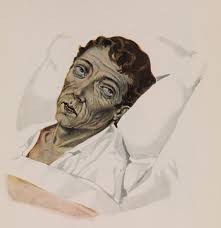
Cholera patient
As the 19th century cholera epidemics raged in Great Britain, the newspapers kept a running toll of the cases and deaths, which had “the depressing effect of the tolling of a funeral bell,” Morris writes.
Some small villages were nearly destroyed. Of Bilston, an iron-and coal-mining town in Staffordshire, observers wrote “To describe the consternation of the people is impossible. Many factories and workshops are closed; business is completely at a stand; women seen in a state of distraction running in all directions for medical help for dying husbands, husbands for their wives, and children for their parents; the hearses carrying the dead to the grave without intermission either by day or night. Those inhabitants who possessed the means of quitting their homes, flying to some purer atmosphere; those who remained seeing nothing before them but disaster and death.”
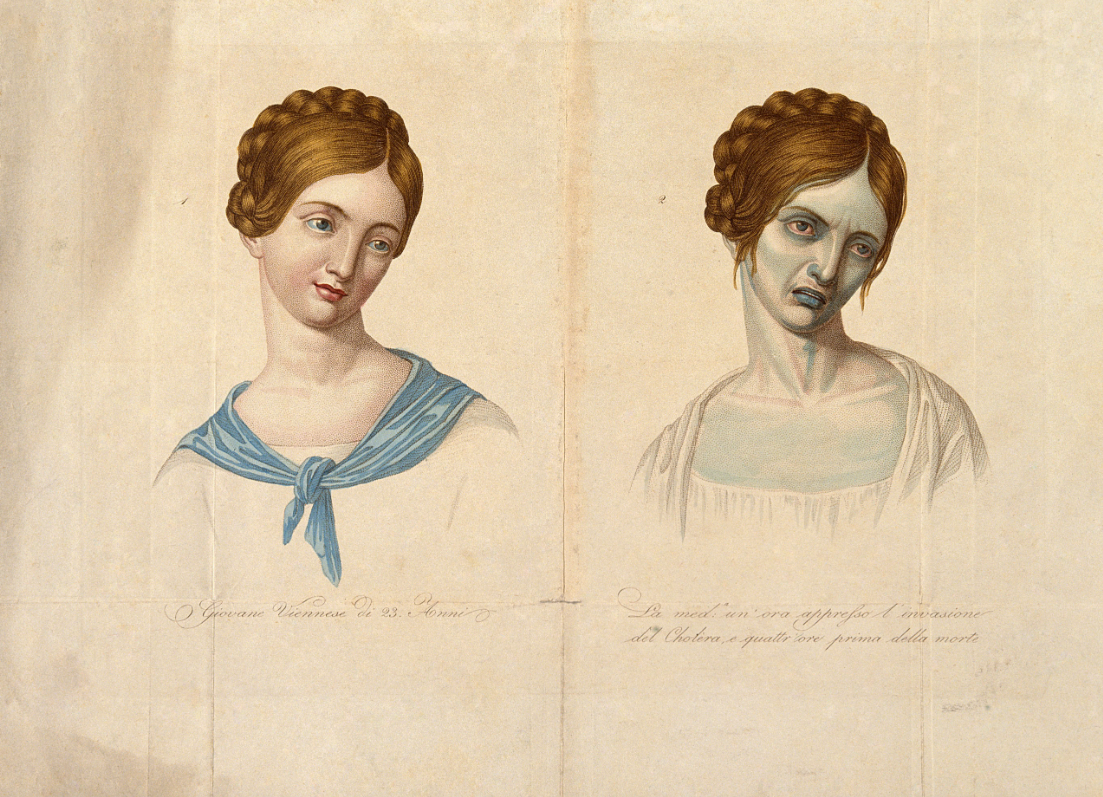
A young woman before and after cholera
Culled from: Flu
Wax Specimen Du Jour!
Wax specimens from the book Dermochromes – III (1910):
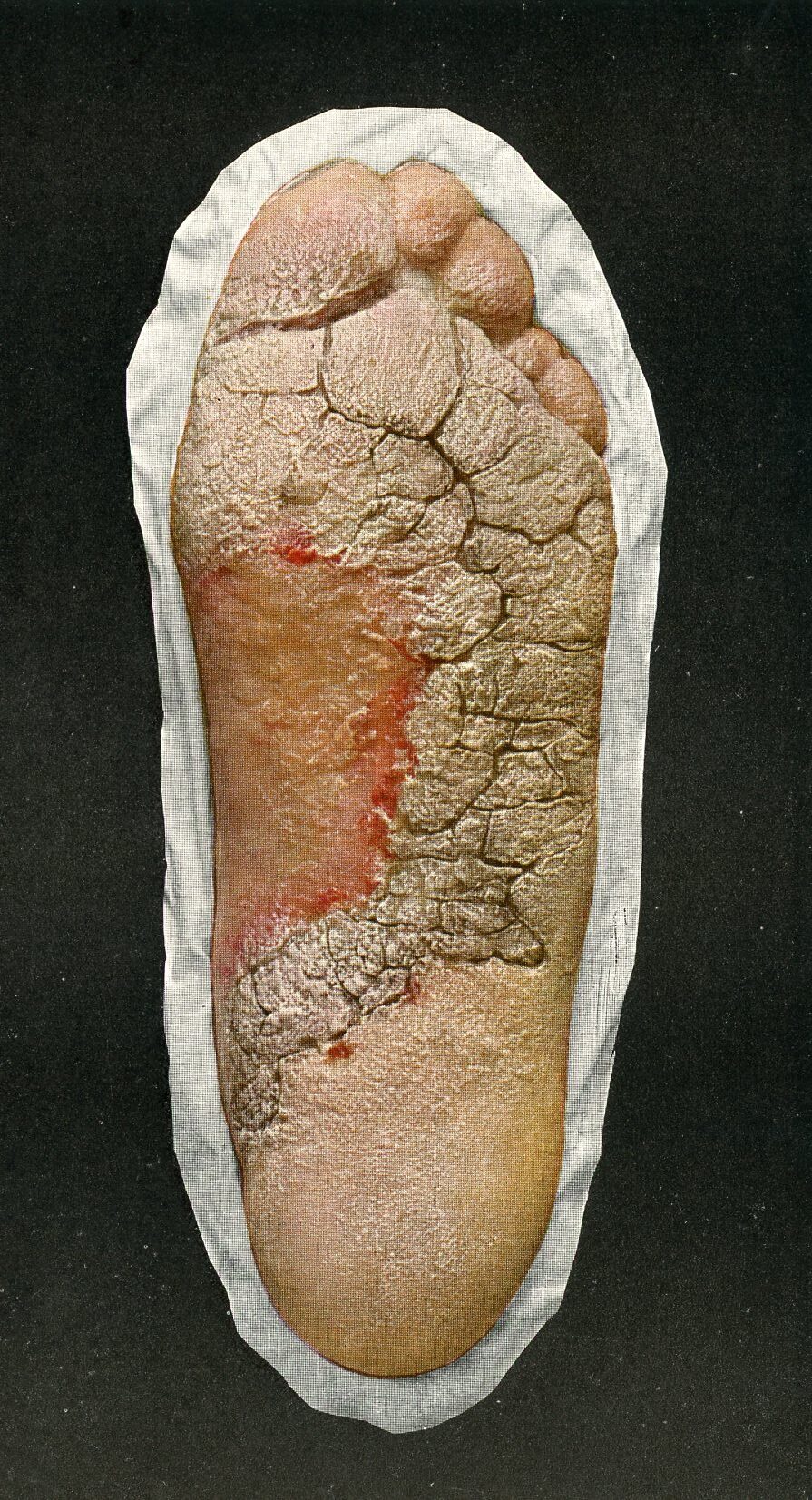
Eczema corneum plantae pedis
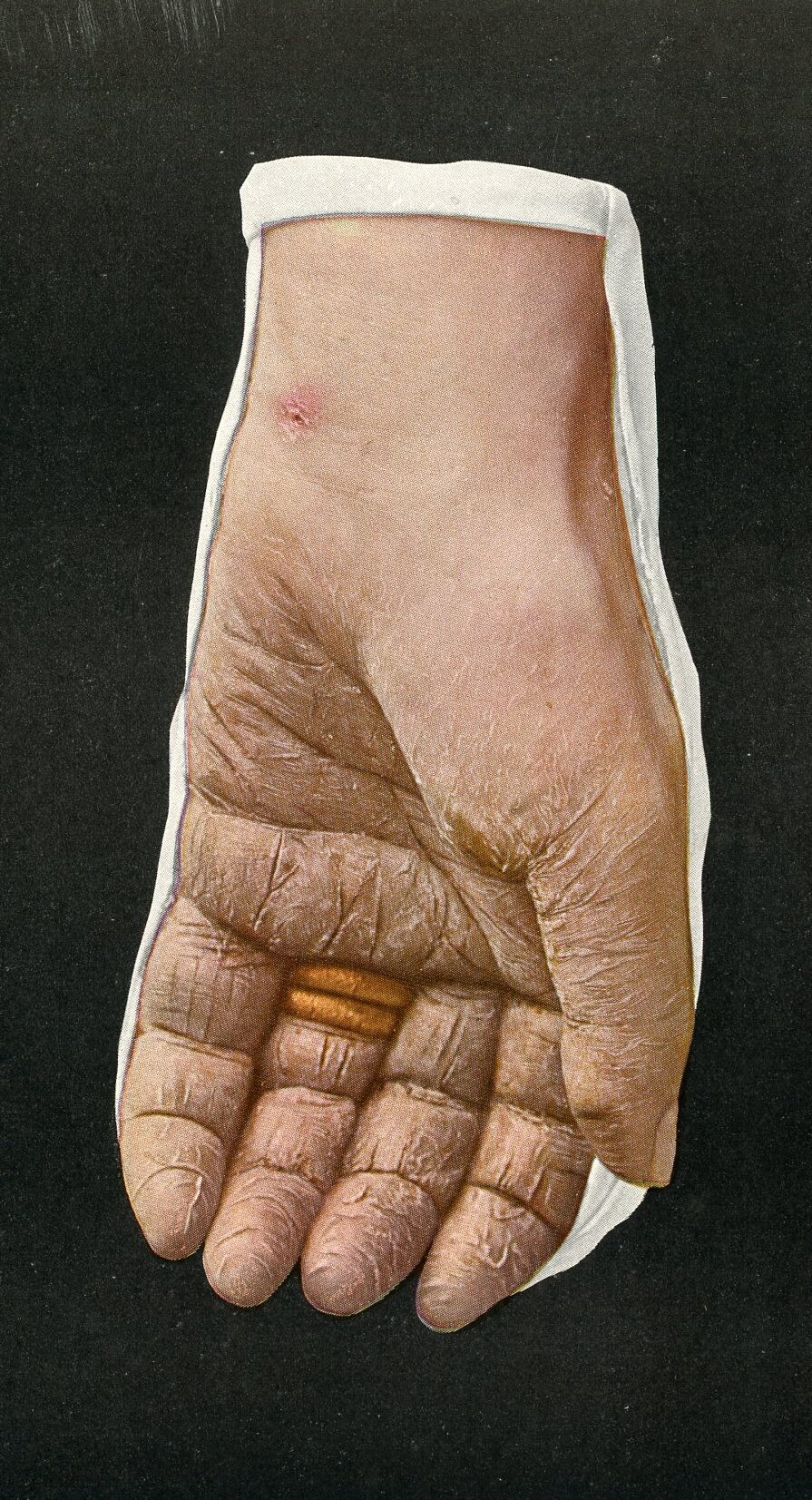
Eczema chronicum volae manus corneum
Andersonville Prisoner Diary Entry Du Jour!
This is the continuation of the 1864 diary of Andersonville prisoner Private George A. Hitchcock (see the archived version for all entries up until now).
Here’s today’s entry:
November 1st. The sheds are being cleared of all sick, who are either taken outside or returned to camp.
Culled from: Andersonville: Giving Up the Ghost