Today’s Torn Apart Yet Truly Morbid Fact!
The city of Quchan in the region of Western Turkmenia (modern day Iran) was hit by an earthquake of exceptional force at about 3pm on November 17, 1893. Working on the damage created, seismologists equate it to Richter force 9. The quake was followed by powerful aftershocks. A contemporary account records that “Almost the whole night tremors occurred one after another, reaching 70 in a 24-hour period.”
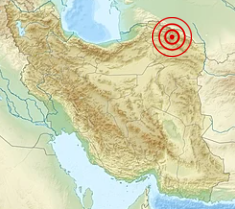
Virtually no buildings in Quchan were left intact—”torn apart” is the term used in the same report. Streets were deep in debris, and the area’s fine vineyards were ruined, as were productive forests. It is said that, “Forested hills were simply taken apart and rolled downward. Only a third of one of these hills remained.” The valley of the Garmab River was split by deep fissures, and over a large area the soil “looked as if shaken by a sieve.”
This was clearly a quake of great severity. The city walls came crashing down as did its mosques, and the place of the ruler, Il’khan Quchan. According to local reports, at least 18,000 people died, including all of the 11 wives of the Il’khan.
Culled from: Catastrophes and Disasters
Andersonville Prisoner Du Jour!
Andersonville Prison (also known as Camp Sumter), located near Andersonville, Georgia, was a Confederate prisoner-of-war camp during the final fourteen months of the American Civil War. The prison was overcrowded to four times its capacity, and had an inadequate water supply, inadequate food, and unsanitary conditions. Of the approximately 45,000 Union prisoners held at Camp Sumter during the war, nearly 13,000 (28%) died. The chief causes of death were scurvy, diarrhea, and dysentery.
This is the account of J. N. Sweeny, Company H, 8th Kansas Infantry:
On December 8, 1864, I was put in charge of forty sick and dying comrades who were packed in a box-car at Florence, S.C., to be sent to Charleston for exchange. My duty was to attend to their various wants during the journey. Among the number was a poor emaciated skeleton, scarcely able to sit up. He was an old man, perhaps fifty. [I resent 50 being called “old”! – Ancient DeSpair] I noticed that he was trying to attract my attention by means of signs, but I did not understand them. He then showed me a small book—a work on Masonry—which he carried, and asked me if I knew anything about it. I told him I did not. This circumstance made him an object of my especial care during the trip. At Charleston we were put aboard the truce boat. I wrapped him in his old ragged blanket and carried him aboard. When we were transferred from the truce boat to a U. S. transport, I laid him down on the deck. He lay in such a position that the flag was in full view, flying at the masthead. He uncovered his face and looked full five minutes straight at the emblem of liberty, then, throwing up both hands, exclaimed: “Hurrah! hurrah! hurrah!” three times, and fell back a corpse. The next day we buried him in the Atlantic. That cry is still ringing in my ears. Would that I had language to describe that grand exhibition of loyalty and its effect upon those who witnessed it. If some of the stay-at-home cowards—who bushwacked us in the rear, and are still bushwacking us—had witnessed it, they would then be able to form correct opinions concerning the motives which prompted the soldier to choose death rather than dishonor. I have seen many die of hunger, while clutching between their emaciated fingers the moldy crust of bread at which their stomachs revolted, who could have life, liberty and plenty, by forswearing their allegiance to the flag. The men who braved the terrors of Andersonville were made of sterner stuff than to strike their colors to even that grim monster, Famine.
Here’s an unrelated casualty:
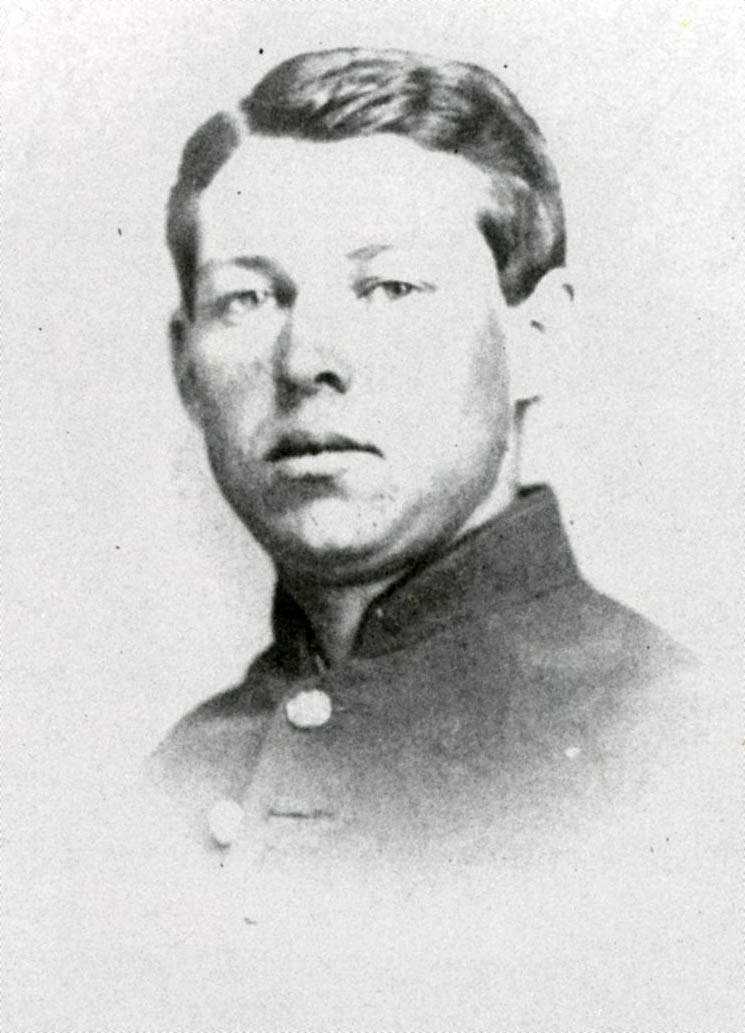
Private Manlius Comey, Co. F, 1st Massachusetts Heavy Artillery, was captured on June 22, 1864 near Petersburg, Va., and was imprisoned at Andersonville and later Florence, S.C. He was exchanged on December 8th, but died on the Transport “City of New York” before reaching Annapolis, Md.
Culled from: Andersonville: Giving Up the Ghost
Garretdom: Fiendish Woman Du Jour!
Here’s another in the series of newspaper articles entitled, “A Fiendish Woman.” This one is from the December 7, 1877 issue of the Wisconsin State Journal.
A Fiendish Woman.
ELIZABETH, Dec. 6
Mrs. John Riley, wife of a prominent citizen who resides in the outskirts of the city, and who has frequently brutally beaten an orphan girl in her employ, this P.M. in a fit of rage, poured a pail of scalding water over the girl, from the effects of which she will probably die.
Sulfuric Acid – 1
Molten Lead – 1
Razor – 1
Broken Neck – 1
Pistol – 1
Needle & Thread – 1
Hurling – 1
Boiling Water – 2
Red Hot Poker – 1