Today’s Famished Yet Truly Morbid Fact!
After the discovery of Neanderthals, many scientists classified them as archaic humans – the first (before the metaphor became tired) missing link. Others put Neanderthals on their own terminal branch of evolution, while some European scientists considered Neanderthals the ancestors of some human races but not others. (Sigh… you can guess which races they singled out, Africans and Aborigines.) Regardless of the exact taxonomy, scientists considered Neanderthals thick-witted and lowbrow, and it didn’t surprise anyone that they’d died out. Eventually some dissenters began arguing that Neanderthals showed more smarts than they got credit for: they used stone tools, mastered fire, buried their dead (sometimes with wildflowers), cared for the weak and lame, and possibly wore jewelry and played bone flutes. But the scientists couldn’t prove that Neanderthals hadn’t watched humans do these things first and aped them, which hardly takes supreme intelligence.
DNA, though, permanently changed our view of Neanderthals. As early as 1987, mitochondrial DNA showed that Neanderthals weren’t direct human ancestors. At the same time, when the complete Neanderthal genome appeared in 2010, it turned out that the butt of so many Far Side cartoons was pretty darn human anyway; we share well north of 99 percent of our genome with them. In some cases this overlap was homely: Neanderthals likely had reddish hair and pale skin; they had the most common blood type worldwide, O; and, like most humans, they couldn’t digest milk as adults. Other findings were more profound. Neanderthals had similar MHC (major histocompatibility complex) immunity genes, and also shared a gene, foxp2, associated with language skills, which means they may have been articulate.
It’s not clear yet whether Neanderthals had alternative versions of apoE (a gene that transports lipoprotein, fat-soluble vitamins, and cholesterol into the lymph system and which is an important factor in cardiovascular disease and Alzheimer’s), but they got more of their genetic protein from flesh than we did and so probably had some genetic adaptations to metabolize cholesterol and fight infections. Indeed, archaeological evidence suggests that Neanderthals didn’t hesitate to eat even their own dead – perhaps as part of primitive shamanic rituals, perhaps for darker reasons. At a cave in northern Spain, scientists have discovered the fifty-thousand-year-old remains of twelve murdered Neanderthal adults and children, many of them related. After the deed, their probably starving assailants butchered them with stone tools and cracked their bones to suck the marrow, cannibalizing every edible ounce. A gruesome scene, but it was from this surfeit of 1,700 bones that scientists extracted much of their early knowledge of Neanderthal DNA.
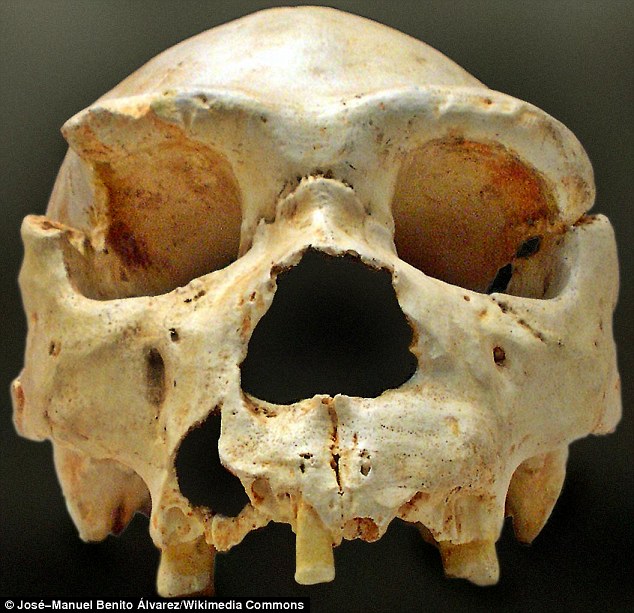
One of the doomed Neanderthals found in a Spanish cave.
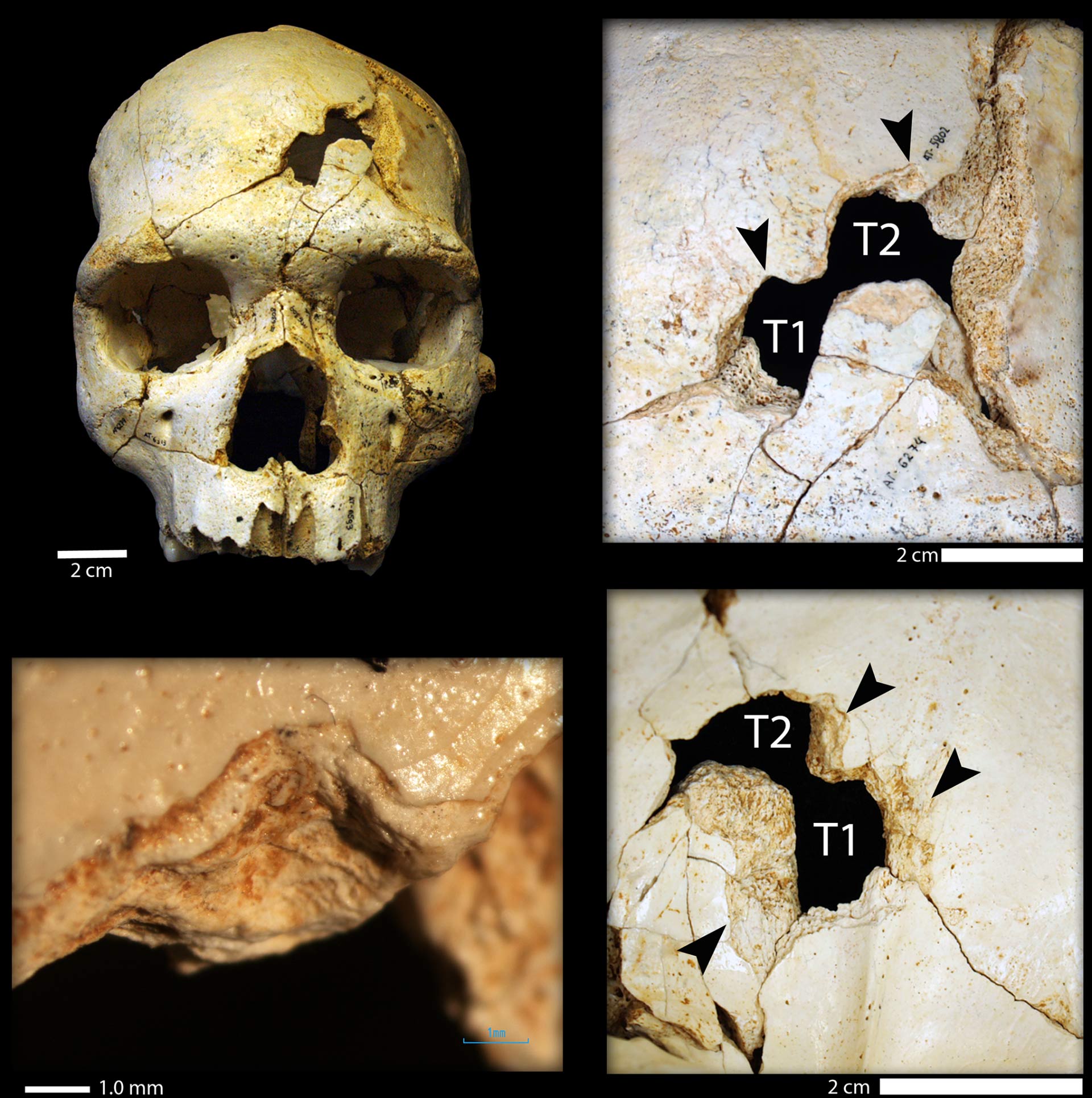
Another skull showing traumatic head injuries sustained prior to death.
Like it or not, similar evidence exists for human cannibalism. Each hundred-pound adult, after all, could provide starving comrades with forty pounds of precious muscle protein, plus edible fat, gristle, liver and blood. More uncomfortably, archaeological evidence has long suggested that humans tucked into each other even when not famished. But for years questions persisted about whether most non-starvation cannibalism was religiously motivated and selective or culinary and routine. DNA suggests routine. Every known ethnic group worldwide has one of two genetic signatures that help our bodies fight off certain diseases that cannibals catch, especially mad-cow-like diseases that come from eating each other’s brains. This defensive DNA almost certainly wouldn’t have become fixed worldwide if it hadn’t once been all too necessary.
Culled from: The Violinist’s Thumb
The Head of Martin Dumollard
In 1861, after a twelve-year murderous rampage, Lyon’s Martin Dumollard was arrested. At times, with the help of his wife, he would lure country girls into the woods, with the promise of a lucrative servant’s job. He would murder them, stabbing or choking them to death with a noose, or crushing their skull. He stripped them, taking their clothes, which he eventually sold. He was caught when a girl escaped from his grasp and reported the incident. He was convicted and guillotined in 1861. This 1863 photograph is not an image from life, but of the plaster cast of his decapitated head. It was used for phrenological analysis of his behavior. To this day there is controversy as to whether Dumollard killed the women for their belongings or for his sexual fantasies. At least ten girls were murdered.
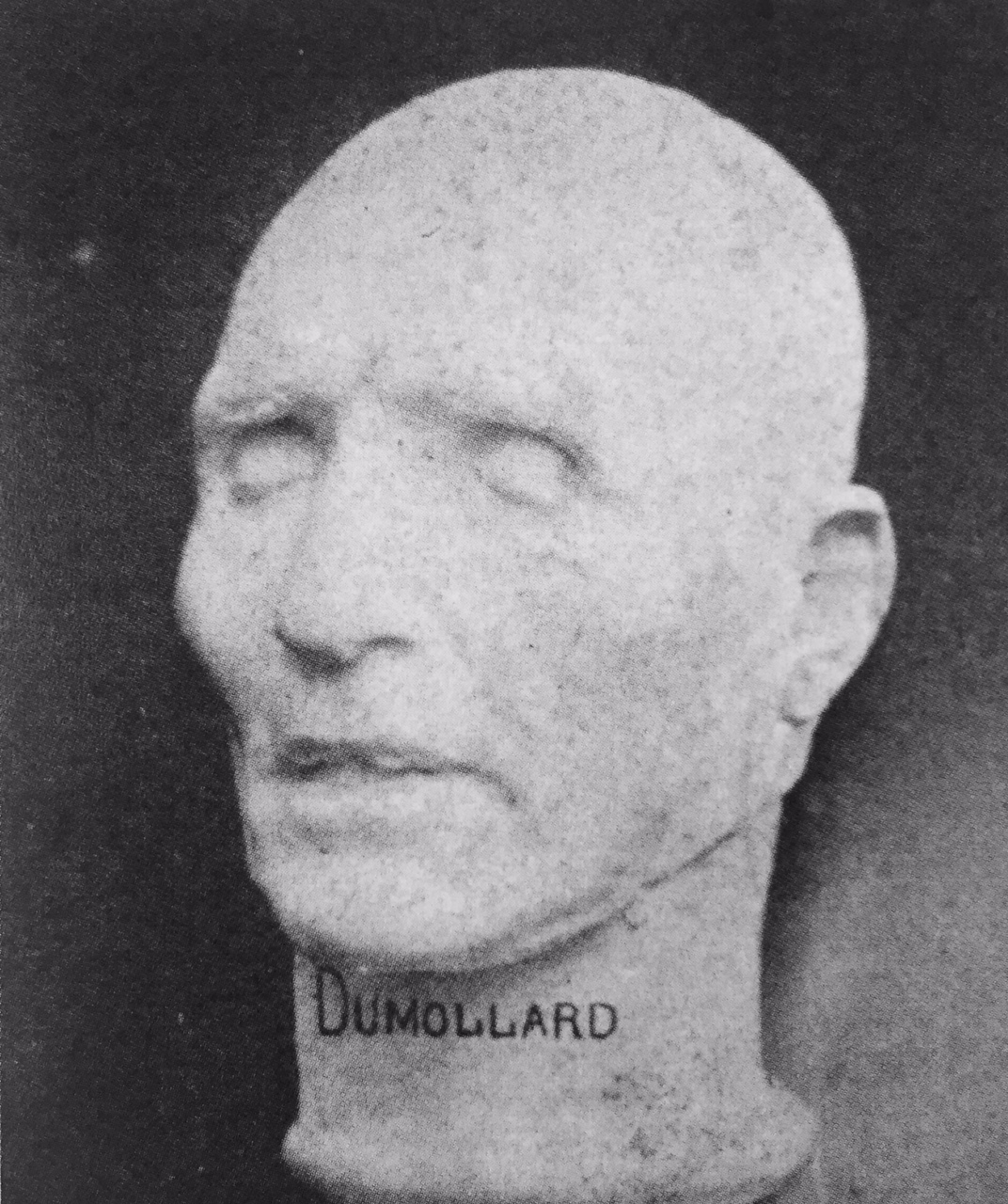
Culled from: Deadly Intent: Crime and Punishment Photographs from the Burns Archive