Today’s History-Changing Yet Truly Morbid Fact!
The great plague of Cyprian began in A.D. 250 and indisputably changed the course of history. It’s nature, however, is unknown. Cyprian, the Christian bishop of Carthage, described the symptoms as violent diarrhea and vomiting, an ulcerated sore throat, burning fever, and putrefaction or gangrene of the hands and feet. Another account tells of a very rapid spread of disease all over the body and of unassuagable thirst. Like the Athenian plague, the place of origin is said to have been Ethiopia, from which it passed to Egypt and the Roman colonies in North Africa.
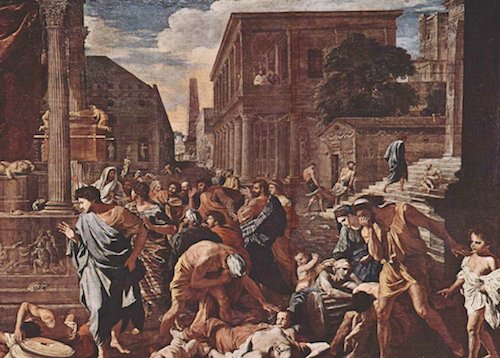
The Great Plague of Cyprian
The plague took the form of a true pandemic, spreading from Egypt in the south to Scotland in the north. It advanced with appalling speed, not only by contact with infected persons but by means of clothing or any other articles used by the sick. The first, devastating appearance was followed by a remission which ended with a renewed attack of equal virulence in the same district. There was a seasonal incidence, outbreaks starting in the autumn, lasting through winter and spring, and fading out with the coming of hot weather in the summer. Mortality is said to have been higher than in any other pestilence, the deaths of infected persons outnumbering those who survived attack. The plague of Cyprian lasted for no less than sixteen years, during which time something in the nature of a general panic developed. Thousands fled the countryside to overcrowd cities and cause fresh outbreaks; wide areas of farmland throughout Italy reverted to waste; some thought that the human race could not possibly survive. Despite warfare in Mesopotamia, on the eastern frontiers and even in Gaul, the empire managed to survive this catastrophe; but by A.D. 275 the legions had fallen back from Transylvania and the Black Forest to the Danube and the Rhine, and so dangerous did the position seem to have become that Aurelian decided to fortify the city of Rome itself.
Throughout the next three centuries, while Rome itself collapsed under the pressure of Goth and Vandal, there were recurrent outbreaks of a similar plague. Gradually the evidence becomes less exact, degenerating into a generalized story of war, pestilence and famine, as the darkness descended over Rome and her mighty empire disintegrated. The Germanic peoples crowded into Italy, Gaul, across the Pyrenees, into Spain, even into North Africa, where plague so weakened the Vandals in A.D. 480 that they were unable to resist a later invasion by Moors. There are rumors of a great mortality in Rome (467) and around Vienna in 455. Of special interest, because it may have affected the history of the Anglo-Saxons, is a visitation in Britain, apparently part of a general pandemic in 444. According to Bede, mortality was so great in Britain that barely enough healthy men survived to bury the dead, while the plague depleted the forces of the Romano-British chieftain Vortigern to such an extent that he was unable to cope with the incursions of the savage Picts and Scots. Legend relates that, after taking counsel with his chieftains, Vorigern decided to seek help from the Saxons, who in 449 arrived in Britain as mercenaries under their leaders Hengist and Horsa. It may indeed have been plague which so weakened the British that Saxon infiltration was successful.
Culled from: Disease and History
This reads more like a festival line-up to me:
THE GOTHS * VANDALS * THE MOORS
CYPRIAN * CARTHAGE * BLACK FOREST
The Savage Picts * Gaul * The Scots * The Saxons
etc.
Ghastly! – Discarded Edition
These poor guys look so tossed-aside, don’t they? As, I suspect, they were.
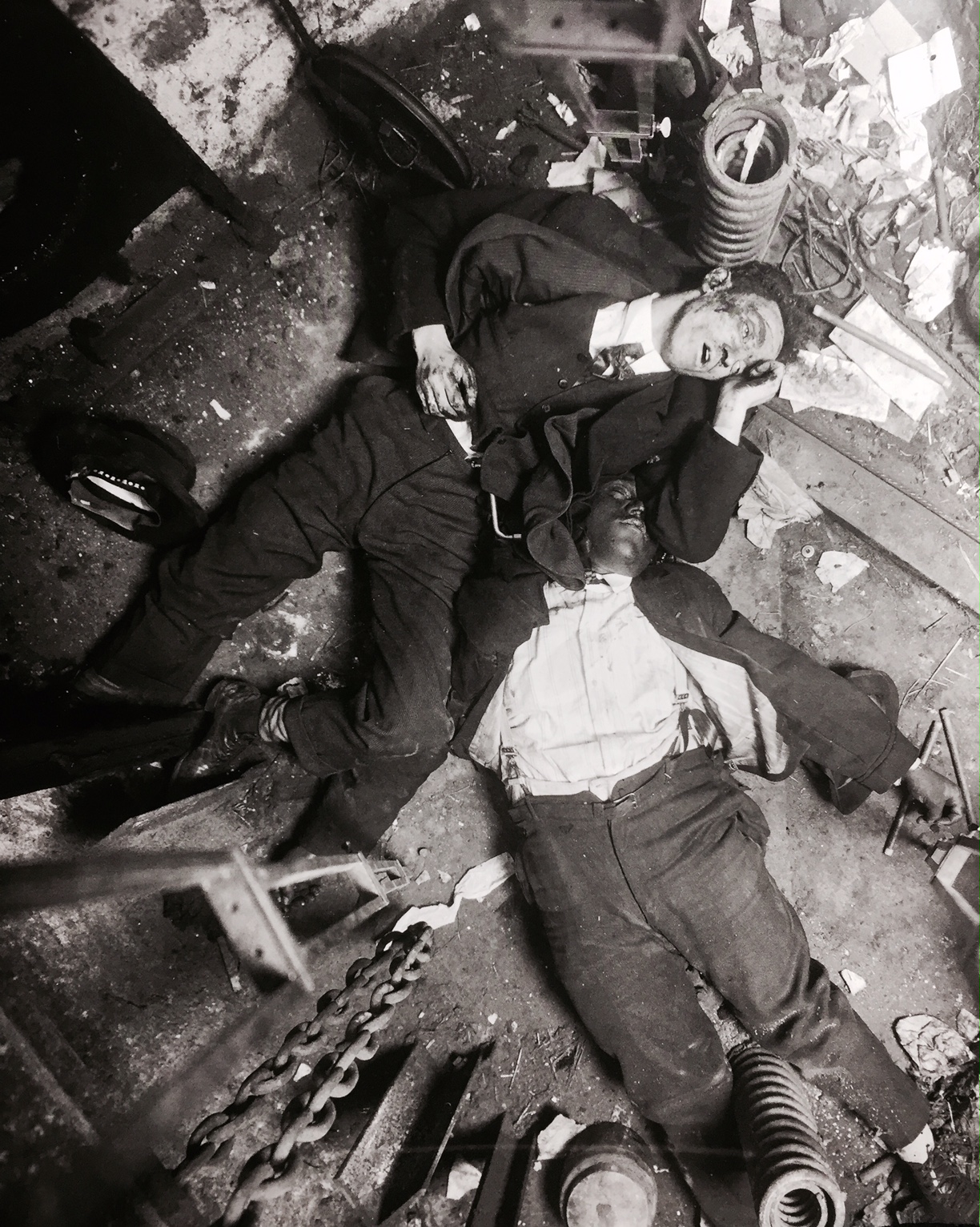
A total of 222 homicides were recorded in New York City in 1915. The eight-by-ten-inch glass-plate negative used in early police cameras captured precisely every coil, chain, scrap of newspaper, and drop of blood left at crime scenes. Police photographers were required to make images of murder victims from above; the legs of the photographers’ tripos can be seen in this image.
Culled from: Shots in the Dark: True Crime Pictures