Today’s Miserable Yet Truly Morbid Fact!
The most brutal aspect of slavery was the separation of families. This was a haunting fear which made all of the slave’s days miserable. In spite of the fact that probably a majority of the planters tried to prevent family separations in order to maintain plantation discipline, practically all of the black autobiographers were touched by the tragedy. Death occurred too frequently in the master’s house, creditors were too relentless in collecting their debts, the planter’s reserves ran out too often, and the master longed too much for expensive items for the slave to escape the clutches of the slave trader. Nothing demonstrated his powerlessness as much as the slave’s inability to prevent the forceable sale of his wife and children.
The callous attitudes frequently held by planters towards slave unions are revealed clearly in statistics: 32.4 % of the unions were dissolved by masters. An overwhelming majority of the couples were separated before they reached their sixth anniversary. The heartlessness of the planters is revealed more clearly in their separation of slaves who had lived together for decades. Several instances of this appeared in Louisiana: Hosea Bidell was separated from his mate of twenty-five years; Valentine Miner from his after thirty years; and, in the most horrifying case of them all, Lucy Robinson was separated from her mate after living with him for forty-three years.
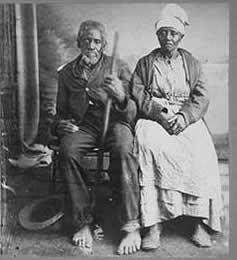
Slave Couple
Culled from: The Slave Community: Plantation Life in the Antebellum South
Face of Madness
In The Library Eclectica (the astore of which has been removed, but I will be restoring a version of it online soon), I have a book entitled The Faces of Madness: Hugh W. Diamond and the Origin of Psychiatric Photography (edited by Sander L. Gilman), 1977. It contains a wonderful collection of photographs of asylum inmates taken in the 1850’s by pioneering medical photographer and psychiatrist Dr. Hugh W. Diamond, along with engravings that were made of them and used in teaching. There are also several case studies by Dr. John Conolly (the leading British psychiatrist of the mid-nineteenth century) for some of the patients. The portraits are beautiful and sad and the text reveals the psychiatric thought processes of the mid-19th century.
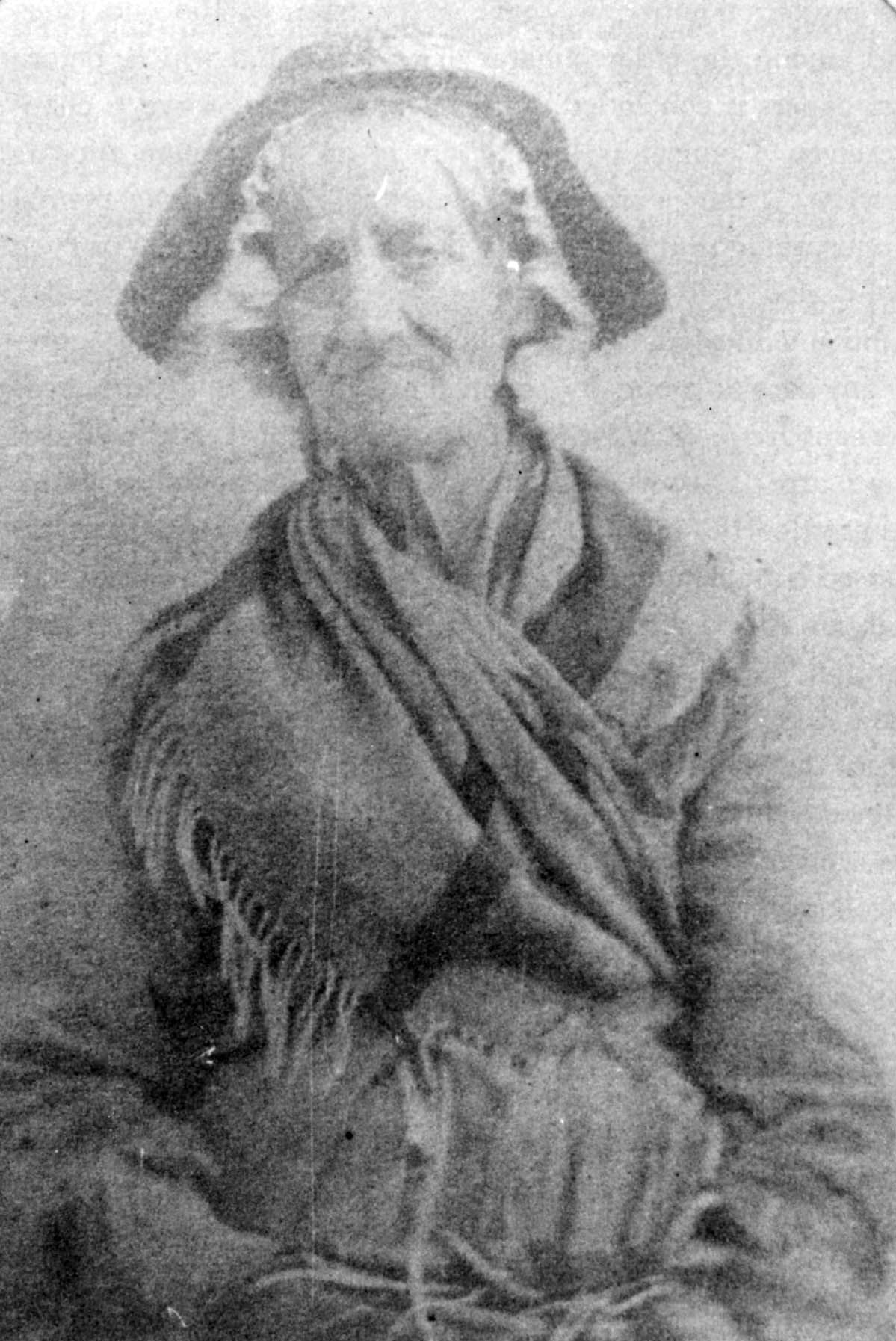
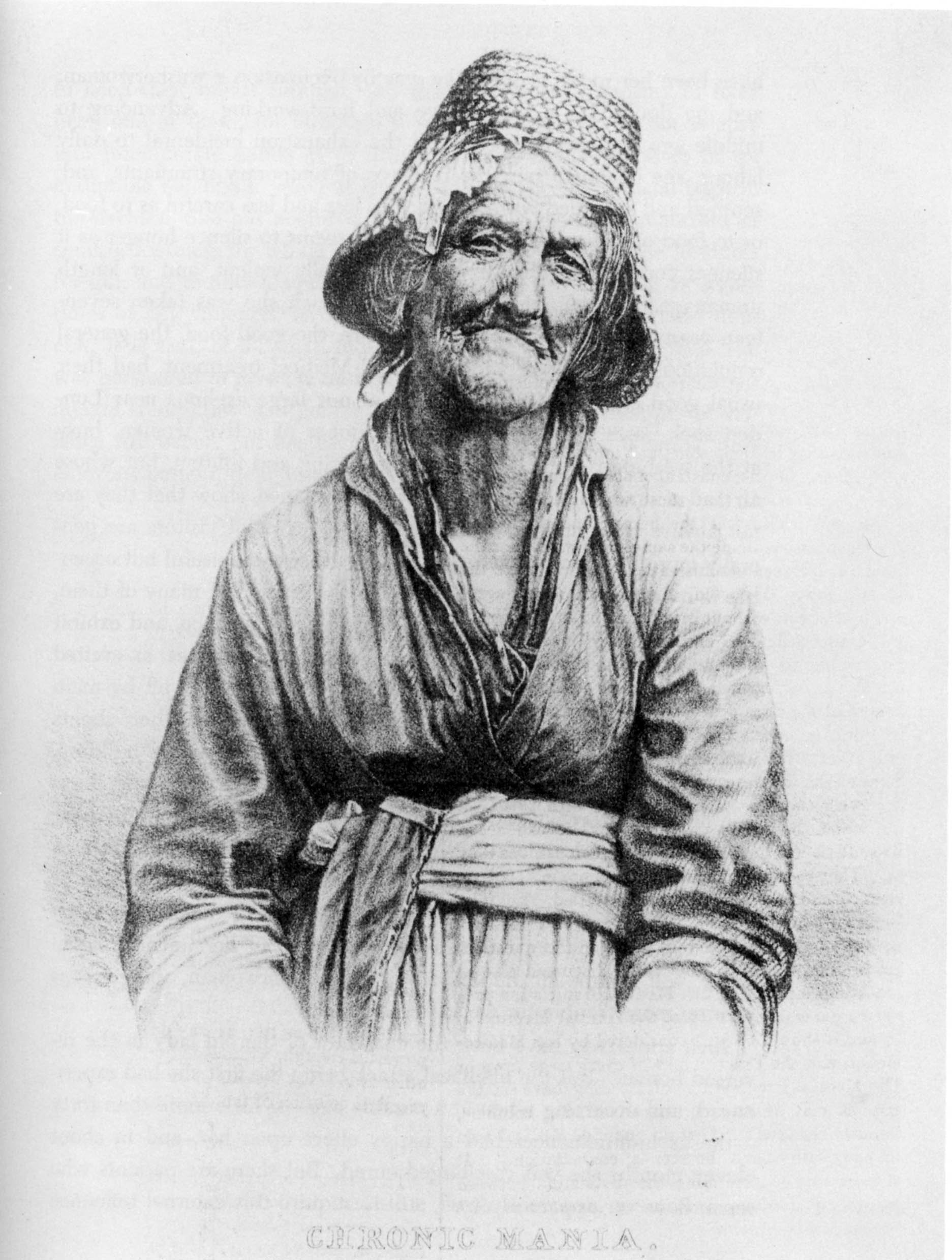
In… the present number, we have a specimen of the odd characters found among the older inmates of asylums, and which, before this series of papers is concluded, must have, as they deserve, a chapter to themselves. Comical as this picture of an old woman appears at the first view, it tells a somewhat lamentable tale of long mental vexation; supervening probably among the trails of the middle or even the youthful period of life, when carelessness, unheeded or untended, a giddy mind uneducated, wild manners and irregular habits, unrestrained by any care of protection, opened a wide way to disturbance; or when perhaps frequent want, or constant discomfort, and wild disorder, or the sharper sorrows incidental even to almost homeless classes of people, unsettled the intellect altogether. The apparently careless air, the reversed bonnet, and a sort of drollery lurking in the cheeks and chin, are largely mixed with traces both of former agitations and excitement, and also with some shadows of lost hope and joy. Activity, and a certain strength of character seem depicted in the general form of the face; in the well-formed forehead, wide and high; in the broad and pronounced chin; in the development of the superciliary region of the brow, and, perhaps, even in the nose. One feels sure that once this poor woman was of a merry mind, and danced and sang, and turned her bonnet round for very mirth. Even now there is something in the position of her head and her general attitude which betokens a consciousness of being an odd and amusing object presented to the casual visitor; but the delvings of care in the forehead and in the whole face are still many and deep: the strong descending lines form the alae nasi to the depressed corners of the mouth, speak of alternations of depression with excitement, and make the physiognomy indicative of past attacks of mania and melancholia, both of which have left their traces there.
This odd facial expression, and combination of various expressions, seem, indeed, to be the natural results of what was known to have been her mode of life. She was by occupation a washerwoman, and, no doubt, for a time active and hard-working. Advancing to middle age, and beginning to feel the exhaustion incidental to daily labour, she began to seek the resource of temporary stimulants, and, soothed and stupefied with gin, became less and less careful as to food, or to food of a good description: for gin seems to silence hunger as it silences conscience. She became occasionally violent, and at length, unmanageable except in an asylum; to which she was taken seventeen years ago. The regular life led there, the good food, the general regulations of the place, and occasional Medical treatment, had their usual good effects. In the laundries of our large asylums near London such cases abound. You see a number of active women, busy at the washing-tub, or dexterous in mangling and folding, but whose air and manner, and somewhat fiery countenance, show that they are not always so composed; and, indeed, the nerves of visitors are generally more likely to be shaken in the crowd of these useful but eccentric laundresses than elsewhere; for it is the custom of many of them, much violence of voice and gesture. Formerly the nurses, as excited as the patients, used to overpower them and carry them off by main force to the refractory ward, in their progress to which their shouts and remonstrances diffused alarm over nearly the whole building. They are now understood much better. The peculiar form and duration of such outbreaks in these hard-working women are quite familiar to the head-laundress and her assistants; and by observing a rule of very wide application and utility in managing asylums, — the rule of letting them alone, — the most obstreperous among them, after satisfying her mind by the unrestrained expression of her uncontrollable anger, will resume all the activity of the washerwoman, and perhaps give no more trouble for weeks to come.
Such appears to have been the character of the old lady in the reversed bonnet. But the maniacal attack being the first she had experienced, and occurring when at a curable age – a little more than forty – the asylum-influences had a happy effect upon her, and in about eleven months she was discharged cured. But there are patients who seem, however apparently well, still to require this external influence to keep their minds rational; and this poor woman appears to have been one of them; for although it was said that she did not relapse in intemperate habits as to drinking, she was not found to be an endurable neighbor when at large, and was very soon taken back to the asylum. She has acquired the habit of taking large quantities of snuff, a fondness for which appeared to have superseded the fondness for gin; and to obtain snuff she was capable of any cunning, or sometimes of any violence. Even the habit of snuff-taking, the most difficult, it is said, of all small indulgences to be wholly abandoned, she was persuaded to give up, and with very great advantage as regarded mental tranquility and general behavior. Now and then fits of violence still occur; but her usual state is that of an odd, cunning, mischievous patient, delighting in eccentricity of dress.