Today’s Lamentable Yet Truly Morbid Fact!
After Smallpox had decimated the Aztec empire in Mexico it spread to Guatemala and continued southward, reaching the Incan lands (present-day Peru) around 1525. There the disease wreaked similar havoc, killing the emperor Huayna Capac and most of his family, including the son he had designated as his heir, and other senior military commanders. An ensuing succession struggle divided the Incan empire into two factions that waged a bloody civil war. By the time Francisco Pizarro arrived in Cuzco in 1532 with 67 horsemen and 110 footsoldiers, they met no serious military resistance. In 1563, Portuguese colonizers brought smallpox to Brazil, where it wiped out entire indigenous tribes.
Importations of smallpox also decimated the native peoples of North America, facilitating the European colonization of the continent. In 1616-19, a smallpox epidemic cut down almost nine-tenths of the Indian population int he Massachusetts Bay area shortly before the arrival of the Pilgrim settlers in 1620. Pilgrim leader John Winthrop attributed the epidemic to an act of God, “The natives, they are near all dead of the smallpox,” he wrote, “so as the Lord hath cleared our title to what we possess.” [I hate Pilgrims – DeSpair]
In 1634, William Bradford, the governor of the Plymouth Colony, vividly described an outbreak of smallpox among the Connecticut Indians. The victims, he reported, “fall into a a lamentable condition, as they lye on their hard matts, ye poxe breaking and mattering, and running one into another, their skin cleaving (by reason therof) to the matts they lye on; when they turn them, a whole side will flea off at once… and they will be all of a gore blood, most fearful to behold; and then being very sore, what with could and other distempers, they dye like rotten sheep.” According to one estimate, the native population of North and South America, which had numbered roughly 72 million when Columbus landed in 1492, had been diminished by warfare and disease to about 600,000 in 1800, a staggering decline.
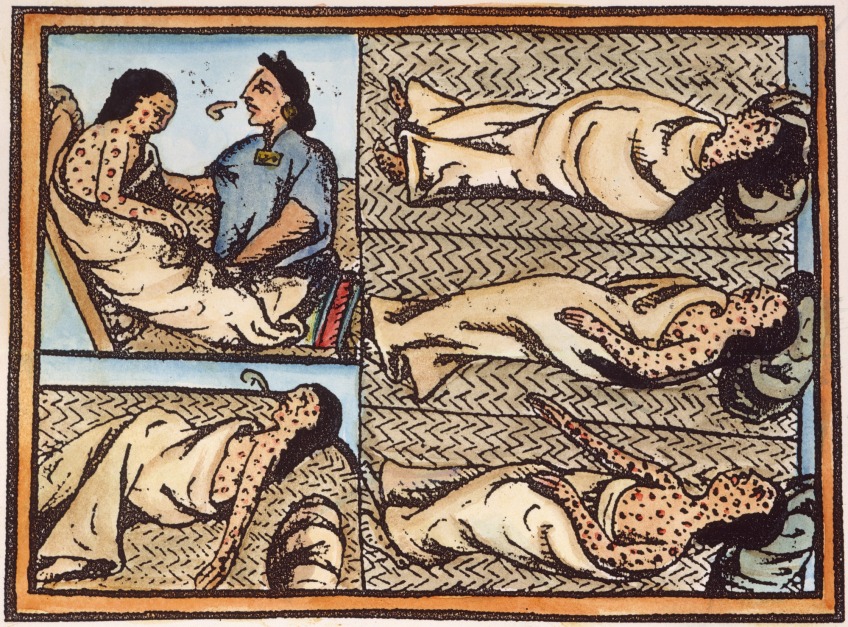
Culled from: Scourge: The Once and Future Threat of Smallpox
Tragedy Du Jour
June 26, 1960
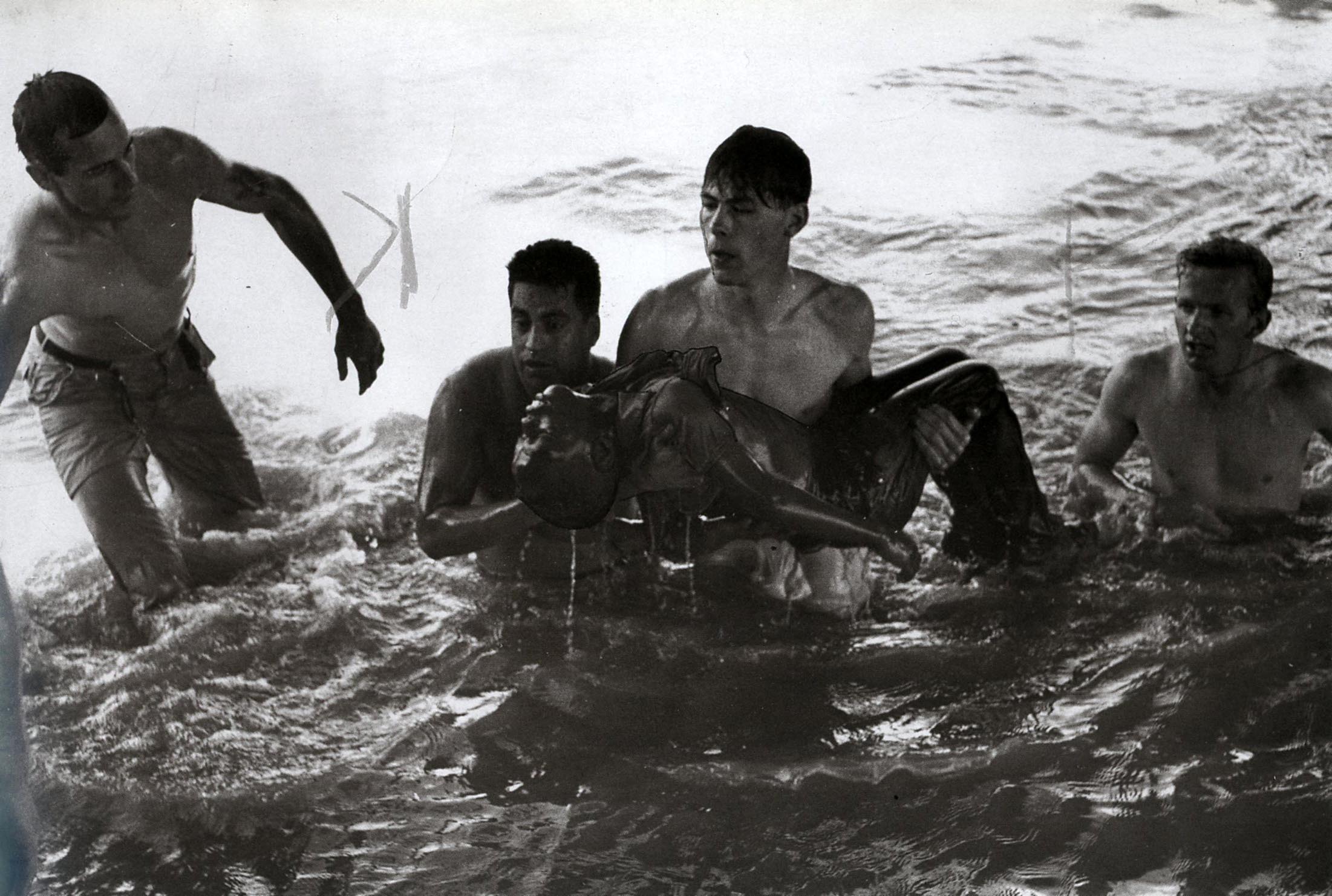
On a warm June evening in 1960 a tragedy played itself out in St. Paul when eleven-year-old James Green and his nine-year-old brother, Henry, built a makeshift raft and went navigating in a pond near their home. The pond was actually a ten-foot-deep, rain-filled pit beneath a bridge being constructed along the Interstate 35E corridor at Arlington Avenue. Another brother, aged seven, later told police that a boy standing on the uncompleted bridge threw a firecracker down toward the raft. “They [the two brothers] got scared and fell off,” the younger brother reported. James and Henry never made it back to their raft, disappearing in the murky waters.
A policeman arrived and was about to go in after the boys when four volunteers offered to help. The men dived into the pit and are shown here bringing one of the brothers back to the shore. The other boy was quickly found as well, but both were pronounced dead at the scene. Residents of the area were angered by the deaths, according to the Pioneer Press, and demanded that the pit be drained “before others drown”.
Culled from: Strange Days, Dangerous Nights: Photos from the Speed Graphic Era