Today’s Arbitrarily Doomed Yet Truly Morbid Fact!
For the first year of the Civil War, treatment of the wounded was haphazard at best. It was generally up to the wounded to find their way to an aid station or hospital. Those who could not walk often lay on the battlefield for several days. Many did not survive.
That changed for the Union army in June, 1862 when Jonathan Letterman was named medical director. An 1849 graduate of Jefferson Medical College in Philadelphia, Letterman introduced many significant innovations that immediately improved conditions for the wounded. Taking over a department that was in disarray, Letterman created a system that utilized three areas of treatment. In the first, field dressing stations were established on or immediately adjacent to the battlefield. Here, the wounded received basic treatment. No operations were performed at these primary sites. The doctor there simply stabilized and dressed the wound, provided whiskey to prevent shock, or administered morphine for pain, if it was available. The physician then sent the less seriously wounded back to the battle. Concurrently, other attendants gathered the more seriously injured to an ambulance collecting point for removal by wheeled conveyance to the second, more serious level of treatment: the divisional field hospitals.
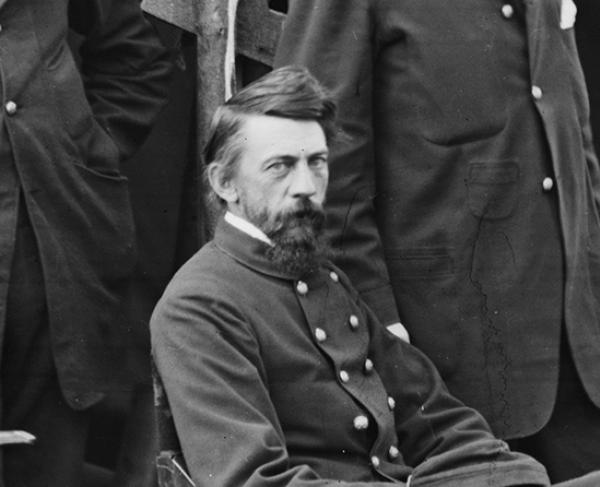
Dr. Letterman
This second level of Letterman’s system required each division of the army to set up field hospitals in the rear of each unit before battle, away from the fighting but close enough for ambulances to reach quickly. The more seriously wounded were transferred from the dressing station to these field hospitals for further treatment. Three surgeons and three medical officers were assigned to each divisional hospital. These facilities, usually a home or a barn not far from the battlefield but more protected than a dressing station, provided emergency surgery and amputations. Finally, those needing long-term treatment were sent from the field hospitals to larger facilities located some distance from the battlefield.
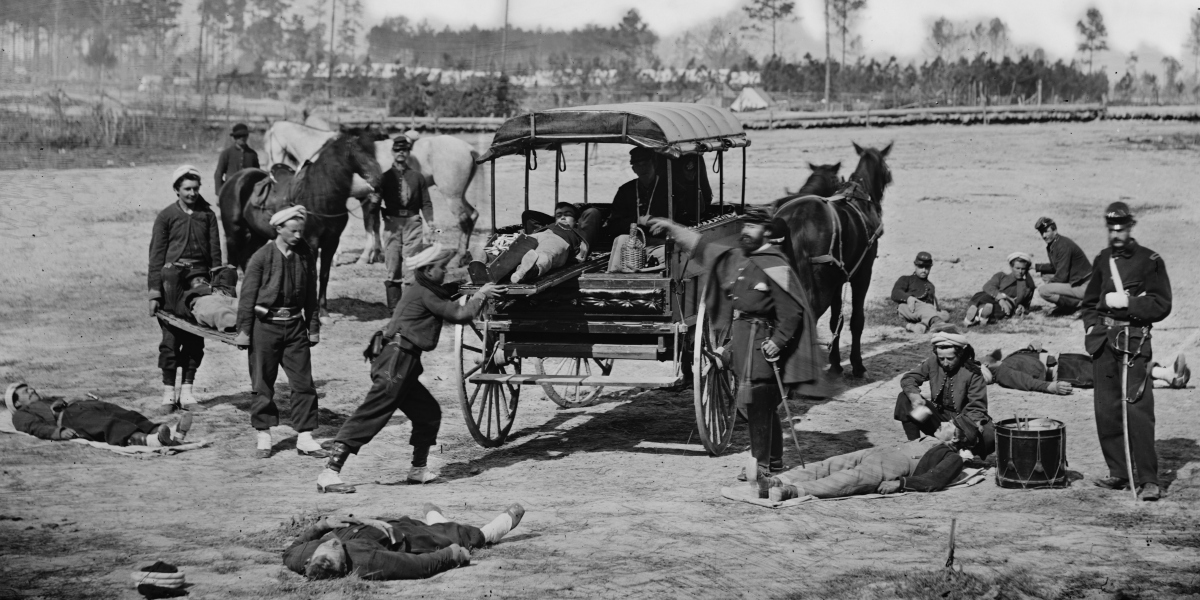
Ambulance crew demonstrating removal of wounded.
Letterman’s plan also established a three-tiered organized triage plan. Priority was given to those whose wounds were deemed serious but survivable. Those with lesser wounds were only treated after the serious wounds had been addressed. The lowest priority was given to those who had suffered wounds so serious that their chances of survival were considered unlikely. Head, chest, or abdominal wounds were generally considered to be mortal, and the wounded were made comfortable and left alone to either recover or die.
While this resulted in better treatment for those of the first two categories, it relied on the judgment of the attending physicians, many of whom had never seen a gunshot wound before. Occasionally, it arbitrarily doomed some who might otherwise survive with treatment, or caused needless pain for those incorrectly triaged. One of the latter was Private John Chase of the Fifth Maine Battery, who was wounded an unimaginable forty-eight times when a case shot prematurely exploded as he was loading it into a cannon. Chase’s right arm was shattered and his left eye blown out. He was taken to the farm of Isaac Lightner and given a cursory triage. Not expected to survive, he was placed outside the barn with no protection from the elements. Still alive after three days, he was given minimal treatment and moved inside the barn, where he lay for several more days in agony before being moved inside the house, where he stayed for another week, still not expected to survive. He was eventually relocated to the Lutheran Seminary, where he finally received more advanced treatment. He survived his wounds and was awarded the Medal of Honor in 1888 for his heroism at Chancellorsville just two months before he was wounded at Gettysburg.
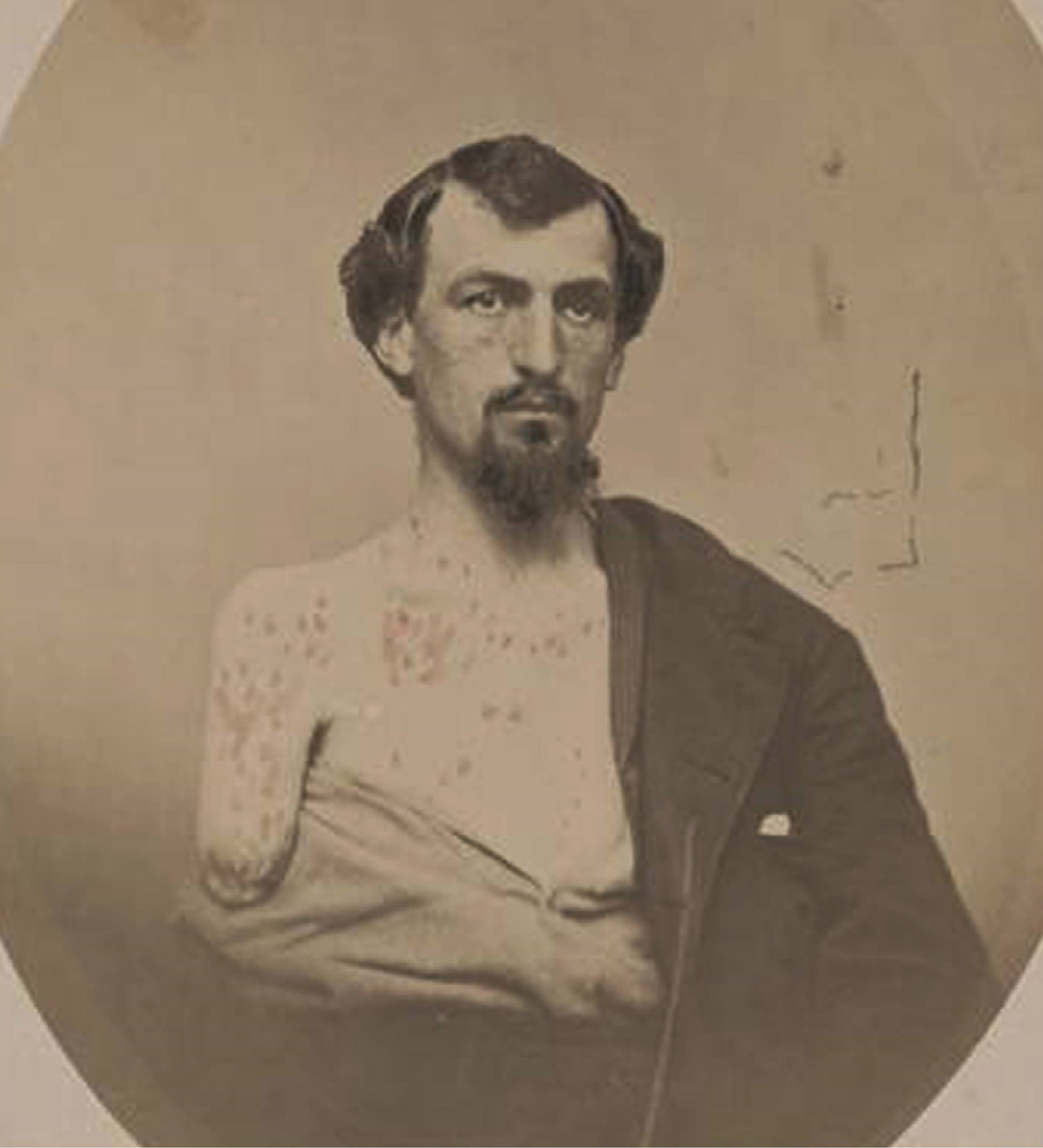
Private John Chase – Never Say Die!
Culled from: Bullets and Bandages: The Aid Stations and Field Hospitals at Gettysburg
|
|

Post-Mortem Portrait Du Jour!
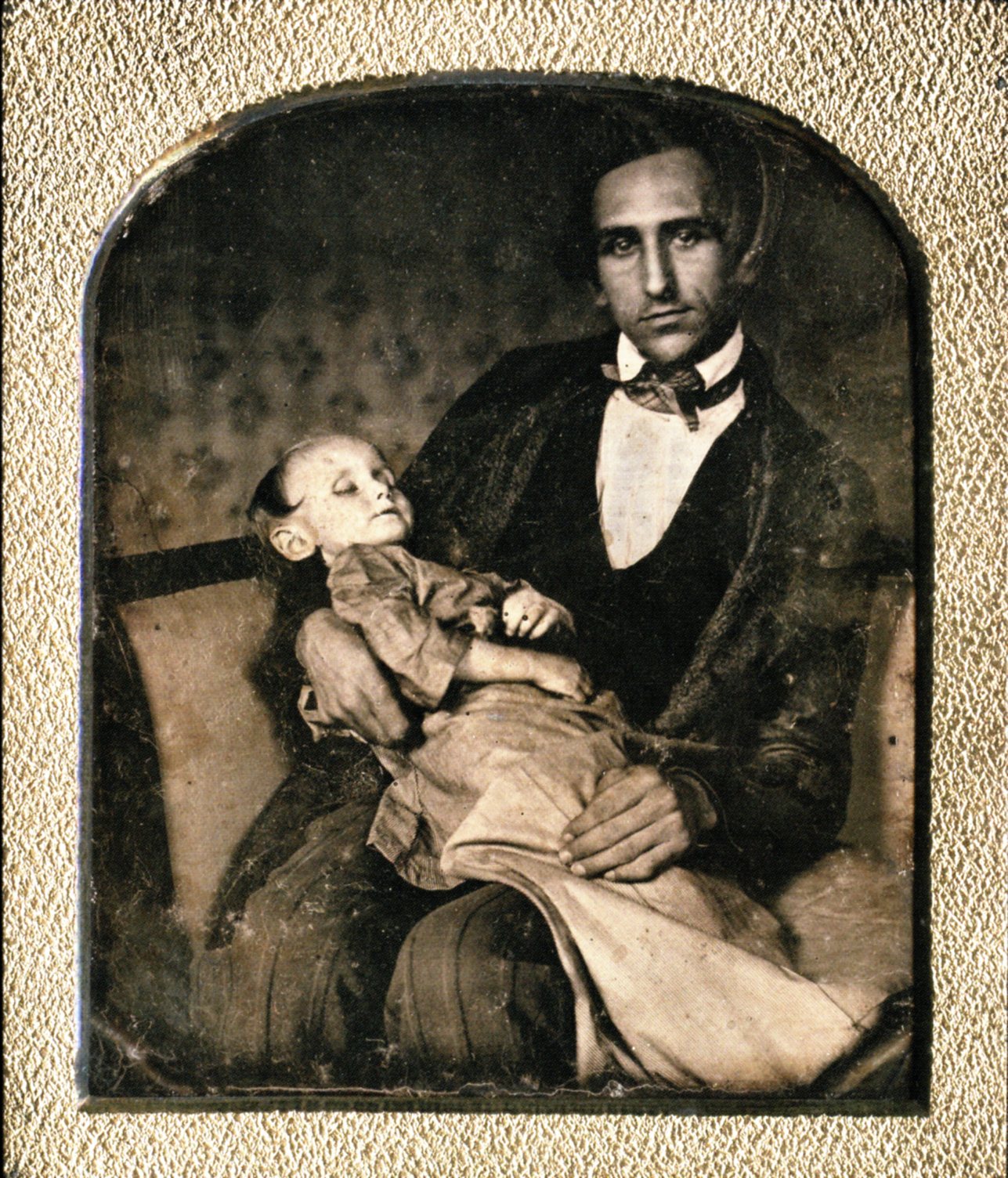
Father and Son
circa 1844 – sixth-plate daguerreotype – 3.75″ x 3.25″
A young father with his deceased son across his lap. The boy’s waxed curl was frequently seen in early post-mortem photography of children.
Culled from: Beyond the Dark Veil: Post Mortem & Mourning Photography