I know it must seem like I’m obsessed with the Civil War these days, but I use a random method of picking the books I use for facts and Civil War books just keep popping up! In any event, I hope you enjoy…
Today’s Handsome, Charismatic Yet Truly Morbid Fact!
The morning of May 24, 1861, came early in those pre-daylight savings times, about 4:45 a.m. A short, older man walked the dirt streets of Mechanicville, New York, to the local New York and Western Union telegraph office. Mr. Ephraim Ellsworth was alone, his feet making soft indentions on the new spring grass that grew by the side of the road. His wife was still in bed. Phebe suffered from Parkinson’s disease, worse now than it had ever been.
Their son, Elmer, was supposed to be in a battle today. At least they thought it was a battle – no one was sure. All they really knew was that Elmer, at the head of his brigade of New York Zouave firefighters, was to cross the Potomac River from Washington, D.C., and enter the Virginia town of Alexandria. The crossing was at night, under a full moon. Whether that augured well or poorly was still to be seen. The whole Federal army was to be in on the movement, but more specific news had been scarce this far away from the capital.
Mr. Ellsworth sat, waiting. The telegraph whirred and clicked throughout the early morning, then one of the operators suddenly gasped and burst into tears. He looked up at Mr. Ellsworth, rose, and walked to him, holding a piece of paper. The operator’s hand shook as he handed the Western Union onionskin to the waiting father. Mr. Ellsworth looked at the words, not trusting himself to read or understand their message. By the second reading, however, the communication was clear: their son, Elmer, was dead.
Shocked and shaken, Ephraim Ellsworth walked slowly back to the low-browed cottage. Now what? First he must tell Phebe that their handsome, charismatic 24-year-old son was gone – forever gone – from their lives. His merry hazel eyes and authoritative voice were stilled, his idealistic letters silenced. His high-flown dreams of a career commanding men would never be a reality. A shotgun shell extinguished much of the happiness of their lives. How? Where? Why?
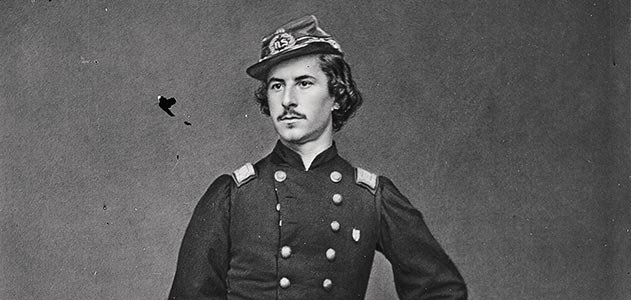
Dashing Colonel Ellsworth
Ellsworth had been killed in Alexandria, Virginia, that morning – the victim of a fight but not of battle. He and a small group of soldiers and reporters were coming down a flight of stairs from the roof of the Marshall House hotel, where they had just removed a large Confederate flag belonging to the hotel’s proprietor, James Jackson. Ellsworth carried the flag. Jackson shot him through the heart with one barrel of a shotgun. Before Jackson was able to discharge the second barrel, Cpl. Francis Brownell deflected the weapon and discharged his own, killing Jackson immediately.
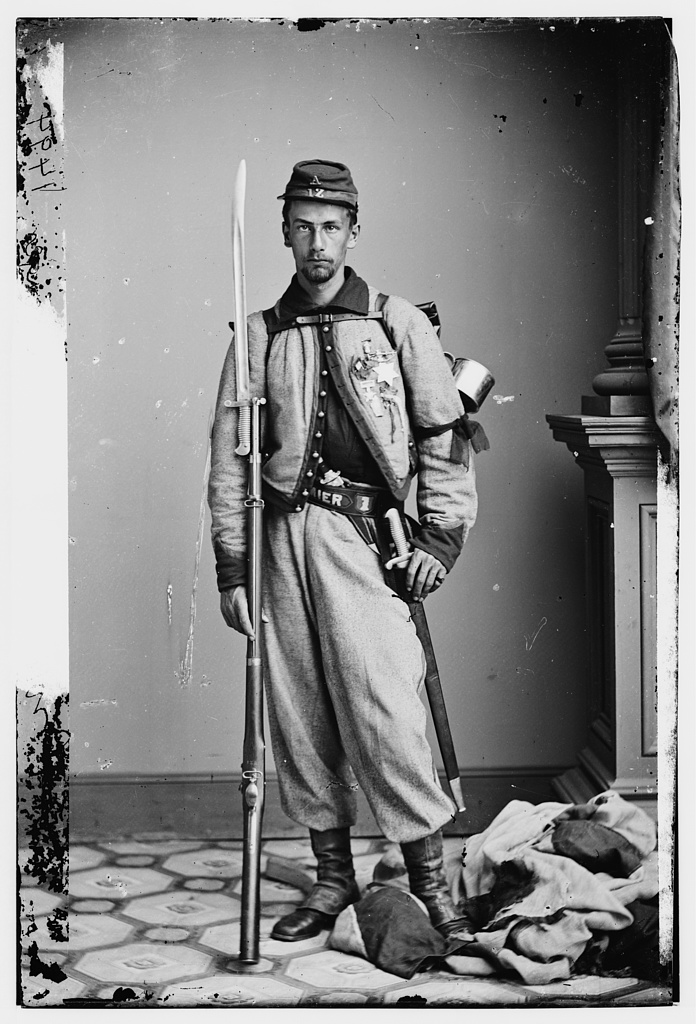
Cpl. Francis Brownell and the Flag Ellsworth Snatched
Ephraim and Phebe Ellsworth would not mourn their son’s death alone. The entire North would support them in their sorrow, as the loss of Ellsworth was a national tragedy. Their son was the first Union officer to die in the American Civil War. Flags were lowered to half-staff in Washington, D.C., to lie in state in the White House. Lincoln himself wrote to the Ellsworths, in solidarity with their sadness. The funeral train, draped with black and flying the national flag, passed from Washington to New York City, then up the Hudson River. Eight men from Colonel Ellsworth’s regiment, the 11th New York First Zouaves, accompanied the remains and comforted the bereaved parents. They stayed with their commander across upstate New York, where he was interred in Hudson View Cemetery.
No one realized at the time that within a few weeks, such a burial would be a near impossibility. Telegrams announcing the deaths of other sons, North and South, would become all too common. Many deaths occurred in which no one could be notified. Soldier after soldiers was buried in an anonymous trench or left to rot somewhere on the battlefield. More dead piled up – in mass graves, in unknown places, at the bottoms of creeks, rivers, and oceans, burned to death in the Wilderness, starved, frozen, dead by disease. Cannon fire broke bodies into molecules, never to be recovered. Mass graves contained soldiers from both sides of the conflict, and there was no DNA to help identify anyone. Hospital graveyards grew enormous, and new cemeteries were created in both the North and South. To a single family, only one death was mourned. The national family eventually mourned the loss of more than 750,000 men.
Culled from: The Aftermath of Battle: The Burial of the Civil War Dead
Probable Exciting Causes!
Here’s a fascinating list from the Northern Michigan Asylum in Traverse City, Michigan, circa 1886.
“A glance at the table of probable exciting causes will show that certain habits once formed are most disastrous to the ‘healthy evolution of the metal faculties.’ The period of life between 25 and 45 brings its special difficulties and temptations. ‘The weakly principled and ill-balanced fall victims in the combat between passion and principle, and among the various deplorable issues an attack of maniacal excitement is one.’ Business activity is at its height, and the struggle for competency with its successes and failures, its pleasures and anxieties, each year cause some to fall by the wayside. Beyond the age of 50 loss of family and property, and the impairment of physiological adjustment between nerve stimulations and nerve nutrition, may lead to dethronement of reason.”
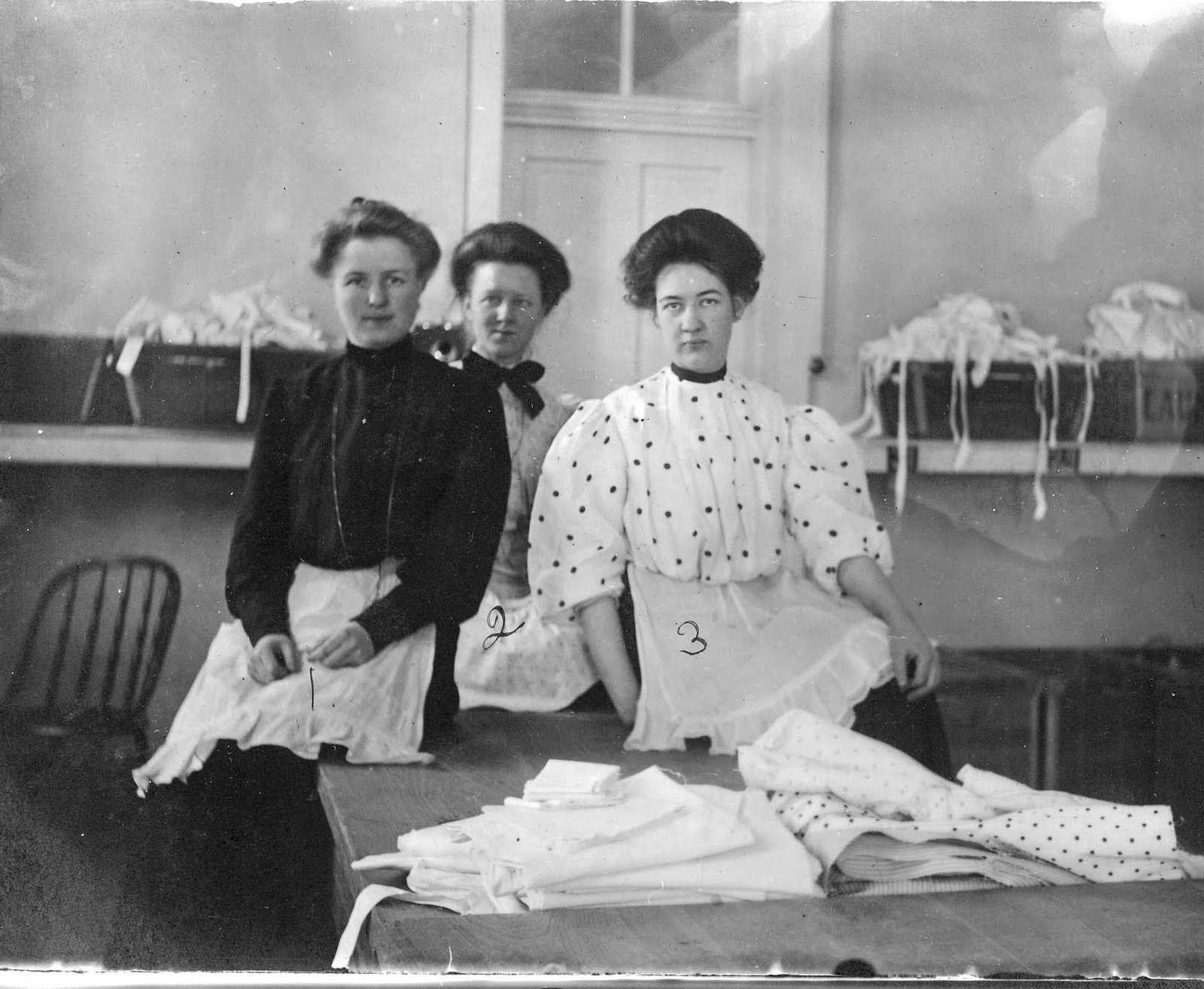
Asylum inmates of unknown excitement
Probable Exciting Causes
Abuse and cruelty: Male (0), Female (1) = 1 Total
Bodily injury: Male (0), Female (1) = 1 Total
Brain disease (apoplexy): Male (2) , Female (2) = 4 Total
Business reverses: Male (5), Famale (0) = 5 Total
Congenital defect: Male (4), Female (3) = 7 Total
Disappointed affections: Male (2), Female (1) = 3 Total
Dissolute life: Male (1), Female (0) = 1 Total
Domestic infelicity: Male (3), Female (17) = 20 Total
Epilepsy: Male (20), Female (16) = 36 Total
Eruptive Fever: Male (0), Female (3) = 3 Total
Fright: Male (1), Female (5) = 6 Total
Grief, care, and anxiety: Male (2), Female (17) = 19 Total
Ill health: Male (17), Female (25) = 42 Total
Insolation: Male (4), Female (0) = 4 Total
Intemperance: Male (32), Female (1) = 33 Total
Nostalgia: Male (1), Female (0) = 1 Total
Old age: Male (5), Female (4) = 9 Total
Overwork and overstudy: Male (2), Female (3) = 5 Total
Popular errors and dilusions [sic]: Male (1), Female (0) = 1 Total
Previous attacks: Male (2), Female (1) = 3 Total
Prolonged lactation: Male (0), Female (1) = 1 Total
Pubescence: Male (0), Female (2) = 2 Total
Puerperal: Male (0), Female (43) = 43 Total
Religious excitement: Male (3), Female (2) = 5 Total
Seduction: Male (0), Female (3) = 3 Total
Sexual excesses: Male (2), Female (0) = 2 Total
Shock: Male (1), Female (1) = 2 Total
Syphilis: Male (8), Female (3) = 11 Total
Traumatism (head injury): Male (5), Female (0) = 5 Total
Typhoid fever: Male (1), Female (1) = 2 Total
Vicious habits and indulgences: Male (55), Female (4) = 59
Want and privation (poverty): Male (1), Female (5) = 6 Total
Unascertained: Male (77), Female (70) = 147 Total
Total: 492 Male (257), Female (235)
So what would you be in for? For me, it would most certainly be “nostalgia” with a dose of “intemperance”.
Culled from: Angels in the Architecture: A Photographic Elegy to an American Asylum
The more things change, the more they stay the same. There are still people willing to kill to protect that hateful confederate flag.