Today’s Dangerous Yet Truly Morbid Fact!
To address the problem of keeping the wounded lying on the battlefield until a battle was over, Jonathan Letterman, Medical Director for the Union Army during the Civil War, established an ambulance corps for the first time. Before Letterman’s plan was introduced, musicians and convalescents were often pressed into service as stretcher bearers and ambulance drivers, under command of the Quartermaster Department. Letterman took that responsibility away from the Quartermaster Department and instituted trained attendants. He also assigned one four-horse ambulance and two two-horse ambulances to each regiment, with three privates assigned to specific duties for each ambulance. Brigade officers were assigned to oversee the ambulance service, and brigades were assigned their own medicine and supply wagons.
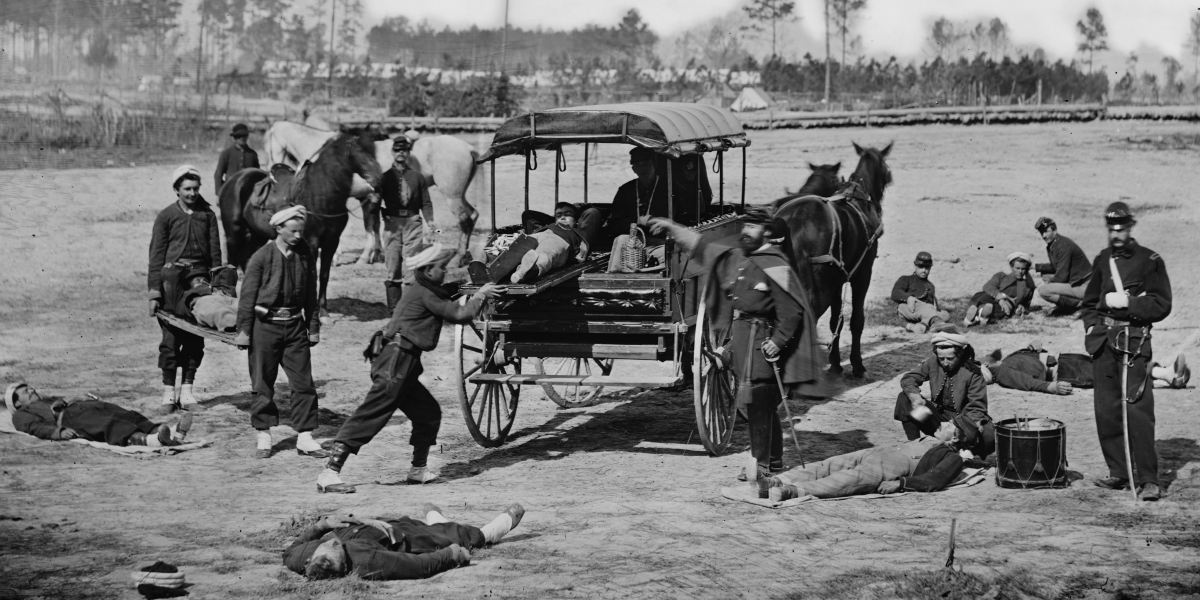
Zouave ambulance crew demonstrating removal of wounded
Divisional ambulance trains were organized with forty to fifty ambulances and ten to fifteen supply wagons per train. Each ambulance had four stretchers and hand litters, plus a supply of bandages, lint, milk, and concentrated beef soup. These supplies were to be used in an emergency only.
Those assigned to the Ambulance Corps had the responsibility of removing the wounded from the battlefield as quickly as possible, no longer waiting until the battle was over, as had been the practice. This undoubtedly saved many lives, but proved to be dangerous duty for the men of the corps. Enemy troops fired indiscriminately at anyone in the line of fire, combatants and noncombatants alike. At Gettysburg one officer and four privates were killed and seventeen wounded while in the discharge of their ambulance duties. A number of horses were killed and wounded, and some ambulances damaged.
Culled from: Bullets and Bandages
Post-Mortem Photo Du Jour!
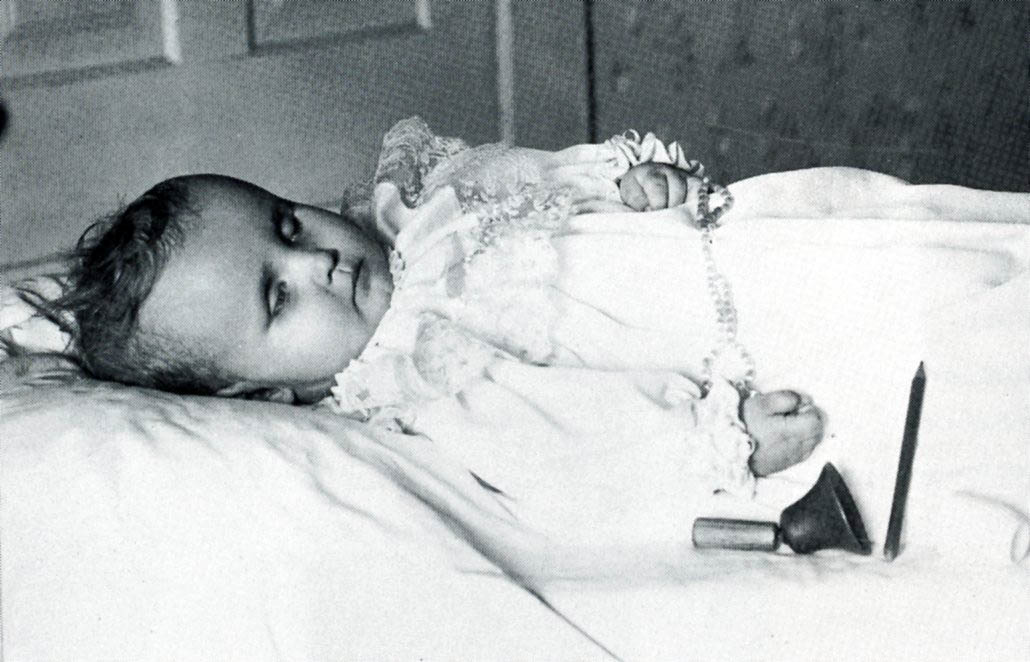
Postmortem photograph of unknown child with rosary beads, a bell, and pencil.
Rogan, ca. 1890s. Gelatin silver print on cardboard mount, cabinet card.
Culled from: Secure the Shadow: Death and Photography in America