Today’s Vaporized Yet Truly Morbid Fact!
At exactly 8:15:17 a.m. on August 6, 1945, the ‘Little Boy’ was released from the bomb bay of the Enola Gay as it passed over Hiroshima. Its target was the T-shaped Aioi Bridge. The following is an account of what happened at or near ground zero.
Facing the T-shape of the Aioi Bridge, the teachers’ room of the Honkawa Elementary School was suddenly bathed in blinding bluish light. It was eight seconds past 8:16 a.m. in downtown Hiroshima. Teacher Katsuko Horibe heard nothing. The window near her exploded. Glass bombarded her scalp, forehead, and left arm, but she felt nothing. She flung herself under a desk but did not bother to protect her head as everybody has been taught in air-raid drills: hands shielding the eyes, thumbs plugged into the ears. Whatever was happening was evidently already over. It was silent and dark as night.
A teachers’ meeting had been scheduled for 8:30, but since commuting schedules had become unreliable Miss Horibe had taken an early street car and been the first to arrive. All ten of her colleagues died on their way to work.
Innumerable other accidents of time and place spared and took lives in Hiroshima on that hot and muggy morning, beginning with the accidental course of the Enola Gay‘s bomb itself. It had missed the Aioi Bridge by 800 feet and exploded instead 1850 feet above Dr. Shima’s hospital, just 650 feet southeast of Miss Horibe’s school. The Shima hospital and all its patients were vaporized, but its owner, the fatalistic Dr. Shima, kept pedaling unscathed on his bicycle. He was between house calls in the suburbs.
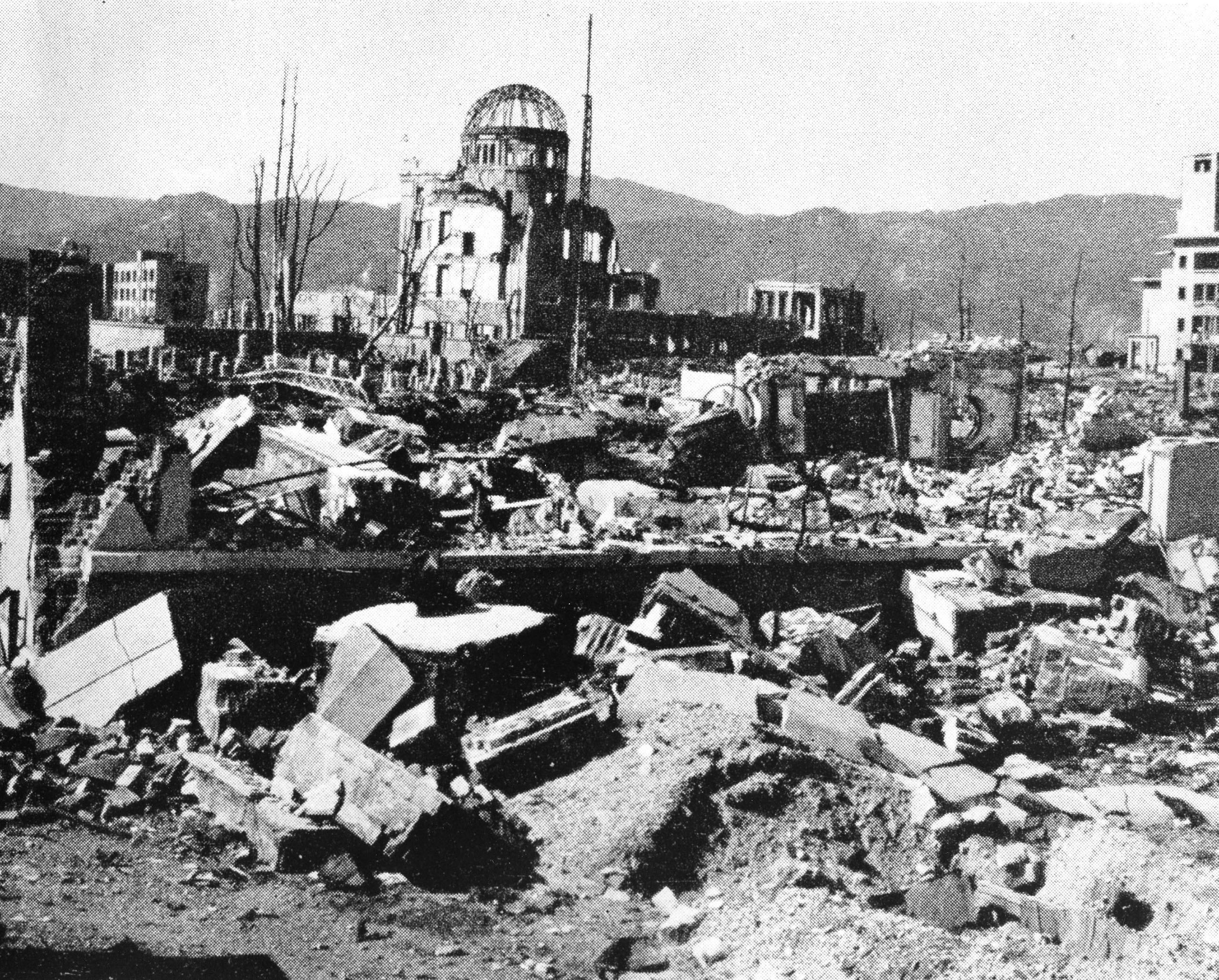
Ruins of the Shima Hospital, with the famous Prefectural Industrial Promotion Hall (preserved as part of Peace Memorial Park), in the background
The “hypocenter” was in the courtyard of his hospital. It was ground zero, the hub of the nuclear death wheel, the point on the ground directly underneath the explosion, the focus of Hiroshima’s new universe. Eighty-eight percent of the people within a radius of 1500 feet died instantly or later on that day. Most others within the circle perished in the following weeks or months. All who were in Hiroshima on August 6 would come to know precisely how far fate had placed them from the hypocenter at 8:16. And everyone would learn at least one new English word: “hypocenter,” the place from which all life and death was measured.
The handful of survivors who, like Miss Horibe, escaped almost automatic death near the hypocenter owed their lives to luck and to the sturdiness of the very few structures not make of wood. The stone railings of the Aioi Bridge tumbled like bowling pins into the river and segments of its concrete pavement were curled like ocean waves, but somehow the 400-foot bridge survived. So did the shell of Miss Horibe’s long, three-story Honkawa School; it was built of reinforced concrete and surrounded by a thick brick wall. its interior was gutted, along with all of central Hirioshima for 1.2 miles and, in many sections, far beyond. In less than half a second, heat rays with temperatures of more than 3000 degrees Celsius caused primary burn injuries within two miles of the hypocenter. Almost 130,000 of Hiroshima’s 350,000 people would die.
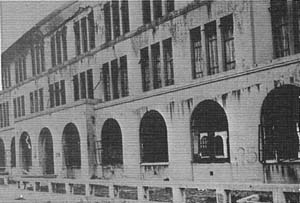
Honkawa Elementary School after the bombing. A small part of it was preserved as a Peace Museum.
Culled from: Day One: Before Hiroshima and After
Torture Method Du Jour!
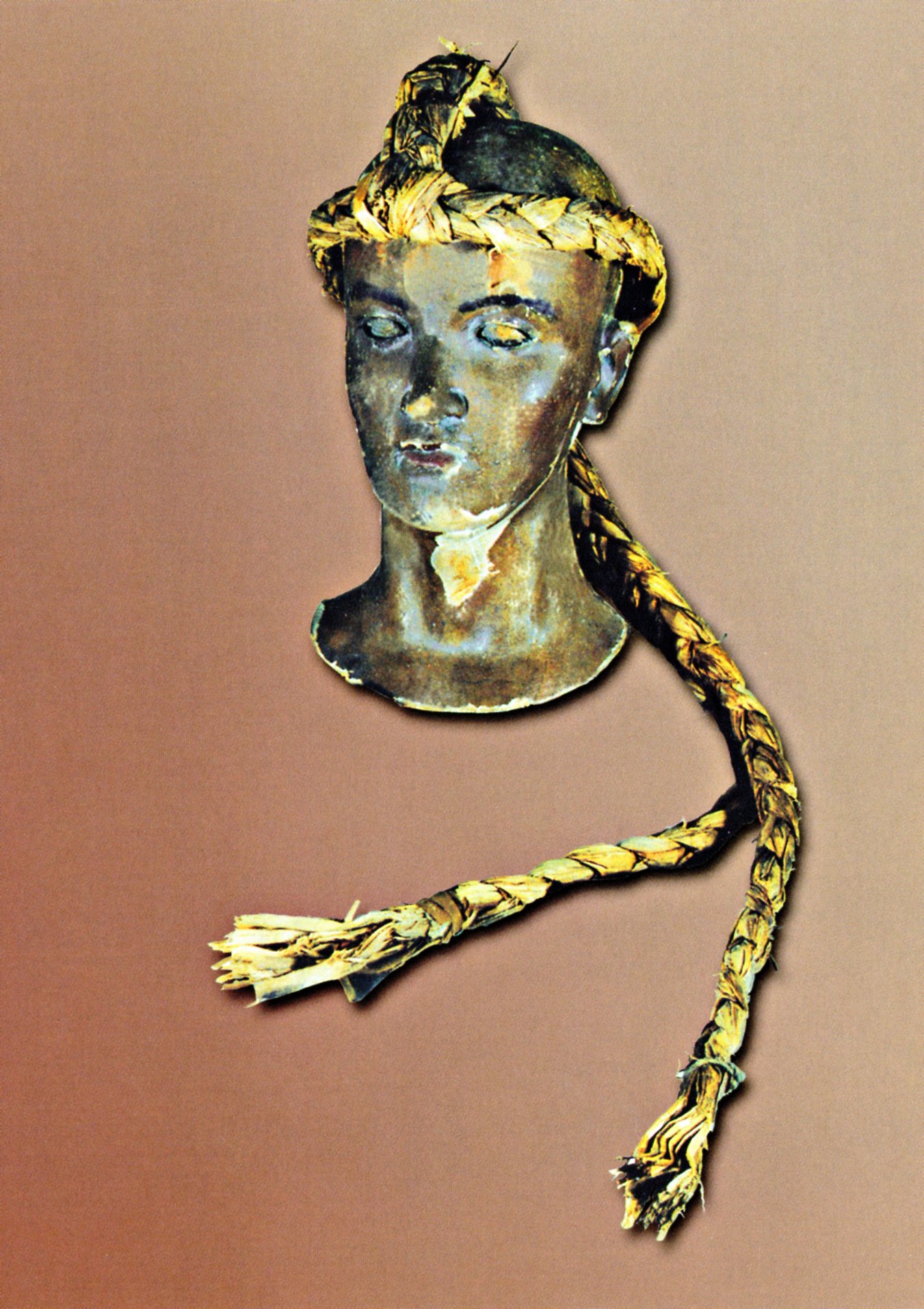
STRAW BRAID
The braid, being very light, did not inflict any physical pain. It was put on a woman’s head, mainly young ones, to punish them for crimes regarding honor, short of adultery, which was considered more serious and deserved a harsher form of torture.
This instrument was mainly inflicted for small sins, such as a shameless neckline, being the object of gossip, or even for simply moving in a way that was considered enticing to men.
Culled from: Torture – Inquisition – Death Penalty
Re the “Straw Braid”: what country was this? (Japan? China?)