Today’s Lime-Sprinkled Yet Truly Morbid Fact!
Every detective worth his salt has a case that haunts him for the rest of his life. For NYPD Detective Ernest Van Wagner, that case began on Friday, June 18, 1909. While at the West Forty-Seventh Street stationhouse checking precinct records, he observed an elderly Chinese man in traditional black garb shuffle into the stationhouse seeking help. The man called himself Sun Leung and told the desk lieutenant in broken English, “Me tink my cousin him dead in room. Wanta cop to get him out.”
In itself, the request was not unusual. In the early 1900s most New Yorkers died at home, but very few Chinese resided so far north of Chinatown. The lieutenant, however, did not ask any questions. Instead he roused a patrolman off reserve and told him, “Go with this Chink. He’s got a dead one in his joint.”
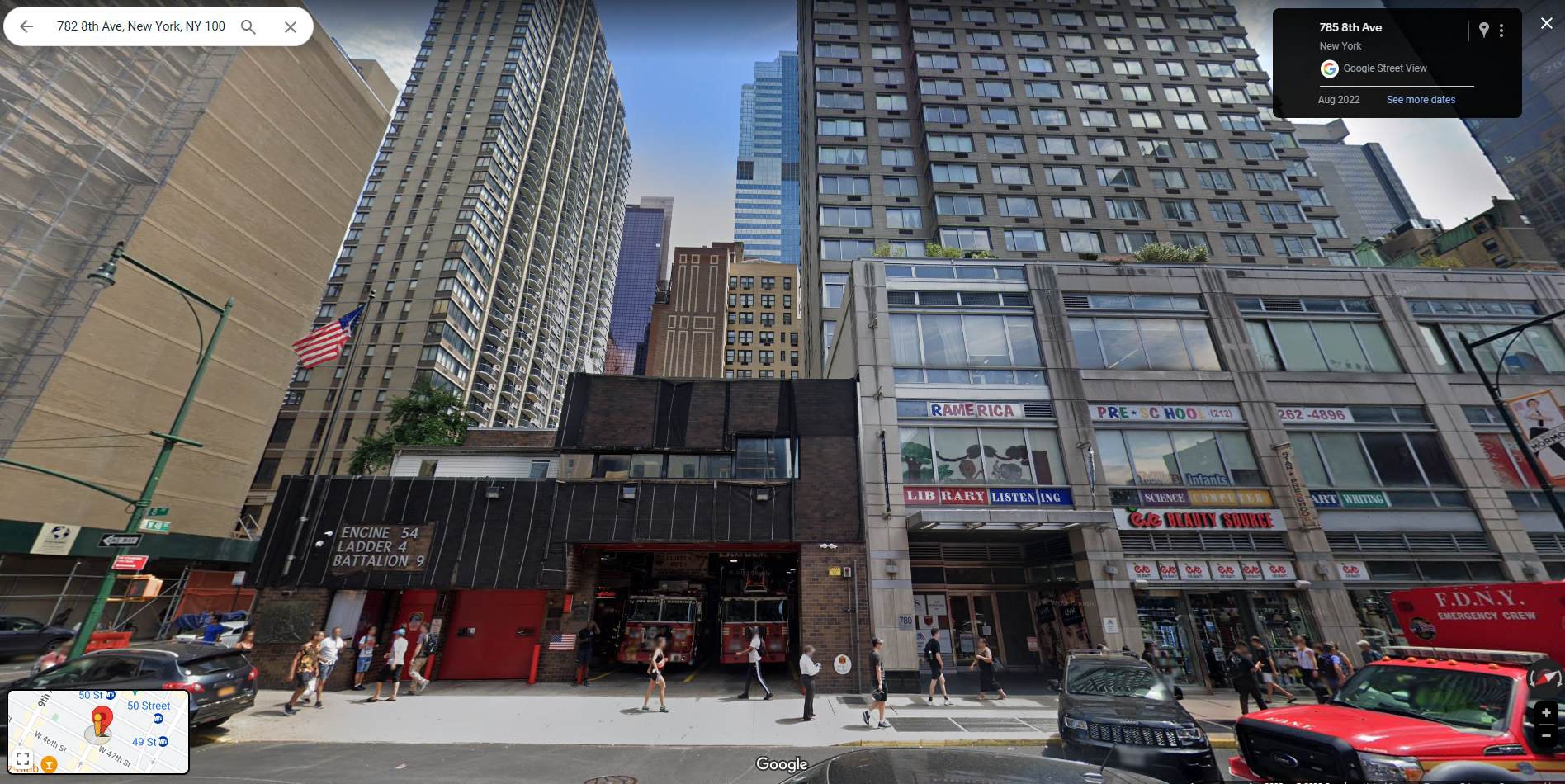
While Detective Van Wagner returned to his records search, Mr. Leung led the police officer to a four-story building at 782 Eight Avenue, off West Forty-Eighth Street. The old Chinese man ran a pricey chop suey restaurant on the second floor, one of the city’s first Asian eateries to open outside of Chinatown. The upper two floors were occupied by restaurant workers and itinerant Chinese men. The telltale stench of decaying flesh emanated from within the flat that Mr. Leung said belonged to his cousin, but six sturdy padlocks on the door effectively prevented the patrolman from gaining access.
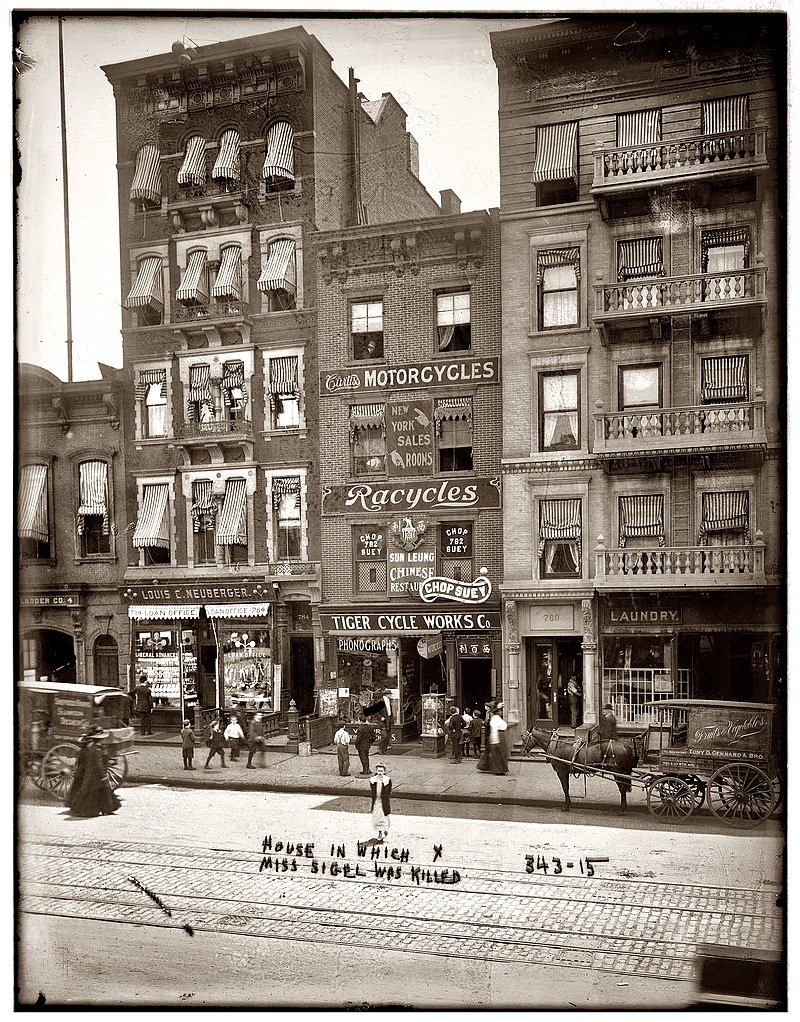
782 Eight Avenue, New York City
He notified the lieutenant. Van Wagner overheard their conversation and offered to go to investigate. He had no luck getting in, either, until he borrowed an ax from a nearby firehouse and battered down the door. The smell was so bad that several Chinese men, who had been anxiously watching the two policemen tackle the sturdy door, fled the hallway in search of fresh air.
Van Wagner opened the apartment windows and waited for the odor to dissipate before proceeding. A cursory search of the rooms failed to immediately locate the source of the stink, but Van Wagner took note of the expensive Asian furnishings and the luxurious silk garments in the dresser. Upon closer examination he realized that some of the clothing items belonged to women. His curiosity was further aroused when he noticed dozens of photographs of Caucasian females on display throughout the apartment in the company of a handsome but unknown, Chinese man.
Although the entire apartment reeked, the odor was strongest in the bedroom. He separated the heavy bed curtains, expecting to come across a body, but instead all he saw was sheets in disarray and three articles of ladies’ lingerie and a pair of black stockings partially concealed under a pillow. When he looked under the bed, he found an old battered trunk secured with rope. The motion of pulling the chest out from underneath disturbed the remains. Van Wagner severed the rope and broke the lock. The lid flew up, revealing a naked, trussed, severely decomposed corpse of indeterminate sex, partially covered by a thick wool Army blanket, sprinkled with lime.
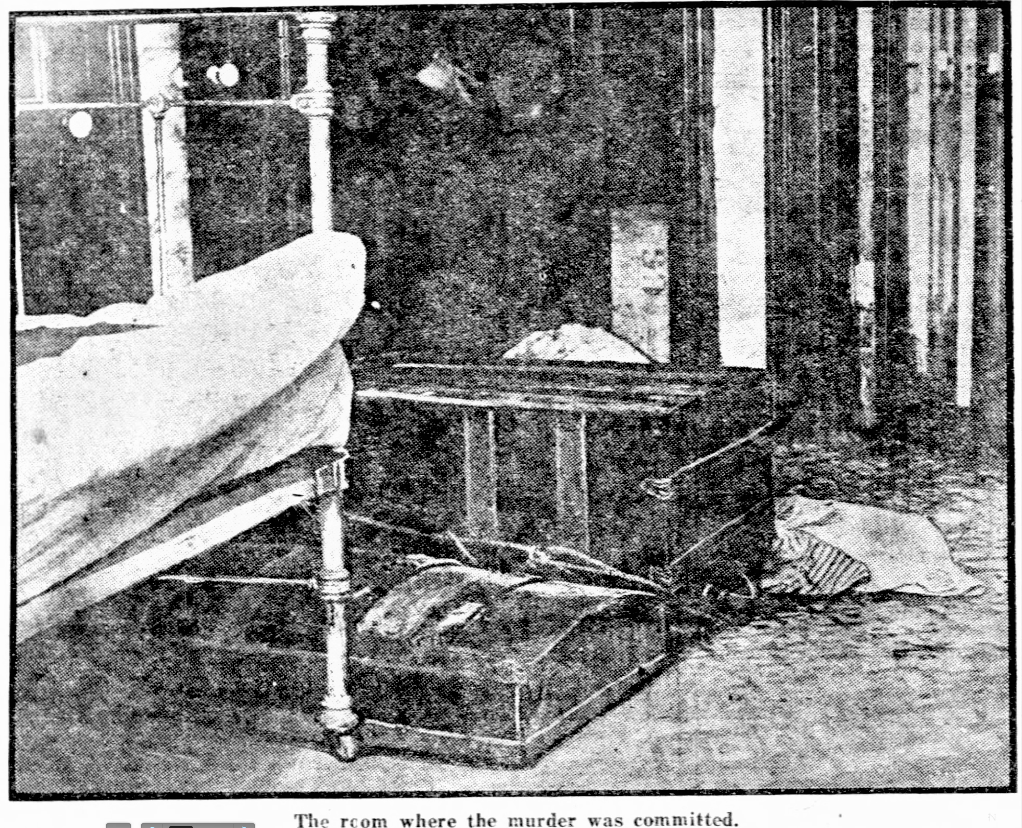
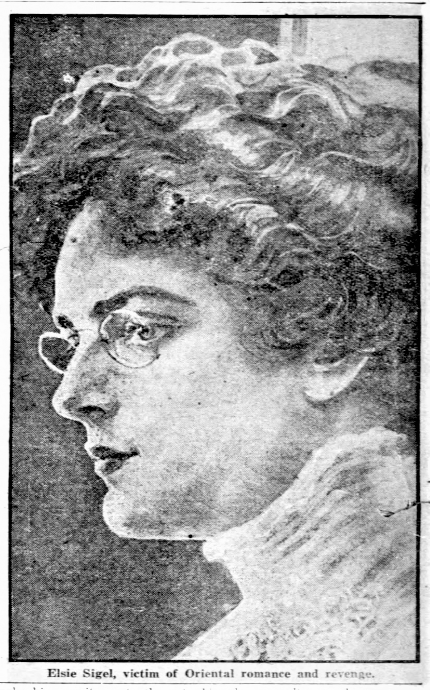
The law required Van Wagner to wait until the coroner examined the corpse before he could proceed with his end of the investigation. The coroner determined that the victim was a woman and the cause of death appeared to be strangulation. After the coroner left, Van Wagner conducted his own search of the body and recovered a small, gold, heart-shaped locket that had become deeply embedded in the woman’s rotting bosom. It was etched with the initials “EJS,” and it provided him with the first clue as to the victim’s identity.
Other detectives began to question the restaurant staff, but none of them spoke English. The police brought in a Chinese translator from Columbia University. As Van Wagner listened to the interrogations, he got the distinct impression that the Chinese men knew more than they were telling. He telephoned Police Headquarters, hoping that someone might have reported the dead girl missing. As luck would have it, the detective on duty informed him that a man named Paul Sigel, son of famed Civil War general Franz Sigel, had contacted him earlier that evening seeking advice on how to handle a delicate family matter.
According to the detective, Sigel and his wife worked as Christian missionaries in Chinatown and had always encouraged their daughter Elsie to take part in their crusade. Mr. Sigel now feared that Elsie had eloped with a Chinese man and headed south. Shortly after she disappeared, he received a telegram from her that she was in Washington, D.C., and would return on June 12. A week had passed since that date, but Mr. Sigel did not want to officially report Elsie missing, because of the scandal that the mixed marriage would cause to his family’s reputation. He only wanted to know whom he could contact in the nations’ capital for help in locating his daughter.
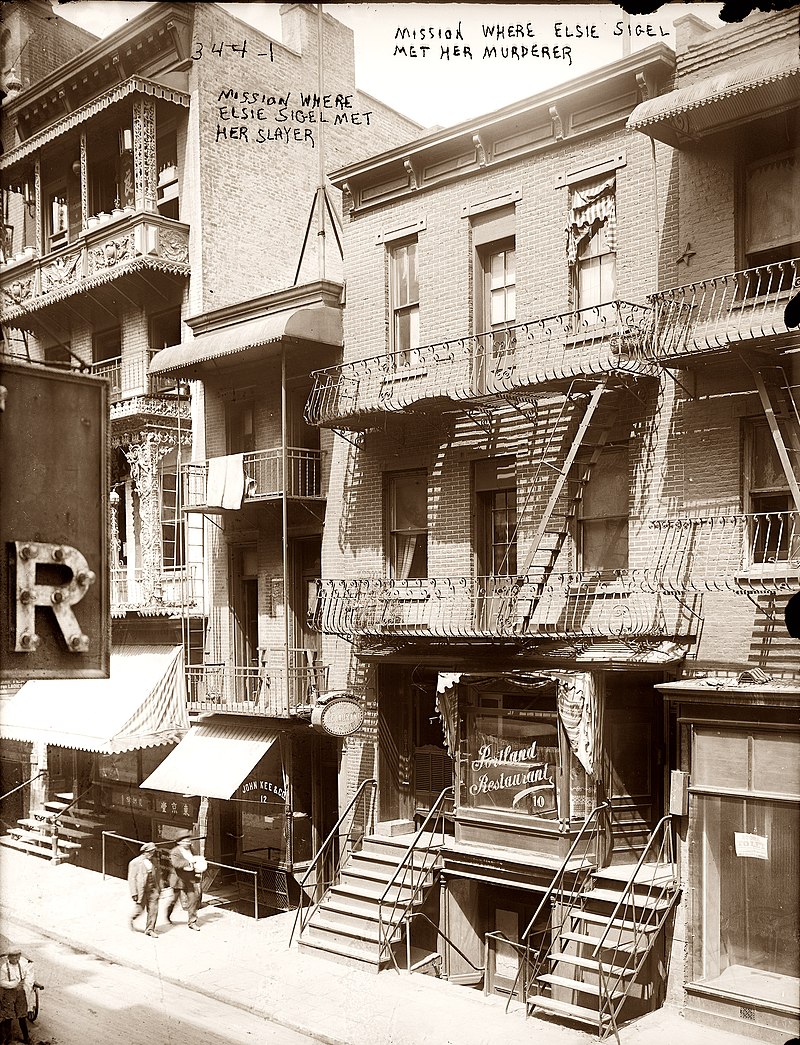
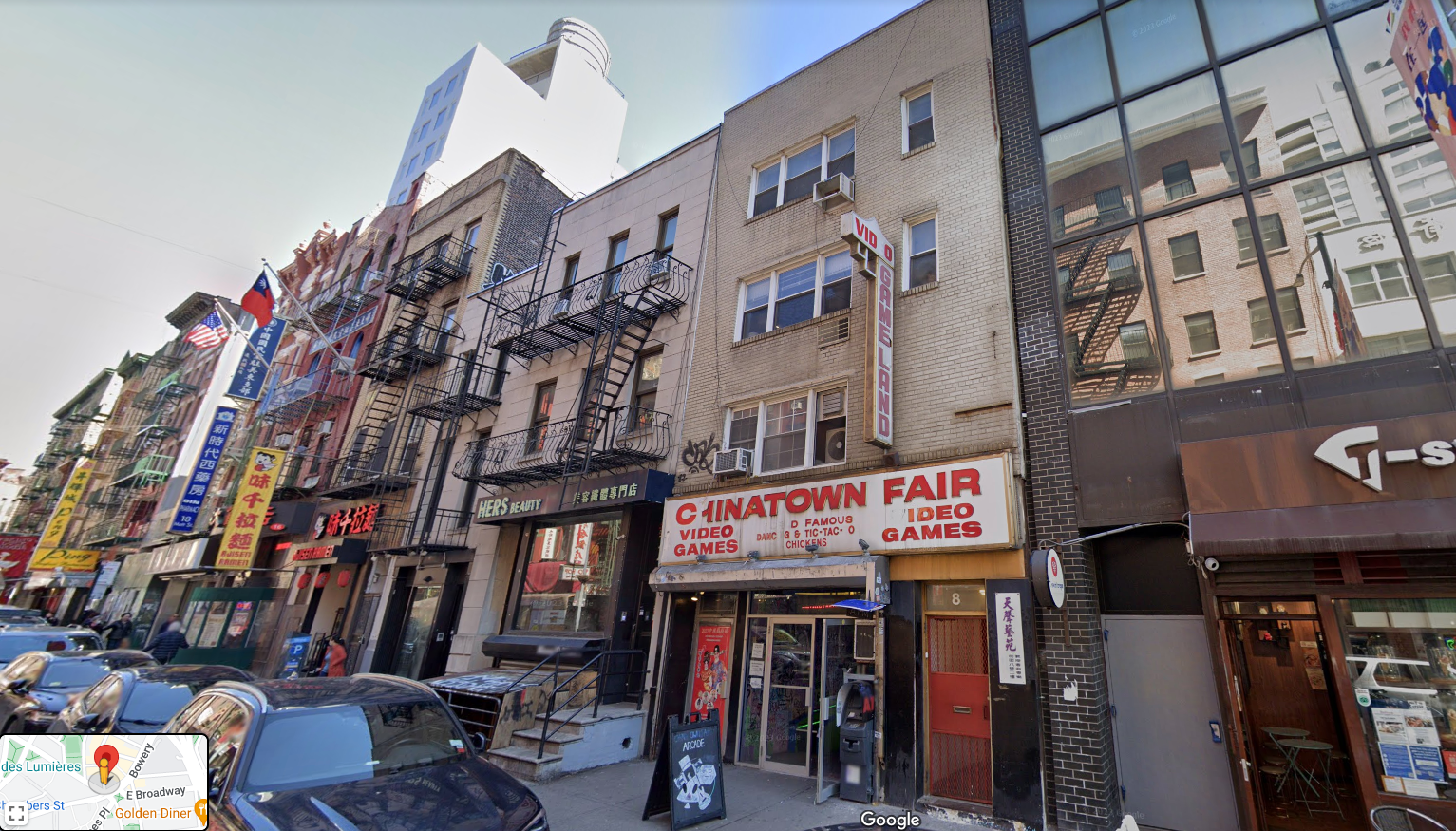
The mission where Elsie Sigel volunteered.
This new information combined with initials on the locket that matched the name Elsie Sigel, gave Van Wagner a pretty good idea who the victim was. He rushed to the Sigel home. After some cajoling on his part, the husband and wife reluctantly added to what he already know. They said that Elsie had fallen in love against their wishes with William L. Ling, a young Chinese-American whom they were trying to convert to Christianity. While they refused to believe their daughter was the murder victim Van Wagner found, they confirmed that Ling lived at the address with another Chinese man they knew as Chang Sing. The next morning, the embarrassing scandal the Sigels had hoped to avoid became front-page news.
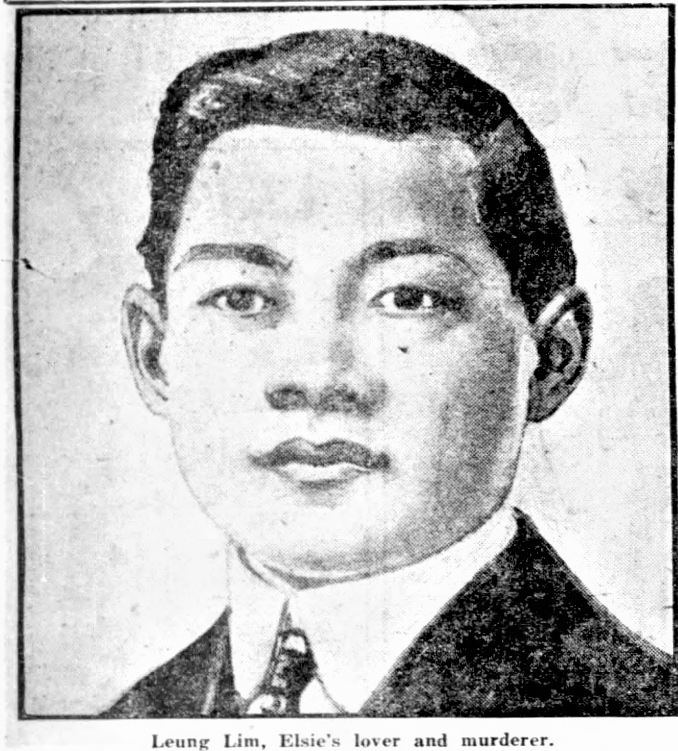
The police caught a break several days later when Ling’s roommate turned up working as a cook in upstate New York. According to Sing, Elsie Sigel was a frequent visitor to their apartment and was friendly with other Chinese men as well. On June 9, he was awakened by a commotion in Ling’s bedroom and peeked through the keyhole. He saw his roommate choking Elsie with a stocking, but instead of stopping him, he panicked and fled the apartment. Later Ling asked him to help get rid of Elsie’s body. Van Wagner was able to confirm that the body had made it as far as Newark, New Jersey, before the two men returned it to their flat. He also verified that Ling had bought the six padlocks and that Ling had been the man who sent the telegram from Washington, D.C., but he could not discover Ling’s whereabouts. He became convinced that the Chinese tong had helped Ling escape.
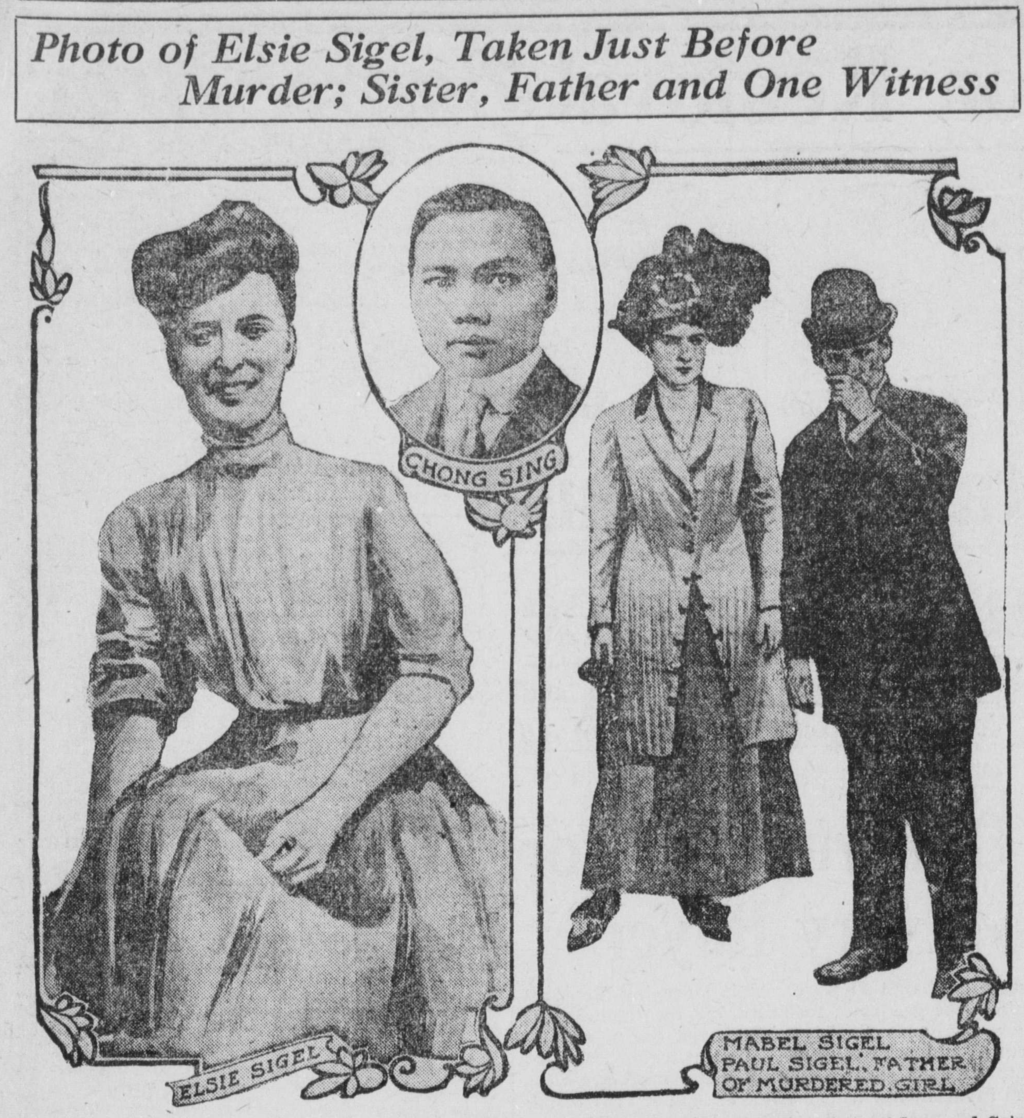
In January 1910, a new administration took charge of the Police Department. It wanted to distance itself from the embarrassing episode and let the matter quietly fade away without ever making William Ling answer for his crime. As for Detective Van Wagner, he eventually got promoted to captain, but he was forever haunted by the case.
Culled from: Undisclosed Files of the Police
The building in which Elsie was murdered no longer exists. The block is completely boring now – all the interesting buildings were demolished long ago.
The mission at 10 Mott Street still exists though. Less charming, of course, but intact.
Weegee Du Jour!
Weegee was the pseudonym of Arthur Fellig (June 12, 1899 – December 26, 1968), a photographer and photojournalist, known for his stark black and white street photography. Weegee worked in Manhattan, New York City’s Lower East Side as a press photographer during the 1930s and ’40s, and he developed his signature style by following the city’s emergency services and documenting their activity. Much of his work depicted unflinchingly realistic scenes of urban life, crime, injury and death.
Here’s a photo from the book Weegee’s New York: Photographs, 1935-1960
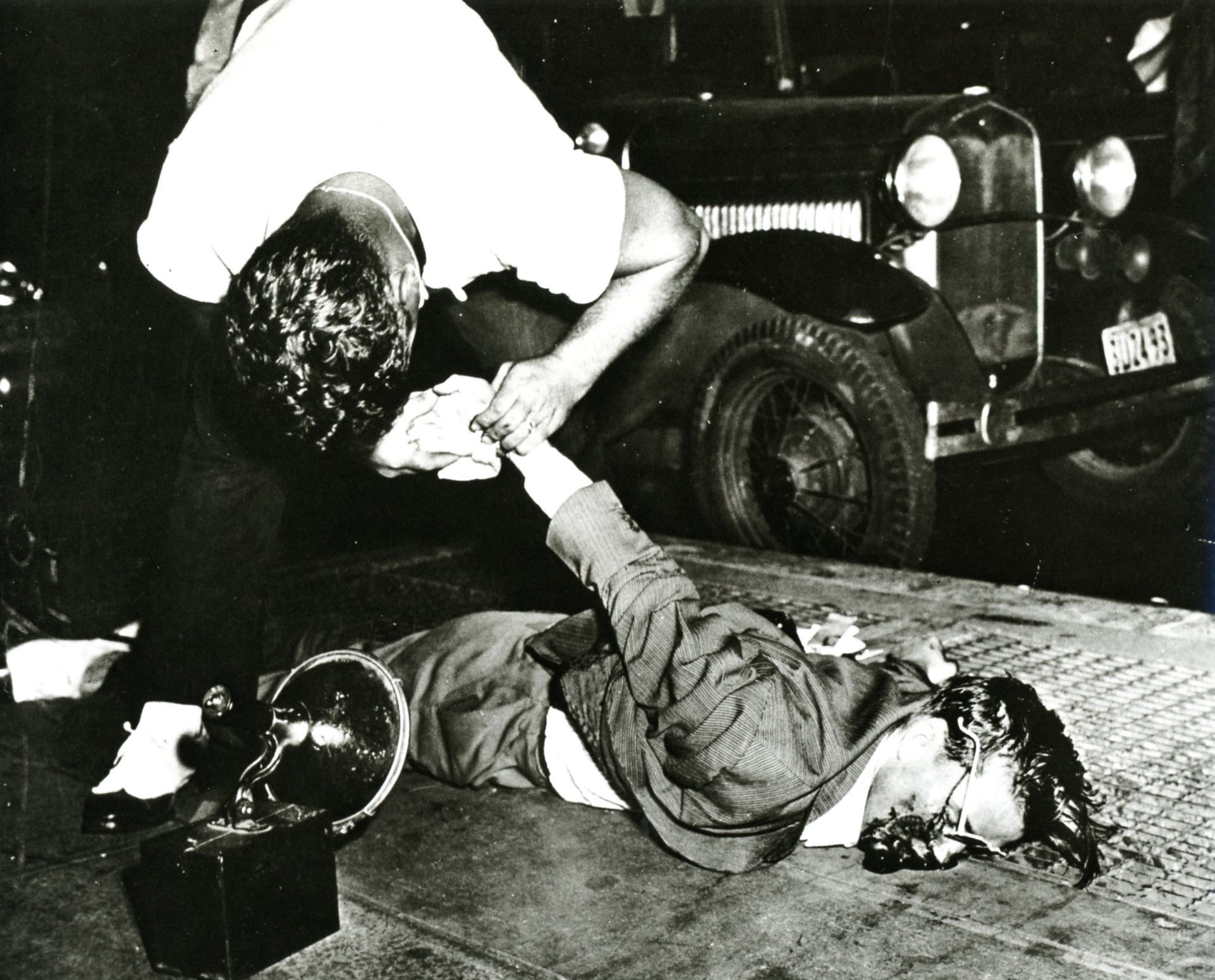
Identification squad, 1943