Today’s Misguided Yet Truly Morbid Fact!
Even some ordinarily unsympathetic white Mississippians thought the lynching of Lloyd Clay in Vicksburg in 1919 might have been misguided. A twenty-two-year-old day laborer from a respected family, Clay was accused of rape, even though the victim denied he had been her assailant. Overly zealous to remove Clay from the jail, the mob accidentally shot two whites. Still, they carried off the execution, clumsily trying to hang him and finally burning him alive near the center of town. Newspapers called it “hideous” and “horrible,” “one of the worst lynchings in history,” and at least one newspaper thought Clay was “probably an innocent man, and one wholly out of the classes of the ‘bad negro’.” Another newspaper labeled the lynchers rank amateurs who lacked the necessary skills to dispatch their victim. The more than one thousand spectators reportedly remained passive during the execution, though some thought the executers had been clumsy and inflected “needless suffering” on Clay. The lynching incurred further criticism for having taken place in a white neighborhood. At least six white women fainted, and others reported that their “sensibilities” had been “shocked.”
Culled from: Without Sanctuary: Lynching Photography in America
Despite the rare condemnations of the lynching, there was still much approval, such as this despicable little snippet from the Semi-Weekly Leader of Brookhaven, Mississippi (May 21, 1919):
Within twenty-four hours after the body of Lloyd Clay was lynched and burned at Vicksburg, a negro entered the home of Robert Scott, who discovered him upon his return home at 9:30 in the evening. Scott’s wife had heard the negro and had run out of the house. If lynching doesn’t serve to impress the negro with a sense of wrong and sure and hasty punishment for his crime, what will? The mob has failed to teach him. What will?
Mütter Museum Specimen Du Jour!
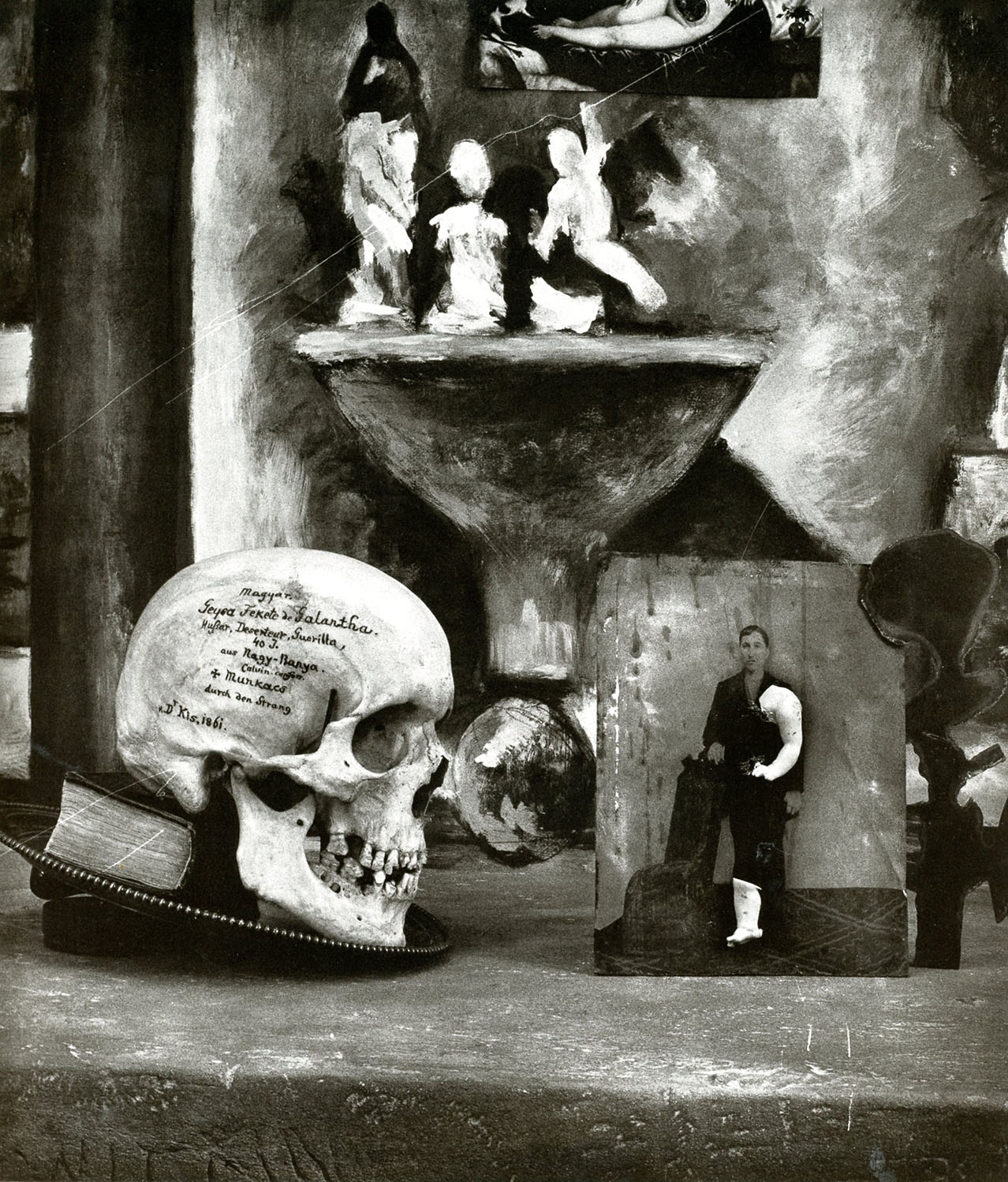
Allegory on the Mystery of Separation and Death
1999, Joel-Peter Witkin
Skull of Geysa Fekete de Galantha, Magyar (Hungarian) from Nagy-Banya, age forty, Calvinist, Hussar, deserter, guerrilla. Died in Mukacs by hanging. From the collection purchased in 1874 from Professor Joseph Hyrtl of Vienna.
Culled from: Mütter Museum Calendar, 2000