Today’s Dimwitted Yet Truly Morbid Fact!
Juanita Spinelli’s entire life was a lie, but she had the talent to influence the young and dumb to do her bidding. We know that Ethel Leta Juanita Spinelli was born on October 17, 1889, in Kentucky, but after that the rest of her pathetic life is speculation. Spinelli made so many claims about her past that only the truly gullible would believe a word that she said. Whether she gave herself the nickname “The Duchess” or whether it was coined by her alleged Purple Gang connections, nobody will ever know, nor probably care.
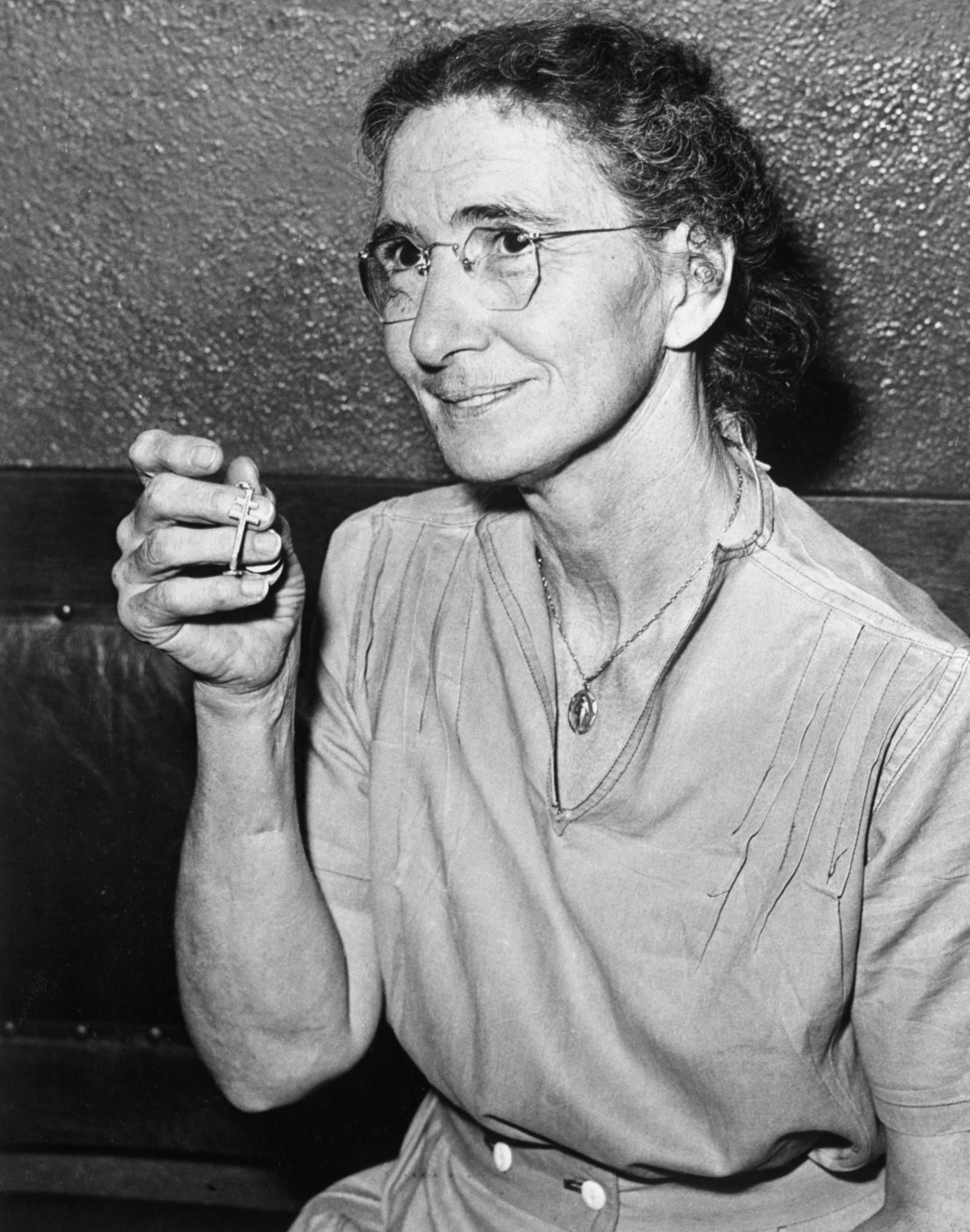
“They call me The Duchess.”
What is known about her is that she materialized in San Francisco sometime in the late 1930s, with three kids and a hood named Michael Simone in tow. Spinelli was a haggard, toothless woman who looked twenty years older than the fifty years that she claimed to be. She asserted that she was an informer for Detroit’s ultra-violent Purple Gang and had to leave the Motor City in a hurry. The Purple Gang was a Jewish organized-crime outfit that was basically wiped out by internal disputes by 1935, so Spinelli’s story is questionable. She was supposedly married to bank robber Anthony Spinelli, who had been killed while smuggling contraband across the Mexican border. Information on Anthony Spinelli and his crimes are as non-existent as were the Duchess’ parenting skills.
The Duchess rounded up a handful of malcontents with serious mental deficiencies: eighteen-year-old Robert Sherrod, twenty-one-year-old car thief and jailbird Gordon Hawkins, and Albert Ives, a twenty-four-year-old, one-eyed half-wit. Together with the thirty-two-year-old Simone, who acted as a caseman as well as the Duchess’ lover, the gang knocked off gas stations and rolled drunks.
Spinelli’s teenage daughter Lorraine was used as a sex lure by her criminally demented mother. Lorraine, whose street name was Gypsy, would approach drunken men with the promise of easy sex. Once they were alone, Spinelli’s thugs would rob the man, sometimes taking off his clothes.
Juanita thought of herself as the brains of the outfit and when she wasn’t planning small-time robberies, she was cooking and cleaning for her troupe of young crooks. Acting as the teacher, Spinelli instructed the boys in the fine arts of robbery, assault, and car theft. She taught them that it was smarter to commit a steady stream of small crimes than one big one like robbing a bank. She explained that the police would go all out to find a bank robber, but they would more than likely shrug at a man who woke up on the sidewalk with his wallet missing. Providing them with the mother figure that they may never have had, Spinelli delegated jobs for the gang and doled out their cut of the money as if it were an allowance.
On a foggy night on April 8, 1940, Ives shot barbecue stand owner Leland S. Cash while attempting to rob him of the day’s receipts. The fifty-five-year-old Cash was deaf and didn’t hear Ives when he demanded the money. Cash reached into his pocket to turn up his hearing aid, but the dim-witted Ives plastered the restaurateur before he had a chance to comply, leaving him to die in the parking lot of his diner at Lincoln Way and La Playa in San Francisco’s Sunset District.
The Duchess panicked, packed up her gang and headed for Sacramento in a stolen car, stopping only to rob a gas station on the way out of San Francisco. Settling at a cheap hotel on the seedy side of town, the gang drank whiskey and planned to make quick money by rolling drunks in Sacramento.
Much to the gang’s dismay, the dim-witted Sherrod kept reliving the murder of Cash, asking the Duchess and others if they thought that Cash had died right away or if he had suffered a lingering death. The hooligans sent Sherrod out on an errand to discuss the situation.
They decided that Sherrod must die before he talked too much. Ives suggested that they shoot him in the head and make it look like an accident, but the Duchess vetoed Ives’ idea. She didn’t want the boy to suffer. Knowing that Sherrod was a weak swimmer, they decided to have a picnic along the Sacramento River. After the cookout, they would go swimming in the river, where they would push Sherrod into the middle of the swift spring current and to his death.
The next day, the inept gangsters piled into their stolen car and drove to an area about ten miles south of Sacramento near the Freeport Bridge with the intent to drown the hapless teenager, but Sherrod was afraid of the fast-moving current and refused to get in the water. The gang drove ack to Sacramento with Sherrod blabbing on about Cash’s murder.
Fearful that Sherrod would go to the police, Simone and Spinelli decided on a better half-baked plan. They put the plan into action the very next evening, April 13, 1940.
After the two younger children were put to bed, the Duchess had a get-together in her hotel room. Sherrod was anxious for a drink and downed his first glass of whiskey in one gulp. When he asked for another drink, Spinelli poured him one laced with chloral hydrate, popularly called knockout drops, or a Mickey Finn. Sherrod gulped down the drink and was soon groggy. After he became unconscious, the gang beat the teenager, before Hawkins and Ives loaded him into the car and drove him back to the Freeport Bridge.
As Hawkins drove, Ives undressed Sherrod and put him into swimming trunks. At the bridge, Ives dragged Sherrod out of the car and tossed him over the rail into the ice-cold water. Ives placed Sherrod’s clothing nearby, so it would like as if he had gone swimming. Little did Ives, Hawkins, Simone and Spinelli know, but Sherrod was already dead by overdose from the chloral hydrate.
The next day, the Duchess decided that the gang should drive to Reno. They needed to be in a fresh town full of money and drunks. They planned to rob hitchhikers and motorists along the way. The real plan was to kill the simple-minded, yet violent, Ives before he, too, started running off at the mouth. Ives was getting full of himself, bragging about the two murders that he had committed. The plan was to kill him in the High Sierras and dump his body off a tall cliff where he would never be found or even looked for.
Sometime during the ride, Ives saw Simone give Hawkins a knowing glance. At a gas station near Grass Valley, he overheard the gang talking about a 700-foot-cliff. Ives wasn’t as stupid as everyone thought, and he ran into a nearby diner, through the kitchen, out the backdoor and into the brush behind the diner. He waited until the gang drove away, and then he ran to a nearby California Highway Patrol post, where he told the stunned officer his story about the crime gang.
The Duchess and her crew were pulled over by highway patrol officers in Truckee. Spinelli tried to pull her innocent-mother routine, but after the police found their cache of weapons, the jig was up.
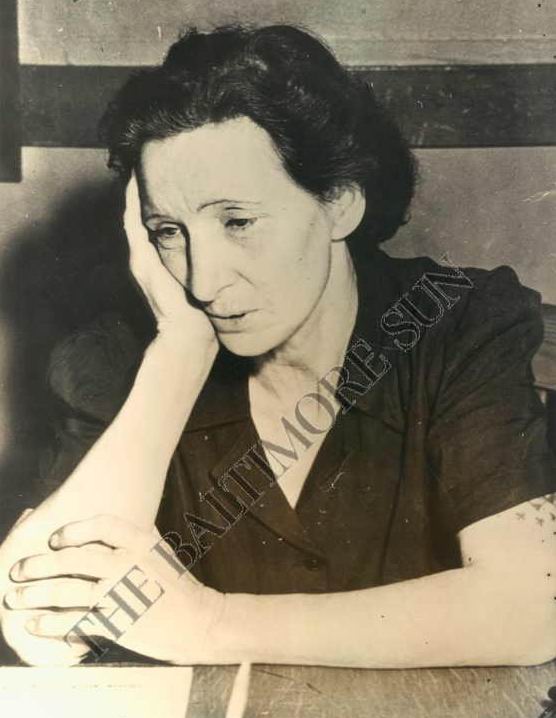
Where did it all go wrong?
After being taken to Sacramento to face charges of Robert Sherrod’s murder, the gang quickly turned on each other. Ives turned state’s evidence first and told the authorities about every robbery and car theft and the two murders that the gang had committed.
Gypsy, who was pregnant, claimed that she had been busy attending Continuation High School in San Francisco and was too busy with school to know about the criminal deeds that her mother was involved in. She was released from custody. Eight-year-old Vincent and fifteen-year-old Joseph Spinelli were placed in foster care.
The city of San Francisco waived its right to the prisoners, and the gang was tried for the Sacramento County murder of Robert Sherrod. Gordon Hawkins, Michael Simone, and Juanita Spinelli were sentenced to death in San Quentin’s gas chamber.
After the usual appeals and stunts, Ethel Leta Juanita Spinelli was led into the gas chamber on November 21, 1941. Spinelli didn’t mind when the warden realized that the witnesses weren’t all assembled and made her wait a few minutes while the spectators found their seats. Spinelli was the first female put to death in California’s gas chamber.
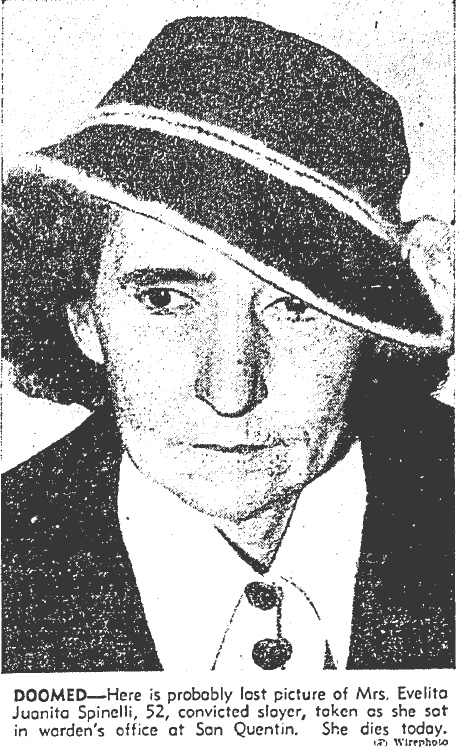
One week later, on November 28, Simone and Hawkins were gassed simultaneously in San Quentin’s double-seat gas chamber. Ives was found not guilty by reason of insanity and was sent to live out his life at the Napa State Asylum for the Insane.
From the San Quentin Correctional Records:

Culled from: Death In California by my friend, David Kulczyk
Death Scene Du Jour!
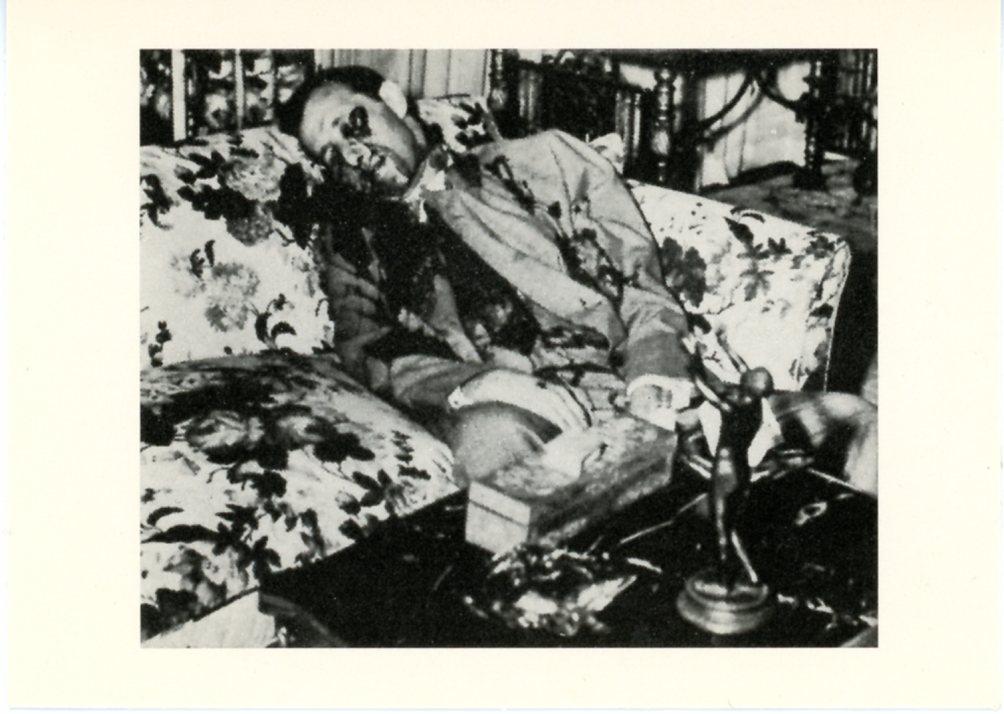
The famous coroner shot of “Bugsy” Sigel after his demise by the Mob.
Culled from: Faces of Death Trading Cards