Today’s Onrushing Yet Truly Morbid Fact!
Most people’s chances of being caught in an avalanche are extremely remote, unless one happens to be in the wrong place at the wrong time. By one estimate, a hundred thousand avalanches tumble down U.S. mountains each year—the vast majority of them in the remote ranges of the West such as the Rockies, Sierras, and Cascades—and tens of thousands more fall each winter in Canada and Europe. Together they kill only about forty people annually in North America and about one hundred in Europe. While U.S. avalanches mostly claim recreationists as victims—the numbers climbing in recent years as more skiers, snowboarders, snowshoers, and snowmobilers explore the wintry backcountry—it’s the villagers in high valleys of the Alps who have lived for centuries under the constant threat of avalanches. They’ve developed countless strategies to defend themselves: they maintain the forests and build fencelike barriers to anchor the snow on steep slopes, place their buildings with a close eye to avalanche run-out chutes, cover roads with shedlike roofs, and even construct their churches and houses with heavy, prowlike walls to deflect the onrush of snow like a ship plowing through the seas.
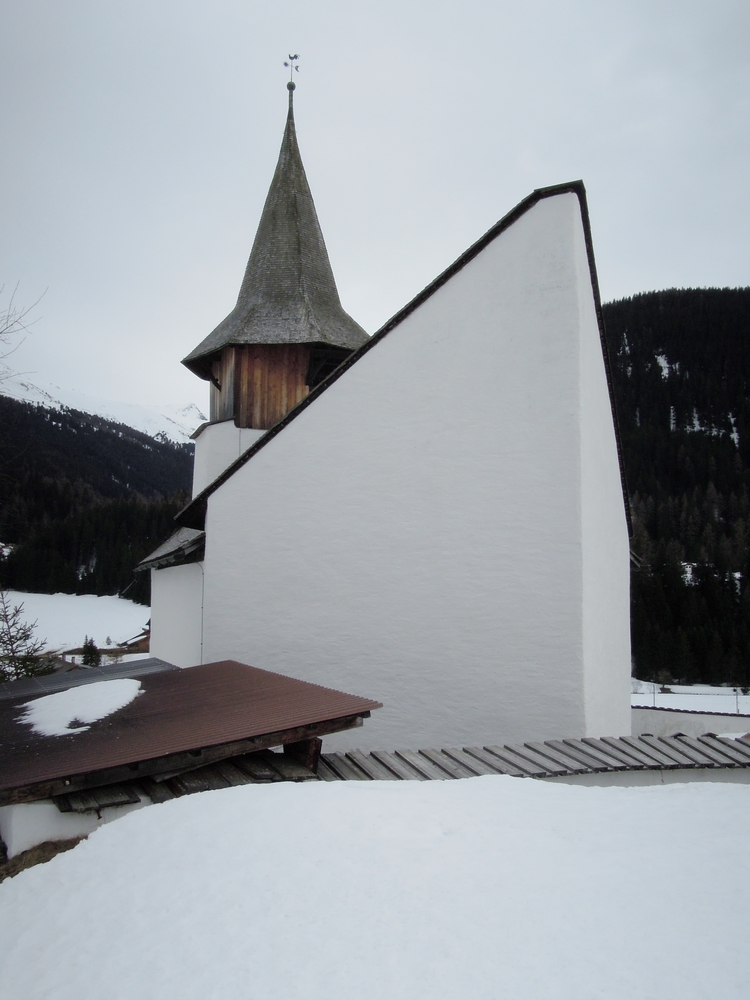
Example of avalanche protection architecture in the Swiss Alps
Unlike the sea, an avalanche’s power is instantaneous, the more stunning for its suddenness, reminding us that the ground we live on and the mountains themselves—those very symbols of stability—are not static but in their own way alive and ever-changing, as is the snow that covers them. When it does release, the thundering rush of snow can flatten houses, buildings, and forests; it can rush over the top of smaller mountains like a great white wave or bury an entire valley floor. Avalanches have been clocked in Japan’s mountains at speeds of 230 miles per hours, have been measured in Alaska as traveling a distance of eight miles, and have killed—in the case of a Peruvian ice, snow, and mud avalanche that in 1970 broke off an Andean mountaintop and dropped thousands of feet, tumbling miles through a populated valley—twenty thousand people.
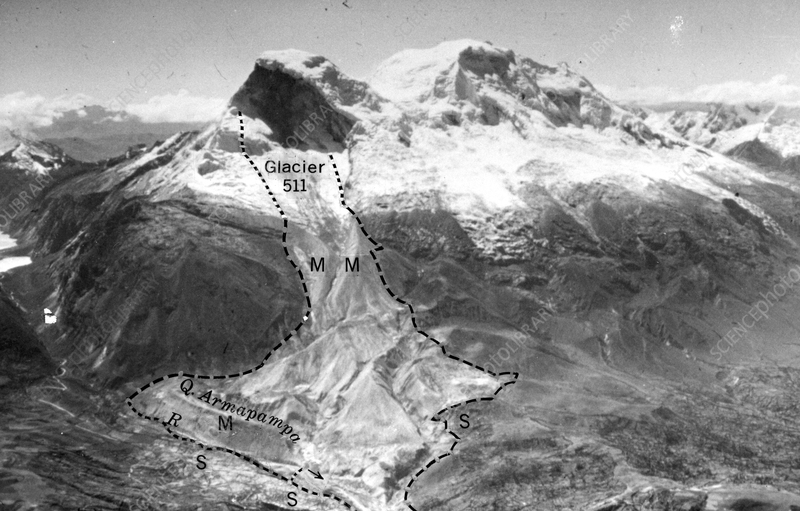
Debris field from the 1970 Peruvian avalancheSome of the most famous victims of avalanches include Hannibal’s soldiers and battle elephants, decimated in 218 B.C. by avalanches as the battalions crossed the Alps from the north on their way overland from Spain to attack Rome. “Snow falling from the high summits engulfs the living squadrons,” wrote the epic poet Silius Italicus. Not far from that spot, two German hikers in 1991 discovered the five-thousand-year-old body of a hunter thawing from the ice of a glacier, soon to be world famous as the Ice Man, or Otzi (after the Otztal Alps), and possibly the victim of a prehistoric avalanche. Prince Charles narrowly escaped burial in an avalanche during a 1988 ski outing in the Alps when he and his party, including a Swiss mountain guide, ventured into high terrain that had been deemed hazardous, and one of his closest friends, Major Hugh Lindsay, a former equerry for the queen, perished in the slide. Hundreds of climbers have died in avalanches in ranges all over the world, including Alex Lowe, considered by many to be America’s best alpinist, who was buried by an enormous avalanche in 1999 while attempting to ski a mountain in Tibet.

Otzi! Otzi! Otzi! (Oy! Oy! Oy!)
Culled from: Last Breath: Cautionary Tales from the Limits of Human Endurance
Crime Scene Du Jour!
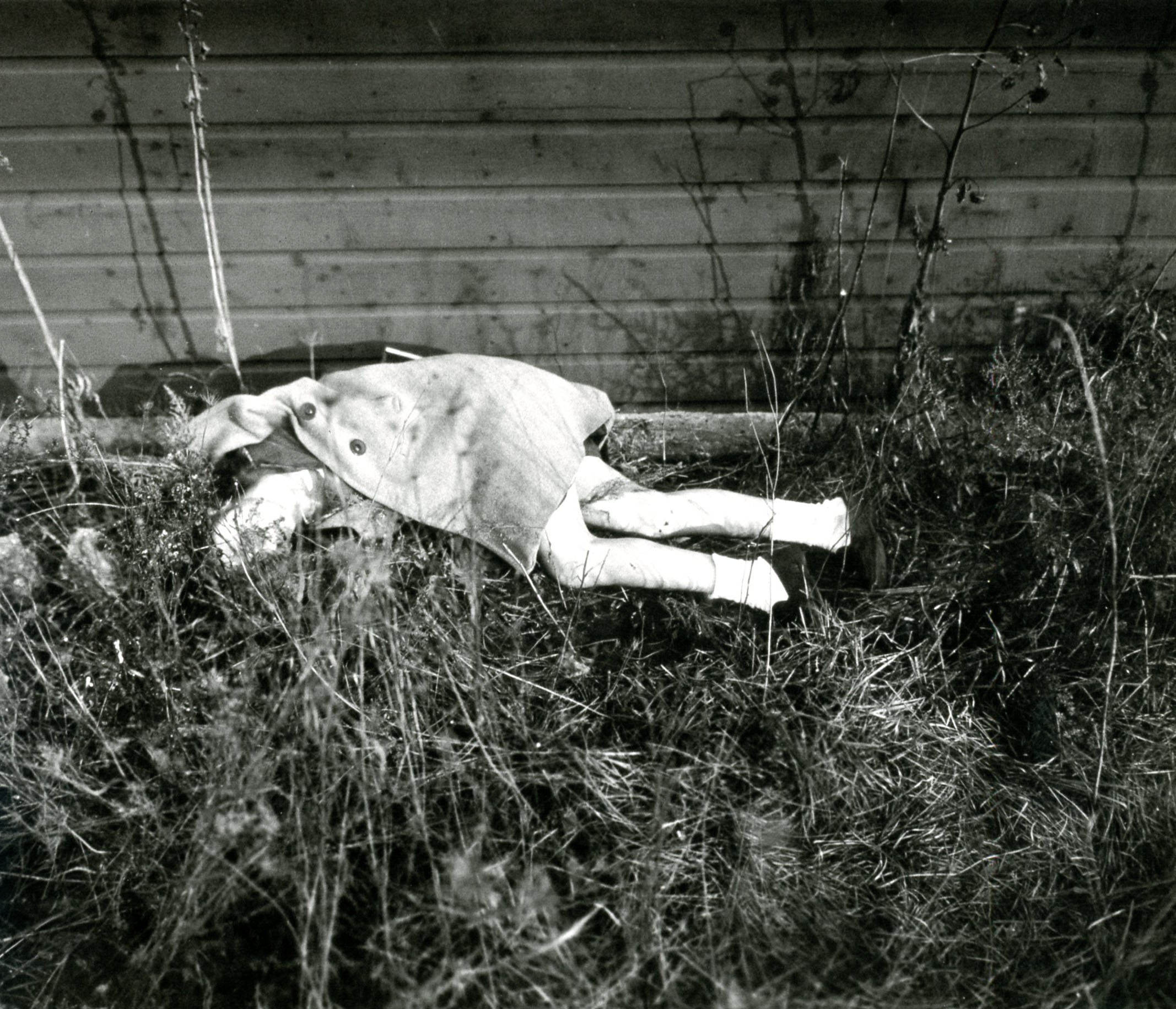
Susan Scanga was only sixteen in 1945 when she was found dead in a junkyard at the foot of Huron Street in the Greenpoint section of Brooklyn. During the day she worked in an apparel shop; at night she attended business school. A bullet had been fired at close range to her head. She had not been beaten or raped.
On the wall near her body was written: “Nick.” The police assumed the victim had scratched her assailant’s name before she died. After questioning friends and relatives of Susan’s, they issued an eight-state alarm for the arrest of her fifteen-year-old boyfriend, Nicholas Fomkin.
Nick and his friend Leonard Runkoski, sixteen, found themselves near Mobile, Alabama, four days after the murder. They had taken a bus to Philadelphia and hitched a ride south with an army lieutenant. Then they called Brooklyn police and asked for money to return home. Mobile authorities took them into custody until New York policemen arrived to retrieve them.
Nick Fomkin had been dating Susan for about seven months. On the night of November 20, while heading for a pool hall after drinking beer with friends at his home, he bumped into Susan. She was walking with a boy, a friend of both of theirs. According to Nick’s testimony, he playfully put a gun to her head and said, “If you ever went out with another guy…” and then the gun went off. He panicked and threw the gun in a creek. He had traded his fish knife for his friend Leonard’s gun.
Nick had written his own name on the wall. He evidently dragged his victim to a familiar haunt, inadvertently implicating himself in the crime by leaving her below the graffito. On December 6, Nick Fomkin pleaded not guilty to second-degree murder. He was remanded and on the following day pleaded guilty to first-degree manslaughter.
Culled from: Shots in the Dark
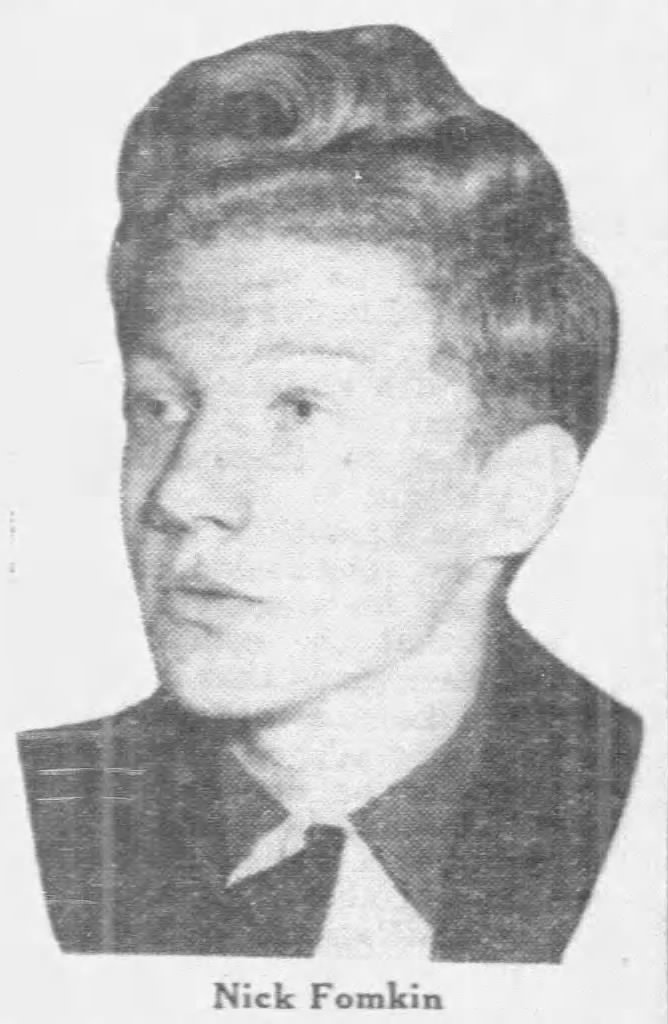
I found a photo of Nick in the newspaper. He was sentenced to 10-20 years. The Judge stated, “Because of your temporarily insane jealousy, the life of a young girl who had everything to live for was ended suddenly. This was a terrible crime.” The consensus was that he murdered Susan because he suspected she was running around with other guys.
Andersonville Prisoner Diary Entry Du Jour!
This is the continuation of the 1864 diary of Andersonville prisoner Private George A. Hitchcock (see the archived version for all entries up until now).
Here’s today’s entry:
June 24th. Very warm. Drew rations of mush and sow-belly yesterday, and raw meal and salt today. We do not venture from under our shelter during the middle part of the day, when the torrid rays melt us quickly.
Culled from: Andersonville: Giving Up the Ghost