MFDJ 07/03/2024: Typhus Fever

Today’s Filthy Yet Truly Morbid Fact!

Typhus fever is entirely different from typhoid fever. The latter is a water-borne disease caused by a bacillus. Typhus fever is a disease of dirt. The causative organism, Rickettsia prowazekii, belongs to a class of organisms which lies midway between the relatively large bacteria, easily seen under a high-powered microscope and which produced diseases such as typhoid, syphilis, and tuberculosis, and the viruses, which produce such diseases as smallpox and measles and which are so minute that they can be identified only with an electronic microscope. The organism is carried by lice. Lice is often found on animals or in the cracks and crannies of old buildings, but they can also infest unwashed bodies and the seams of dirty clothing.


Rickettsia prowazekii – ain’t it cute?

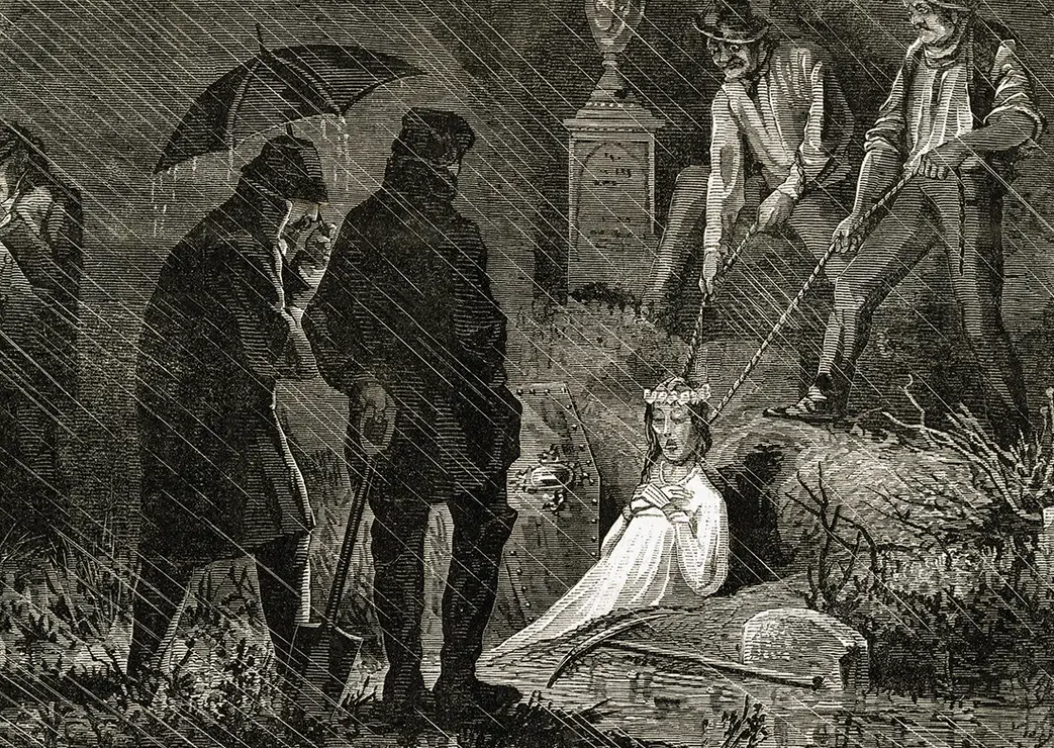
This is why typhus acquired the name of gaol fever and, since fevers were supposed to be caused by bad smells, this is the reason why English judges customarily would bear small nosegays of sweet-smelling flowers. The disease originated in the filthy prisons and spread from the felon in the dock to the judge upon the bench. Three such ‘assize epidemics’ occurred in the sixteenth century. These epidemics were late incidents in the history of typhus. The origin of the disease remains obscure. One theory holds that it originated in the East as an infection of lice and rats but subsequently became an infection of lice and men. (Of Lice and Men – I think I read that in 10th grade. – DeSpair)  Cyprus and the Levant were probably the first focus of spread to Europe, the earliest known severe outbreak being in the Spanish armies of Ferdinand and Isabella during 1489-90.

Since typhus is a campaign and dirt disease, particularly liable to occur in conditions where a number of people are herded closely together, wearing the same clothes for prolonged periods, and lacking means of ensuring bodily cleanliness, it sometimes had profound effects upon the fortunes of war. A remarkable example is the relatively small and localized epidemic which destroyed a French army besieging Naples in July 1528, thus making a decisive contribution to the final submission of Pope Clement VII to Charles V of Spain. Typhus also forced the Imperial armies of Maximilian II to break off the campaign against the Turks in 1566. Soldiers carried typhus fever across Europe during the Thirty Years War of 1618-48 and it was during this period that the disease became firmly established.

Typhus remained endemic in the whole of Europe from the seventeenth to the late nineteenth century, but it was only in conditions of warfare, extreme poverty or famine that major outbreaks occurred. The United States was not infected until early in the nineteenth century; a great epidemic occurred at Philadelphia in 1837. But the history of typhus is complicated by the existence of more than one form of the disease. ‘True’ typus fever, characterized by high fever, delirium, a crisis, and a blotchy rash, is very dangerous. Other less dangerous variants are Rocky Mountain Spotted Fever, Brill’s Disease—a mild type which occurred among New York Jews and was described by Nathan Edwin Brill in 1898—and the Trench Fever of the First World War. This last variant, which was very prevalent among German and Allied troops, apparently replaced ‘true’ typhus in the armies it infected, for ‘true’ typhus did not occur among them, though it wrought havoc among the Servs and Russians. After the Russian revolution and the civil war which followed, famine and disease devastated almost the whole country. Approximately 20 million cases of true typhus occurred in European Russia alone between 1917 and 1921, with from 2.5 million to 3 million deaths.


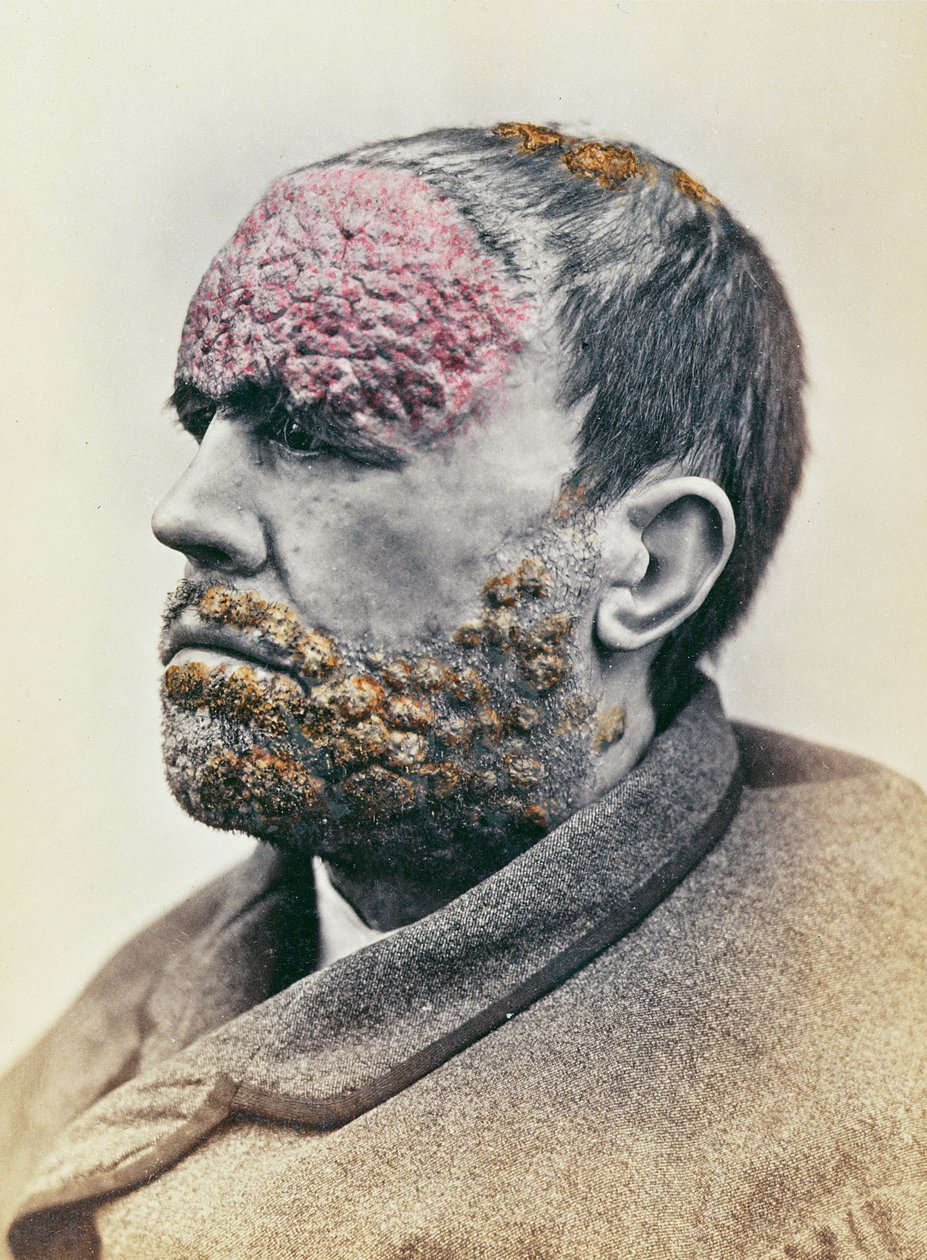
True Typhus rash

The mode of transmission of typhus by the bite of the infected body louse was first described in 1911. H. da Roche Lima isolated the causative organism in 1916 and named it after an American, Howard Taylor Ricketts, and an Austrian, Stanislaus Joseph von Prowazek, both of whom died while investigating the disease. Since then improvements in hygiene and the use of DDT to kill lice have brought typhus under control, but mystery still surrounds this disease, for it seems that very special conditions are necessary before it will flourish in a virulent form, even when there is gross infestation with lice. Typhus seems to require concomitant malnutrition and sordid living conditions before it will produce a lethal epidemic.


Clipping hair of a boy infested with lice at a bathing station in Warsaw, 1917.

Culled from: Disease in History


Crime Scene Du Jour!


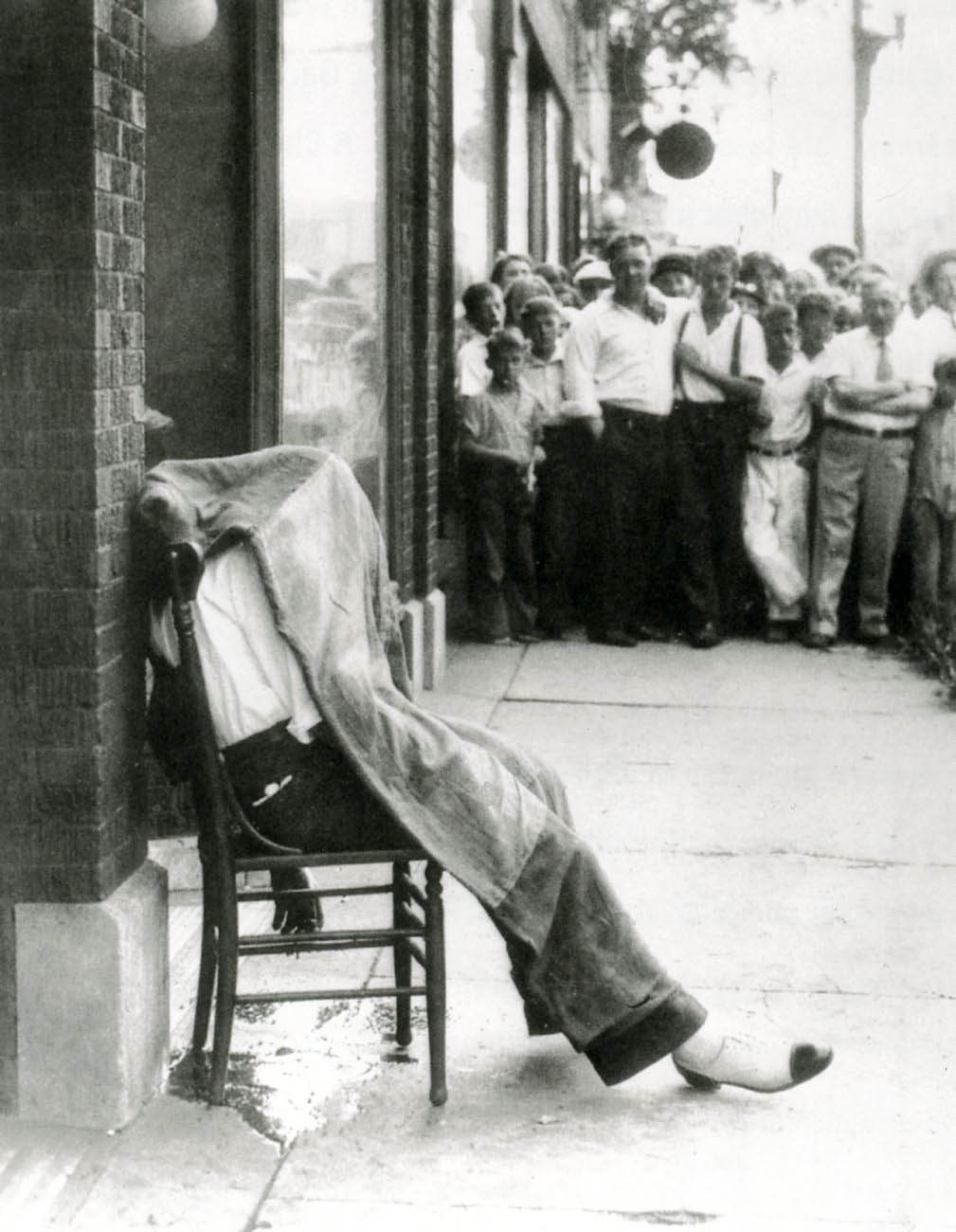
Scene of Dutch Schultz Shooting at the Palace Bar and Grill, Newark New Jersey, 1935

In 1935 Lucky Luciano ordered a hit on fellow gangster Arthur “Dutch Schultz” Flegenheimer and his “aides” after Schultz announced his intention to kill the anti-mob prosecutor Thomas L. Dewey. Luciano feared this murder would draw unwanted attention to the racketeers, so he put out an order to silence Schultz. Along with three other gangsters, Schultz was gunned down in a Newark, New Jersey, restaurant.

Culled from: Police Pictures

MFDJ 07/02/24: Explosion in the Tunnel

Today’s Ignited Yet Truly Morbid Fact!

On the afternoon of Saturday, December 11, 1971, an explosion ripped through a water intake tunnel under construction about 230 feet (69m) below the surface of Lake Huron near Port Huron, Michigan. The force of the blast was so immense that it ripped the 48-inch (120cm) corrugated metal air ducts to shreds, leaving a contorted mass of debris blocking the passageway and cutting off any escape for some of the workers further in the tunnel. Luckily, Eldon Bright was working near the elevator shaft and was one of the first to be lifted to safety. “You couldn’t see because all the lights were knocked out. I don’t know, maybe about 28 guys were trapped at the other end… Sure they will bring them up eventually, but a lot of them are going to be dead.”

It took rescue crews until 7 p.m. to reach the trapped men. Twice the rescuers had to be evacuated because of dangerous levels of methane gas. Ambulance worker Daniel Eastwood described the scene: “When we found men alive, we bandaged them, tied them to a stretcher and then moved on… They would cry for us not to leave…” Some 40 workers were in the tunnel at the time of the blast; 21 were killed and 9 injured.


Rescue workers bring a worker out on a stretcher

Investigations proved inconclusive but many believe that a crew working on the Lake Huron end of the tunnel five miles (8km) away set off the blast when they were drilling a ventilation shaft. Investigator Lindsay Hayes contended that a large drill bit broke loose, fell into the tunnel and set off sparks that ignited the methane gas.


The blast created a shock wave with a speed of 4,000 miles an hour and a force of 15,000 pounds per square inch.

The water tunnel, which was designed to carry fresh drinking water from Lake Huron to Detroit, was completed in 1974 and is capable of pumping 800 million gallons of water per day.
Culled from: Disaster Great Lakes


Civil War Injury Du Jour!

Surgeon General’s Office
Army Medical Museum

Photograph No. 196 and 197.  Case of successful primary amputation at the hip-joint.

Private James E. Kelley, B., 56th Pennsylvania, age twenty-eight, was wounded at about 9:00 in the morning of April 29, 1863, in a skirmish of the 1st Division, 1st Corps, on the Rappahannock, nearly opposite the “Pratte House” below Fredericksburg. A conoidal musket ball fired from a distance of about three hundred yards shattered his left femur. A consultation of the senior surgeons of the brigades decided that ex-articulation of the femur was expedient and the operation was performed at 4:00 in the afternoon at the “Fitzhugh House” by surgeon Edward Shippen, U.S. V., and the amputation was accomplished with slight loss of blood. The patient was, at first, placed in a hospital tent, was transferred May 22 to the Corps Hospital, progressing favorably. By May 28 all the ligatures had been removed. On June 15, 1863, the patient was captured by the enemy and removed to the Libby Prison in Richmond. Up to this date there had been no adverse symptoms. On July 14, Kelley was exchanged and sent to the Annapolis, U.S.A., General Hospital. On his admission he was much exhausted by profuse diarrhea. The internal portion of the wound had united but the external portion was gangrenous. Applications of bromine were made to the sloughing surface without amelioration. A chlorinated soda solution was substituted, and in the latter part  of July there was a healthy granulating surface. On December 23, 1863, the wound had entirely healed and Kelley visited Washington and obtained an honorable discharge from service and a pension. At this date, the picture from which the photograph was taken was drawn by Hospital Steward Stauch, U.S.A., one of the artists of the Army Medical Museum. Kelley then went to his home, near Black Lake P.O., Indiana County, Pennsylvania. A letter dated January 12, 1865, was received from him at this office and represented him as as in excellent health and spirits at the time. In the spring of 1868, Kelley went to New York and had an artificial limb adapted by Dr. E.D. Hudson. At that time the photograph was taken. He could walk quite well after the adaptation of the artificial limb. This specimen is preserved at the Army Medical Museum and is number 1148 of the surgical section. Kelley’s disability was rated March 4, 1874, as total, second grade. There was nothing additional recorded at the pension office at the above date.

Culled from: Orthopaedic Injuries of the Civil War 

MFDJ 07/01/24: Execution as Deterrent

Today’s Lasting Yet Truly Morbid Fact!

In 1700 the governor and Council of Maryland considered the fate of two men sentenced to death for burglary. It was the first offense for both. “What they have Stollen is but a Trifle,” the governor noted, in suggesting that clemency might be appropriate. The Council disagreed. Members urged the governor to inquire whether the two were guilty of “any other evil Practices” that might allow him, in good conscience, to let the execution proceed. “So many Burglarys are Dayly comitted in this Province,” the Council concluded, “that it is absolutely necessary some publiq Example should be made to deterr others from the like Crimes for the future.”

Criminologists would likewise call it deterrence, but eighteenth-century Americans usually had blunter words for the primary purpose they ascribed to capital punishment. “There are but few who are made without fear,” explained James Dana a few hours before Joseph Mountain’s execution in Connecticut for rape. The punishment that awaited Mountain was “calculated and designed to put the lawless in fear.” The Virginia Gazette observed that capital punishment was a way of “counterbalancing Temptation by Terror, and alarming the Vicious by the Prospect of Misery.” An executed criminal was “an Example and Warning, to prevent others from those Courses that lead to so fatal and ignominious a Conclusion:—and thus those Men whose Lives are no longer of any Use in the World, are made of some Service to it by their Deaths.” Fear, terror, warning—whatever one called it, the main purpose of the death penalty was conceived to be its deterrent effect, its power to prevent prospective criminals from committing crimes. “Suppose our ministers of justice, in their superabounding mercy, should spare the vilest criminals,” the minister Aaron Hutchinson imagined. “Vice would be daring, and the wicked walk on all hands.”

To convey that message of terror to the greatest number required careful management of the process by which criminals were put to death. Most clearly, an execution had to be a public event, open to anyone wishing to attend. “A principal design of public executions is, that others may fear,” argued Noah Hobart before an audience gathered in Fairfield, Connecticut, to see Isaac Frasier hanged for burglary. “One end of the law,” the minister Nathanial Fisher proclaimed at a similar occasion, “in ordering him to suffer, in this public and ignominious manner, is to alarm and deter others.” By locating executions in open spaces affording views to large numbers of people, and by scheduling them in the daytime to maximize visibility and convenience for spectators, officials sought to broadcast terror as widely as possible. Death “should be publicly inflicted on the wicked,” Nathan Strong declared, so “that others may see and fear.”

The message was conveyed in several ways simultaneously. Americans in the seventeenth and eighteenth centuries knew in the abstract, even if they had not witnessed any actual executions, that death was the consequence of serious crime. Executions were reported in newspapers and discussed in sermons and were the talk of any county where one occurred, so the public would have been well informed about capital punishment even without the opportunity to see it put into practice. But there was something uniquely terrifying about seeing an execution. One could usefully meditate on the death of the burglar Philip Kennison, for instance, but it was only “the Sight of this unhappy Criminal” actually dying that could “give an Edge to these Meditations, and fix them with lasting Impressions on all our hearts.” Those who saw Samuel Smith, another burglar, dropped from the scaffold would never forget that the “connection between crime and gibbet, is much nearer and more natural, than many suppose.” Condemned criminals were well aware that their role at an execution was to be seen by as many as possible. Valentine Dukett was said to have pondered “the awful spectacle which this body of mine will in a short time exhibit.” The burglar Levi Ames is supposed to have rhymed on the morning of his execution:

Ah! what a Spectacle I soon shall be,
A Corps suspended from yon shameful Tree.

The death penalty was understood as something that had to be seen in order to have its maximum effect.

Culled from: The Death Penalty: An American History


 Vintage Prisoners Du Jour!


ABORTIONISTS
October 12, 1936
Photographer: Fred Morgan

Abortion Hospital, Newark, N.J. Nurse Anne Green and Dr. G. E. Harley. — photographer’s caption.

Dr. George E. Harley, 66, and his nurse Anna Green, 28, were arrested October 9, 1936, on charges of performing illegal operations. It was alleged that they ran Newark’s “Anti-Stork Club,” a sort of co-op for illegal abortions, and that as many as eight hundred young women had paid $1  to $2 a month for “membership.” Records seized at their offices indicated that the doctor might have performed as may as 5,800 abortions.

Culled from: New York Noir

I totally need an “Anti-Stork Club” t-shirt!

And also, here’s an article with additional details from the February 22, 1937 issue of Time magazine:

Just about a year ago, according to the testimony she last week swore to in a Newark court, a wayward New Jersey girl named Anna Bartholomeo found herself pregnant and speedily learned about “Dr. Harley’s place.” This was an eleven-room house in a respectable Newark neighborhood where one George E. Harley, a genteel little malpractitioner, conducted an anti-birth insurance business. For $2 a month, paid in advance, “Dr.” Harley guaranteed that no customer need have a baby. For contraceptive he dispensed a “Magic Oil.” In case of pregnancy he stood ready to perform an abortion.

More than 2,000 women in Newark, New York City and neighboring communities subscribed to the system of this abortionist whose name echoed London’s famed Harley Street where England’s most honorable doctors have their offices.

Newark’s “Dr.” Harley was called both an osteopath and a chiropractor last week. According to an imposing certificate on his office wall, issued by a diploma mill called the “American Academy of Medicine & Surgery,” he is a “Doctor of Medicine & Master Diagnostician.” Subscribers to his anti-birth plan submitted photographs of themselves in street clothes and in the nude, and received numbered identification cards.

“Dr.” Harley’s assistant, a strapping brunette of 33 named Anna Green, carefully filed the photographs, especially the nudes, which few women rebelled against posing for, in big leather-bound scrapbooks.

Police exulted over those tell-tale photographs when they raided this abortorium last autumn. But prosecutors did not need to subpoena any of the women as witnesses, for Anna Bartholomeo, 20, inmate of the North Jersey Training School for Girls, testified willingly. This young woman went to the Harley establishment last spring, when she was three months pregnant. Because she had neglected to take out a Harley anti-birth policy, “Dr.” Harley wanted to charge her $150 for the abortion. Her “friend,” who accompanied her, haggled the charge down to $125, whereupon Anna Bartholomeo was promptly delivered of her embryo.

Last week a Newark jury decided that “Dr.” Harley and Assistant Green were criminals. A judge prepared to sentence them to from seven to 15 years in a penitentiary. This jeopardized the prepayments made by women who expected to require abortions. As for their nude photographs, the county prosecutor guaranteed to protect their reputations by impounding the scrapbooks.

MFDJ 06/01/24: Deportee Plane Crash

Today’s Deported Yet Truly Morbid Fact!

Twenty-eight Mexican nationals got into an old, twin-engine DC-3 on the cold and clear Tuesday morning of January 28, 1948. The twenty-seven men and one woman were being deported back to their home country because they were working illegally in California as agricultural workers. The deportees had the choice of taking a bus, train, or airplane back to El Centro, California. The novelty of flying and the speed of the flight sounded much better than a long, cold, and bumpy ride.

The DC-3 was owned by Airline Transport Carriers, an  air carrier that flew only flights chartered by various government agencies. The flight on that cold January day was chartered by the Immigration and Naturalization Service to fly the deportees to the INS Deportation Center in El Centro.

For reasons that remain unknown, Captain Frank Atkinson and co-pilot Marion Ewing took the wrong airplane for the flight. They were supposed to take a DC-3 that was certified to carry thirty-two passengers, but instead took a DC-3 that had seats for only twenty-six passengers and was seven hours overdue for a routine and required safety inspection. The thirty-year-old Atkinson had more than 1,700 hours of flight time and Ewing had more than 4,000 hours. Both had been U.S. Army Air Corps pilots during World War II. Along with the flying crew, Atkinson’s wife Bobbie flew along to serve as a flight attendant. The flight to Oakland was routine, and nothing out of the ordinary happened.

Greeted in Oakland by INS guard Frank Chaffin, the crew found out that there were more passengers than seats in the plane. It is not known if Captain Atkinson realized then that he had flown the wrong airplane or if he had been aware of the fact all along. He apparently did not care, as the plane was flying light. The flight was to travel to Burbank for refueling before heading off to El Centro. Atkinson loaded the evicted Mexicans and their guard into the plane. Three of the migrant workers had to sit on luggage. The DC-3 was slightly overloaded as it bounded down the runway and over the San Francisco Bay.
At approximately 10:30 a.m., workers at the Fresno County Industrial Road Camp, located twenty-one miles northwest of the town of Coalinga, noticed the DC-3 overhead, trailing white smoke from its port engine. Many of the one hundred men at the camp were veterans of World War II and had seen many airplanes in trouble.

Suddenly, the work crew saw the left wing ripped away from the fuselage along with nine passengers, who had jumped out through the gaping hole in the fuselage. The plane caught fire and spiraled to the ground, exploding in a huge ball of fire. The workmen ran to the scene to rescue any survivors, but the only thing that they could do was put out the fires that the blazing aircraft had sprayed over the dry Los Gatos Canyon.

The fiery wreckage was spewed over a two-hundred-yard area. Bodies—some still strapped in their seats—littered the terrain, along with suitcases and shoes. The wing, together with the bodies of the nine jumpers, was found a half mile from the crash site. The majority of the dead were found in the front of the aircraft’s burnt-out hull.

The investigation by the Civil Aeronautics Authority found that a fuel leak in the port engine fuel pump ignited a fire and, due to the extremely fast-moving in-flight air, acted like a cutting torch, burning through the wing span, causing the wing to be torn away.
The people of Fresno turned out for the mass funeral of the twenty-eight Mexican nationals at Holy Cross Cemetery. Catholic mass was said by Monsignor John Galvin of Saint John’s Cathedral and Father Jose de Gaiarrgia of Our Lady of Mount Carmel. Twenty-eight identical gray caskets were laid to rest into an eight-four-foot-long mass grave, flanked by officials from Mexico and the United Sates and their respective flags. Twelve of the victims were never identified.
Legendary songwriter Woody Guthrie read about the disaster at his home in New York City and became infuriated that the newspapers had omitted the names of the deportees. He wrote a poem called “Deportee (Plane Wreck at Los Gatos)” that lamented that fact. If Woody had read the Fresno Bee, he would have seen that everyone who was identified was named in the Fresno paper, the closest city to the accident.


Mass Burial

Culled from: Death In California by my friend David Kulczyk


Ghastly!

Yosuke Yamahata photographed the aftermath of the atomic bombing of Nagasaki on August 10, 1945.  Here’s one of his haunting images from the book Nagasaki Journey: The Photographs of Yosuke Yamahata, August 10, 1945.

MFDJ 05/30/24: Lovat’s Crucifixion

Today’s Noticeable Yet Truly Morbid Fact!

Matthew Lovat was a mentally unstable eighteenth-century Italian shoemaker.  His mental condition first showed itself when he castrated himself as a young man. The ridicule that this aroused in his native village of Casale forced him to move to Venice. A year later he tried to crucify himself in the street but was stopped when he attempted to nail his left foot to a wooden cross. He returned to Casale and began work making ;a second cross, which he attached to a rope suspended from the ceiling of his third-floor room.

With the cross laid flat on the floor, Lovat stripped off save for a handkerchief girding his loins. He donned a crown of thorns. Slipping his feet into a specially made bracket, he proceeded to hammer a nail through his feet into the wood of the cross. He tied his body securely to the shaft of the cross to prevent him slipping off and imitated Christ’s spear wound by cutting himself with a knife. Next, using his free hands, he edged the cross towards the window ledge, until it overbalanced and fell vertically out into the street. Thus suspended, Lovat used his left hand to nail his right into the cross; predictably he found it impossible to nail his left, despite the fact that he had previously pierced the palm with a nail. Equally predictably,  his actions did not go unnoticed by passers-by, who rushed to his rescue.

Lovat’s third attempt at suicide was successful but more orthodox. He starved himself to death in a lunatic asylum.

Culled from: Death: A History of Man’s Obsessions and Fears


Mütter Museum Specimen Du Jour!


Untitled from the Mütter Series ©2000 Candace diCarlo

Foetus, approximately twelve-weeks, cleared and stained with alizarin, preserved in glycerin.

Culled from: Mütter Museum

MFDJ 05/29/24: Inside the U-20

Today’s Unpleasant Yet Truly Morbid Fact!

German submarine U-20 was the U-boat that sank the Lusitania.  Here is an excerpt about life about the submarine, from Erik Larson’s typically brilliant book, Dead Wake:

Under commander Walther Schwieger, U-20 had at least one dog aboard. At one time, it had six, four of them puppies, all dachshunds, the unexpected product of an attack off the coast of Ireland.

On that occasion, following cruiser rules, Schwieger chased and stopped a Portuguese ship, the Maria de Molenos. After waiting until its crew got away, he ordered his gun crew to sink the vessel. This was his favored mode of attack. He saved his few torpedoes for the best and biggest targets.

His gun crew was fast and accurate, and fired a series of shells into the freighter’s waterline. Soon the ship disappeared from view, or, as Zentner put it, “settled down for her bit of vertical navigation.”

Amid the usual debris left adrift on the surface, the men spotted a cow, swimming, and something else. The bearded accordion player saw it first and shouted, “Ach Himmel, der kleine Hund!”

He pointed to a box. A tiny head and two paws protruded over its edge. A black dachshund.

U-20 approached; the crew lifted the dog aboard. They named it Maria, after the sunken freighter. They could do nothing for the cow, however.

U-20 already had a dog aboard, a male, and in short order Maria became pregnant. She bore four puppies. The accordion player became the dogs’ caretaker. Deeming six dogs too many for a U-boat, the crew gave three puppies away to other boats but kept one. Zentner slept with one on his bunk, next to a torpedo. “So every night,” he said, “I slept with a torpedo and a puppy.”


U-20, second from left

That Schwieger was able to conjure so humane an environment was a testament to his skill at managing men, because conditions in a U-boat were harsh. The boats were cramped, especially when first setting out on patrol, with food stored in every possible location, including the latrine. Vegetables and meats were kept in the coolest places, among the boat’s munitions. Water was rationed. If you wanted to shave, you did so using the remains of the morning’s tea. No one bathed. Fresh food quickly spoiled. Whenever possible crews scavenged. One U-boat dispatched a hunting party to a Scottish island and killed a goat. Crews routinely pillaged ships for jam, eggs, bacon, and fruit. An attack by a British aircraft gave one U-boat’s crew an unexpected treat when the bomb it dropped missed and exploded in the sea. The concussion brought to the surface a school of stunned fish.

The crew of U-20 once scavenged an entire barrel of butter, but by that point in the patrol the boat’s cook had nothing suitable on hand to fry. Schwieger went shopping. Through his periscope he spotted a fleet of fishing boats and surfaced U-20 right in their midst. The fishermen, surprised and terrified, were certain their boats would now be sunk. But all Schwieger wanted was fish. The fishermen, relieved, gave his crew all the fish they could carry.

Schwieger ordered the submarine to the bottom so his crew could dine in peace. “And now,” said Zentner, “there was fresh fish, fried in butter, grilled in butter, sautéed in butter, all that we could eat.”


Commander Schweiger

These fish and their residual odors, however, could only have worsened the single most unpleasant aspect of U-boat life: the air within the boat. First there was the basal reek of three dozen men who never bathed, wore leather clothes that did not breathe, and shared one small lavatory. The toilet from time to time imparted to the boat the scent of a cholera hospital and could be flushed only when the U-boat was on the surface or at shallow depths, lest the undersea pressure blow material back into the vessel. This tended to happen to novice officers and crew, and was called a “U-boat baptism.” The odor of diesel fuel infiltrated all corners of the boat, ensuring that every cup of cocoa and piece of bread tasted of oil. Then came the fragrances that emanated from the kitchen long after meals were cooked, most notably that close cousin to male body odor, day-old fried onions.

All this was made worse by a phenomenon unique to submarines that occurred while they were submerged. U-boats carried only limited amounts of oxygen, in cylinders, which injected air into the boat in a ratio that depended on the number of men aboard. Expended air was circulated over a potassium compound to cleanse it of carbonic acid, then reinjected into the boat’s atmosphere. Off-duty crew were encouraged to sleep because sleeping men consumed less oxygen. When deep underwater, the boat developed an interior atmosphere akin to that of a tropical swamp. The air became humid and dense to an unpleasant degree, this caused by the fact that heat generated by the men and by the still-hot diesel engines and the boat’s electrical apparatus warmed the hull. As the boat descended though ever colder waters, the contrast between the warm interior and cold exterior caused condensation, which soaked clothing and bred colonies of mold. Submarine crews called it “U-boat sweat.” It drew oil from the atmosphere and deposited it in coffee and soup, leaving a miniature oil slick. The longer the boat stayed submerged, the worse conditions became. Temperatures within could rise to over 100 degrees Fahrenheit. “You can have no conception of the atmosphere that is evolved by degrees under these circumstances,” wrote one commander, Paul Koenig, “nor of the hellish temperature which brews within the shell of steel.”

The men lived for the moment the boat ascended to the surface and the hatch in the conning tower was opened. “The first breath of fresh air, the open conning-tower hatch and the springing into life of the Diesel’s, after fifteen hours on the bottom, is an experience to be lived through,” said another commander, Martin Niemoller. “Everything comes to life and not a soul thinks of sleep. All hands seek a breath of air and a cigarette under shelter of the bridge screen.”

All these discomforts were borne, moreover, against a backdrop of always present danger, with everyone aware they faced the worst kind of death imaginable: slow suffocation in a darkened steel tube at the bottom of the sea.

Culled from: Dead Wake


Vintage Crime Scene Du Jour!


“Homicide, John Flood – July 3, 1917″
6.25″ x 8.25” glass-plate negative

PATROLMAN SLAIN WHILE WIFE WAITS

Patrolman About to Buy Funeral Wreath. He Is Called to Flat to Quell Row.

TWO WOMEN ARE HELD

Missing Pugilist Sought—Policeman Was Beaten to Death

Ten minutes after he left his wife waiting at Avenue A and Seventy-eighth street yesterday afternoon while he answered a summons of an apartment house disturbance. Patrolman John P. Flood of the East Sixty-seventh street station lay dead in the kitchen at 602 East Seventy-seventh street with a double fracture of the skull. When the policeman was found his assailant had fled. The police have sent out a general alarm for Milton Blier, a pugilist.

It was only half an hour before Flood’s duty ended, and his wife was waiting with him so they might purchase some flowers for the funeral of a little girl friend, when a hysterical woman rushed up and cried to the patrolman, whose three years in the neighborhood had made him well known:

“Come to my apartment quick, John. There is trouble.”

Patrolman goes to Death

Flood rushed away with the woman, whom beknown as Miss Kitty Mannix of the John Jay apartment house, at 502 East Seventy-seventh street. She explained to the patrolman, so she told the police afterwards, that she believed a prizes fighter, known as Milton Blier (alis Blaha), was waiting for her, and that she was afraid to enter her apartment. After she warned Flood that the man would probably cause trouble, the woman unlocked the door and the patrolman entered.

Miss Mannix said she went down the stairs to wait with her sister. The patrolman did not return, and believing she heard groans, she hurried to the office of Miss Emma Kelcourse, agent for the apartment house, at 510 East Seventy-seventh street who in turn reported to Julius Schneider, superintendent of the row of buildings. He went to the apartment and found Patrolman Flood lying unconscious on the floor, with blood splattered about the room, two or three broken plates, but no furniture upset. A physician of Flower Hospital found the policeman dead when he arrived a few minutes later.

Census Card is Clue

A State military census registration card led to the discovery of Miss Mannix, who disappeared immediately after she had reported to the house agent. On the card her name was Mrs. James O’Connor, and it was learned later that she was the wife of James O’Connor, with whom she has not been living for three years. The police found her in her mother’s laundry on the East Side. With Margaret Haskegen, her sister, of 419 East Sixty-fourth street, with whom she spent the night while in fear of going home, Kitty Mannix (Mrs. O’Connor) is being held by the police as a material witness.

After questioning the two women last night the police sent out a general alarm for Blier, a prizefighter, who is described as 23 years old, weighing 130 pounds, medium height and fair complexion. His home was in the neighborhood of Eightieth street and Second avenue.

The assailant is believed to have taken the weapon with which he killed the policeman with him. Coroner Healy said the wounds looked as if Flood had been struck on the forehead with a hammer and on the back of the head with a small axe.

Patrolman Flood lived at 426 West Fifty-First street with his wife and three children. He also supported the children of his brother-in-law. He joined the force in July 1902. He was known among the fellow patrolmen of the Sixty-seventh Street for his mild manner and good nature.


Patrolman John Flood

Culled from: Murder in the City

Incidentally, last year a street was named in honor of Flood, and in 2019 his unmarked grave was given a proper headstone:
https://patch.com/new-york/upper-east-side-nyc/officer-killed-1917-gets-honored-yorkville-street-naming

MFDJ 05/27/24: Taeko After the Bomb

Today’s Damaged Yet Truly Morbid Fact!

At exactly 8:15:17 a.m. on August 6, 1945, the ‘Little Boy’ atomic bomb was released from the bomb bay of the Enola Gay as it passed over Hiroshima.  The following is an eyewitness account of the aftermath of the bombing.

Taeko Teramae had the Tsurumi Bridge and Hijiyama Hill on her mind from the moment she jumped out of the second-floor window of the telephone exchange 600 yards from the hypocenter. Taeko, fifteen, had just returned from her 8 a.m. tea break and was waiting in line to resume her 8:15 shift along with some of the 120 teenage students rotating as switchboard operators in the concrete building. She had put her earphones and speaker around her head when she saw a blue flash. Boxes of telephone equipment tumbled on her. She crawled to the stairs. They were blocked by the bodies of other operators. A few cried, “Mother!”  Most were dead.

From the window facing City Hall, Taeko saw that the entire city was being engulfed by flames. Only the Hijiyama Hill area to the east seemed unaffected. If the Tsurumi Bridge was standing she could reach the hill and save herself. She climbed on the window sill, jumped without hesitating into the street, scampered across some burning telephone poles, and ran toward the Bridge. She became aware that she was barefoot, that blood was streaming from her right arm and face, and that she could not see out of her left eye. But she felt no pain.

No one else seemed to be running. The street was packed with charred, swollen bodies, shuffling slowly, silently, sometimes vomiting, away from the flames, away from the city, arms and hands aloft, patches of skin flapping in the rising wind. Taeko ran past two school friends, neither she nor they giving any sign of recognition. Out of breath, she stopped and saw a boy of about ten bending over a much smaller girl. “Mako! Mako! please don’t die!” cried the boy. The little girl remained silent. “Mako, are you dead?” The boy cradled his sister’s body in his arms.

Nobody paid attention. The fires were closing in. Taeko resumed running. All her life she would feel that she should have given help to less fortunate survivors that morning; she blamed herself for having shown no kindness, no ordinary humanity.


Hiroshima, post-bomb

When Taeko reached the Tsurumi Bridge toward 11 a.m., it was packed solidly with people, some lifeless, some sitting, some crawling toward Hijiyama Hill. No one was pushing them along because fires were blocking the bridge entrance.

At the seawall Taeko found one of the two female teachers who supervised the student operators in the telephone exchange. The teacher, who had stayed behind to help any of her charges who might yet reach the bridge, showed shock at Taeko’s left eye and her face wounds, and tried to staunch them with the only material at hand: cigarette tobacco. Still Taeko felt no pain.

Since the heat of the spreading fires was constantly rising, the teacher decided to help Taeko swim across the river. Taeko was an excellent swimmer and they were able to dodge the bodies and debris floating in the water. But soon Taeko was exhausted and called out that she felt herself sinking. “Take courage, child!” her teacher said. “You can’t die here!” With the teacher pulling at one arm she was able to continue. On the Hijiyama side of the river the teacher told Taeko, “Be strong!” Then she plunged into the water and swam back toward the fires in search of other students. Taeko never saw her again.

Trudging up Hijiyama Hill sometime after noon, Taeko still felt no pain. The asphalt was very hot and soft under her feet. Bodies of people, living and dead, lined the roadside, but the first sign of civilization was in evidence. Bodies no longer littered the road where the fleeing masses would step on them. Fewer people were on the move now and they were advancing very slowly, quietly, like sleepwalkers, occasionally urged on by a policeman.

Halfway up the Hill, Taeko, her face now so swollen that she could only peek through a tiny slit of her right eyelid, found a long line of injured people sitting in front of an emergency aid station under a suspension bridge. They were shouting, “Mizu! Mizu! Water! Water! Give me water!” and “Hot! Hot! I’m hot!” Several kept screaming, “Kill me! Please kill me!” The nurses and soldiers who ran the aid post were bent over the wounded and paid no attention to the waiting line.

Taeko sat down with the others. Her face was beginning to be painful. She could no longer see anything, but she heard people call weakly, “Go back! Go back!” Evidently some of the people in line were trying to cut in ahead of their turn. The line seemed hardly to move at all. When Taeko’s turn finally came, the soldiers stitched her cuts without giving her a painkiller and bandaged her head so only her nose and mouth remained uncovered. When she winced one of the men said, “You should be stronger, otherwise we cannot win!”

Taeko survived and recuperated at home. She suffered from all the radiation symptoms, including bleeding gums. Her mother treated her condition with a dried weed, a home remedy that had to be burned on the back of Taeko’s neck. Her family had hidden all mirrors in the house, but when her bandages were removed and she saw her deformed face reflected in a plateful of soup, Taeko learned that she had lost her left eye. She did not cry. Her hatred for Americans did not abate for many years, but Taeko slowly recovered reasonably good health.


Taeko Teramae

Culled from: Day One: Before Hiroshima and After


Arcane Excerpts: Lithotomy Edition

Sometimes it’s good to put things into perspective and realize no matter how bad things are, they probably aren’t 1812 lithotomy bad.  This article about a most unfortunate man is full of colorful and mysterious phrases and was culled from the 1813 Eclectic Repertory and Analytical Review.

An Account of a Case of Lithotomy; with Practical Remarks
by James Barlow, Surgeon, Blackburn, Lancashire.

[From the Edinburgh Medical and Surgical Journal, for July 1812.]

… About five years ago, I was consulted by Richard Holden of this neighbourhood, a stout, corpulent, robust man, then about sixty years of age, on account of great pain when passing his urine, accompanied with very frequent provocations to propel it. He informed me, that, for some years past he had occasionally discharged both blood and mucus from the urethra, and that any violent bodily exercise was usually the forerunner of the former indication of calculous affection. These, together with other ordinary symptoms, led me to suspect a stone in the bladder, and I proposed passing a sound into that viscus, in order to adjust the opinion I had preconceived on the nature of the case; this proposal was, however, rejected, from an idea entertained by the patient of the pain which the introduction of an instrument into the bladder must unavoidably occasion. In this state of incertitude my patient absented himself from me, and continued with frequent intermissions of pain till the sixth of November 1811, a lapse of five years, when I was requested to visit him. On my arrival, I was informed that he had not been able to evacuate his urine for nearly two preceding days and nights. On laying my hand on the abdomen, the patient complained of a considerable degree of pain in the region of the bladder, which was connected with tension, and the scrotum and ambient parts were of a dark livid colour. The catheter was immediately introduced, and my former opinion fully confirmed by the instrument striking against a stone, as was also notified by the sound emitted to the ear very distinctly. Nearly two quarts of dark-coloured urine were drawn off, which afforded temporary relief; the warm bath was recommended, a laxative glyster was administered, and an aperient mixture directed to be taken in divided doses, which produced several copious evacuations by stool, and reduced the tension, and considerably relieved the soreness of the abdominal region. Nevertheless, the retention of urine still continued, caused, I apprehend, by a calculus lodged in the vicinity of the neck of the bladder; for every time the catheter was passed it was resisted by the presence of a stone, and little or not water could be extracted without first pushing the point of the instrument against it, and raising the stone from its situation, and keeping the instrument in this position till the bladder was emptied. By this manoeuvre the impediment was surmounted, and the urine evacuated once or twice every twelve hours during several succeeding days, by the use of the common silver catheter, until I prevailed on my patient to be removed to the town (Blackburn) where I had an opportunity of paying more particular attention to the urgency of the case. On his arrival, I introduced a small flexible metallic catheter into the bladder, fitted with a small cork to plug up the end; the fore-finger being passed into the rectum, served to bend the apex of the instrument under the arch of the pubes, where it was permanently fixed, so that he could evacuate his urine ad libitum.

The indispensableness of the finger in the rectum, while passing the instrument, afforded me an opportunity of ascertaining the morbid indurated state of the prostate gland, which was greatly enlarged, and in a very rigid condition.

Notwithstanding the antiphlogistic regimen was rigorously adhered to, there remained a considerable degree of soreness on the region of the pubes, attended with quick pulse and fever, insomuch that I did not then propose the operation of lithotomy, being aware of the consequences that might ensue from the attendant symptoms, excited by consequent irritation, the frequent effects of calculi, and a long distended state of the bladder; nevertheless, these unfavourable symptoms gradually abated, together with the tension of the abdomen, and the operation became admissible; and after being determined on, and the preparatory regimen adopted, I performed it on the seventeenth instant (November), in the presence of two assisting surgeons and the necessary attendants. The patient being placed and secured in a horizontal position upon a steady table of commodious height, and supported by pillows with the breech projecting over the edge of the table, the first stages of the operation were conducted in the usual manner, and with tolerable facility. On the membranous portion of the urethra being laid open with the scalpel to the commencement of the prostrate gland, the beak of the bistouri caché was inserted into the groove of the staff, the handle of the staff was taken hold of with the left hand, and raised from the right groin of the patient to nearly a right angle with the body; the bistouri was then carried gently forwards into the bladder and the staff taken out; the cutting edge of the bistouri being turned laterally towards the left ischium of the patient, and raised from its sheath, it was withdrawn nearly in a horizontal direction; and in executing this step of the operation, I perceived an unusual resistance and grating sensation, as if cutting through a cartilaginous substance. The fore-finger of the left hand was now passed as high as possible into the bladder, through the opening made by the bistouri, and with difficulty the surface of a stone was felt; for owing to the man’s state of corpulency, the greatest part of the hand became buried in the wound. The forceps were then carefully introduced by the side of the finger, which served as a guide to detect the stone. The finger being withdrawn, the stone was seized by the blades; but from the great expansion of the handles, I was led to believe that the calculus was either very large, or otherwise taken hold of in an unfavourable direction. To ascertain this incident, I endeavoured to reach the stone by insinuating the finger betwixt the extended blades of the forceps, but was opposed by the bulk of the prostate gland; for it appeared to occupy so considerable a space, that its extent could not be wholly traced by the finger in any direction. I therefore judged it expedient to let go the stone, and attempt to seizes it in a less diameter, and after using every possible means in my power, I was obliged to abandon this project; and the extent and rigidity of the prostate, and its unyielding condition, induced me to enlarge the incision; for on every attempt to extract the stone, the body of the gland was brought forwards into sight, and appeared to completely wedge up the space betwixt the two rami ischii. Thus situated, and whilst the left hand was employed in gently drawing forwards the forceps along with the stone, the right was engaged in dilating the wound with the scalpel in a line with the external incision, where the resistance opposed the chief obstacle; in this manner sufficient room was made, and the transmission of the stone effected. It was of an oval shape, and its long diameter 2.25, and its short 1.75 inches. A female sound was immediately passed into the bladder, and another stone detected larger than the first, and which was extracted with proportionate difficulty. It was also oval, but measured 2.6 inches one way, and 2.1 the other. From the different situations in which I had an opportunity of recognizing the prostate gland of this patient, both by the finger passed up the rectum and through the wound in perineo, its lateral lobes evidently projected considerably on the rectum, and it appeared the shape and size of the gizzard of a goose. Several arteries were divided in the operation, which required the ligature; and there was a considerable oozing of blood, which appeared to come from the divided edges of the prostate gland. A canula was introduced into the wound, which by its pressure on the incised portions of the gland, prevented the blood from making its way into the bladder, and soon stopped the bleeding.

A plaster of lint, spread with cerate, was applied to the wound; the patient was then conveyed to bed, and his knees brought together, and secured by means of a tape passed round his thighs. A draught composed of sixty drops of tintc. opii was administered, and the patient left to take repose. On calling in the evening, I was informed that the medicine had not produced sleep; he appeared restless, with a quick pulse. There was no tension or pain about the region of the bladder, nor any hæmorrhage from the wound, and the urine flowed guttatim through the canula without interruption.

A warm bath was immediately procured in the room, into which he was put and remained twenty-five minutes, which afforded some temporary relief, but without producing syncope or diminishing the vibratory force of arterial action. On being removed to bed the opiate draught was repeated, but did not induce the least inclination to sleep the whole of the night. In the morning the canula was removed and the wound dressed as before. A saline mixture, with antimonial wine, was directed to be taken. An aperient glyster was administered. for several succeeding days, and occasional purgatives exhibited to stimulate the torpid disposition of the intestines, all which produced their desired effects. The warm bath was repeated twice every twenty-four hours for ten days successively, and the antiphlogistic plan was strictly enjoined till the symptoms of fever and irritation subsided.

On the 20th instant, three days after the operation, a degree of soreness and tension manifested itself in the lower part of the abdomen, which extended along the urethra, and which assumed the appearance of peritoneal inflammation. But, on a minute investigation I was convinced, that the tension of the abdomen was caused by the parts of the wound connected with the operation being distended with inflammation, which wholly prevented the action of the bladder and voluntary power of the abdominal muscles from propelling the urine through the aperture. Without hesitation I passed a female catheter up the wound in perineo into the cavity of the bladder, and evacuated more than a quart of limpid urine of healthy appearance. This unusual mode of assisting nature in relieving herself, was found necessary to be repeated every eight or ten hours for several succeeding days, until the tension and inflammation of the parts connected with the wound had subsided; after which the urine returned through the artificial aperture with comparative freedom. About three weeks from the time of the operation, a little urine made its way, at intervals, by the channel of the urethra, and the man seemed gradually recovering; when on a sudden a new train of symptoms came on, accompanied with inflammation and swelling of the right testicle, attended with violent obtuse pain, which produced a slight degree of fever and constitutional irritation of the system. Ten leeches were applied to the inflamed scrotum, and cloths moistened in a solution of ammonia muriata in vinegar and water were kept constantly applied to the affected part; a brisk purgative draught was administered, and a scanty regimen enjoined: yet every precaution used to disperse the swelling and inflammation proved unavailing, and suppuration was announced by frequent rigours, and the stricture of the testicle becoming less tense. A poultice was then applied, and renewed three times a-day, till a fluctuation of matter became perceptible, which was let out through an opening made with a lancet; the part soon healed, and the tension of the testicle gradually subsided; soon after which the left testicle became enlarged and painful, and assumed the appearance of a smooth solid substance. Leeches and other topical applications were assiduously applied, as in the former affection, and a mixture, apparently of pus and urine, was regurgitated by the urethra which continued for the course of eight or ten days, and then the inflammation and swelling gradually disappeared. From this period the wound in perineo assumed a granulating and healthy appearance, and the urine was voided voluntarily through the urethra in increased quantity; and in the space of ten weeks, from the time of the operation, the wound was completely healed, and the man returned home in a state of apparent good health, being able to retain his urine in considerable quantity, and propel it at pleasure. On a minute examination of the state of the prostrate gland at this period, by the finger in ano, its size appeared very much diminished from what it was prior to the operation.

I have lately had an opportunity of conversing with my patient, and he informs me, that some weeks past he parted with two small pieces of rough calculi by the urethra, and there is a deposit of sabulous matter in his urine, from which it appears probably that the disposition to the formation of stone still exists.

MFDJ 05/25/24: Minnesota’s Frozen Son

Today’s Frostbitten Yet Truly Morbid Fact!

Civic disaster requires a hero. Minnesotans found or created one in a young storm survivor they christened “Minnesota’s Frozen Son.” Michael J. Dowling was fifteen when he came within an inch of freezing to death in one of the blizzards of the winter of 1880-81 (known as the “Snow Winter” because of the immense and frequent snowstorms). Dowling’s frostbite was so advanced that he lost both legs below the knees, his left arm below the elbow, and all the fingers and most of the thumb on his right hand. But Dowling was a fighter. He lived on to become a teacher, newspaper editor, and eventually speaker of the house of the Minnesota State Legislature. “It is what one has above the shoulders that counts, ” he always told his fellow amputees.

Culled from: The Children’s Blizzard


Vintage Medical Photo Du Jour!

“A Morning’s Work,” 1865
Reed Brockway Bontecou, M.D., Washington D.C.
Albumen print, 6 x 4 1/2 in.

This photograph graphically documents the devastation of the Civil War. More than 625,000 men died (one of every four who fought), and more than 400,000 were wounded. Chronic diarrhea and infections such as dysentery killed tens of thousands of people in the years following, as a ravaged generation and a young nation continued to pay the costs of the war.

Reed Brockway Bontecou, M. D. (1824-1907), Surgeon in Charge at Harewood United States Army General Hospital in Washington, D.C. was an avid proponent of photography and documented his cases for inclusion in the newly established United Sates Army Medical Museum. This image, labeled “A Morning’s Work” by Dr. Bontecou himself, reflects the typical number of amputations he performed in a single morning.

Culled from: A Morning’s Work

MFDJ 05/24/24: Great Lisbon Earthquake

Today’s Trembling Yet Truly Morbid Fact!

By the mid-18th century, Lisbon was at the center of a considerable Portuguese empire, with possessions in Africa, South America and the Far East. It was a city of some 275,000 people with a major port on the estuary of the Tagus River and had many fine buildings including the royal palace and a splendid new opera house.

Earth tremors were not unusual in Portugal, but there was no reason for the people to fear a major disturbance as they went to Mass on All Saints Day in the great cathedral and the many churches in the city. At 9:30 a.m.it must have seemed as though the wrath of God had descended upon them: for several minutes the earth shook with a loud sound like thunder. The noise of falling buildings added to the uproar.

After a pause there was a second tremor, then a third. By this time a dense cloud of smoke had risen, darkening the city and alarming the survivors even further. This was bad enough, but there was worse to follow. Fires broke out in many parts of the city, destroying buildings that had survived the earthquake, and shortly afterwards people in the harbor areas were terrified to see the waters rush out, exposing the seabed for over half a mile offshore. This phenomenon has become well-known in earthquakes affecting coast areas.

Those watching this awful unnatural scene had worse to face, however. The retreating waters stopped, turned around and raced back to shore with exceptional force as a vast wave. The Lisbon wave was said to be 50 feet high when it smashed into the waterfront area of the city, destroying everything in its path and drowning hundreds if not thousands of people who had not the slightest hope of escape.

The great writer Voltaire used the Lisbon earthquake as the basis for a scene from Candide. His description is by no mean overstated: “… they felt the earth tremble beneath them. The sea boiled up in the harbor and broke the ships which lay at anchor. Whirlwinds of flame and ashes covered the streets and squares. Houses came crashing down. Thirty thousand men, women and children were crushed under the ruins… the terrified Candide stood trembling with fear and confusion. ‘If this is the best of all possible worlds’ he said to himself, ‘what can the rest be like?'”

Although there is no exact measurement for it, this was clearly a very substantial earthquake. Its shock waves were felt as far away as Scotland, where water levels on major lochs rose and fell by several feet. The same happened in Switzerland, and on the canals of the Netherlands, the disturbance was great enough to cause large barges to snap their anchor cables. Considerable damage was caused to towns and cities in North Africa, particularly around the town of Fez in Morocco, where death and destruction on a large scale was reported. A tsunami wave crossed the Atlantic and struck the islands of the Lesser Antilles, reaching over 20 feet high in places.

Following the main tremors came a whole series of aftershocks lasting for many months. It is estimate that there were as many as 500 of these shocks, keeping the Portuguese people in a state of fear and alarm. In July 1756 the British Ambassador in Lisbon received a letter from his counterpart in Madrid asking: “Will your disturbed earth never be quiet?”

In Lisbon, the effects were catastrophic. Of the 20,000 or so houses in the city, less than 3,000 were left standing. The palace and the opera house were both destroyed by fire. Churches and other public buildings were flattened, and warehouses full of fine goods were burnt to the ground, ruining their owners. The city had virtually to be rebuilt from scratch. Many people were burned alive. Numbers of dead were never accurately recorded, but it is thought that Voltaire’s figure is some way out and that at least 60,000 people failed to survive the disaster—over a fifth of the entire population. Large numbers died in churches where they were attending Mass. Lisbon’s great cathedral was reduced to a ruin, and hundreds died there when huge pillars and sections of roof fell on them.

As it happened on a Sunday, and All Saints Day at that, questions were raised as to how a merciful God could have allowed such a thing to happen, killing so many innocent  people, including children. Many pamphlets, tracts and even books on the subject were produced. The priests, naturally, were telling their congregations that God was angry with them for their sinful lives—Lisbon had been a rich city of many pleasures, Candide’s “the best of all possible worlds”—and that they must repent.

The earthquake was extensively studied by scientists, who tried to point out—without total success—that earthquakes were natural phenomena. In Candide, Voltaire has the character Pangloss pontificating on the subject, saying “the earthquake is nothing new. The town of Lima in America experienced the same shock last year. The same causes produce the same effects. There is certainly a vein of sulphur running under the earth from Lima to Lisbon.”

Lisbon has suffered a number of tremors in the past 240 years, but none nearly as severe as the quake which caused such fearful damage on All Saints Day in 1755.


Depiction of the Great Lisbon Earthquake by Granger

Culled from: Catastrophes and Disasters


Sideshow “Freak” Du Jour!


Unidentified Living Skeleton

Culled from: Monsters: Human Freaks in America’s Gilded Age

MFDJ 05/23/24: Death by Insulin

Today’s Arduous Yet Truly Morbid Fact!

At around midnight on May 3, 1957, a doctor was summoned to the Yorkshire home of thirty-eight-year-old Kenneth Barlow. When the doctor arrived, Barlow had a tragic tale to tell. All night long, his wife, Elizabeth, had been ill. At 9:20 p.m., while in bed, she had vomited. Barlow had changed the sheets, then joined his wife in bed. Some time later, she had complained of “feeling too warm” and got up to take a bath. Barlow dozed off to sleep. When he awoke at 11 p.m., he found that Elizabeth was not beside him and hurried to the bathroom. There he had found her submerged in the water. At first he had tried to pull her out, but she was too heavy for him. So he had removed the plug and tried to revive her with artificial respiration.

Elizabeth still lay in the empty bath on her right side. Although there were no signs of violence on the body, the pupils were strangely dilated, a feature that the doctor thought worthy of investigation. For this reason, he listened with interest, all the while wondering how someone who claimed to have made “frantic efforts” to haul his wife from the bath had managed to keep his pajamas so dry and avoid splashing the bathroom floor. Another incongruity was spotted by Dr. David Price, the medical examiner—Elizabeth Barlow still had water in the crooks of her elbows, hardly likely if she had received artificial respiration.

Two hypodermic syringes were found in the kitchen, which Barlow, a nurse, explained by saying he had been giving himself injections of penicillin to treat a carbuncle. He denied giving his wife any injections. Traces of penicillin in the needles seemed to bear out Barlow’s story.

An autopsy revealed that Elizabeth Barlow had been a normal, healthy woman, and there were no visible injection marks on the skin. She was two months pregnant, but Price could find nothing to account for the sudden onset of fainting in the bath. Analysis of the bodily organs told much the same tale: no trace of poison or any other metabolic weakness likely to result in loss of consciousness.

On May 8, still dissatisfied, Price took a magnifying glass and went over every inch of the dead woman’s skin, looking for injection marks of a hypodermic needle. Mrs. Barlow’s freckly complexion made this an arduous task, but after two hours of painstaking inspection, Price found two tiny puncture marks on the left buttock and another two in a fold of skin under the right buttock. Cutting into the skin and tissue around the marks, Price saw the minute inflammation consistent with recent injections.

But what substance had been injected? A council of doctors and scientists from around the country, headed by Dr. Alan S. Curry of the Home Office Forensic Science Service, was convened to consider the baffling facts. Barlow, the nurse, had efficiently described his wife’s symptoms—vomiting, sweating, weakness, and pupil dilation. After much debate the panel agreed that everything pointed to hypoglycemia, or low blood sugar, a disorder that can, in extreme cases, lead to death. Had Barlow injected his wife with a massive overdose of insulin, then her blood sugar could have plummeted to a lethal level. All of which sounded plausible, except that Elizabeth Barlow’s heart blood had registered a sugar level way above average— completely opposite what might have been expected.

Despite this setback, the panel would not be dissuaded from its belief that insulin—for the first time—had been used as a murder agent. They knew that Barlow frequently injected insulin at work and that he had once joked to a patient: “If anybody ever gets a real dose of this, he’s on his way to the next world.” Another comment was even more enlightening. Barlow had confidentially advised a fellow nurse that insulin was the ideal choice for a “perfect murder,” because it dissolved in the blood and could not be traced.

He was right, there were no prescribed tests for detecting insulin in the body, but eventually the panel was able to solve the conundrum of Elizabeth Barlow’s high sugar level. In several cases of violent death, biochemical research had shown that the liver often flooded the bloodstream with sugar in the last few moments before death as a survival aid. If this reached the heart before circulation stopped, then the blood there would register an unusually high blood sugar level. Which meant that Mrs. Barlow could have been given an insulin overdose.

To confirm their hypothesis, the team conducted an unusual experiment. First, a number of mice were injected with insulin. They trembled, made feeble noises, became comatose, and died. Then, other mice were injected with extracts of the tissue surrounding the injection marks on Mrs. Barlow’s body. Exactly the same reactions were observed. It was noted that mice injected with matter from the left buttock died more rapidly than those given tissue from the right, suggesting that the left injection had been administered last. The data gathered from this experiment confirmed that the quantity of the insulin remaining in the body was eight-four units, although the actual dosage must have been much higher.

But what of the commonly held belief among doctors—and Barlow—that insulin disappeared very quickly from the body? Once again, new research came to the aid of the examiners. it was known that acidic conditions preserved insulin, and it now appeared that formation of lactic acid in Mrs. Barlow’s muscles after death had prevented its breakdown.

Bradford police had already discovered that Barlow was no stranger to sudden death: just a year earlier, his first wife had died in mysterious circumstances at the age of thirty-three. The cause of death was never satisfactorily explained, and he had married Elizabeth soon afterward.

On July 29, 1957, Barlow was arrested and charged with murder. At first he persisted in denying that he had injected his wife at any time, until presented with the evidence. Then he admitted injecting her with ergonovine to induce an abortion. In fact, the forensic experts had already anticipated that very defense—no abortifacient drugs were found.

At Barlow’s trial, the defense suggested that as Mrs. Barlow fainted and slid under the bath water, her body had reacted by releasing a massive dose of insulin into the bloodstream, causing coma and death. This theory was briskly dealt with by Dr. Price. He reckoned that to account for the eighty-four units of insulin found in Mrs. Barlow’s body, her pancreas would have had to secrete an incredible—and unheard of—fifteen thousand units!

Barlow was found guilty and imprisoned for life.

Culled from: The Casebook of Forensic Detection


Vehicular Suicide Du Jour!

A twenty-five-year-old divorced man drowned in his own auto after it plunged into Lake Erie. He had been seen stopping his vehicle by the water and then driving into the lake at a high rate of speed. Despite the fact that the auto floated for a few minutes, the driver did not attempt to escape. Postmortem toxicological studies were negative for alcohol or common drugs. He was suspected of slaying his twenty-two-year-old girlfriend who had been found stabbed to death in their home just before his immersion in the lake. The man also had a police record of juvenile manslaughter, traffic violations, and aggravated robbery.

Culled from: Car Crash Culture

I searched but I couldn’t find this story in the newspaper archive.  If anyone tracks it down, please send it my way!