Today’s Disputed Yet Truly Morbid Fact!
Mohammed Samir Ferrat was a wealthy Algerian businessman with ties to US Commerce Secretary Ron Brown. How close they were remains in dispute, but it’s claimed by many that Ferrat was scheduled to fly to Croatia with Brown on April 3, 1996, but for whatever reason, he was not on the plane. Which was just as well, since the plane crashed while attempting to land at the airport in Dubrovnik, killing Brown and all 34 others aboard.
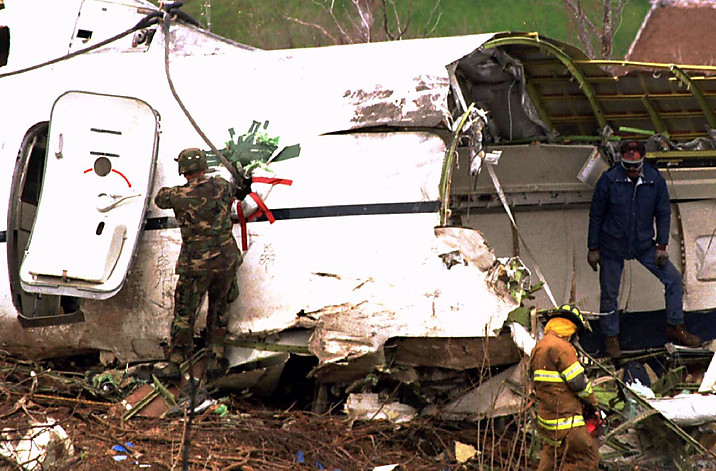
Ferrat would get just three and a half months to ponder his narrow escape.
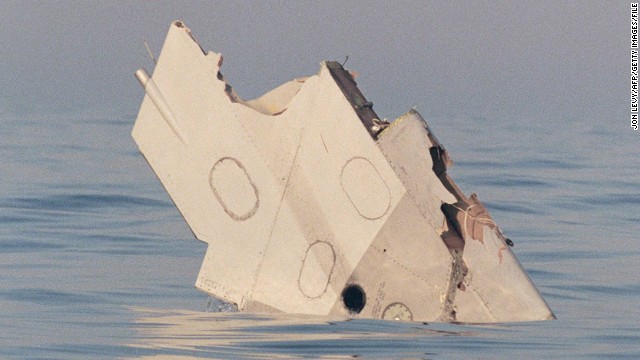
On July 17, 1996, he boarded TWA Flight 800, bound for Paris from New York, and shortly after takeoff, the plane apparently exploded and crashed into the Atlantic off Long Island, killing all 230 aboard, including Ferrat.
Culled from: Uncle John’s Ahh-Inspiring Bathroom Reader
Submitted by: Aimee

Conspiracy theorists, eat your hearts out. Side note: one George Henderson claims that he, not Ferrat, was the one supposed to fly to Dubrovnik with Ron Brown and who then backed out. – Aimee
Ghastly! – Syphilitic Edition
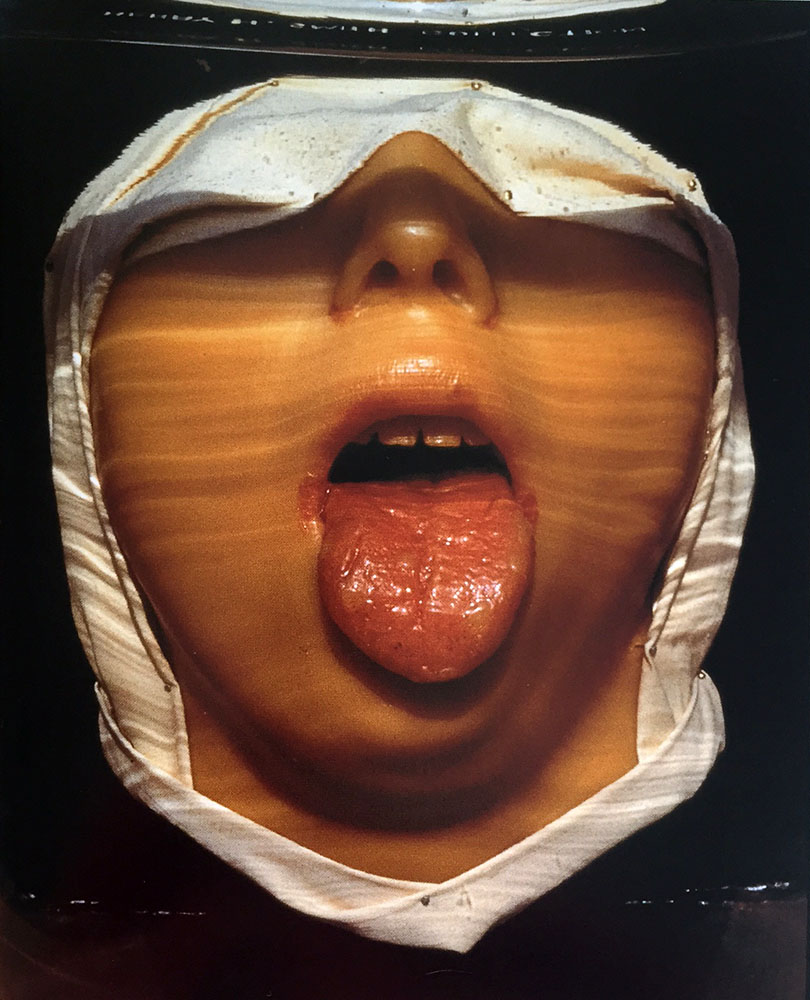
A Timeless Gesture (1994) by Rosamond Purcell
This is a 19th century wax model, probably German, showing syphilitic leukoplakia (development of white, thickened patches) of the tongue. Culled from: Mütter Museum of the College of Physicians of Philadelphia by Gretchen Worden.
Wretched Recommendations!
I thought I’d share the latest addition to The Library Eclectica:
Sleeping Beauty III: Memorial Photography: The Children


This is another collection of memorial photographs from the fabulous Burns Archive. I have to say, though, my first impression regarding this book is rather negative. I didn’t pay attention to the size of the book and assumed it would be a large 9″ x 12″ book like the previous collections Sleeping Beauty I and II. (The dimensions of the above photograph on Amazon would suggest this as well.) However, it’s a paltry 6″ x 6 3/4″. I’m not sure why it’s so small? Is it because they’re children? In any event, I’m still pretty annoyed by the high price ($43.75) combined with the small size.
Having said that, it’s another great collection of fascinating and very sad images. It even includes a small section at the end for modern memorial photography, which only seems to cover stillborn babies or babies that die soon after birth, before a proper photograph could be taken of them while alive.
Although the deceased children are, of course, fascinating, for me the real poignancy of memorial photography comes with the stoic faces of the surviving parents and siblings. Looking at these photos always puts my mind back into the 19th century, thinking of how tentative life was back then, with untreatable epidemics just a cough or a sip away. Looking at the weary faces of some of the mothers, I can’t help but wonder how many times they went through this experience in their lives? Entire families could be wiped out in a matter of days. There’s so much that we take for granted in this age of modern medicine. Sometimes it’s good to stop and reflect on the peace of mind that science has given us, and how if we’d been born a hundred years earlier, life would have been very, very different.
I’ll share some photos from the book every now and again. Here’s the first one:
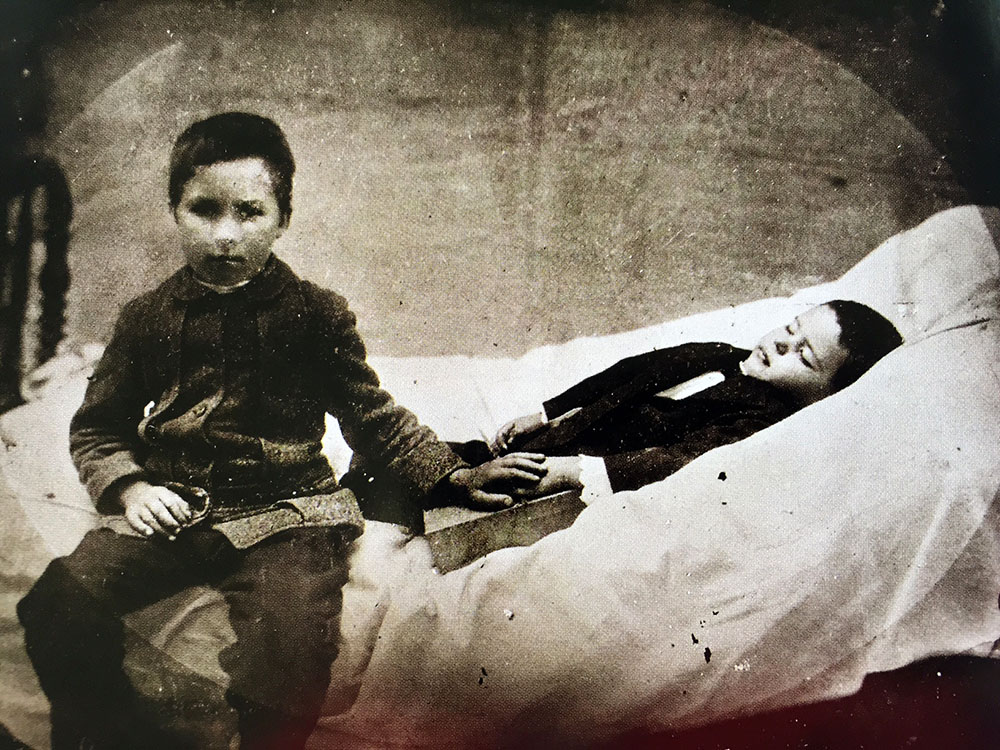
BROTHER MOURNING BROTHER
TINTYPE FULL PLATE REMOVED FROM FRAME, CIRCA 1870
In the nineteenth century, loss of a sibling was common and often resulted in photographs of children posing with their deceased brother or sister. This full plate tintype was beautifully framed and hung on a wall as a memorial to a lost brother.
More books about Cemeteries and Mourning can be browsed at The Library Eclectica!