Today’s Incendiary Yet Truly Morbid Fact!
The last person to be burned as a witch in Scotland was Janet Horne at Dornoch in Ross shire in 1727. Janet had been accused of witching her daughter to make her hands and feet grow into horses hooves, so that she could ride her. The daughter had a deformed hand, due to being “shod by the Devil”! She was also tried but acquitted. She later had a child who exhibited the same kind of congenital hand deformity. A stone at the place of execution commemorates her death. The witchcraft Acts were repealed there in 1736.
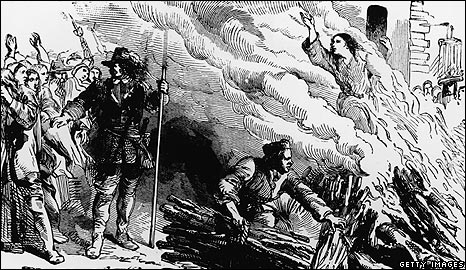
No Thank You!
It is claimed that as many as 200,000 people were burned for witchcraft in Europe in 16th and 17th centuries.
Three slightly different methods of burning were used. The first, consisted of using a heap of faggots piled around a wooden stake above which the prisoner was attached with chains or iron hoops. The British and Spanish Inquisition preferred this method as it had the greatest visual impact. This form of burning typically subjects the prisoner to a far more agonizing death as it some time before the flames reach head level. In most cases of treason and witchcraft the prisoner was strangled first before the fire was lit. In Scotland the strangling formed part of the sentence for convicted witches.
The second method was to tie the condemned to the stake and heap faggots all round them, effectively hiding their sufferings, so that they died inside a wall of flames . It is said that Joan of Arc died like this. It is thought that this method led to a much quicker death because the victim was forced to breathe the flame and hot gasses surrounding their face. The heat of the air causes the lining of the trachea to swell up thus blocking the airway and leading to suffocation within a few minutes.
The third method, used in Germany and the Nordic countries, involved tying the prisoner to a near vertical ladder, the top of which was tied to a frame, and then swinging them down onto the fire.
Culled from: Capital Punishment U.K.
Arcane Excerpts: Fractured Edition!
When I was a kid, my favorite thing to do was to look at books and magazines. We hadNational Geographics going back to the 50’s, and I had favorite articles that I would obsess over again and again. (Namely, the Anchorage Earthquake article and the one about the guy who went sailing around the world alone with his cat. Kind of sums up my future there in two articles.)
When I wasn’t perusing the National Geographics, I was certainly gazing at my favorite book: The Treatment of Emergencies by Hubley R. Owen, M.D., 1918. And for good reason too – there were some ghastly photographs of injuries in the book. Even the “how-to” photos were kind of creepy in their way. So I thought I’d share some of the images that shaped the formative mind of The Comtesse.

There’s this signature in the front of the book. I might have to snoop around for a Dr. Cooper in the Hollingsworth Building, Los Angeles sometime…

The first chapter is entitled “Fractures” and has lovely images like these:
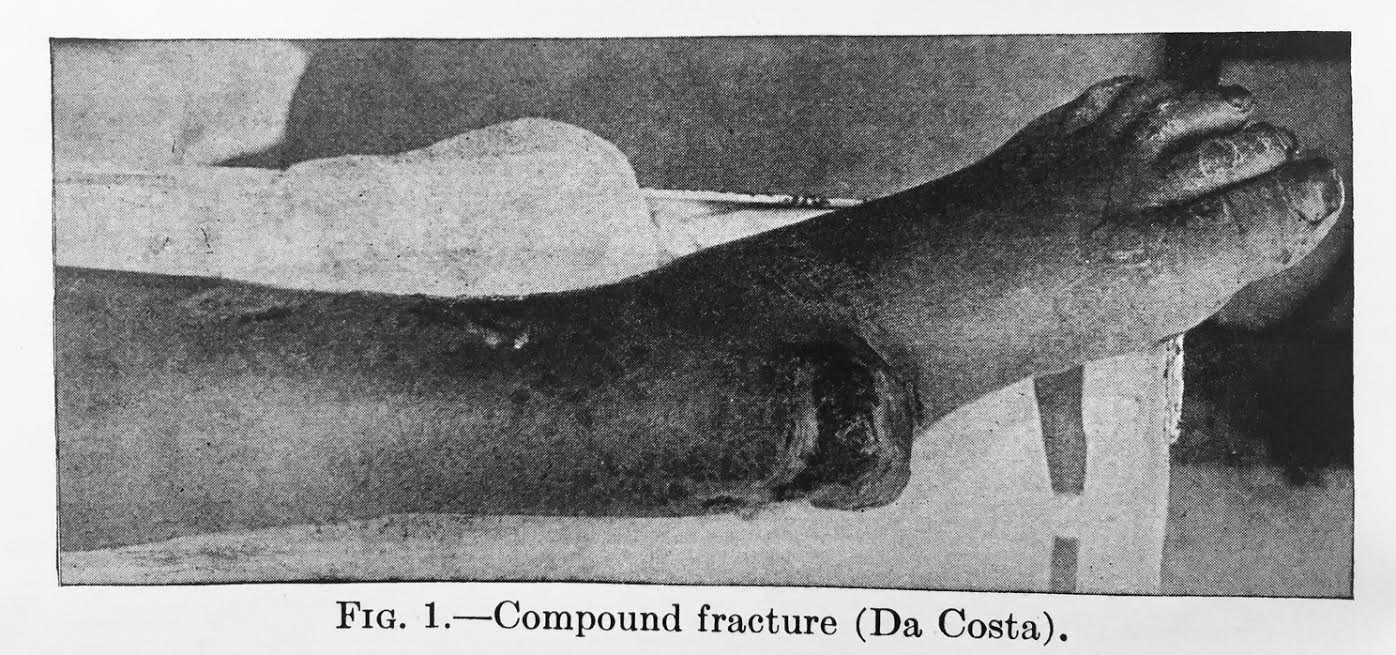
Ouch, Ouch, Ouch!!!
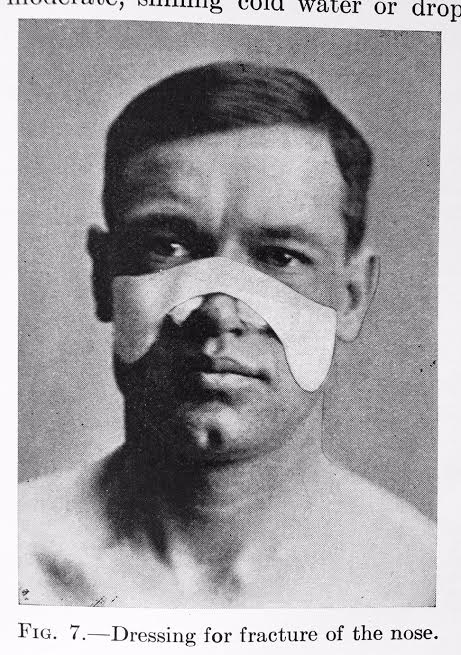
What a handsome model! Look at that dimple!

Owie! Owie! Owie!
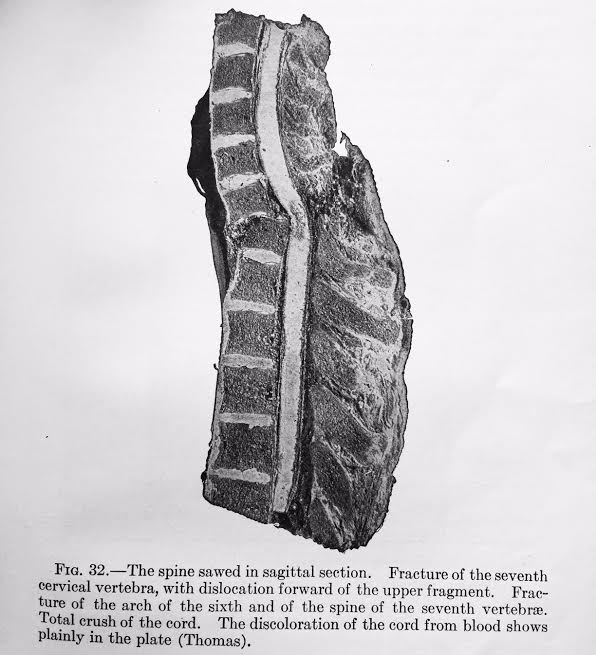
Bad break!
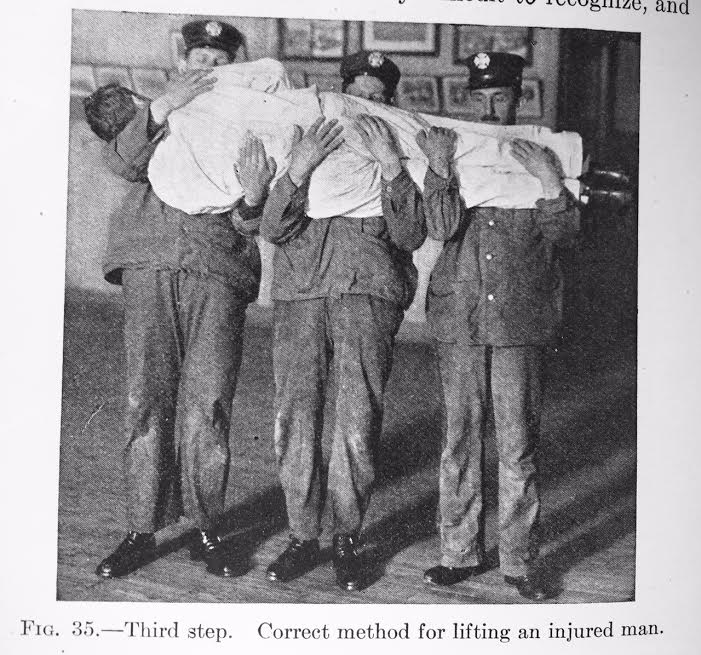
I wonder if the guy in the middle is happy to get that spot, or if he got the short straw?
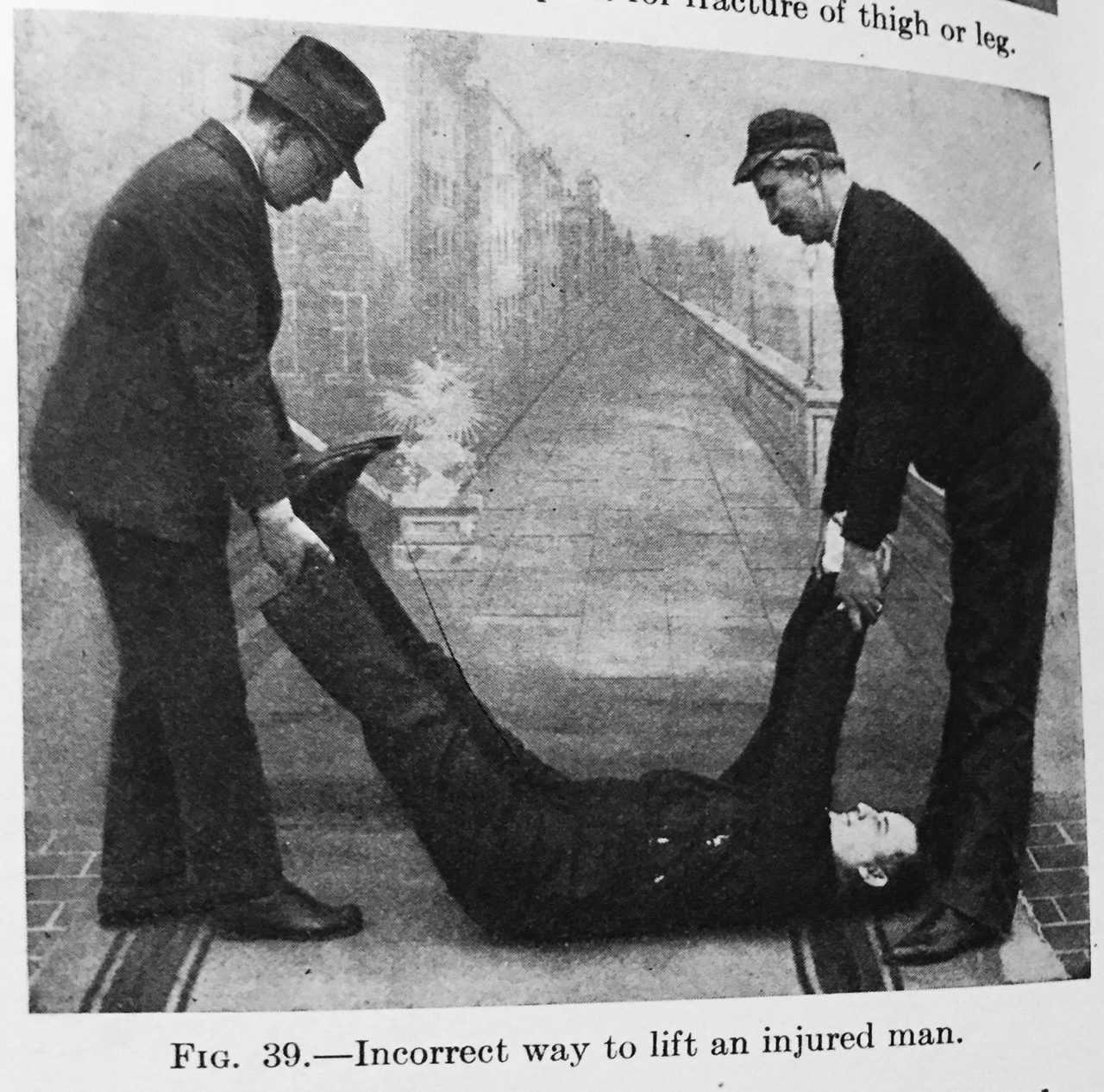
Ur Doing It Rong!
I’ll share more fun-filled delights in the future. Hope you enjoyed this episode!