Today’s Wretched Yet Truly Morbid Fact!
William Henry Theodore Durrant was born in Toronto, Ontario, to William Durrant, a shoemaker, and his wife, Isabella Hutchenson Durrant. The family emigrated to San Francisco, California in 1879. He had one sibling, a younger sister, Beulah Maud (or Beulah Maude), who became an actress and interpretive dancer known as Maud Allan.
At the age of twenty-three, Durrant was a medical student at Cooper Medical College in San Francisco, assistant superintendent of the Sunday school at the 21st Street Emmanuel Baptist Church and a member of the California Signal Corps. It is believed that young Durrant suffered from manic depression. There were unsubstantiated rumors of a dark side to Durrant’s personality. One claimed that he occasionally visited brothels in San Francisco’s Commercial Street, where allegedly he once brought with him, in a sack or a small crate, a pigeon or a chicken, and at a certain time during the evening’s debauch he cut the bird’s throat and let the blood trickle over his body”.
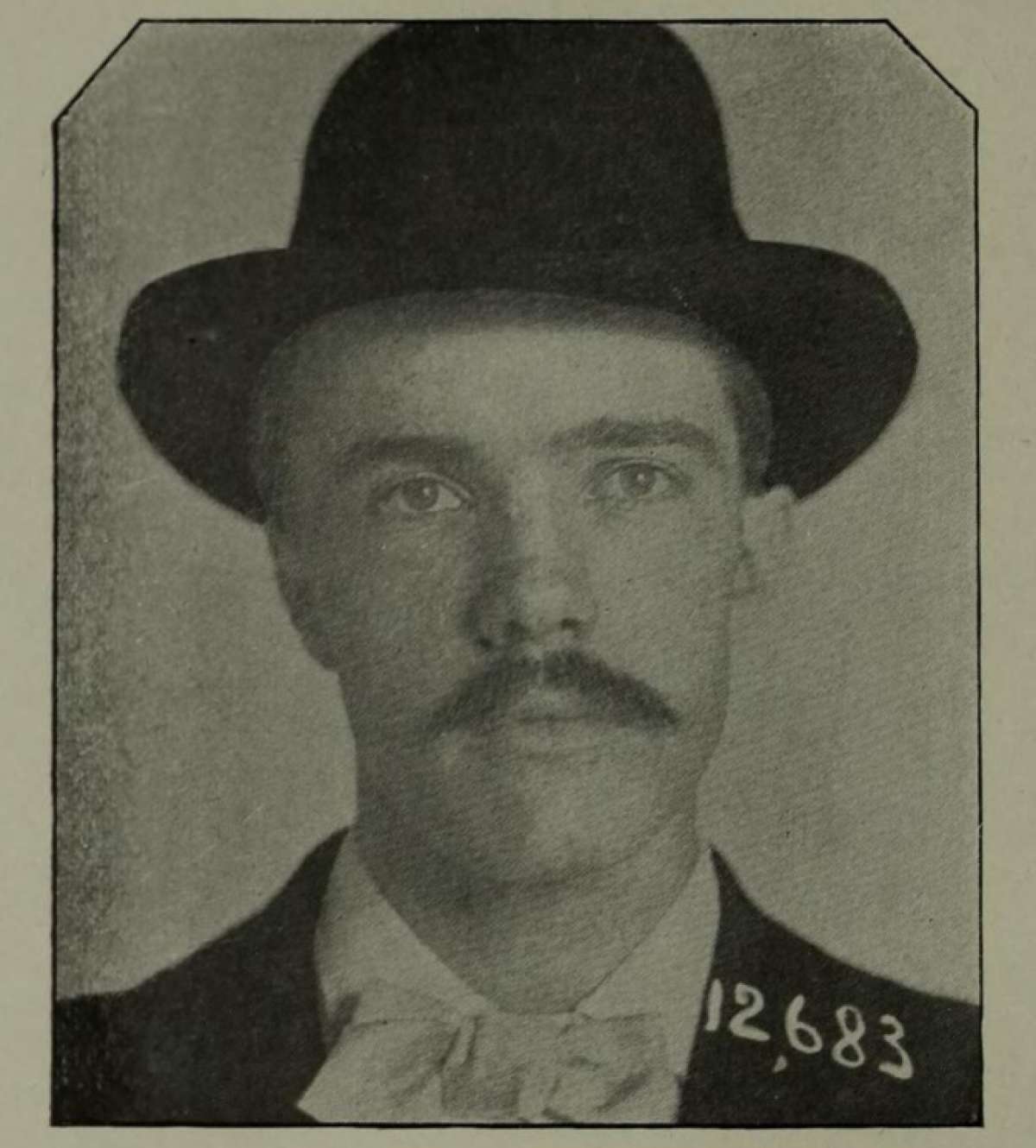
Creepy Young Durrant.
Blanche Lamont was a twenty-year-old who had been teaching at a one-room school in Hecla, Montana. She had moved to San Francisco to further her education and was living with her aunt, Mrs. Tryphenia Noble [Now, there’s a name to use in your next novel! – DeSpair], on 21st Street in the Mission district.
On April 3, 1895, Durrant met Lamont at the Polk Street electric trolley stop just after 2:00 p.m. They rode together to the 21st Street stop. Other people on the trolley stated that they were very close and that Durrant was whispering into Lamont’s ear and tapping at her lightly with his leather gloves. They got off at their stop and were seen by a Mrs. Mary Noble walking down 21st Street to the Emanuel Baptist Church.
A Mrs. Caroline Leak saw them enter the church together. Mrs. Leak, who later testified at Durrant’s trial, was the last person known to see Blanche Lamont alive. George King, the church choir director and organist, who was practicing hymns on the organ, testified that Durrant came downstairs at 5:00 p.m. looking pale and shaken and asked him to go get a medicine at a nearby store.
Mrs. Noble came to the church looking for Lamont a few hours later during the evening prayer service. Durrant approached Noble and inquired about Blanche; she told him that she was worried about her. Durrant told Noble that he was sorry that Blanche was not there but that he would come to her house later to bring a book for her. Mrs. Noble said that he did come by later with the book and suggested that Lamont might have been kidnapped to be forced into prostitution.
The next day, Durrant tried to pawn some women’s rings in the San Francisco Tenderloin district. That same afternoon Noble received a package with the name George King, who was the church choir director, written on the wrapper with Blanche’s rings inside. It was three days after Blanche’s disappearance before Mrs. Noble had reported her missing to the police.
Police questioned Durrant because he was the last person she was seen with and also because a young woman of the church said that she had once come upon Durrant nude in the church library. Police did not have a body or any evidence that anything had happened to Blanche so she remained listed as a missing person.
During this time Durrant began focusing his attentions on twenty-one-year-old Minnie Flora Williams, also an Emmanuel Baptist parishioner. At 7:00 p.m. on April 12, 1895, which was Good Friday, nine days after Lamont disappeared, Williams told her friends at her boarding house that she was going to a church member meeting at the home of a church elder named Vogel, whose wife Mary had seen Durrant walking with Blanche Lamont, the day she disappeared. A few minutes after 7:00 p.m., she was seen in a heated discussion with Durrant in front of the church.
The argument was loud enough to alert a passerby named Hodgkins to stop and intervene. Hodgkins later testified that Durrant’s manner was not becoming to a gentleman and that the pair did calm down and enter the church door together. At 9:00 p.m., Durrant arrived at the church elder’s house for the scheduled meeting.
On Saturday April 13, the women of the church were decorating the church for Easter Sunday. One of the ladies went to a cabinet to get cups and when she opened the door she found a mutilated female body inside. The police were called and the body was identified as Minnie Williams. The church and grounds were searched for any clues and for Blanche Lamont, whom police now suspected to be there. Nothing was found until a church member remembered that they had not searched the belfry. Police went up into the belfry and found Blanche Lamont. She was badly mutilated and nude with her head wedged between two boards. Police immediately began a search for Theodore Durrant, who was the last one seen with both murdered women.
Durrant had left town to join his Signal Corps unit, where he was apprehended the next day, Easter Sunday. He was charged with the murders of Blanche Lamont and Minnie Williams. The trial was covered by major newspapers across the United States.
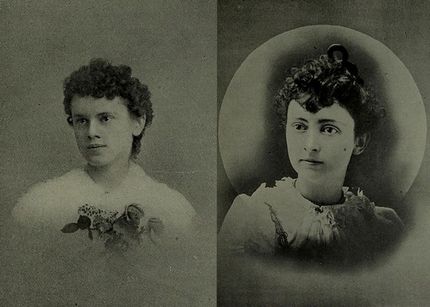
Minnie Williams (left) and Blanche Lamont (right)
A primary witness against Durrant was Blanche Lamont’s sister, Maud Lamont. She gave an account of her sister’s life before her disappearance. She testified that Durrant often came to pick Lamont up to escort her to church and then home and that he came to her house offering to search for Lamont after her disappearance.
The defense challenged her testimony about Lamont’s weight, which she stated was approximately 122 pounds, with their claim that she weighed 140 and that it would impossible for Durrant to carry her up to the belltower. She also identified a diamond chip ring she had given Lamont that a man who was supposedly Durrant had tried to sell. His attorney defended him by citing lack of blood on him or his clothes and shifting blame to the church pastor, but Durrant was convicted and sentenced to be hanged by Judge Carroll Cook. Durrant never confessed to the murders and claimed his innocence until his death. Durrant was granted a temporary reprieve in 1897.
The execution was carried out on January 7, 1898 at San Quentin prison.
Culled from: Wikipedia
Here’s a contemporary account of Minnie Williams’ body, as quoted in Bestial:
Her clothing was torn and disheveled. She had been gagged, and that in a manner indicative of a fiend rather than a man. A portion of her underclothing had been thrust down her throat with a stick, her tongue being terribly lacerated by the operation. A cut across her wrist had severed both arteries and tendons. She had been stabbed in each breast, and directly over her heart was a deep cut in which a portion of a broken knife remained. This was an ordinary silver table-knife, one of those used in the church at entertainments where refreshments were served. It was round at the end, and so dull that great force must have been used to inflict the fearful wounds; indeed, it appeared that the cold-blooded wretch had deliberately unfastened his victim’s dress that the knife might penetrate her flesh. The little room was covered in blood.
Car Crash Du Jour!
One of my favorite books is Car Crashes and Other Sad Stories by Anaheim photographer Mell Kilpatrick. It’s a collection of car crash photos from the 40’s and 50’s, often with corpses still strewn across the enormous interior (or out of it, since there were no seat belts in those days). It combines my love of old cars with my love of morbidity and is the perfect ambulance chaser book!
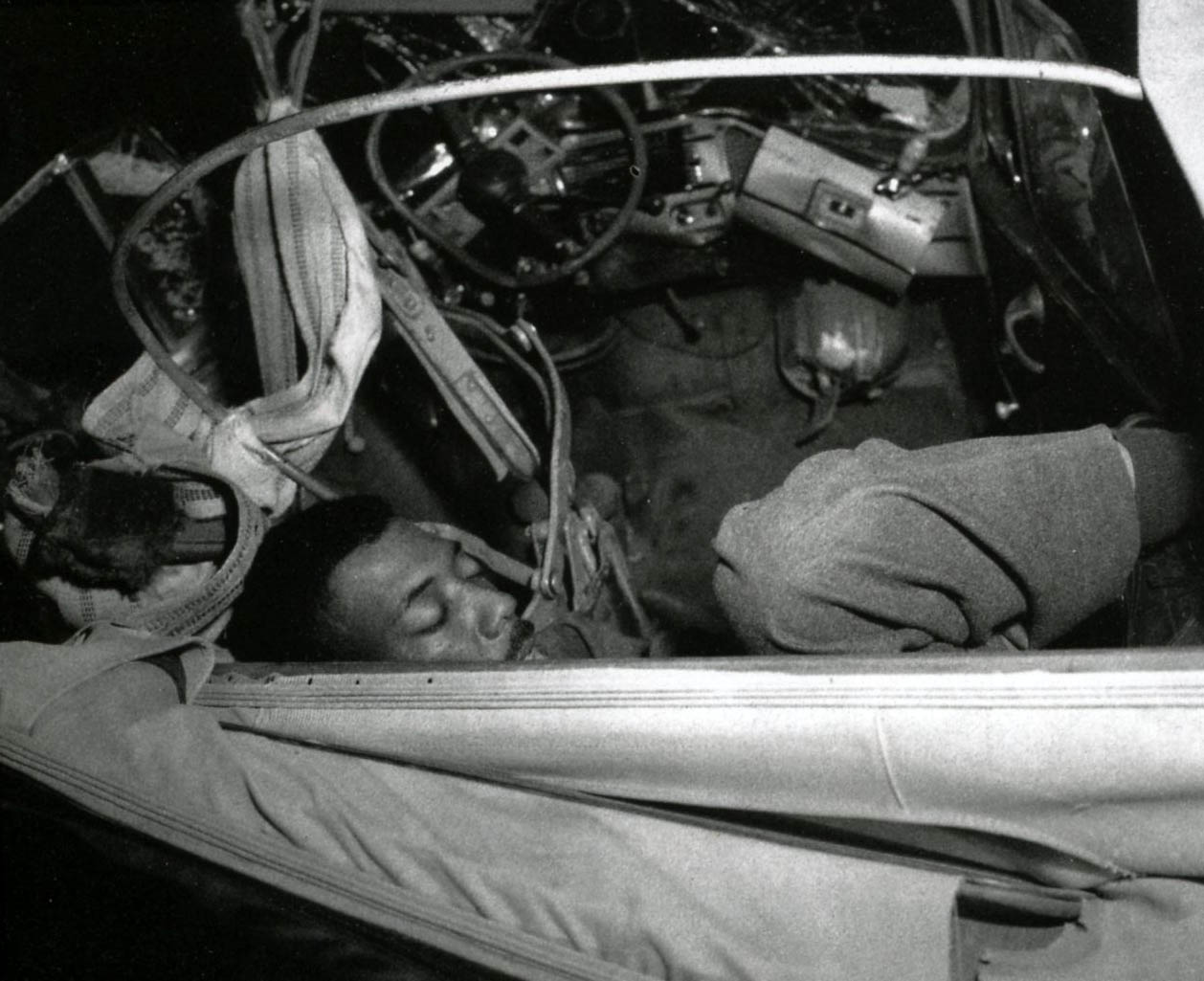
Rt. 101 5 miles south of Laguna