Today’s Humiliating Yet Truly Morbid Fact!
Brasa was a male prison camp in the Latvian S.S.R. Those who have seen these camps and prisons have prolifically commented on the cruelty of the guards and K.G.B. personnel. Here is an excerpt of one such testimony:
Ya. R. who was a prisoner in camp no. OTs-78/7 (Riga, Krustpils Street 53), reports:
“Colonel Aleksei Antonov was campo commander, though we rarely saw him. He ran the camp from his office. His low visibility, however, was compensated for every day by the cruelty of his assistants. Aleksandr Denisov, a good example. A sly and malicious person, Denisov would order the prisoners thrown into the isolation cell for the slightest transgression, such as failing to remove their caps in his presence or not sitting on their own plank-beds in the barracks. Worst of all was K.G. B. Captain Elmar Zual, head of the operations section at the camp. A real Gestapo type, his aim was to humiliate people. In his office, he had rubber hoses, boxing gloves, and even handcuffs attached to electrical wiring. All this was mere pretense, but there were times when he dropped all pretense to frighten those prisoners who refused to collaborate with the K.G.B. by informing on their fellow inmates. Those who could not be intimidated where thrown into the isolation cell. Zaul thus often beat the prisoners himself; it was not unusual to hear the cries of his victims from his office.
“One of Captain Zual’s deputies was Alfred Berzins. He was two meters tall, drank constantly, beat the prisoners, and carried two medal on his chest – ‘Outstanding Worker of the K.G. B.’ and ‘Outstanding Worker of the Ministry of Interior’. “In our camp, there were about 2,000 prisoners living in five barracks. Each prisoner was allotted 0.7 square meters of ‘living space’. Though our official workday lasted eight hours, we had to work longer than that in order to meet our quotas. After work, we were forced to perform ‘public services’ for the camp – without pay. For our basic labors were received five to ten rubles a month after taxes.
“We were assigned to several different jobs, such as the construction of the Popov Radio Factory, a grain factory, or a bituminous concrete plant. The personnel of the lumber plant, moreover, consisted entirely of prisoners.
“There were other Jews like myself who were confined here – as political prisoners, in effect – for attempting to emigrate to Israel. A number of inmates were also imprisoned here for religious reasons or for protesting against the Soviet occupation of Latvia. I recall one Latvian, for example, who was sent here for throwing black paint on the Lenin Monument in Fliga. A certain Kovetskii was sentenced to twelve years in this camp for attempting to emigrate to Sweden illegally. Zhuraviev, formerly a member of the Soviet embassy staff in Indonesia, had his teeth knocked out for describing life in foreign countries to his fellow inmates. A Tatar was beaten up for telling the other prisoners about the violent resettlement of his people from their Crimean homeland. Dudkin, a Jew, was subjected to a berating for holding conversations on Zionism. A certain Belinitskii was beaten up for he merely interceding on behalf of a fellow inmate in the presence of a camp supervisor, who shouted in response, ‘Don’t try to defend the others, worry about your own hide!’
“I repeatedly saw how prisoners at our camp were driven to despair by the arbitrariness of the authorities and the exhausting work. Many of them chose to end their lives by opening their veins.
“I also remember the exceptional humiliations to which the religious prisoners were subjected. Personnel at the camp stuffed dirty food into the mouths of Jewish or Moslem prisoners, for example, and shouted, ‘Eat, you swine!’ They ridiculed religious Christians through ironic reference to parables from the Bible or instigated non-believers to attack them. In making effective use of the principle ‘divide and rule’, the camp authorities often incited the Russian prisoners against their fellow Latvian inmates. Captain Zual himself once fomented a fight – indeed, a slaughter – between the Russian and Latvian prisoners; against the Jews he often incited all the other nationalities. Once, on Yom Kippur, they tried to beat us up while we were in prayers. “Our camp was, according to prisoners who were sent to use from other penal institutions, relatively lenient – it was classified as an ordinary-regime facility. The strict, intensified, and special strict-regime camps were much worse.”
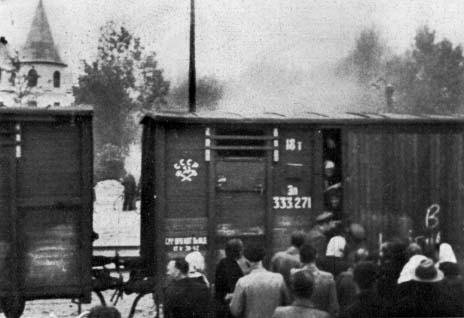
Culled from: The First Guidebook to Prisons and Concentration Camps of the Soviet Union
Post-Mortem Portrait Du Jour!
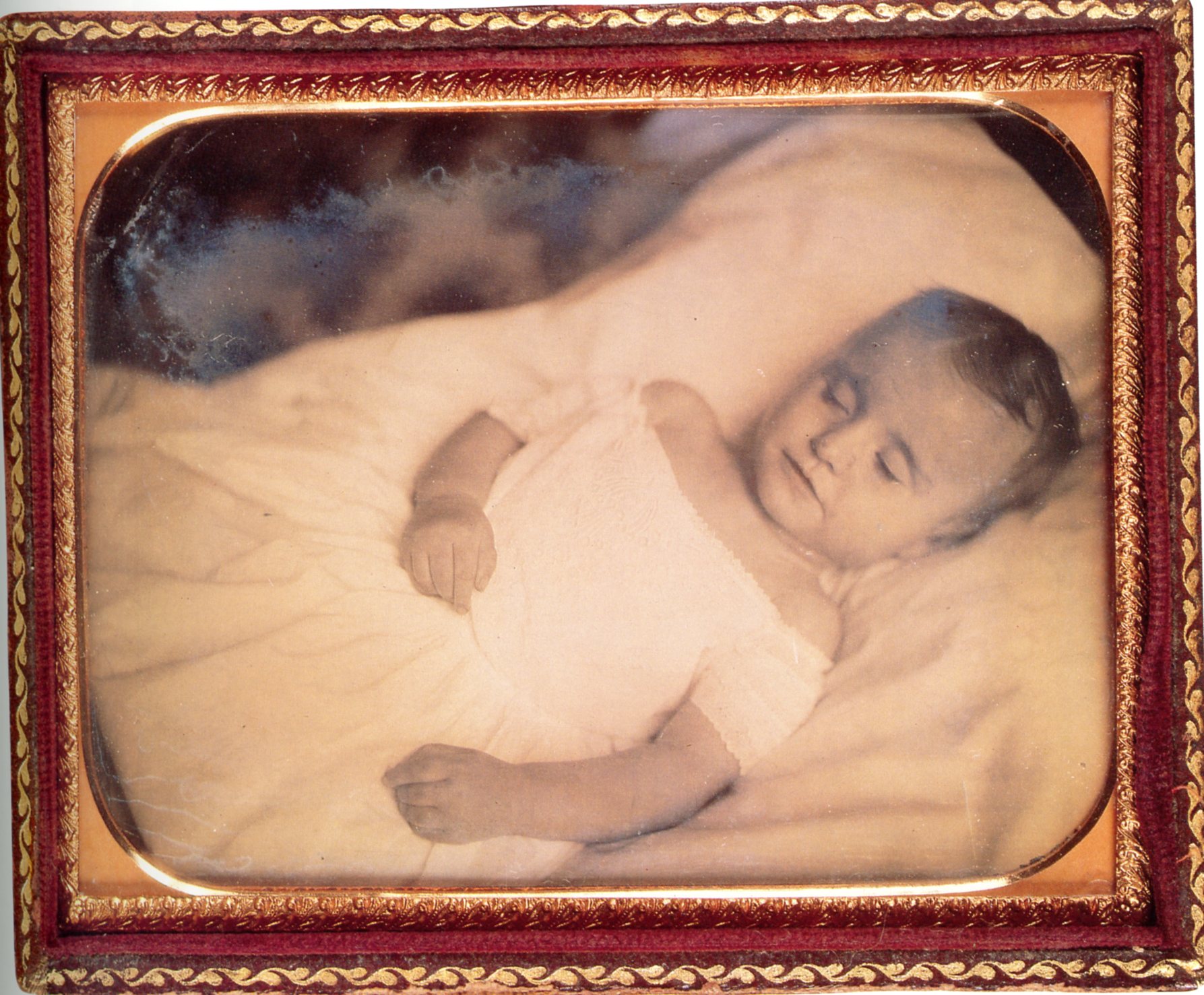
Young Dead Girl. “Sleeping”
Southworth and Hawes, Boston
3 1/4 x 4 1/4″, Daguerreotype
Circa 1853
Culled from: Sleeping Beauty: Memorial Photography in America