Today’s Bubonic Yet Truly Morbid Fact!
Though epidemiological controversies have raged, the Black Death was almost certainly bubonic plague, caused by transmission of the bacillus Yesinia pestis from rats to humans via fleas (notably Xenopsylla cheopis). When the bacillus enters the body through the bite of an infected flea (it can disgorge up to 24,000 in one bite), the disease follows the pattern called bubonic. After a six-day incubation, victims suffer chest pains, coughing, vomiting of blood, breathing troubles, high fever and dark skin blotches caused by internal bleeding (hence the name Black Death), as well as hard, painful egg-sized swellings (buboes) in the lymph nodes in the armpit, groin, neck and behind the ears. Restlessness, delirium, and finally coma and death generally follow. Not all the features familiar in contemporary Asia match those recounted in medieval chronicles. The swift onset suggests that some direct human-to-human transmission also took place, perhaps in the form of pneumonic plague, spread by droplet infection.

The tell-tale buboes.
Many explanations were inevitably offered: God in His wisdom had sent plague to punish mankind for its sins; it might be the result of planetary conjunctions; amongst the ‘natural causes’, alterations in the environment could cause a ‘pestilential atmosphere’ resulting from effluvia, vapors from stagnant pools, dungheaps, decaying corpses, the breath of sufferers themselves – or poisoning of the air by ‘enemies’ such as Jews. Laymen like Boccaccio referred to contagion, but most medical theorists, loyal to their Greek learning, stood by constitutional factors: if the body was robust, illness should not result; if not, one would sicken and die.
Responses depended upon which theory was accepted. If the plague was truly God-sent, only prayer and fasting could be effective. This encouraged flagellant bands to trudge from town to town, whipping each other, hoping by their lashings and denunciations of Jews and sinners to propitiate divine wrath; which in turn sparked persecution of Jews, who were accused of poisoning the wells. In Basel, Jews were penned up in a wooden building and burnt alive; 2000 were said to have been slaughtered in Strasbourg and 12,000 in Mainz; while in July 1349 the flagellants led the burghers of Frankfurt into the Jewish quarter for a wholesale massacre. But, however pious, the flagellants themselves posed a serious threat to public order by creating panic and challenging authority, leading Pope Clement VI to prohibit them.
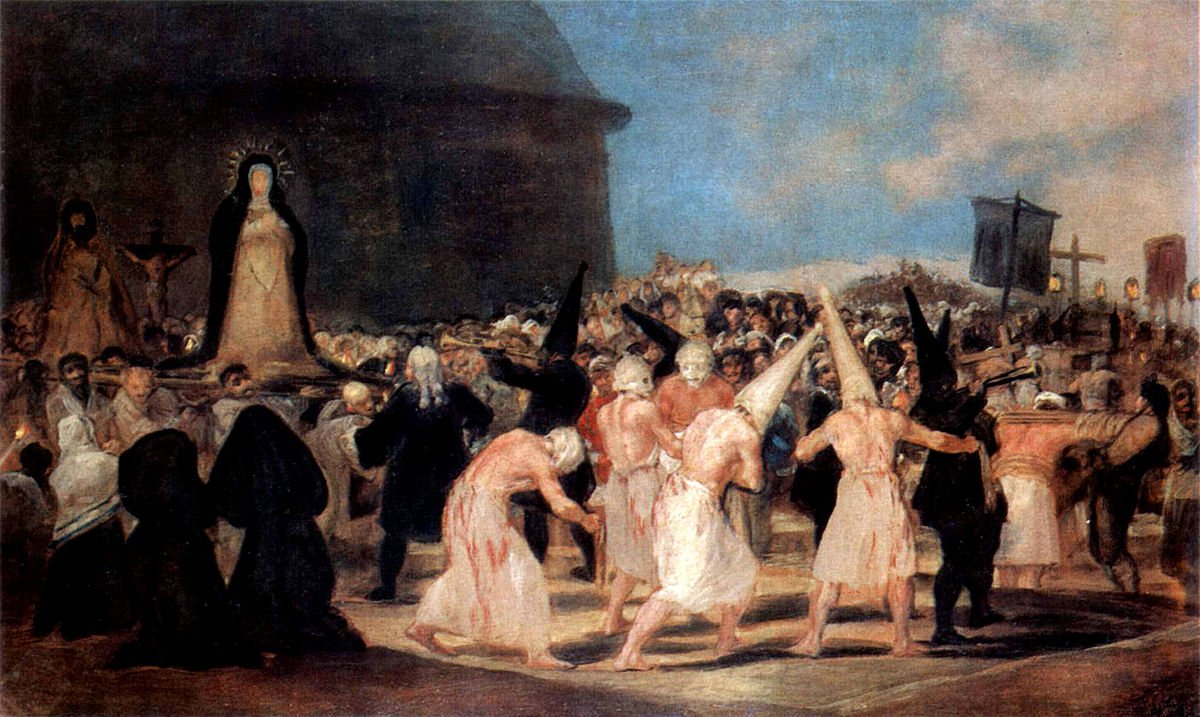
The Flagellants, Doing Their Part
Seeking to protect themselves with long leather gowns, gauntlets and masks with snouts stuffed with aromatic herbs, physicians put the accent on individual treatment, on the assumption that plague involved atmospheric putrefaction. They recommended sniffing amber-scented nosegays and pomanders and administering strong-smelling herbs – aloes, dittany, myrrh and pimpernel, all supposed to have cleansing properties, to say nothing of those princes of pharmacy, mithridatium and theriac. Fires should be lit and rooms fumigated with aromatic wood or vinegar. Writing in 1401, the Florentine doctor Lapo Mazzei (1350-1412) suggested “it would help you to drink, a quarter of an hour before dinner, a full half-glass of good red wine, neither too dry nor too sweet.” [Some things never change – DeSpair, pouring a glass of the good stuff]
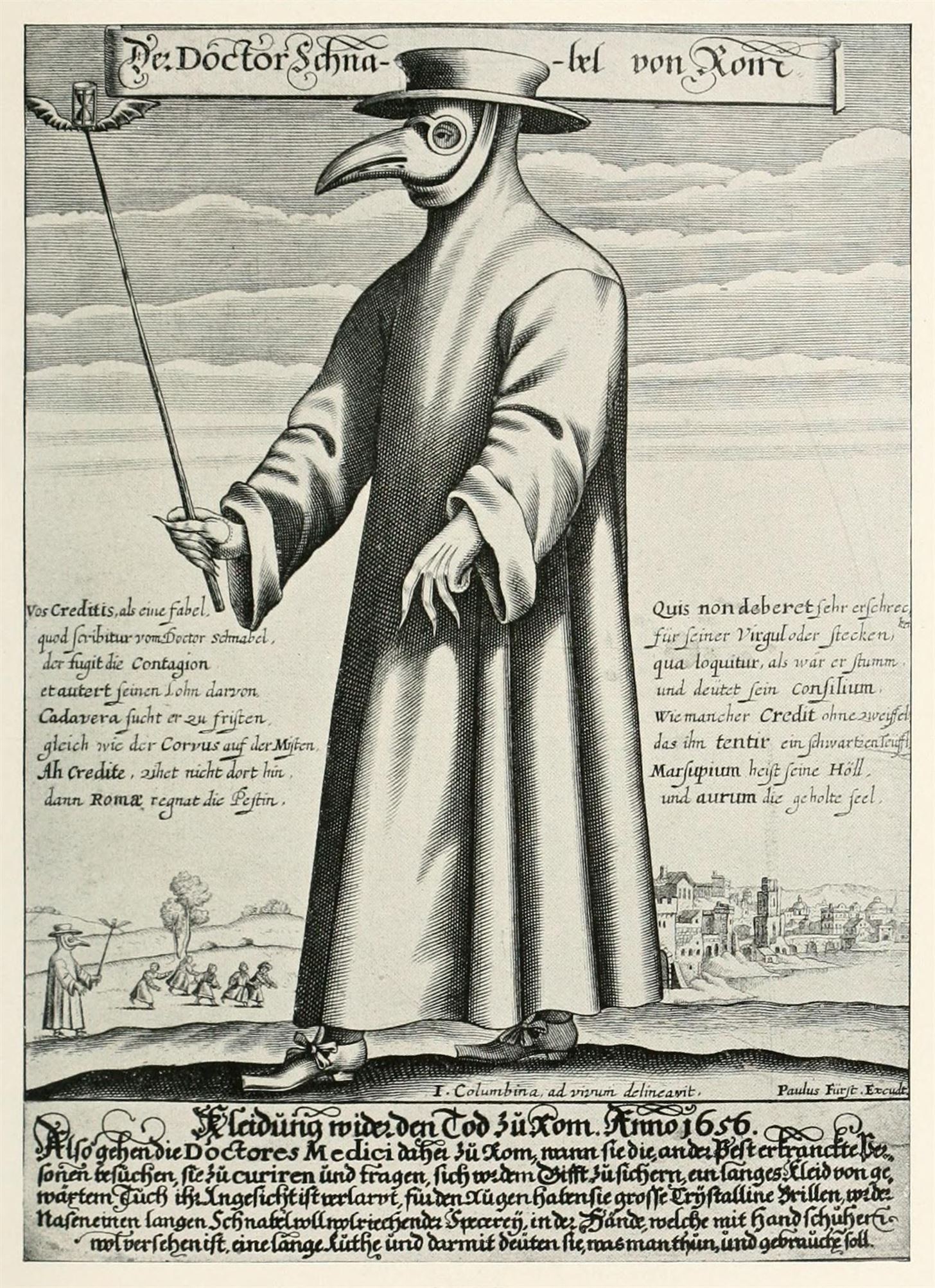
The Ever-Stylish Plague Doctor
Culled from: The Greatest Benefit to Mankind
Malformed Brain Du Jour!
Here’s another excerpt from Malformed: Forgotten Brains of the Texas State Mental Hospital.
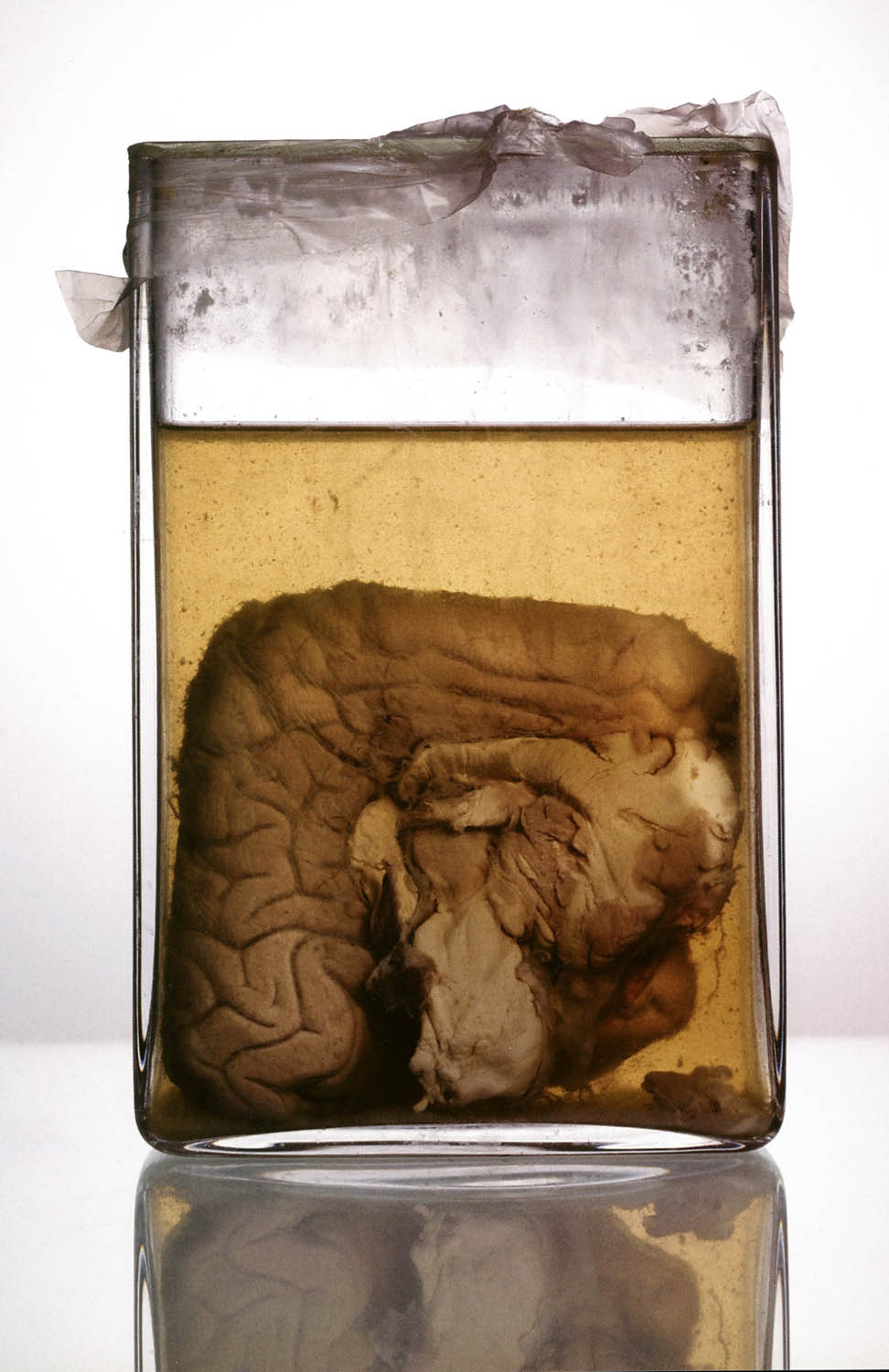
UNLABELED
Study No. 274
This mysterious half section of brain sat alone, misshapen and unexplained. [Wow, can I relate. – DeSpair]