Today’s Fickle Yet Truly Morbid Fact!
Here’s another excerpt from Minnesota 1918:When Flu, Fire, and War Ravaged the State, about the Cloquet fire that devastated much of Northern Minnesota.
The fire could be fickle, sparing explosives but destroying homes. Perhaps the cruelest twist-of-fate tale to emerge from the ashes of October 12, 1918, involved the postmaster in Automba, John Arvid Kerttu.
Passport records show he was born March 13, 1876, in Haaparanta, Sweden, and sailed from Goteborg for America in the summer of 1901. Five years later, he became an American citizen in Duluth. He was described as five foot three, stout with brown hair and eyes, a roundish face, and a reddish complexion. Kerttu worked as a taxidermist and artist in Duluth before becoming postmaster in Automba in the fall of 1915. He also had a store in town with a lunchroom, where he became a broker of timber deals for pulpwood and other business matters – a lucrative position for a successful immigrant in his forties.
When the fires began to grow on October 12, 1918, Kerttu loaded up his wife, Elisabeth, and kids Theodore (ten), Lilly (eight), and Raganor (one) into Alex Mattson’s car, which was ferrying people out of Automba. Kerttu opted to stay to collect important business papers and the cashbox from his store. He stayed too long. The road to Kalevala that provided an escape route for his family was now blocked with flames. So Kerttu started across the clearing southeast of town. At the east end of the rail yard, surrounded by fire, he lay down against a huge sawdust pile.
Refusing to submit to the agonizing fate of burning to death, he pulled out his pistol and shot himself in the head. When his body was found, the revolver was in his hand. His cashbox and papers were next to him. He was untouched by fire: the flames had somehow never ignited the mountain of sawdust that became his premature deathbed.
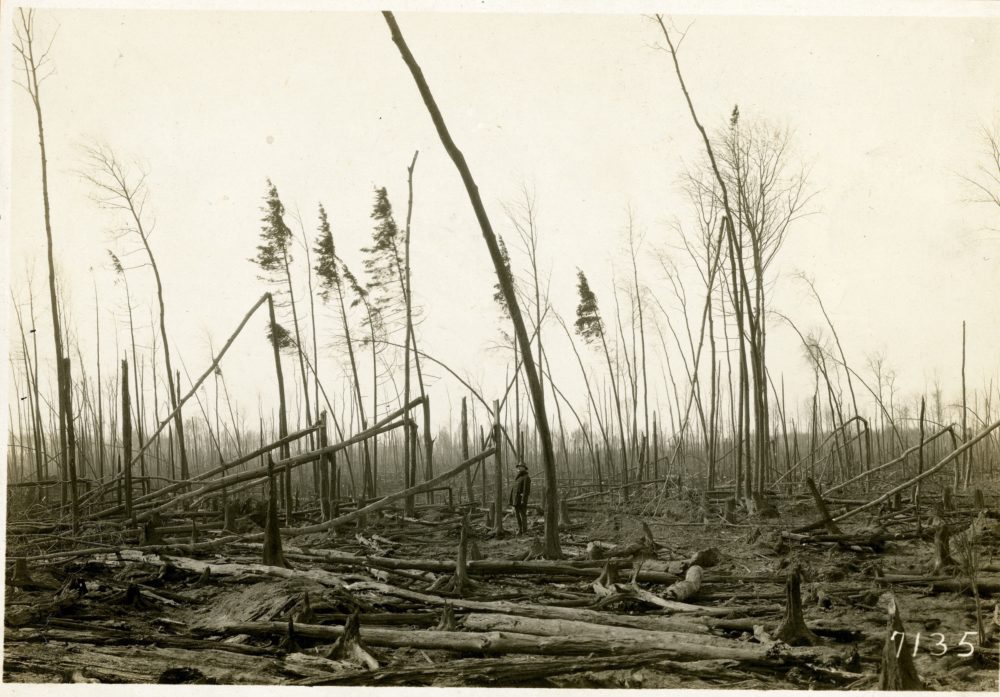
Aftermath of the Fire of 1918.
Incidentally, I realized while doing some genealogy research recently that the Cloquet fire came within a mile of my great-grandparents’ house in Duluth. Ironic that 100 years later we should lose a house to the Camp Fire in Paradise, California.
Post-Mortem Photo Du Jour!
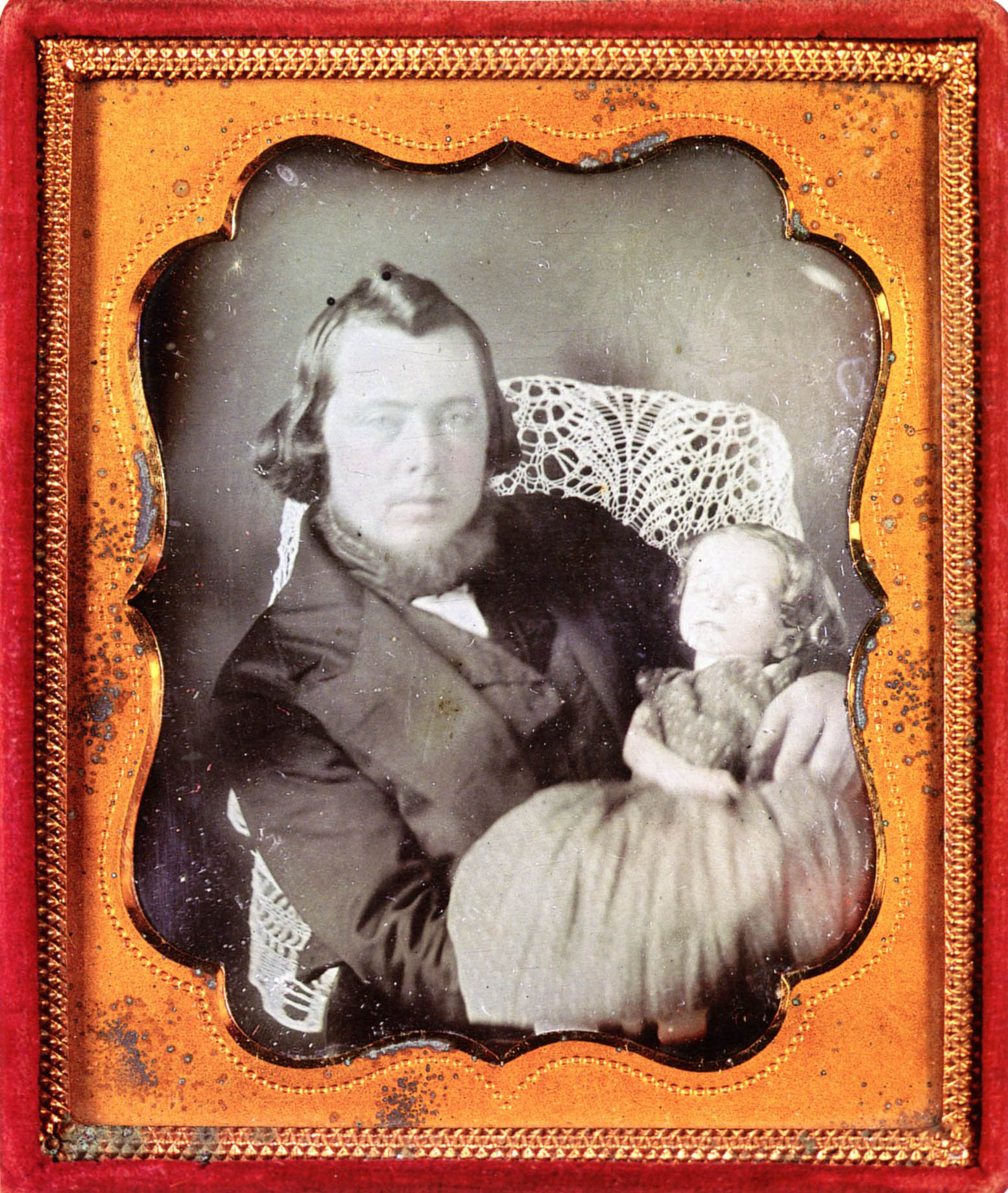
FATHER WITH DAUGHTER ON CHAIR COVERED WITH CROCHETED LACE
Daguerreotype, 1/6 plate, circa 1847
The manner in which this parent presents his daughter’s body to the camera connotes their separation. This child’s dehydrated state makes her appear more like a shrunken doll than a dead little girl. Perhaps the alien appearance resulting from her decay forced her father to acknowledge the need to let go, though it is notable that, despite these circumstances, he did not choose to have her photographed by herself. Her face and hair growth indicates that she is at least a year-and-a-half old. In that era, common summer diarrheas and other intestinal diseases such as typhoid, cholera and dysentery, rapidly dehydrated and killed children. It is no wonder the child mortality rate reached 50 percent considering that bloodletting and other drastic therapies were common treatments. The importance of fluid replacement was not recognized until the twentieth century. Interestingly, because diseased persons usually died quickly prior to the advent of modern therapies, they often looked amazingly healthy. Collectively, the images attest to the fact that in post-mortem photographs, for the most part, only the elderly and dehydrated showed overt signs of death.
Culled from: Sleeping Beauty II