Today’s Unendurable Yet Truly Morbid Fact!
The severe psychological obstacles experienced by the Einsatzgruppen troops in carrying out face-to-face killing were known to Nazi leaders. As Rudolf Höss later recalled:
I had heard Eichmann’s description of Jews being mown down by the Einsatzkommandos armed with machine guns and machine pistols. Many gruesome scenes are said to have taken place, people running away after being shot, the finishing off of the wounded and particularly of the women and children. Many members of the Einsatzkommandos, unable to endure wading through blood any longer, had committed suicide. Some had even gone mad. Most of the members of these Kommandos had to rely on alcohol when carrying out their horrible work.
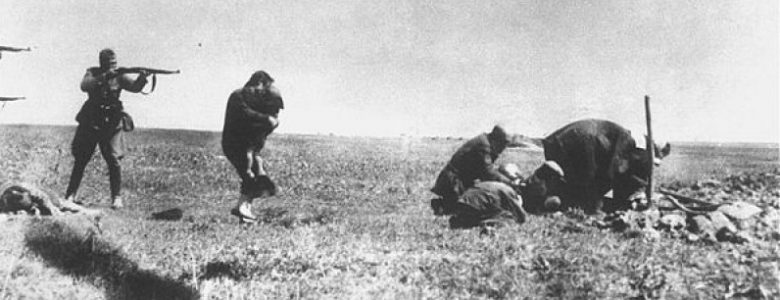
The poor dears, troubled by their “work”.
In the fall of 1941, one of the leading Einsatzgruppen generals, Erich von dem Bach-Zelewski, stunned Himmler by declaring to him, after they had witnessed the killing of about one hundred Jews: “Look at the eyes of the men in this Kommando, how deeply shaken they are! These men are finished for the rest of their lives. What kind of followers are we training here? Either neurotics or savages!” And Bach-Zelewski himself was to feel the effects: hospitalized with severe stomach and intestinal ailments, he experienced, according to Dr. Ernst Robert Grawtiz, chief SS doctor, “Psychic exhaustion” and “hallucinations connected with the shootings of Jews” he instigated and “grievous other experiences in the East”.
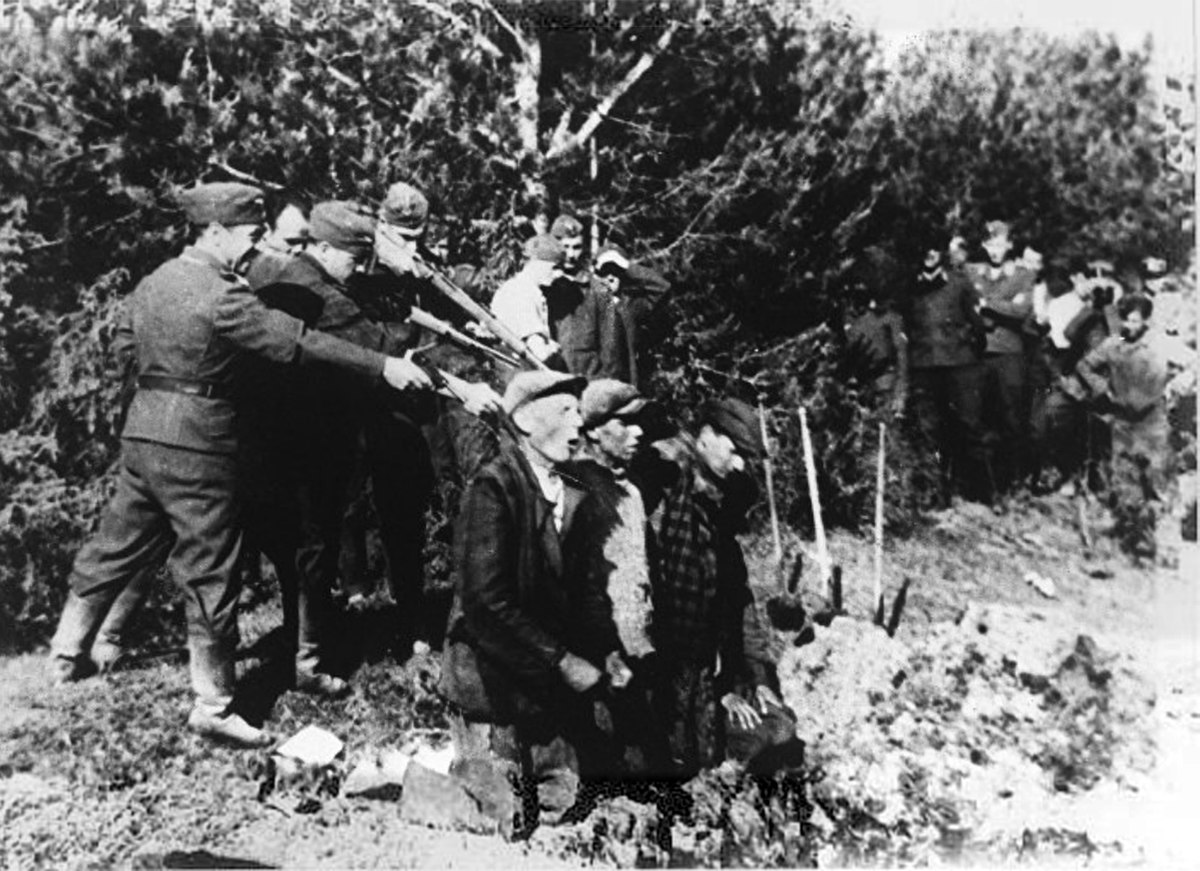
More bad dreams for the Einsatzkommandos.
As a consequence, as Höss explained, only gas was seriously considered for mass killing, “since it would have been absolutely impossible by shooting to dispose of the large numbers of people that were expected, and it would have placed too heavy a burden on the SS men who had to carry it out, especially because of the women and children among the victims.” Inevitably, they turned to earlier Nazi experience with gassing, and Eichmann familiarized Höss with the “euthanasia” project’s use of carbon monoxide gas released through showerheads. But the method was inadequate for large numbers of people because of the great amount of gas and the many installations with gas chambers that would be required. Mobile gassing units used in the East had similar limitations. Hence, “Eichmann decided to try and find a gas which was in ready supply and which would not entail special installations for its use.” As late as November 1941, Eichmann and Höss had not yet discovered a suitable gas, though the camp commandant had chosen an isolated Auschwitz site for the killing – a former peasant farmstead, which was made into the gas chamber Bunker I. They had not yet thought of burning the corpses, and the site’s meadows allowed long pits for burials.
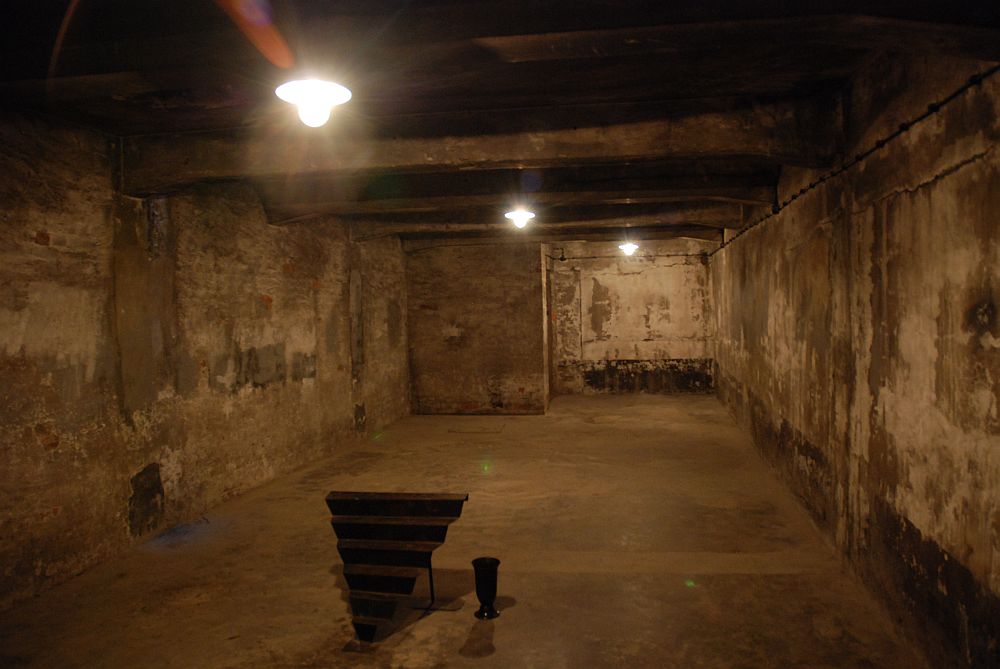
Bunker I at Auschwitz
On one of Höss’s trips away from Auschwitz in August 1941, his deputy, SS Captain Karl Fritzch, “on his own initiative” conducted successful experiments with Zyklon-B (the German trade name for hydrogen cyanide or prussic acid) on Russian prisoners of war on Block 11, the punishment block. Zyklon-B “was constantly used in Auschwitz for the destruction of vermin, and there was consequently always a supply of these tins of gas on hand.” Hoss joined in on repetitions of the experiment on his return, observing the killing while wearing a gas mask, and noting that death came very quickly; although he later claimed, “During this first experience of gassing people, I did not fully realize what was happening perhaps because I was too impressed by the whole procedure.”
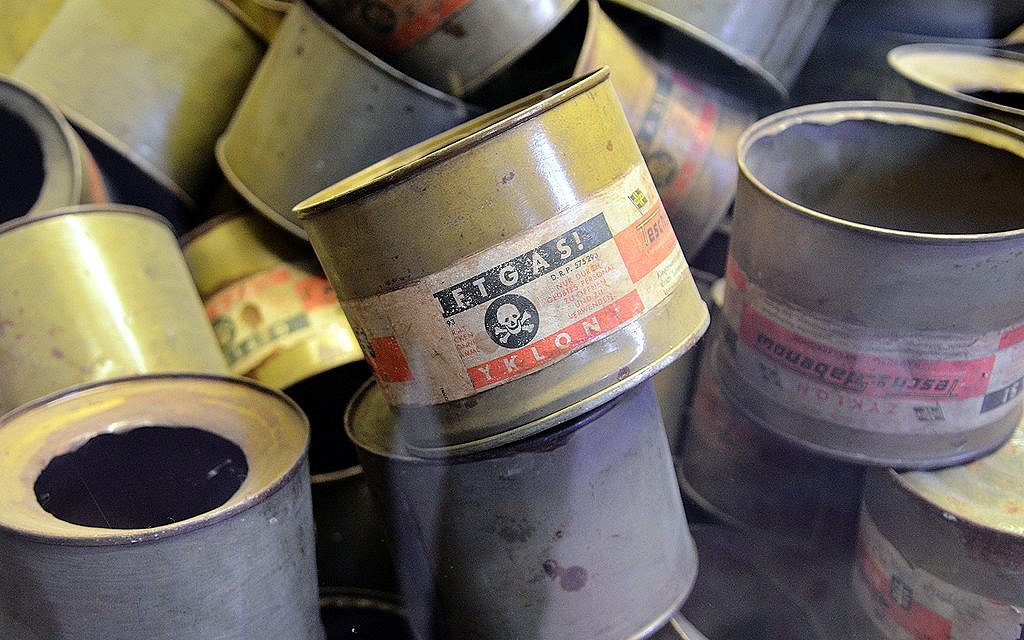
Zyklon-B canisters.
Culled from: The Nazi Doctors
Death Scene Du Jour!
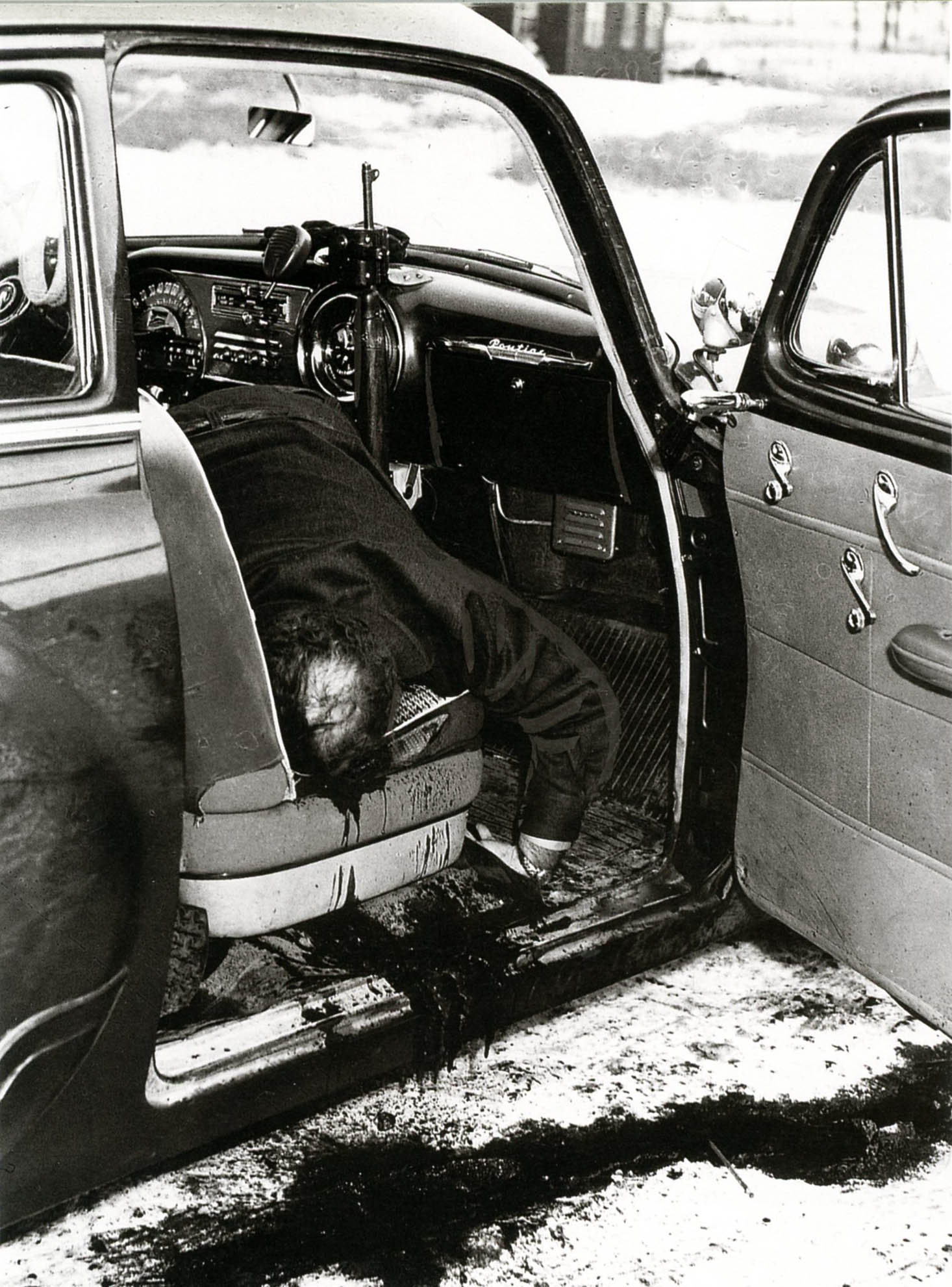
December 7, 1953
Two photographs related to the murder of an Anoka County, Minnesota sheriff’s deputy in December 1953 demonstrate the unblinking style of the times. The deputy Ernest Zettergren was shot and killed with his own gun after struggling with a burglar he’d surprised at four o’clock in the morning outside a tavern in Fridley. His body, slumped over the front seat of his squad car above a pool of blood, wasn’t discovered until three hours later by two boys on their way to school.
It’s not surprising that the photographer took this picture, but it is something of a surprise that police investigators permitted one of their own to be so cruelly depicted in death. The photograph ran in at least one edition of the Pioneer Press the next morning but did not appear in the final city edition. Perhaps someone had second thoughts.
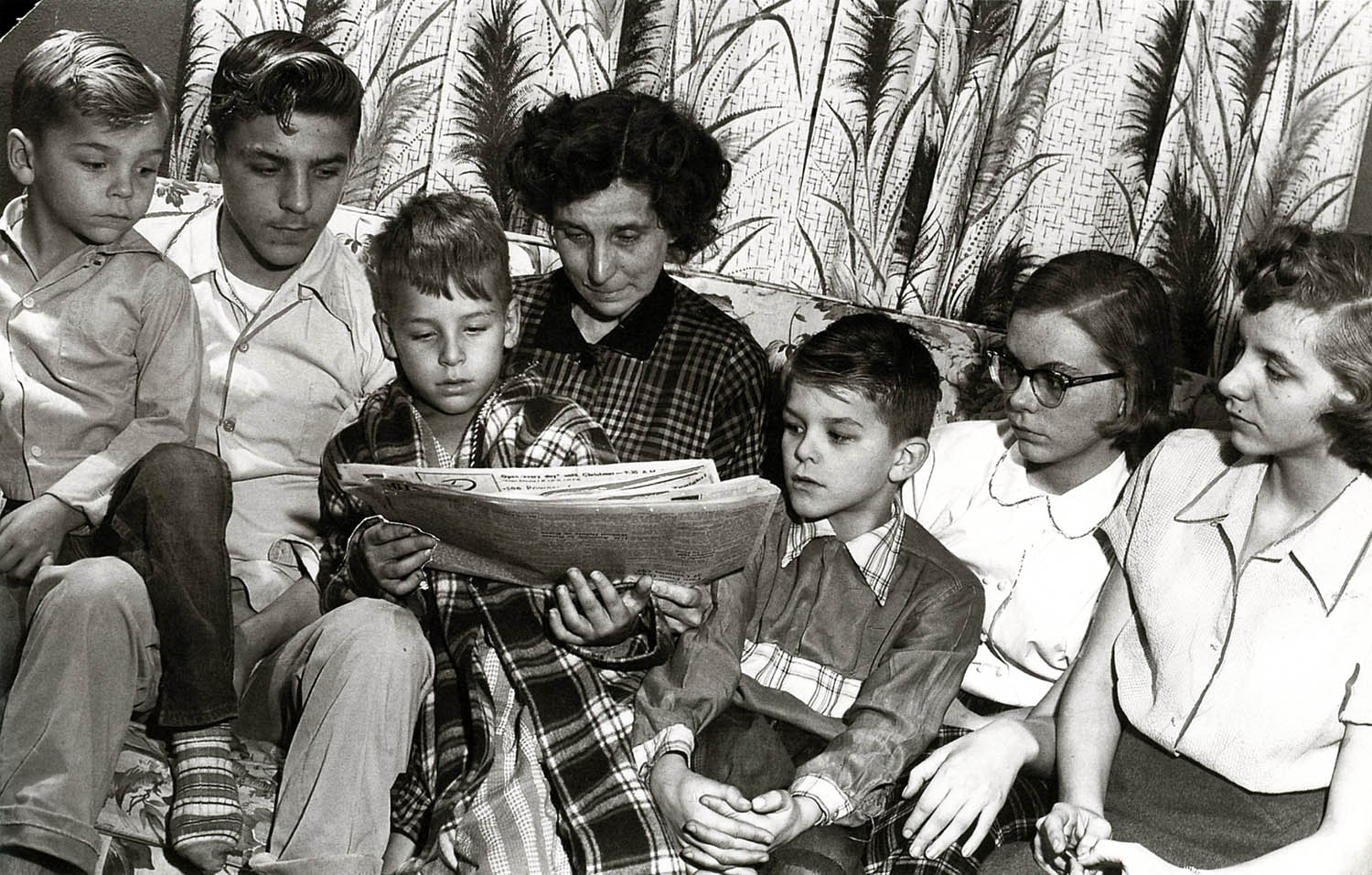
However, this photograph of Zettergren’s wife and six children did run in the Pioneer Press. It shows the grieving family looking at a newspaper account of the murder. Family members were also interviewed for a story in which they described their pain and loss. One can only wonder whether the family saw the bloody photograph of Zettergren published in the early edition and what their reaction might have been.
Zettergren’s killer was found within hours of the murder. The deputy had called in the license plate number of a car parked near the tavern moments before his death. The auto was quickly traced to an ex-convict named Francis W. Anderson, of Minneapolis. Anderson soon confessed, saying he’d shot Zettergren point blank after grabbing his revolver. “It was a cold-blooded killing. It was no accident,” Anderson supposedly told the police. His own days were numbered. After being convicted of first-degree murder, Anderson hanged himself in his cell at Stillwater State Prison on January 31, 1954.
Culled from: Strange Days, Dangerous Nights