Today’s Restrained Yet Truly Morbid Fact!
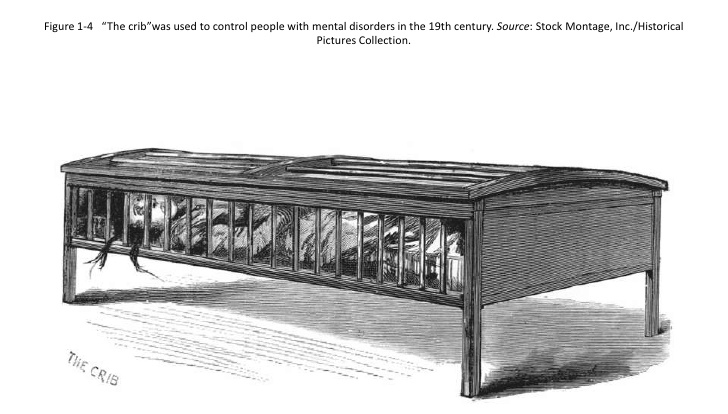
Although physical restraints were discouraged by the doctrines of the Kirkbride plan for 19th century asylums, many patients, including the non-masturbators, were placed in mechanical restraints, at least on a temporary basis, but some permanently. Various means were employed: straitjackets, restrictive mittens which locked at the wrists, straps to restrain the motion of the legs, left over Rush chairs to immobilize the overly active, and, last, the controversial “Utica crib.”
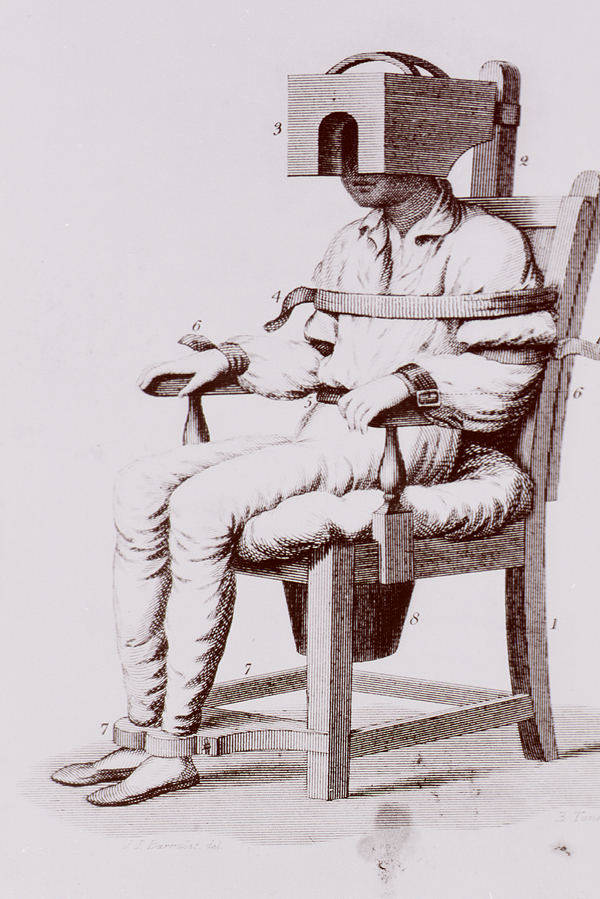
The comfy-looking “Rush Chair”
The Utica crib was first used by a superintendent at a pre-Kirkbride facility in upstate New York. It was a bed structured like a child’s crib with slatted sides. It was six feet long and three feet wide, covered with a lid which shut with a spring lock arranged so that the inmate could not open it from the inside. The space between the body and the lid was barely twelve inches, so the subject was forced to lie at full length, unable to turn over. The experience was similar to being placed in a coffin, which it sometimes proved to be. Inmates who did not calm down would be left in the crib indefinitely, some died. The Utica crib was also utilized to transport particularly difficult cases over long distances. The cribs and their cargo would arrive at the train station in a boxcar, where they were loaded into wagons and taken to the Asylum.
A simpler method of restraint was the bed strap used for immobilizing uncontrollable patients in ordinary beds. The use of the strap was harsh and at times could cause injuries. Another form of control used at the Asylum was the strait-waist or straitjacket. These heavy canvas jackets had sleeves sewn shut so that they could be wrapped tightly around the patient’s back and secured. These were used on those patients who chronically stripped off their clothes no matter how cold it was. The Attendants defended the use of the straitjacket as a protective measure, when more often than not it was used to immobilize violent individuals who were a threat to themselves and others. A lock seat held a patient in a sitting position.
Drugs were used too, mainly morphine, to calm patients. Other techniques that were believed to be helpful were laxatives to purge the system, tonics to restore strength, and various other narcotics to induce sleep. At times even alcoholic beverages were allowed, reasoning that if nothing else worked and a patient could be calmed down with a little booze, it was justified.
Culled from: Lunatic: The Rise and Fall of an American Asylum
Malformed Brain Du Jour!
Here’s another excerpt from Malformed: Forgotten Brains of the Texas State Mental Hospital.
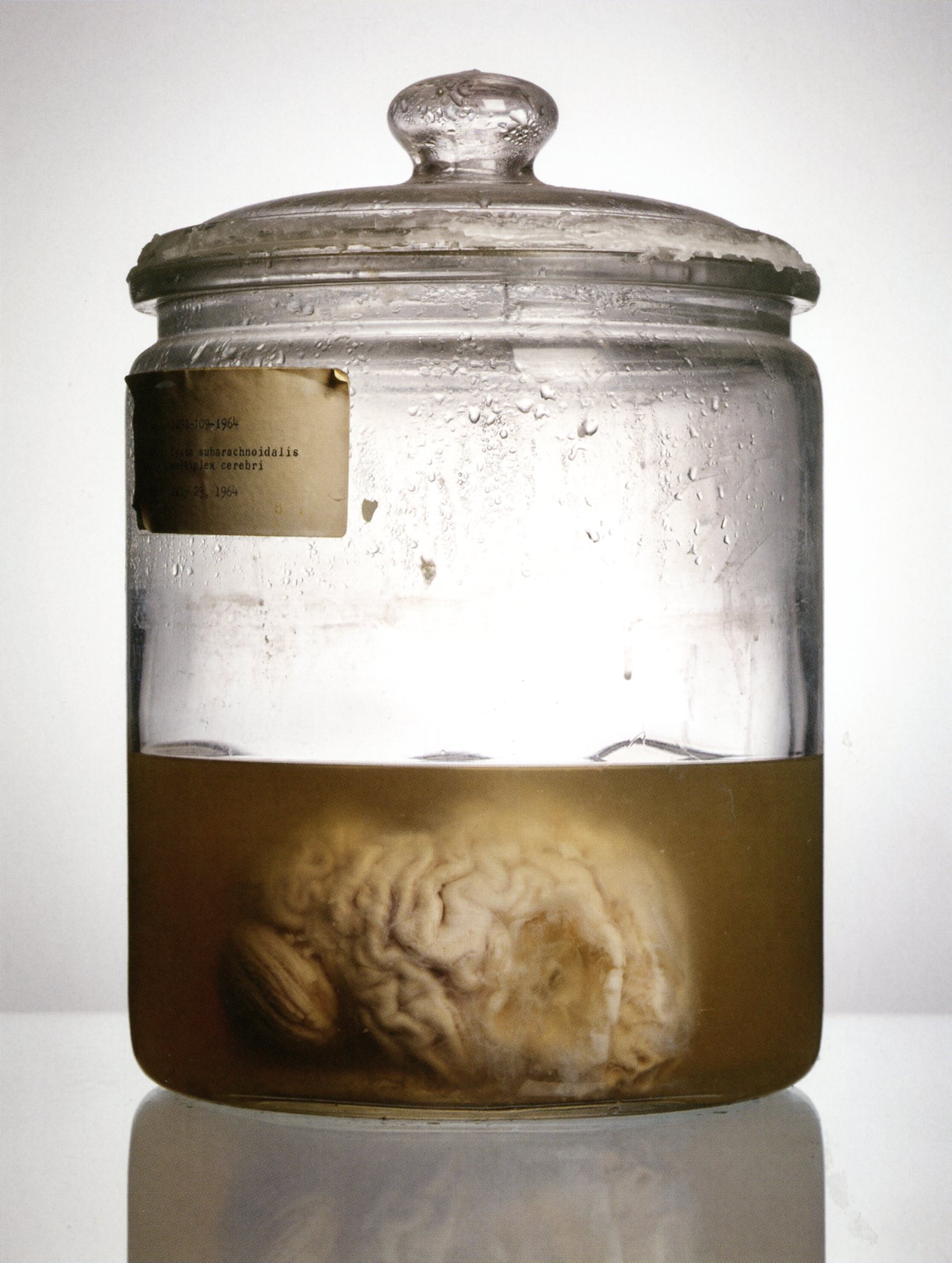
1892-109-1964
Study No. 93:
Cysts subarachnoidalis multiplex cerebri,
07/23/64
This patient suffered from multiple cysts that destroyed the brain.