Today’s Therapeutic Yet Truly Morbid Fact!
Mental therapy in the 18th century was not what we would call therapy today. When an individual exhibited strange or disordered behavior, “treatment” included isolation, jailing, banishment, confinement, restraint, or beatings. As time went on, such forms of treatment were “improved upon” to legitimatize their use. For example, the Rush Chair was designed by Benjamin Rush to immobilize the patient and deprive him of the use of his senses. After being secured in the chair and having a box placed over his head, the patient was incapable of any type of movement and unable to either see or hear. This immobilization and sensory deprivation was thought to enable the patient to achieve an inner calm and therefore be restored to reason. Similar logic was extended to dousings with cold water or dunkings into pools – again, the goal was to stimulate recovery. Before the advent of organized treatment settings (and sometimes after), people considered to be insane were subjected to severe beatings. It was believed that such beatings would restore these unfortunate people to their reason. As explained in the History of the Flagellants, or the Advantages of Discipline (DeLiome 1777), flagellation was used throughout Christian tradition as a means of penance for sins committed, and by various religious orders as a way to draw closer to God. During the Middle Ages and beyond, the use of beatings of the mentally ill stemmed from the premise that the source of the patient’s disorder was the presence of the devil. It was assumed that these beatings would draw the person back to God and thus restore reason.
-
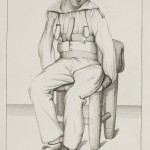
- Plate from J.E.D. Esquirol’s The History of the Flagellants, Or, The Advantages of Discipline, Paris, 1838. Dementia.
-
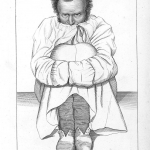
- Plate from J.E.D. Esquirol’s The History of the Flagellants, Or, The Advantages of Discipline, Paris, 1838. Mania.
Culled from: America’s Care of the Mentally Ill: A Photographic History
