Today’s Deeply Embedded Yet Truly Morbid Fact!
During the Japanese occupation of Nanking, China in December 1937, “Women suffered most,” Takokoro Kozo, a former soldier in the 114th Division of the Japanese army in Nanking, recalled. “No matter how young or old, they all could not escape the fate of being raped. We sent out coal trucks from Hsiakwan to the city streets and villages to seize a lot of women. And then each of them was allocated to 15 to 20 soldiers for sexual intercourse and abuse.”
Surviving Japanese veterans claim that the army had officially outlawed the rape of enemy women. But rape remained so deeply embedded in Japanese military culture and superstition that no one took the rule seriously. Many believed that raping virgins would make them more powerful in battle. Soldiers were even known to wear amulets made from the pubic hair of such victims, believing that they possess magical powers against injury.
The military policy forbidding rape only encouraged soldiers to kill their victims afterwards. During an interview for the documentary In the Name of the Emperor, Azuma Shiro, a former Japanese soldier, spoke candidly about the process of rape and murder in Nanking:
“At first we used some kinky words like Pikankan. Pi means ‘hip,’ Kankan means ‘look.’ Pikankan means, ‘Let’s see a woman open up her legs.’ Chinese women didn’t wear underpants. Instead, they wore trousers tied with a string. There was no belt. As we pulled the string, the buttocks were exposed. We ‘pikankan.’ We looked after a while we would say something like, ‘It’s my day to take a bath,’ and we took turns raping them. It would be all right if we only raped them. I shouldn’t say all right. Be we always stabbed and killed them. Because dead bodies don’t talk. “
Takokoro Kozo shared Azuma’s bluntness in discussing the issue. “After raping, we would also kill them,” he recalled. “Those women would start to flee once we let them go. Then we would ‘bang!’ shoot them in the back to finish them up.” According to surviving veterans, many of the soldiers felt remarkably little guilt about this. “Perhaps when we were raping her, we looked at her as a woman,” Azuma wrote, “but when we killed her, we just thought of her as something like a pig.”
This behavior was not restricted to soldiers. Officers at all levels indulged in the orgy. (Even Tani Hisao, the senior general and commander of the Japanese 6th Division, was later found guilty of raping some twenty women in Nanking.) Some not only urged soldiers to commit gang rape in the city but warned them to dispose of the women afterwards to eliminate evidence of the crime. “Either pay them money or kill them in some out-of-the-way place after you have finished, “ one officer told his underlings.
Culled from: The Rape Of Nanking
The Rape of Nanking is a book that depresses me more than any other book I’ve ever read. Horrendous photographs like this might give you some indication why.Of course, the author of the book, Iris Chang, ended up committing suicide partially because she was haunted by her subject-matter. Which I get… all too well.
Arcane Excerpts: Olde Fashioned Exercising!
Here are some amusing illustrations of exercising from Practical Physiology (1897) by Albert F. Blaisdell, M.D.
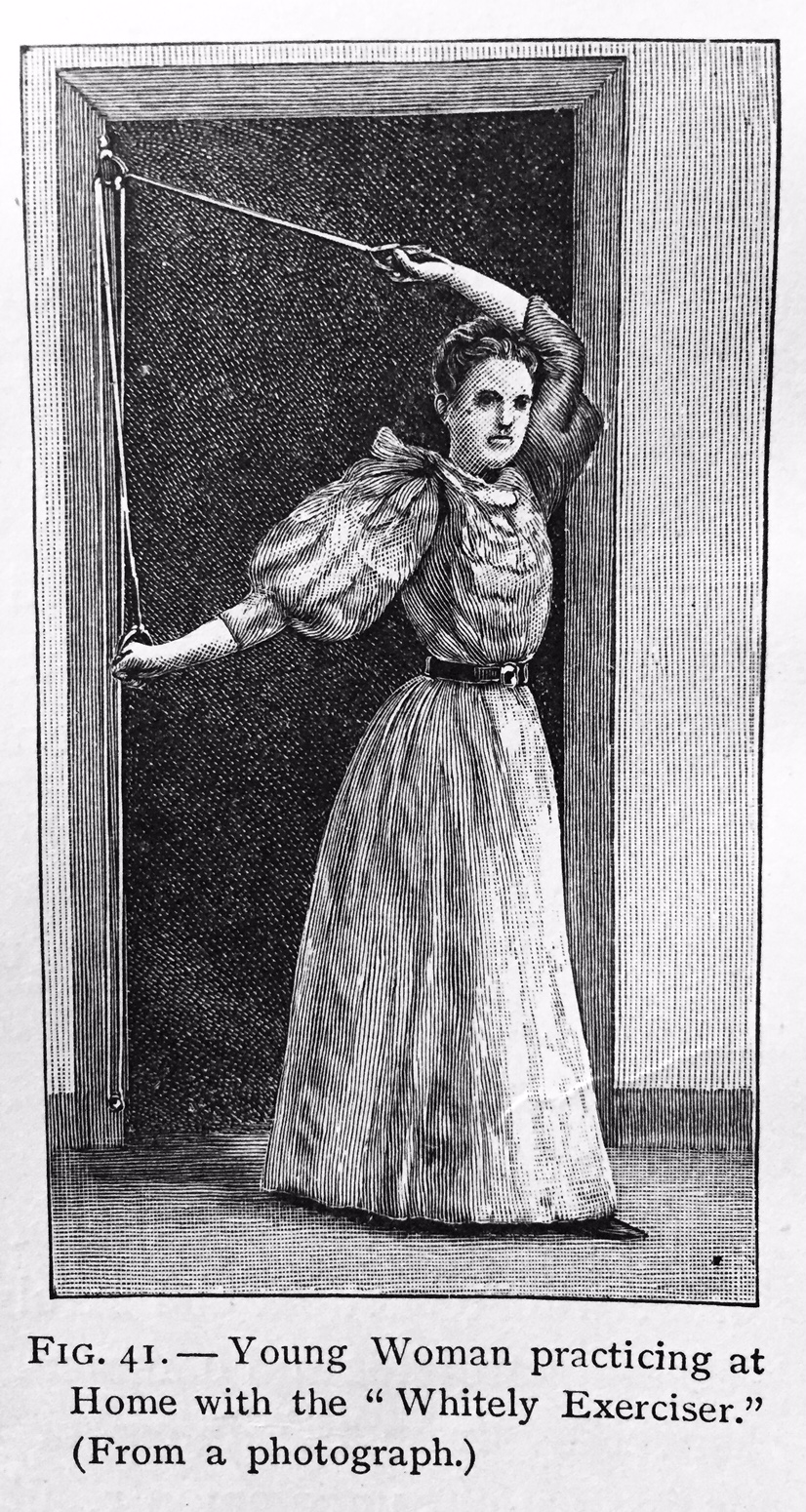
Judicious and systematic exercise, if moderately employed, soon gives a more upright and symmetrical figure, and an easier and more graceful carriage…
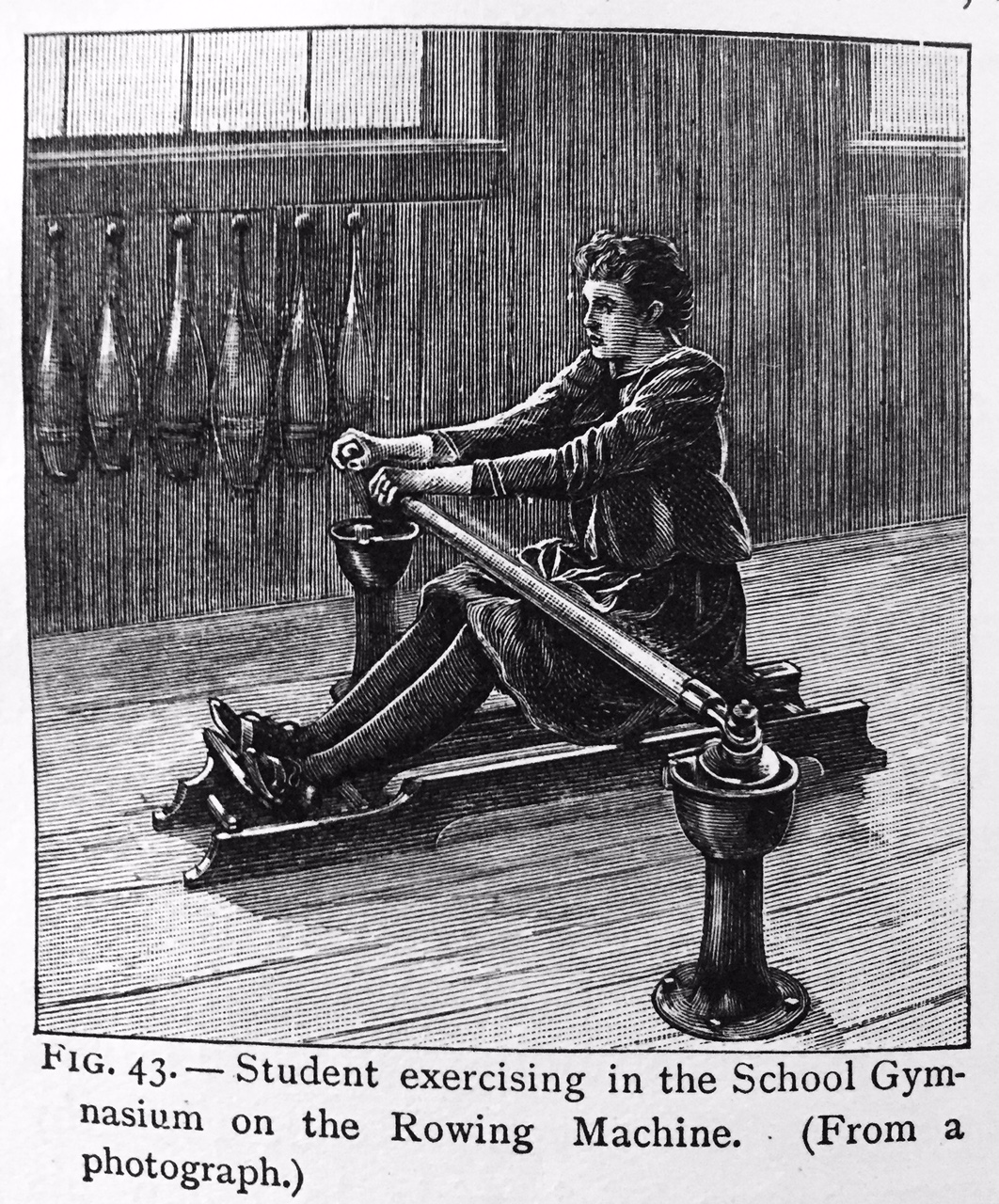
Age is an important factor in the problem, as a young man may do with ease and safety, what might be injurious to an older person.
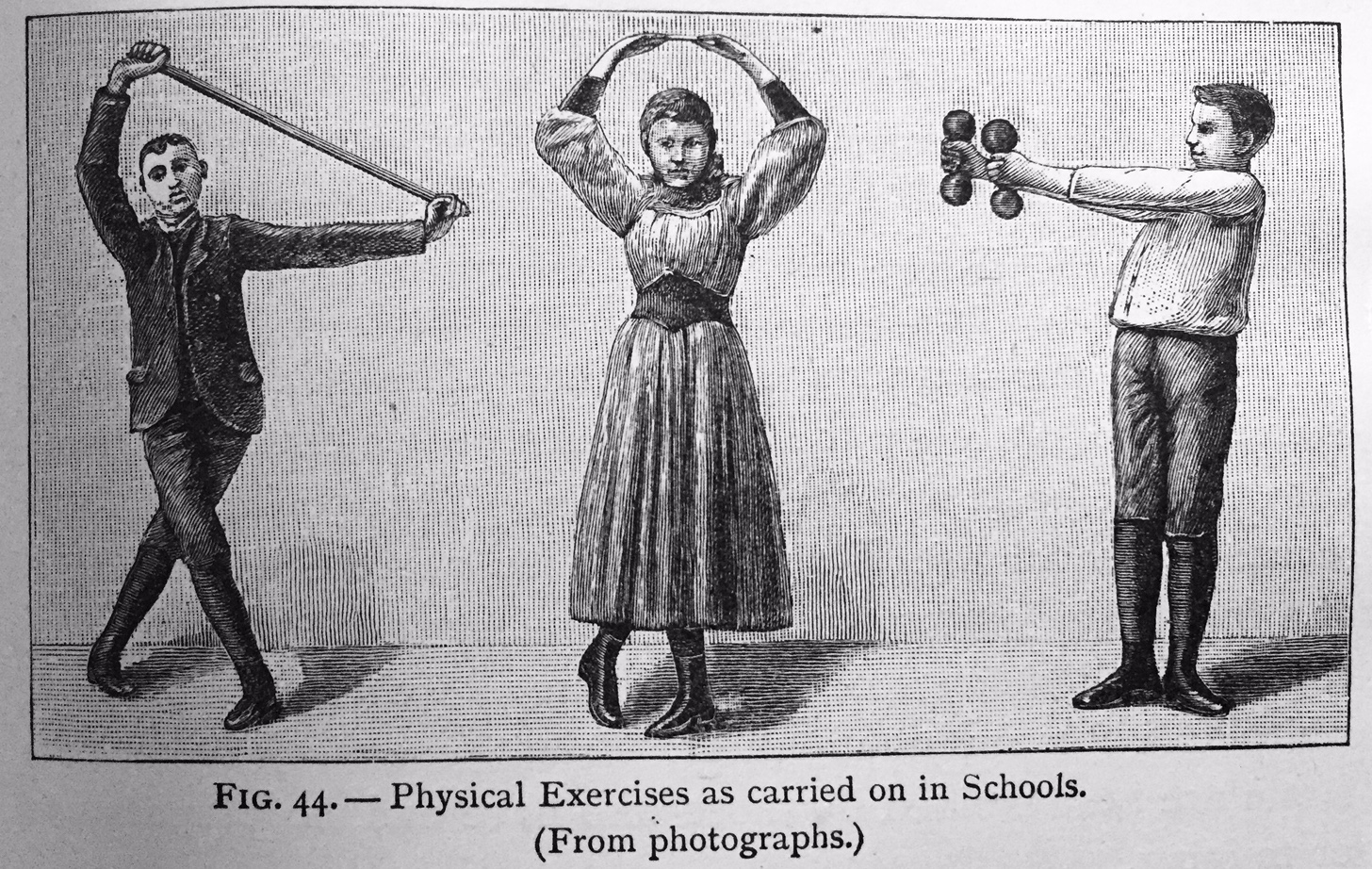
Exercises with dumb-bells and wands, or even without any apparatus, practiced a few times a day, for five minutes at a time, do a great deal of good. They relax the tension of body and mind, and introduce an element of pleasure into the routine of school life.