Today’s Filthy Yet Truly Morbid Fact!
Only a low dose of anesthetic was used during the Civil War, just enough to make the patient insensitive to pain. In some cases, men did not lose consciousness despite the anesthesia. Witnesses reported patients thrashing wildly and shrieking in pain throughout the operation. Adding to the chaos were soldiers begging to be taken next, to relieve their suffering. At the same time, many of those requiring amputation protested vehemently, all adding to the stress of the surgeons.
Three of every four surgeries required amputation, leading to the unfair characterization of surgeons as butchers. The minié ball did such devastating damage that saving a limb, particularly under battlefield hospital conditions and time constraints, was virtually impossible.
A typical amputation began as soon as the patient was anesthetized. The surgeon would wipe any blood off his scalpel that remained from the previous patient, then proceed with little or no additional sterilization. He deftly cut flesh and tissue above and blow the wound, cutting to the bone and leaving a small semi-circular shaped flap of skin, which would be used to close the wound after the procedure was completed. A bone saw was then used to cut through the bone, with the severed limb tossed onto a nearby pile from previous amputations. Amputated limbs would only be removed when the pile grew so large that it became a hindrance.
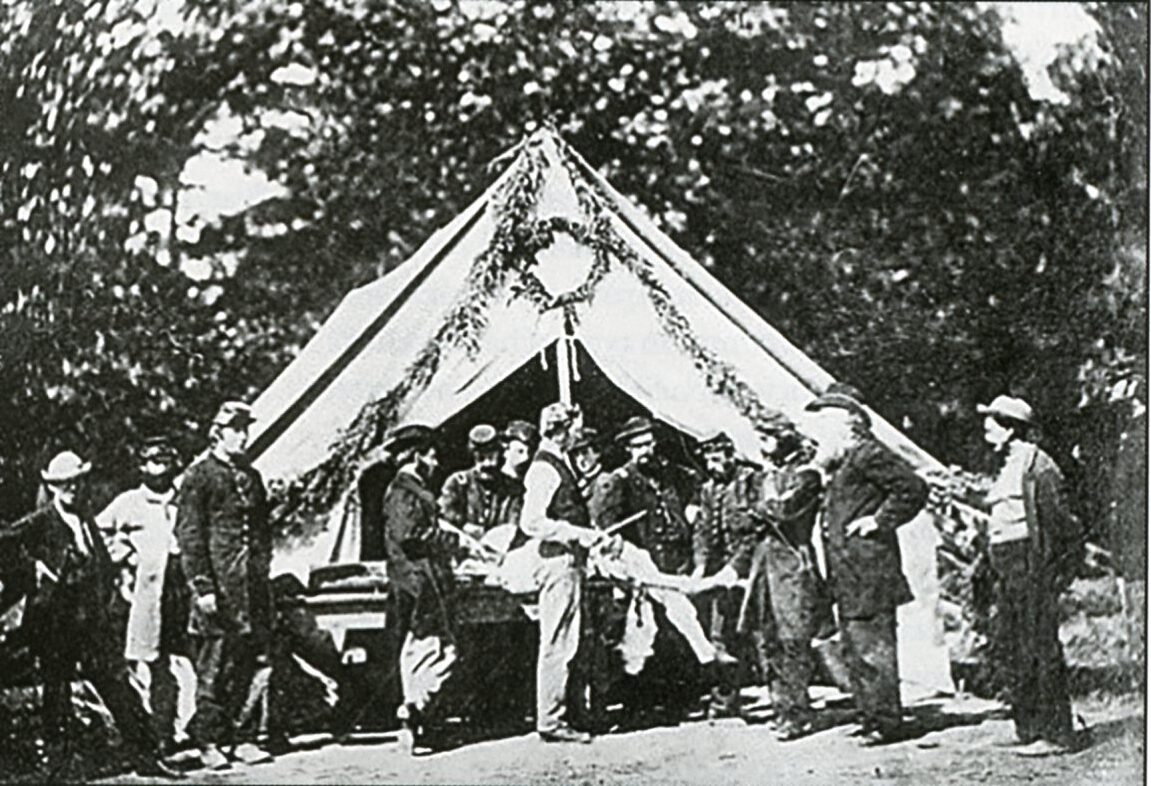
Amputation in a field hospital, Gettysburg
With the limb successfully removed, arteries were then tied off with cotton thread. If thread was not available, horsehair would be used. Those whose arteries were tied off with horsehair saw faster recovery than those with cotton thread, although there was no recognition of this phenomenon at the time. It would be some time before it became apparently that boiling the stiff horsehair to make it supple enough for use had the added benefit of sterilization.
Sharp edges of remaining bone would then be scraped to make them smoother, although many surgeons skipped this step. The flap of skin that had been left when the surgeon cut through the muscle and tissue was then folded over the open stump and sewed shut, leaving a small opening for drainage. the entire stump was then covered with a piece of cloth, which in turn was coated with a form of gelatin made from fish bladders, called isinglass. This dried to a rugged but flexible cover to keep the wound relatively dry and clean. Unfortunately, the cloth used was often just a dirty rag that may have been used earlier.
The patient was then removed from the table and placed wherever space could be found, often in a filthy barnyard. Many amputees who survived said that their wounds never healed completely, necessitating periodic draining for the rest of their lives. It is no surprise that a wounded soldier was was as likely to die of infection as he was to die of his actual wounds.
Culled from: Bullets and Bandages: The Aid Stations and Field Hospitals at Gettysburg by James Gindlesperger
Sing Sing Death House Prisoner Du Jour!
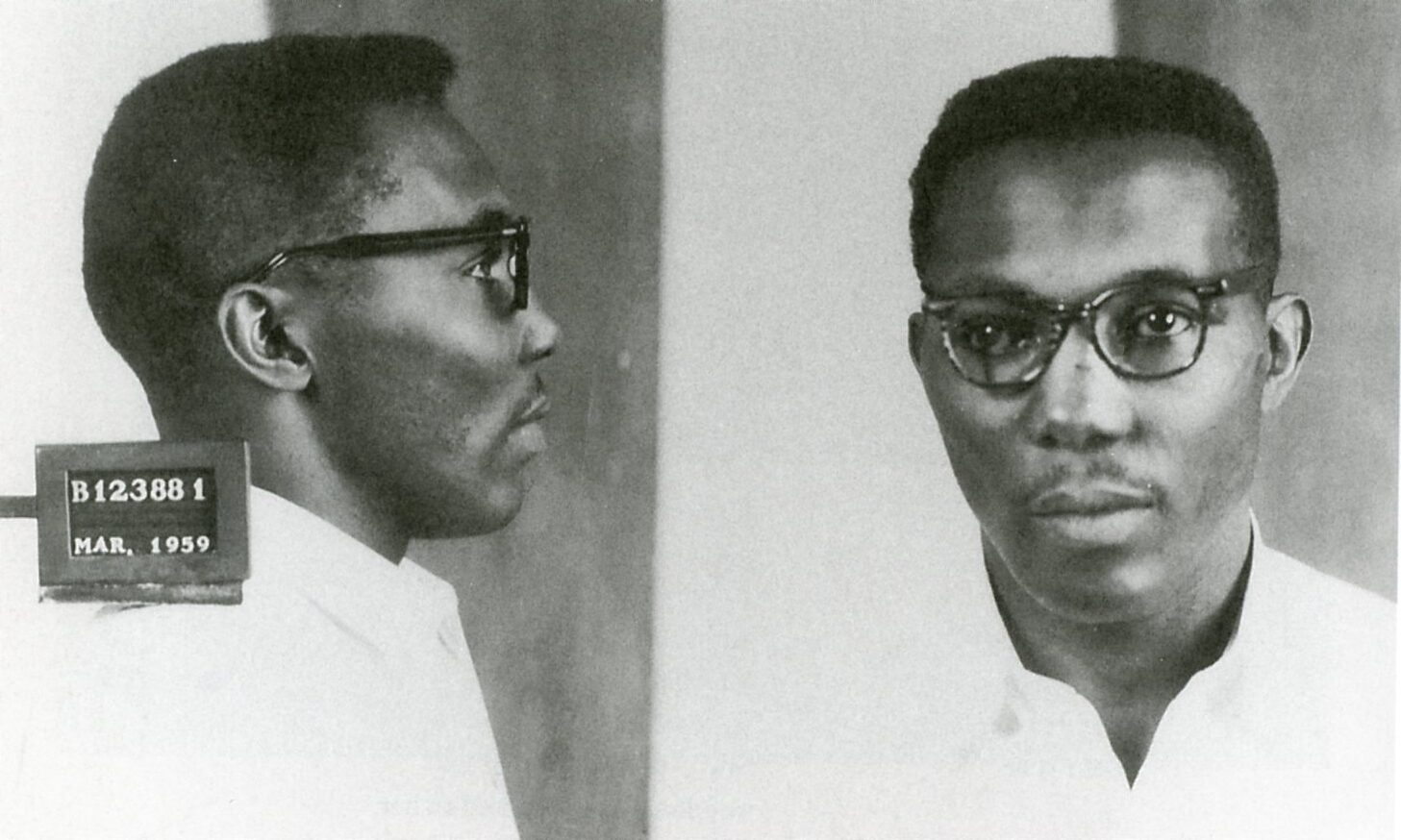
NAME: Henry Flakes aka Snow Flakes
NUMBER: 123-881
BORN: Alabama
AGE: 32
OCCUPATION: Auto mechanic
HABITS: Uses drugs
CRIME: Killed Freedman in robbery
ACCOMPLICES: Walter Green 123-880 and DeWitt Lee
JUDGE: Jacob A. Latona, Erie County Court
SENTENCED: 3-6-59
RECEIVED: 3-7-59
EXECUTED: 5-19-60
Culled from: Condemned: Inside the Sing Sing Death House
I found an article about Snowflakes in the November 10, 1958 Buffalo Evening News:
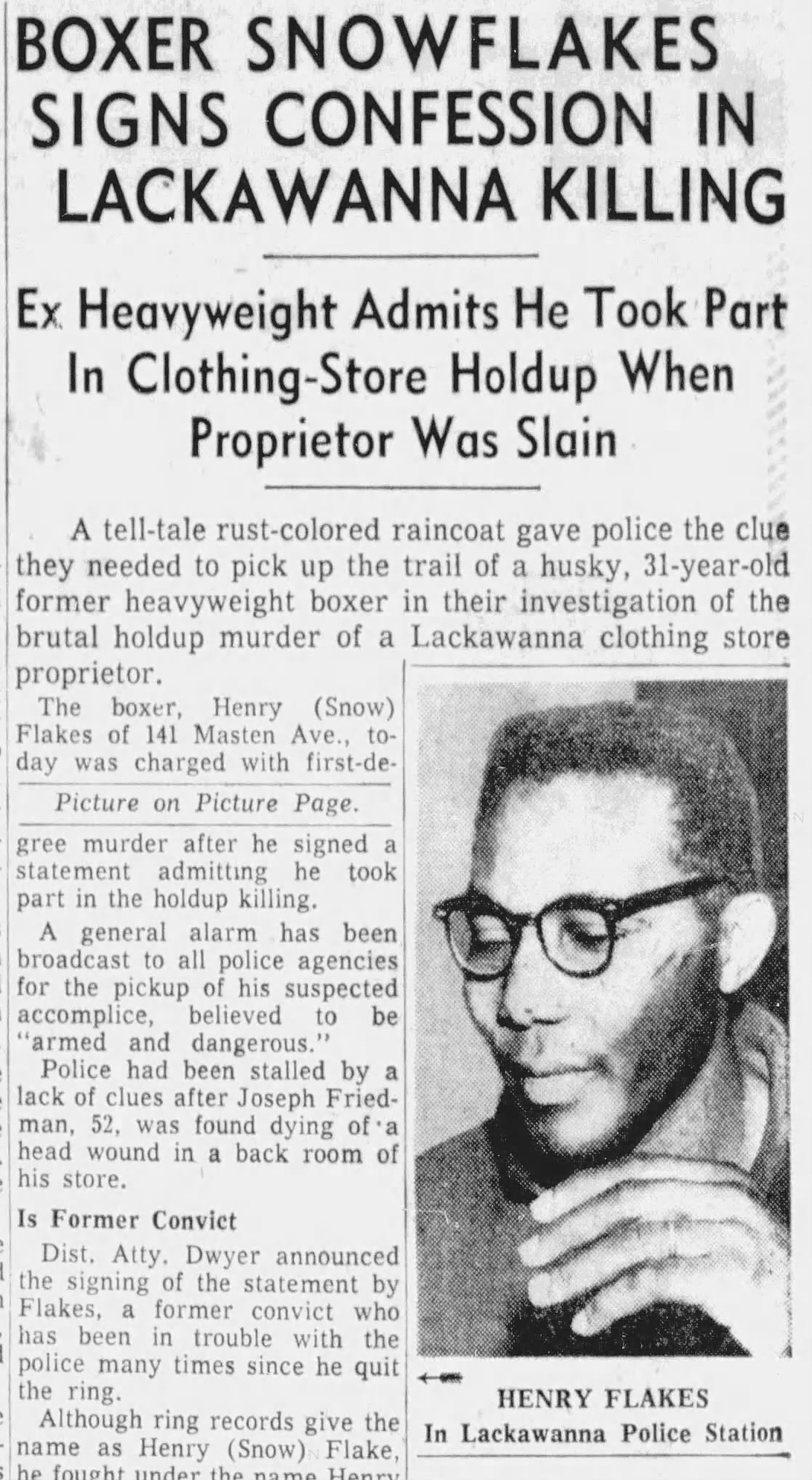
BOXER SNOWFLAKES SIGNS CONFESSION IN LACKAWANNA KILLING
The boxer, Henry (Snow) Flakes of 151 Monroe Ave., today was charged with first-degree murder after he signed a statement admitting he took part in the holdup killing.
A general alarm has been broadcast to all police agencies for the pickup of his suspected accomplice, believed to be “armed and dangerous.”
Police had been stalled by a lack of clues after Joseph Friedman, 62, was found dying of a head wound in a back room of his store.
Dist. Atty. Dwyer announced the signing of the statement by Flakes, a former convict who has been in trouble with the police many times since he quit the ring.
Although ring records give the name as Henry (Snow) Flake, he fought under the name Henry Snowflakes, and the district attorney’s officelists him as Henry (Snow) Flakes.
The first break in the investigation came Saturday night when Detective Stanley F. Segit of the Arson Squad was told that Flakes had been seen in a Michigan Ave. tavern Friday night wearing a rust-colored raincoat similar to one worn by one of the holdup men.
The Arson Squad detective informed Acting Asst. Detective Chief John H. Schutt. The latter got out rogue’s gallery photographs of Flakes and showed them to the widow of the victim, Mrs. Helen Friedman of 145 Stanford Ave., Town of Tonawanda.
Mrs. Friedman made a tentative identification, adding “I’d like to see him in person.”
After surrounding the house, they took Flakes into custody at 4:10 o’clock Sunday morning. Police said a search of a car used by Flakes suspended nominal investigation showed several articles of new clothing with labels ripped out.
Flakes was taken to headquarters and then turned over to Lackawanna police. Homicide Squad Detective Sgt. Joseph T. McCarthy and Detective Walter G. Maul went to Lackawanna headquarters and confronted Flakes with the discovery of the clothes and other evidence.
Flakes wrote the statement out in his own handwriting, Detective Dwyer said, it covered several pages.
Mr. Dwyer came to Buffalo police headquarters this morning to check the statement. At about the same time, Mrs. Friedman was viewing Flakes at a special lineup at Lackawanna.
Flakes has a long police record, including nine traffic arrests since October 1952.
In February 1952 he was charged with being drunk and refusing the reasonable request of a policeman. In May 1952 he was locked up for District police in a concealed-weapons investigation. In July of the same year, a sentence on a dangerous weapons charge was suspended.
Garretdom: Fiendish Woman Du Jour!
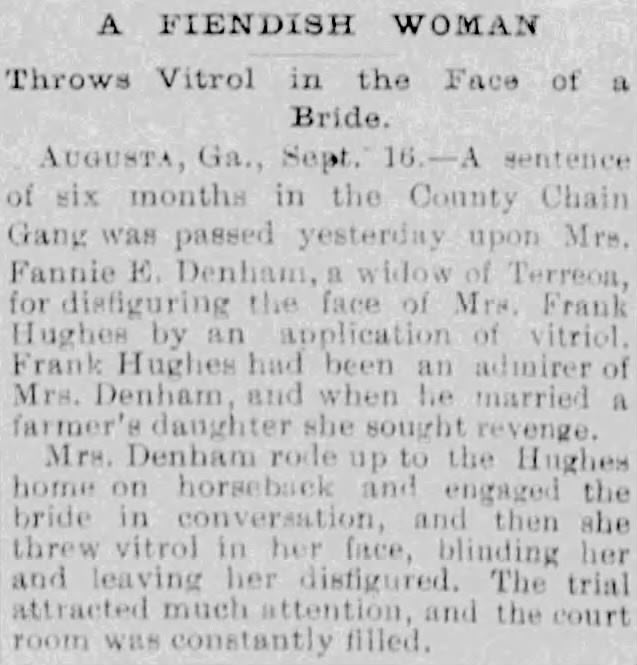
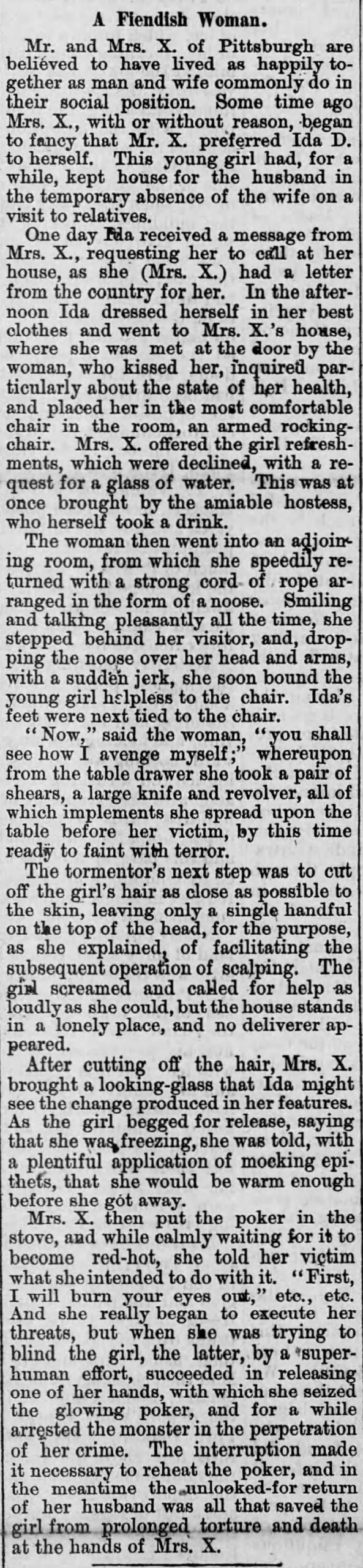
Here’s the latest in articles entitled “A Fiendish Woman”. Sometimes it’s hard to tell in old newspapers whether a story is real or not. (I suppose it’s equally hard to tell that in modern newspapers for different reasons.) This is one of those stories that I can’t figure out. The use of alibis instead of actual names suggests it is a story, not truth – but there’s nothing else to indicate that it might not be real. But just the other day, I almost shared another story about a fiendish girl gang leader before I researched her name to learn that she was a fictional character made up by a newspaper to sell copies. So, I guess we take it with a proverbial grain of salt. It’s a good read, anyway. From the January 3, 1873 issue of the Wilmington, Delaware News Journal:
A FIENDISH WOMAN.
A Jealous Woman in Pittsburgh Attempts a Diabolical Outrage on a Girl.
Mr. and Mrs. X. are believed to have lived as happily together as man and wife commonly do in their social position. Some time ago Mrs. X., with or without reason, began to fancy that Mr. X. preferred Ida D. to herself. This young girl had, for a while, kept house for the husband, in the temporary absence of the wife on a visit to relatives. One day Ida received a message from Mrs. X., requesting her to call at her house, as she (Mrs. X.) had a letter from the country for her. In the afternoon Ida dressed herself in her best clothes and went to Mrs. X.’s house, where she was met at the door by the woman, who kissed her, inquired particularly about the State of her health, and placed her in the most comfortable chair in the room, an armed rocking-chair. Mrs. X. offered the girl refreshments, which were declined, with a request for a glass of water. This was at once brought by the amiable hostess, who herself took a drink. The woman then went into an adjoining room, from which she speedily returned with a strong cord of rope arranged in the form of a noose. Smiling and talking pleasantly all the time, she stepped behind her visitor, and, dropping the noose over her head and arms, with a sudden jerk, she soon bound the young girl helpless to the chair. Ida’s feet were next tied to the chair.
“Now,” said the woman, “you shall see how I avenge myself;’ whereupon from the table drawer she took a pair of shears, a large knife, and revolver all of which implements she spread upon the table before her victim, by this time ready to faint with terror. The tormentor’s next step was to cut off the girl’s hair as close as possible to the skin, leaving only a single handful on the top of the head, for the purpose, as she explained, of facilitating the subsequent operation of scalping. The girl screamed and called for help ask loudly as she could, but the house stands on a lonely place, and no deliverer appeared.
After cutting off the hair, Mrs. X. brought a looking glass that Ida might see the change produced in her features. As the girl begged for release, saying that she was freezing, she was told, with plentiful application of mocking epithets, that she would be warm enough before she got away. Mrs. X. then put the poker in the stove, and while calmly waiting for it to become red hot, she told her victim what she intended to do with it. “First, I will burn your eyes out,” &c. &c. And she really began to execute her threats, but when she was trying to blind the girl, the latter by a superhuman effort succeeded in releasing one of her hands, with which she seized the glowing poker, and for a while arrested the monster in the perpetration of her crime. The interruption made it necessary to reheat the poker, and in the meantime the unlooked-for return of her husband was all that saved the girl from prolonged torture and death at the hands of Mrs. X.