Today’s Humane Yet Truly Morbid Fact!
On December 10, 1941 a Japanese force of about five thousand men overwhelmed a small garrison on the island outpost of Guam after brief but spirited resistance in which seventeen Americans and Guamanians were killed. Seeing that further resistance was futile, G. J. McMillan, U.S.N., the island governor, signed a surrender agreement after being assured that the rights of the Navy population would be respected and that military personnel would be treated humanely in accordance with rules and customs of war.
The Americans soon learned what “humanely” meant to the Japanese. Shortly after the surrender, members of the Japanese landing force began assembling their captives in the plaza of Agana, the island’s major town. Marine John Podelesny was among a group of about forty Americans whom the Japanese lined up to be searched. The Japanese used sign language and the point of their bayonets to order the men to remove their shirts, trousers, and shoes. As Podelesny began removing his clothing, he noticed that the Marine on his left was not doing so. Whether his companions’ action was one of defiance or slowness, Podelesny was not sure. Suddenly the Japanese guard nearest the two men leaped forward and with a single thrust ran his bayonet through the man, who, without a sound, crumpled to the ground and died. Horror-stricken, Podelesny hastened to comply with the order as he watched the Japanese drag the body away. Later the Japanese marched the men to a nearby church where they, along with other American captives, were confined for a month of uncertainty and discomfort.
Culled from: Surrender & Survival: The Experience of American POWs in the Pacific 1941-1945
Pre and Post-Mortem Photos Du Jour!
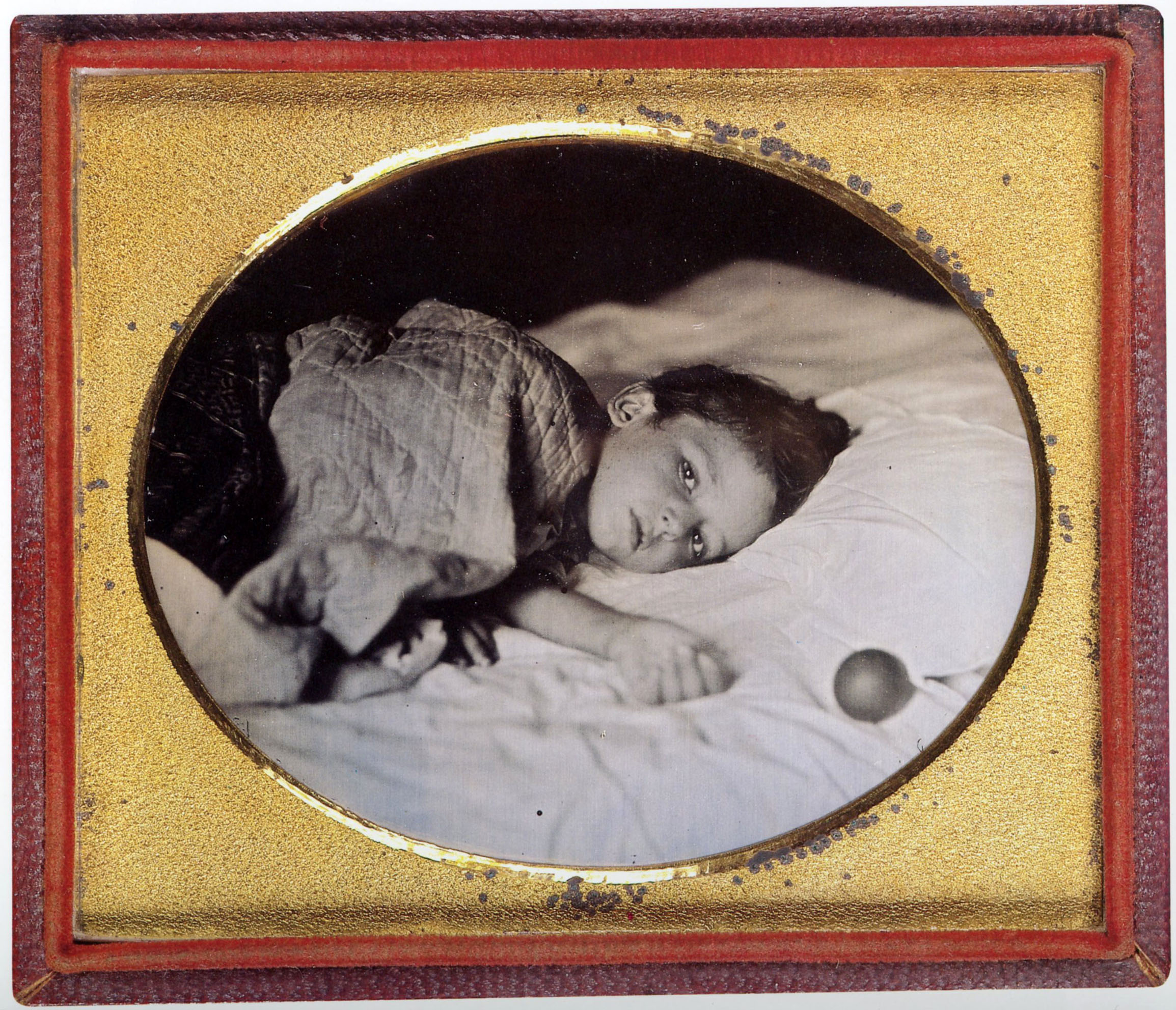
Premortem Daguerreotype of Boy Lying in Bed with a Ball
Anonymous
2 3/4 x 3/ 1/4″, Daguerreotype
Circa 1848
This most unusual image shows a sick young boy in bed with a ball, which symbolized the joy of life in which he can no longer participate. (Only a handful of these pre-mortem genre images have survived.)
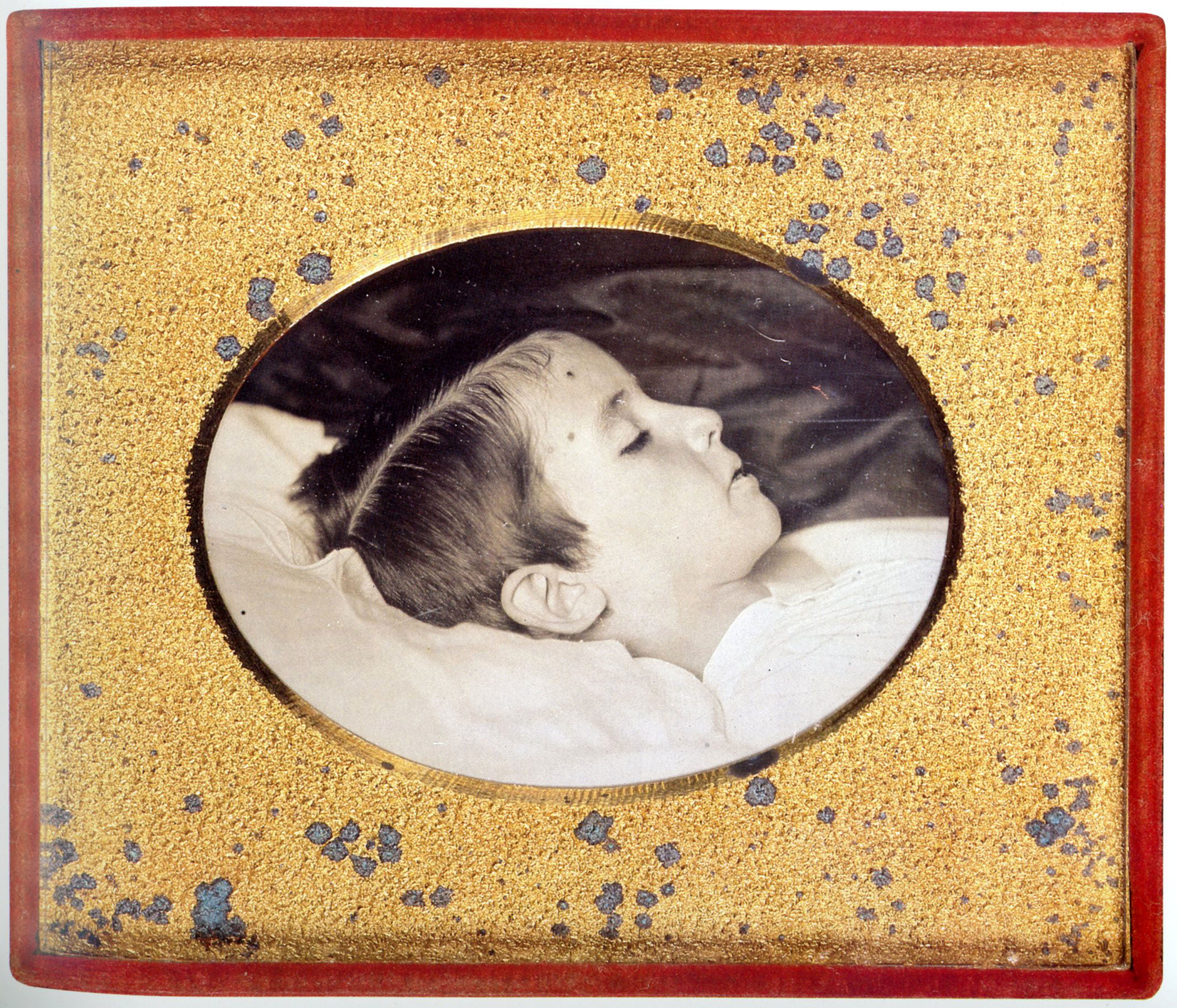
Postmortem Daguerreotype of the Same Boy Lying in Bed
Anonymous
2 3/4 x 3/ 1/4″, Daguerreotype
Circa 1848
The second image shows the boy after he has died. Such close-up photographs were usually reserved for adults. The spots on the boy’s forehead indicate the development of a childhood exanthema, perhaps chicken pox or measles. This pair of daguerreotypes is the only pre- and post-mortem set of images known.
Culled from: Sleeping Beauty: Memorial Photography in America