Today’s Frothy Yet Truly Morbid Fact!
Continued from yesterday…
While Private Vaughan was dying in South Carolina, Private James Downs, a thirty-year-old soldier at Camp Upton in New York, was also feeling ill. He had arrived at the camp, about sixty-five miles east of New York City, to prepare to go overseas to fight. It was a setting not very different from the one Private Vaughan found himself in – an embarkation camp on a flat, sandy stretch of land, this time between Long Island Sound and the Atlantic Ocean, dotted with pine trees and low sandy bushes. But the camp, built a year earlier, was jammed with 33,000 soldiers who struggled to drive over the nearly impassable roads.
In September 1918, the hospital was suddenly flooded with sick men – one out of every ten men in the camp was admitted to the hospital. Private Downs was among them. His records show he entered the base hospital on September 23. His face as flushed, he was delirious, and his temperature was 104 degrees.
The next day, he remained delirious, with the same high temperature, but his skin was turning dark from lack of oxygen. At 4:30 a.m. on September 26, three days after he was admitted to the hospital, Private Downs died of influenza, just two hours before Private Vaughan succumbed.
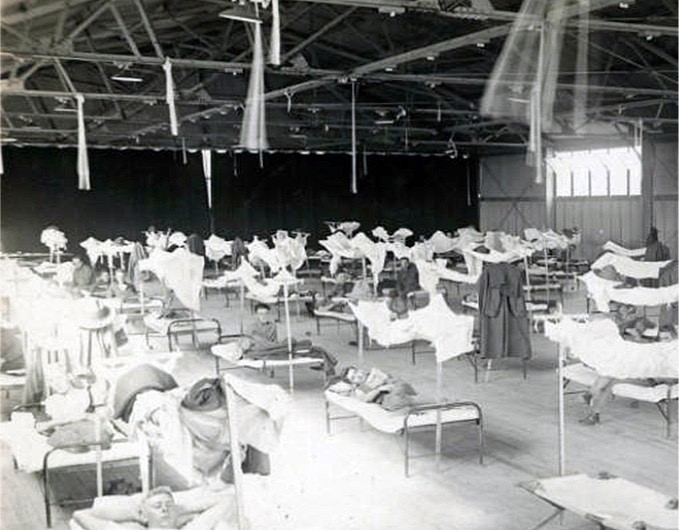
Sick soldiers at Camp Upton
That same day, a Captain Mc Burney did an autopsy on Private Downs. He wrote that Downs was six feet tall, weighting 140 pounds. He had “no external signs of disease or injury.”
The injury, of course, was internal – in Private Downs’s lungs. They were filled with fluid, and a “bloody froth” exuded from them., Captain McBurney wrote. The doctor cut a small slice of James Downs’s lung, soaked it in formaldehyde, encased it in wax, and sent it to the same Washington warehouse that stored the scrap of Private Vaughan’s lung.
And there the lung specimens from Private Vaughan and Private Downs remained, for nearly eighty years, secreted among pathology tissue from millions of people who died of diseases both common and rare, in the Armed Forces Institute of Pathology’s archives. The archives had begun in the Civil War, created by an executive order by President Abraham Lincoln. Since then, military doctors had been sending in thousands of pathology specimens a year, with as many as 50,000 a year sent in more recently. The number of tissue samples stored in the warehouse had swelled to about 3 to 4 million.
Several times in the past century, the warehouse specimens were moved as the ever-growing collection required more and more storage space. But the tiny paraffin cubes encasing lung cells from the autopsies of Roscoe Vaughan and James Downs remained in their boxes, of no interest to anyone until, at the end of the twentieth century, they were rediscovered by molecular biologists who thought it just might be possible to resurrect the flu virus from those ancient slices of lung.
[To be continued…]
Culled from: Flu: The Story of the Great Influenza Pandemic of 1918 and the Search for the Virus That Caused It
Maladies Du Jour!
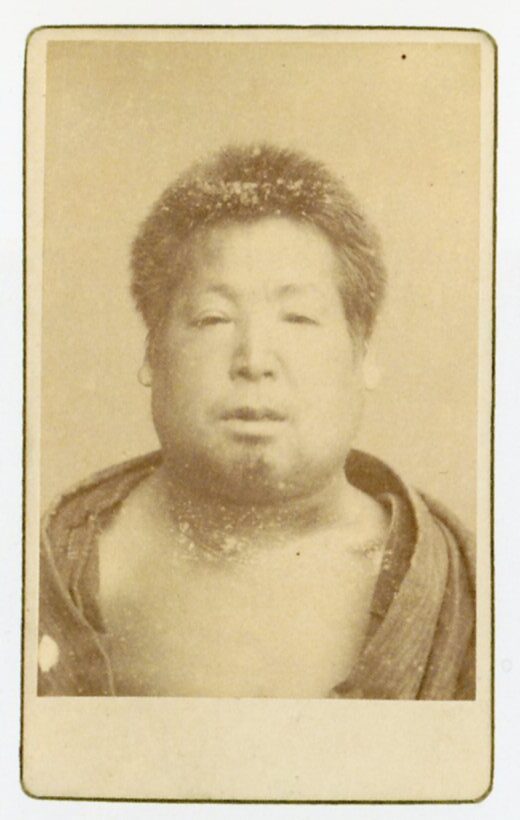
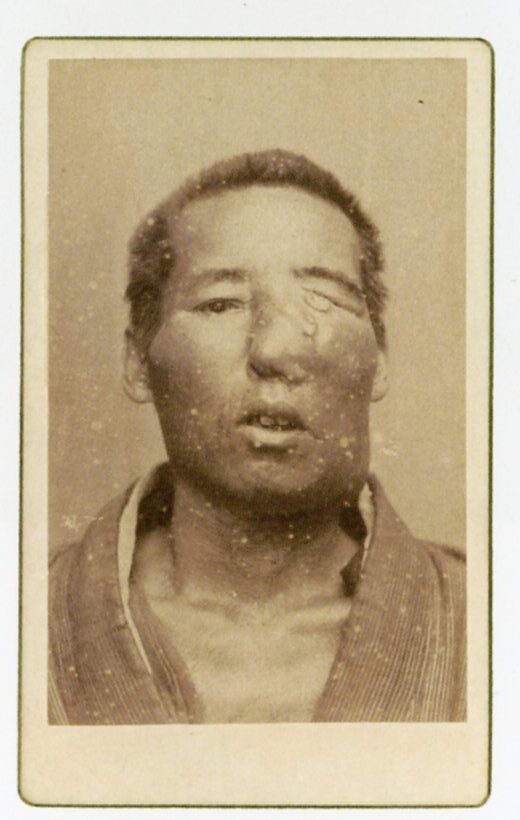
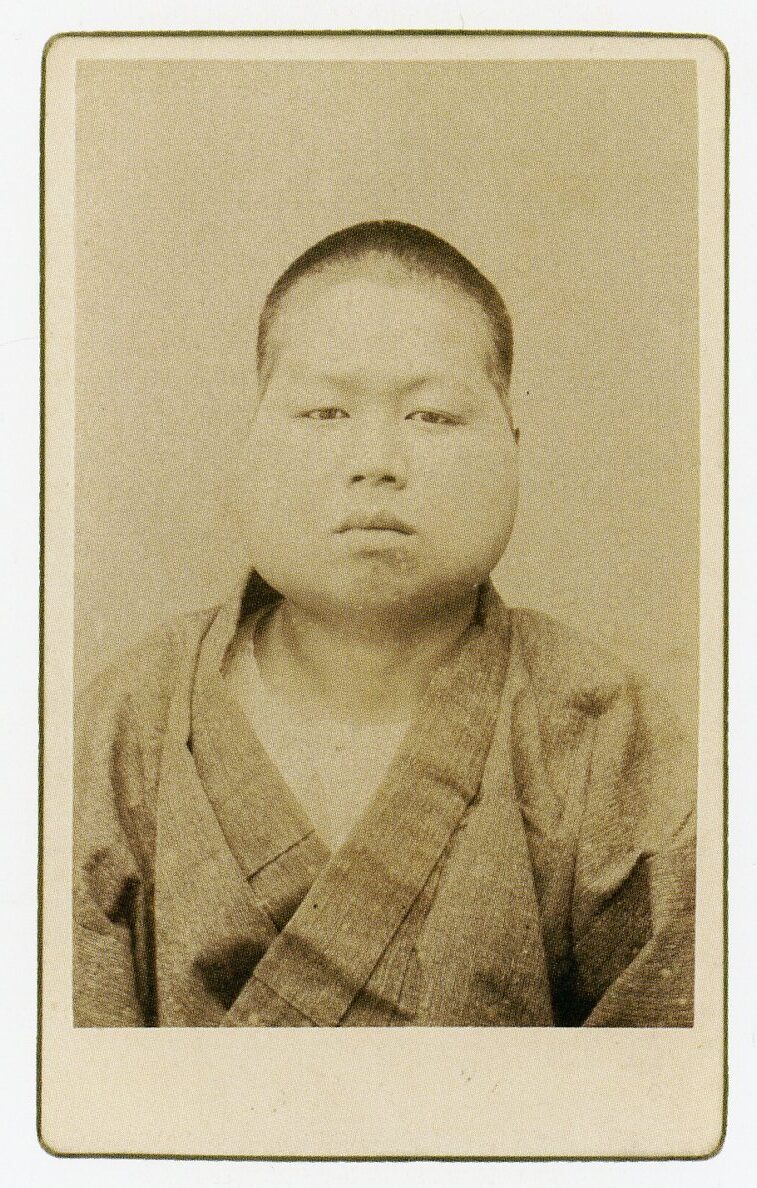
The Dr. Ikkaku Ochi Collection is a fascinating cluster of medical photographs from the late 19th and early 20th century that had been collected by Dr. Ikkaku Ochi in Japan and were found in a box many years later. There was no detailed information available for most of the photos, but the images are compelling because they show composed portraits of people suffering through intense pain caused by conditions that in most cases would be resolved through treatment today. There’s a sense of overwhelming sadness that comes through in these pictures, but also dignity and strength.
Here are three fellows suffering from facial deformities of some sort or another.