Today’s Frozen Yet Truly Morbid Fact!
Continued from yesterday…
Two months after Private Vaughan’s death, influenza came to Teller Lutheran mission (now called Brevig), on the flat frozen tundra of the Seward Peninsula of Alaska. It was an isolated village of eighty people, ninety miles by dog sled from Nome, the nearest town, perched on the edge of a gray and chilly sea. Among the residents was an obese woman who, like the rest, lived in a soot-filled igloo with a window made of seal gut.
On the last Saturday in November, two visitors from Nome attended a crowded, standing-room-only service in the tiny chapel run by the missionaries. The visitors reported that there was much sickness in the city, but no one was unduly alarmed. The Eskimos treated the visitors to their traditional hospitality – a feast for the entire village of reindeer meat, hotcakes, blueberries in seal oil, and tea.
Two days later, on Monday, the first villagers fell ill with the flu. On Tuesday, the first person died, a woman named Mrs. Neelak. The minister set off for Teller, a village fourteen miles from the mission, seeking help. He returned, only to report that people in Teller were being decimated by the same illness.
One after another, the Eskimos died – seventy-two in all. One igloo had twenty-five dead bodies, frozen in the Arctic cold. Starving dogs had broken into another igloo and ripped apart a collection of corpses, leaving a gory mess of bones. Another igloo looked at first like the site of utter devastation. The seal-gut window had broken and snow had drifted in. The fire was out, the bone-chilling cold had penetrated the small space. And as rescuers peeked inside, they saw only a pile of corpses. Then, suddenly, three terrified children appeared from under deerskins and started shrieking. They had survived somehow on oatmeal, surrounded by the bodies of their family.
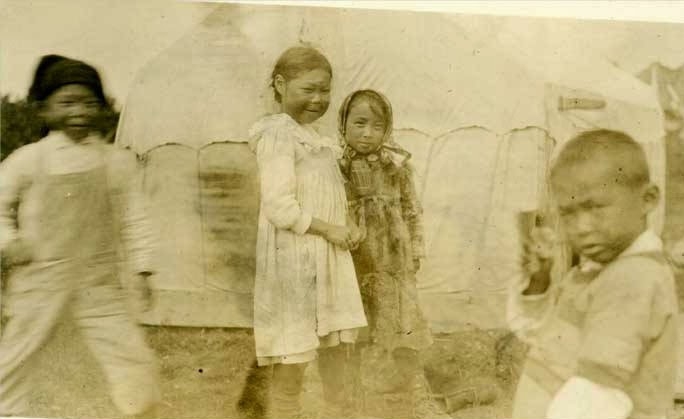
Orphaned Eskimo Children
In the end, a three-week flu epidemic had left only five adults in the village; forty-six children were orphaned. Calara Fosso, the missionary’s wife and one of the few adults who did not get the flu, wrote a letter to the Eskimos years later, still mourning the tragedy: “There was a spiritual revival among the Eskimos at the Mission on the last Sunday in November 1918, before the influenza disaster fell upon us. The whole settlement of Eskimos had crowded into the new school room for worship. We felt the spirit of the Lord among us, as the communicants stood at the altar and later met in prayer; many confessed to their faith. We were deeply moved. This was the last time we were gathered together. By the following Sunday most members had gone to a more beautiful service with their Savior. You, who are the sons and daughters of these children of God, may remember that many of them died testifying to their Lord and singing the hymn that we had shared on that last Sunday, “I Can Hear My Savior Calling.'”
Still in shock from the tragedy, the few able-bodied men that could be found in the nearby villages were left to bury the dead, an ordeal in the harsh Alaskan winter. The villages were so far north that the ground was permanently frozen. In order to dig in to the rock-hard ground at Teller mission, miners pumped hot steam into the frozen earth, thawing it enough to dig a trench. They buried the flu victims in a common grave, marking the site with two large crosses, one at each end of the trench.
Among the dead was the obese woman, whose frozen body lay six feet underground in the mass grave. And there it remained for seventy years.
[If you can’t guess the lung tissue of this woman, along with the two privates in the previous facts, was used to uncover the mystery of the 1918 flu. We’ll get to more detail eventually, but we’ll move on to other facts for now…]
Culled from: Flu: The Story of the Great Influenza Pandemic of 1918 and the Search for the Virus That Caused It
Tragedy Du Jour!
Luc Sante’s Evidence is a compelling collection of crime scene photographs taken by the New York City Police Department between 1914 and 1918. The images are always intriguing, often mysterious, sometimes artistic, occasionally shocking, and reliably graphic. The appendix contains a detailed explanation of all known facts regarding each image (include applicable newspaper clippings) and much reasonable speculation on those images where the facts are lost to history. Here’s an example where the story is known.
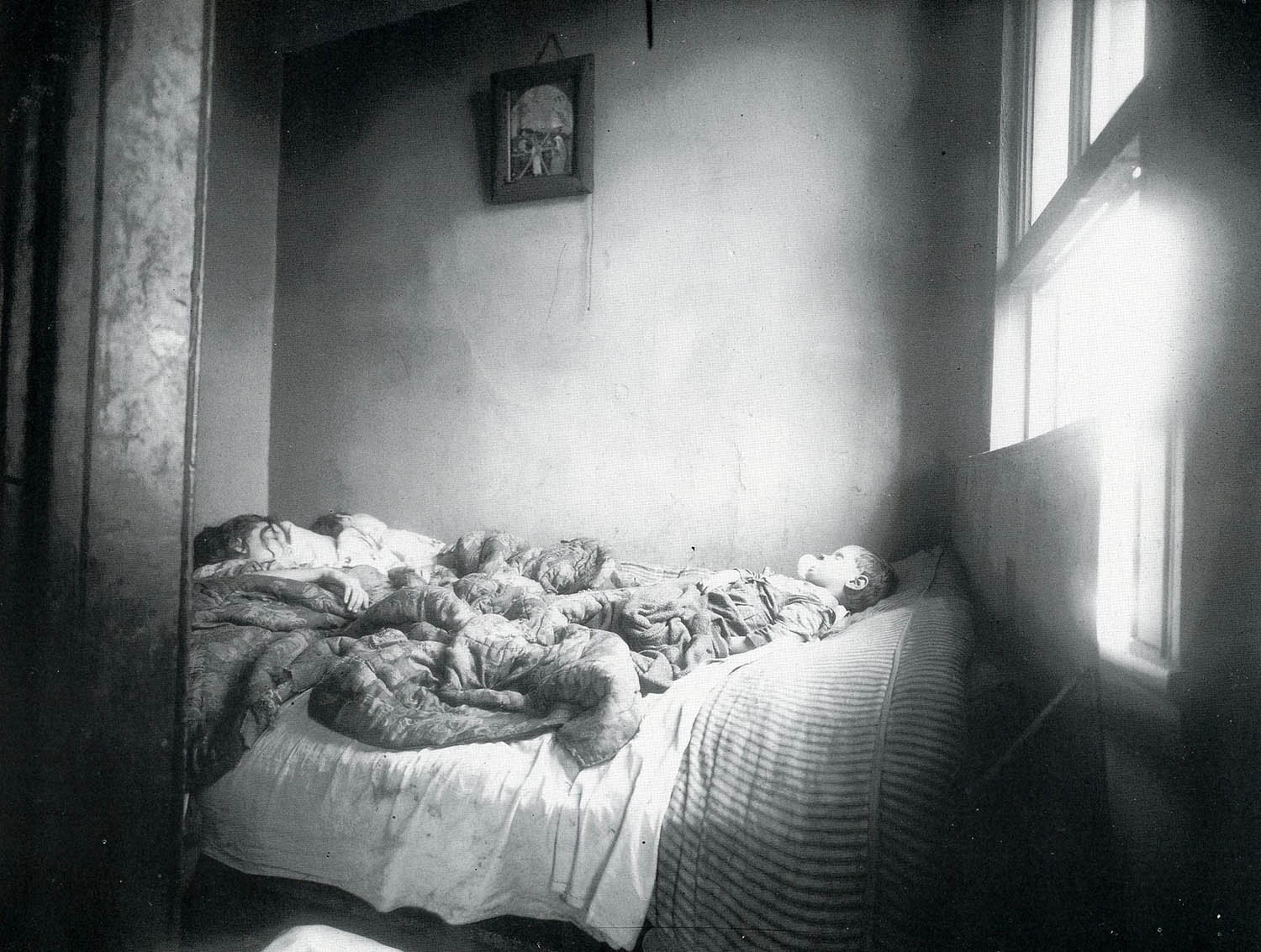
“555 6th Bklyn suicide w/her 3 children (gas) 10/15/15 by Z #870”
This sad picture is matched by an equally sad and simple story:
FOUR DIE FROM GAS
Peter Connell, of No. 476 Sixth Avenue, Brooklyn, went yesterday to the home of his sister, Mrs. Josephine Huntsinger, at No. 555 Sixth Avenue, Brooklyn, to arrange for the funeral of his brother-in-law. The brother-in law was drowned Monday.
Gas billowed from the flat. Connell dashed within. In the bedroom were the dead bodies of Mrs. Huntsinger and her three children – Alice, 13 years old; Elizabeth, 8 years old; and Emma, 3 years old.
The five will be buried together.
[New York American, October 16, 1915]