Today’s Orange Yet Truly Morbid Fact!
Erysipelas is classic cellulitis – an acute disease of the skin and subcutaneous tissue which can produce painful red skin lesions called peau d’orange because the human skin assumes the texture of an orange rind. The organism that causes erysipelas also causes scarlet fever and puerperal fever. Until the end of World War II and the advent of antibiotics, these pathogens were frequently carried in the nose or throat by a large percentage of healthy people who were asymptomatic carriers. In the nineteenth century erysipelas began to receive considerable scientific attention because of epidemics which coincided with peak years of puerperal fever. Indeed the disease was reportedly responsible for a mortality rate of between 5 and 20 percent of all maternity patients in the larger hospitals of Europe, and when smaller medical facilities experienced outbreaks, fully 70 to 100 percent of the new mothers perished. Clearly, hospitals were very dangerous places to give birth, and outbreaks were not only frequent but on the increase.

In 1795 Alexander Gordon, an Aberdeen physician, became the first to associated erysipelas with puerperal fever, and by the first decades of the nineteenth century the suspicion had arisen that both diseases were contagious. Among those harboring this suspicion was the American physician and author Oliver Wendell Holmes (1809-94). In a described case in which a physician had examined the body of a man who had died of gangrene of the leg one day and the following day attended a woman who was giving birth. She, and six other women he had treated, developed puerperal fever.
At about the same time that Holmes published this essay, Ignaz Semmelweis (1818-65) became an assistant at the Vienna maternity clinic. There were two wards, one staffed by midwives, the other by medical students. He was puzzled by a maternal death rate of about 10 percent in the students’ ward compared with about 3.5 percent in that of the midwives. Following several months of investigation, he became convinced that the disease was transmitted by medical personnel from autopsied and dissected corpses to patients, and he introduced the procedure for medical practitioners of handwashing in a chlorine solution to sterilize them before approaching the sickbed. The results were impressive. The maternal death rate fell to less than 2 percent in his ward. His colleagues, however were not only not impressed, they were outraged at Semmelweis for suggesting that they, who were devoted to healing, could be agents of death. In the face of this hostility, Semmelweis resigned and moved to a hospital in Budapest.
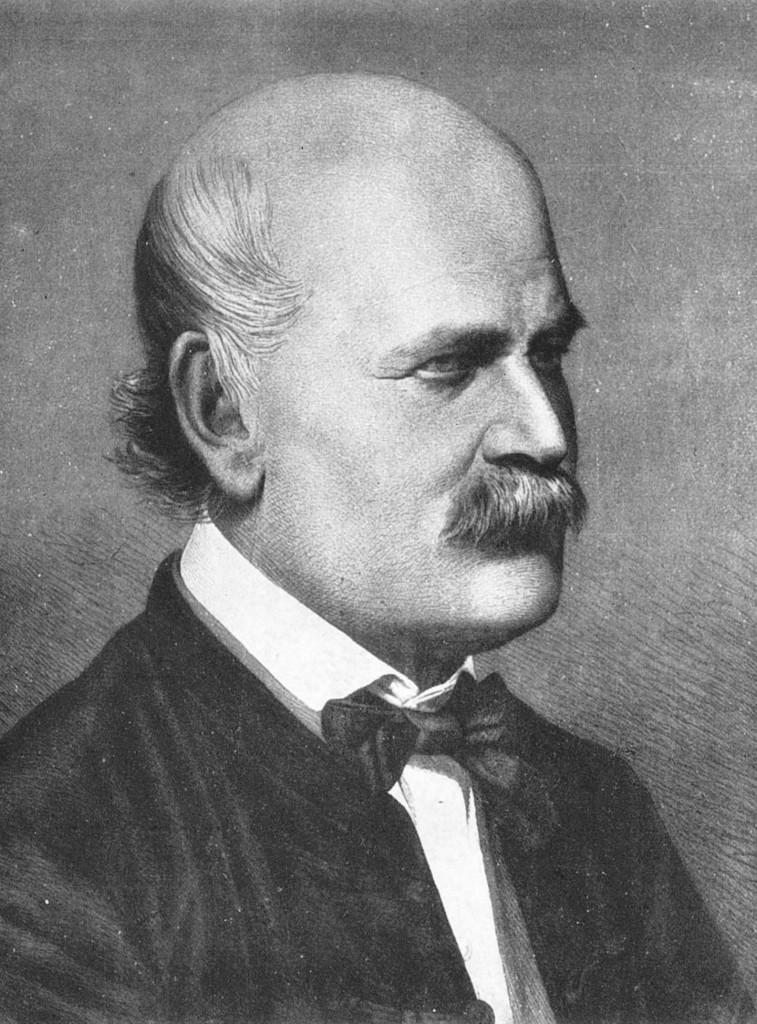
Semmelweis
There, in 1861, he published a major book on childbed fever in which he demonstrated that physicians who accompanied their dead patients to the autopsy room, and then returned to live patients in labor lost considerably more of those patients than did midwives who did not perform autopsies. Perhaps it was the furor and controversy that his book stirred up which led to his admittance to a mental hospital in 1865. Ironically it was discovered in the hospital that he had developed an infection in one of his hands that subsequently spread throughout his body and killed him. Semmelweis died of erysipelas caused by the same pathogens that transmitted puerperal fever – the disease he had struggled to conquer.
Culled from: Plague, Pox and Pestilence
Ohio Prisoner Du Jour!
The Ohio Penitentiary, also known as the Ohio State Penitentiary, was a prison operated from 1834 to 1984 in downtown Columbus, Ohio, in what is now known as the Arena District. The prison housed 5,235 prisoners at its peak in 1955. Prison conditions were described as “primitive” and the facility was eventually replaced by the Southern Ohio Correctional Facility, a maximum security facility in Lucasville. A separate women’s prison was built within its walls in 1837. The buildings were demolished in 1997.
My friend Jim was fortunate enough to visit the prison before it was demolished, and he has recently gifted me some books that describe the horrifying conditions inside. The following is an excerpt from the book The Ohio Penitentiary: 1899:
Aunt Elsie James
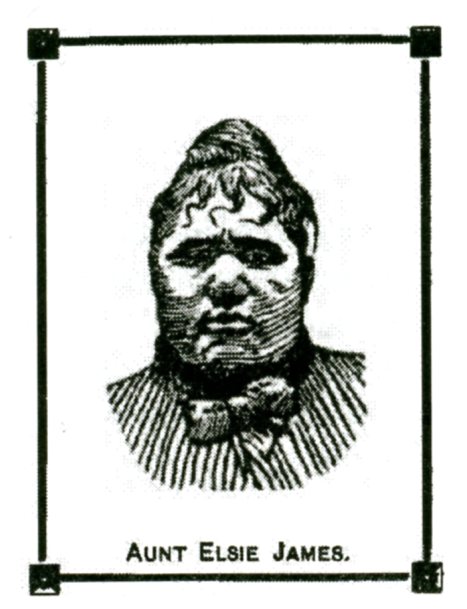
Whose life has always been one of freedom in the wild forests of the Indian territory up to 1889, reminds anyone who sees her of a caged bird, always longing, always sighing for liberty.
Once she was doomed to hang in her own country, bu the kind heart of President Harrison was touched, and he commuted her sentence to imprisonment for life. She was received at the Penitentiary August 1, 1889,. She was accused an convicted of the crime of the murder of a white man, a tenant on her farm. His head was split open with an ax and then secreted under a haystack not far from her house. Elsie is a full blooded Chickasaw Indian, and can talk but a few words of our language. She was baptized last December by Chaplain Dudley, and was greatly affected by the solemn ceremony. She thinks she will not live many moons if she is not pardoned. She is ever protesting her innocence and declares that she has not the heart to even kill a chicken. Elsie is learning to read and write our language, and takes great pride in her work. She is a good prisoner and never gives anyone trouble.