Today’s Miserable Yet Truly Morbid Fact!
On March 16, 1945, the Nazis liquidated the death camp at Spaichingen, located in southwestern Germany, about twenty miles north of the Swiss border. Joseph Freeman and thousands of other inmates began a six-week death march ordeal that ended in the city of Fussen in southern Germany. Joseph’s story is documented in the book The Road To Hell: Recollections of the Nazi Death March. The following is a brief excerpt from the book, discussing the fourth night on the road.
One day after another passed. We had been walking from morning until evening, resting at nights in open fields. The SS was constantly watching us. When we began the march we walked at a normal pace, but as the days passed, we slowed down. The SS pushed us, hollering for us to walk faster. Sometimes they hit us with their guns. At first the punishment succeeded in getting us to move quickly, but by the fourth day beatings could no longer speed the tempo of the walking. The people accepted the blows and still moved slowly. After awhile the SS stopped hitting us and they themselves started to slow down. Now some of us started to cough and sneeze. The cold was catching up to us. Some of us started to walk in groups of two, one supporting the other. Some began to fall on the ground. At first, one would pick up the other and support him while continuing to walk. But in time, the ones who could walk could not help those who had fallen. We were tired and also afraid of being hit by the SS.
Now we are coming to the most terrifying days of our journey. Come with me if you are psychologically and physically strong and can take it. [I know you can. – DeSpair] You will understand how a human being turns into an animal, trying to survive in the most desperate moments when cold and hunger takes over his mind and body. “Dante’s Hell” was a paradise compared to the living hell which I and my fellow survivors endured. We had been moving on the road for four days, trudging from morning until dark. Everyday, as we started to walk, we received our rations which consisted of a piece of bread and a cup of water. In the afternoon of the fourth day we moved out from side road to the main highway. We saw German civilians, so many of them. Thousands and thousands were moving on the road, pushing handcarts full of personal belongings. Some were pushing wheelbarrows filled with household items. We also saw some wounded people in trucks moving in one direction. It was a parade without end, moving silently. Turning our heads, we saw them moving on the other side of the highway. The faces of the German civilians were tired and drawn. Some were in wagons sleeping or in a sitting position, shaking to the beat of the wagons moving on the bumpy roads. Some were moving on foot, including women carrying little children in their arms. It was a parade of human misery awash in a reign of terror and fright.
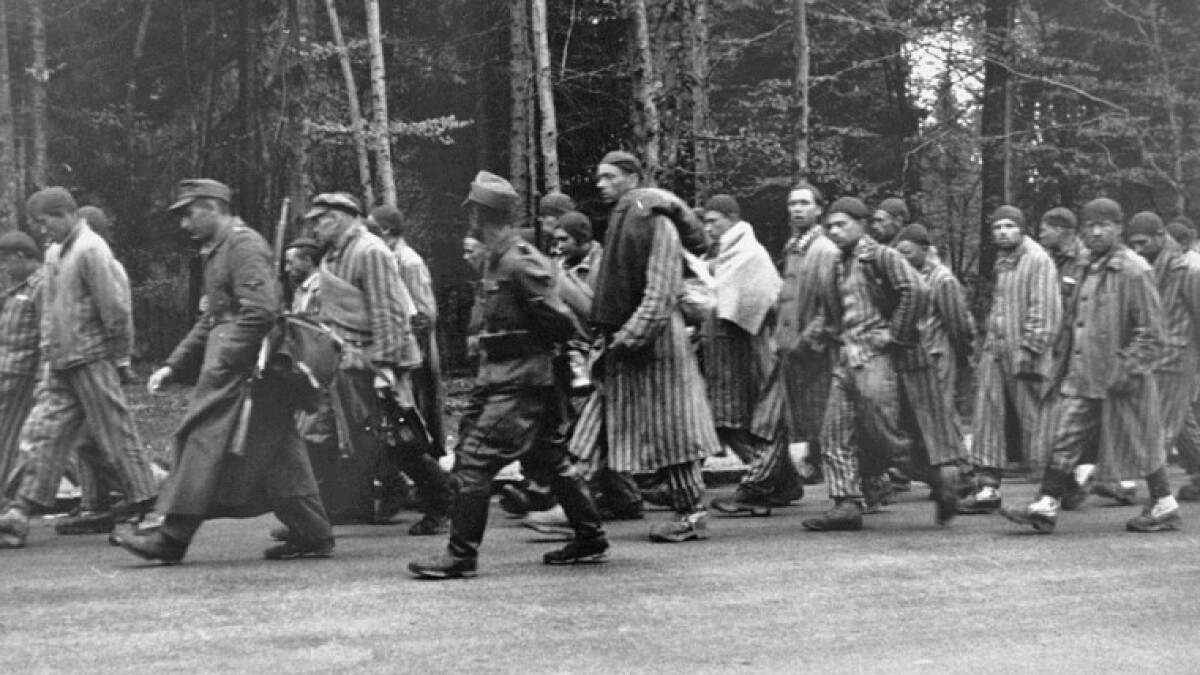
One of the Nazi death marches
We had been moving constantly. The afternoon came, then evening. It started to get dark. A sound of the whistle and we stopped. We stood and waited. The SS in front of us talked to the Lagerelder. Another whistle and we started to move out from the highway to the side road. After walking for some time, we came to an open field. Some large empty buildings stood in front of us. Here we stopped for the night. I remember this very well, our fourth night of the march. It was the beginning of our inhuman suffering.
We were divided into two groups. Those of us in the first group entered the first building. As we entered we heard the shrill voices of the SS ordering us to move faster. We were frightened and cold. There were no wooden floors; we had to lay down on the frozen ground. Exhausted, hungry, and shaking from the cold, some of us could not take the hardship and started to cry and to pray. But praying could not help. Praying could not provide the warmth we desperately needed. The crying and praying went on for the entire night. The night frost was the biggest killer. Each night some people gave up their will to live and died in their sleep. It was terrible after a long and painful night to awaken the next morning next to a friend, his face white, frozen, with pieces of ice jutting from the sides of his mouth. His tongue protruded like a piece of frozen red ice. He had given up. Others like him also gave up. They did not care anymore. There is a limit to pain and suffering. The breaking point comes and that little spark of hope is extinguished. This was the end of their pain. We did not know who was better off—they, the dead, or we who suffered but nevertheless went on. At first, the SS did not believe the inmates frozen on the ground were dead. They poked them with their guns. As this did not help, they shot into their dead bodies. We stood and looked as tears ran down our faces, silently watching the macabre scene. Some of us started to say Kaddish (the last prayers) in memory of our fallen comrades. We tried to get back to sleep but were awakened by Kapos kicking us and calling for us to get up. Laying for so long on the frozen ground, we were stiff and could hardly move. Then the SS who had been watching us from the outside of the building ran inside and started to hit us with the butts of their guns. Those still on the floor tried to escape the punishment by crawling around on the ground. But the SS were running after them and beating them. The sobbing from the victims and the excited voices of the SS barking orders mixed together and is still ringing in my ears. It was so long ago. Still I cannot forget the horrible scene of people crawling and the SS running after them and hitting them constantly.
We ran out from our miserable place of rest and looking back, we saw some inmates laying frozen on the ground. The SS ordered the Kapos to count them. We moved out, leaving some of our comrades unburied in the open. From now on death was our constant companion, reminding us that the end was closing in.
Culled from: The Road To Hell: Recollections of the Nazi Death March
Ghastly!
|
|
