Today’s Whipsawing Yet Truly Morbid Fact!
The cool Chicago autumn night passed quietly. Then, around 4:00 A.M. on Monday morning, the nineteenth of October, 1857, Michael Joyce, the bell ringer at the Cook County Courthouse, heard the plaintive cry, “Fire!” coming from one of two men standing near the Clark Street Bridge, which spans the Chicago River. Joyce observed plumes of smoke curling toward the sky. At first he thought a river tugboat was in trouble, but then he saw the flames shoot from the roof of one of the buildings at 100 Water Street. At that moment, he began to ring the courthouse bell, summoning the volunteer hook-and-ladder companies to action.
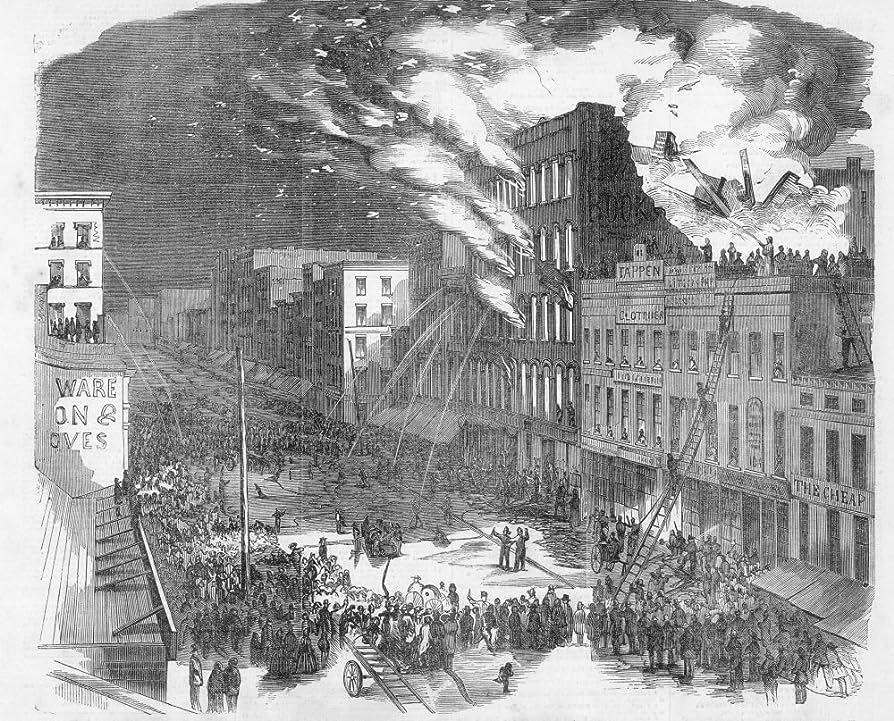
Low-slung four- and five-story, marble-fronted dry goods stores, hatters, stables, and rooming houses lined Water Street, even then a thriving commercial through fare situated on the south bank of the Chicago River. The Water Street merchants from Dearborn on the east to Clark on the west had paid careful attention to the appearance of their storefronts, but the fancy marble pillars and Greek Revival ornamentation they had installed to advertise their business locations and wares disguised the shoddy wooden construction of the interior walls. The entire city was a tinderbox, and it was a wonder that Chicago had been spared the plague of the firebug up to this critical moment of its history.
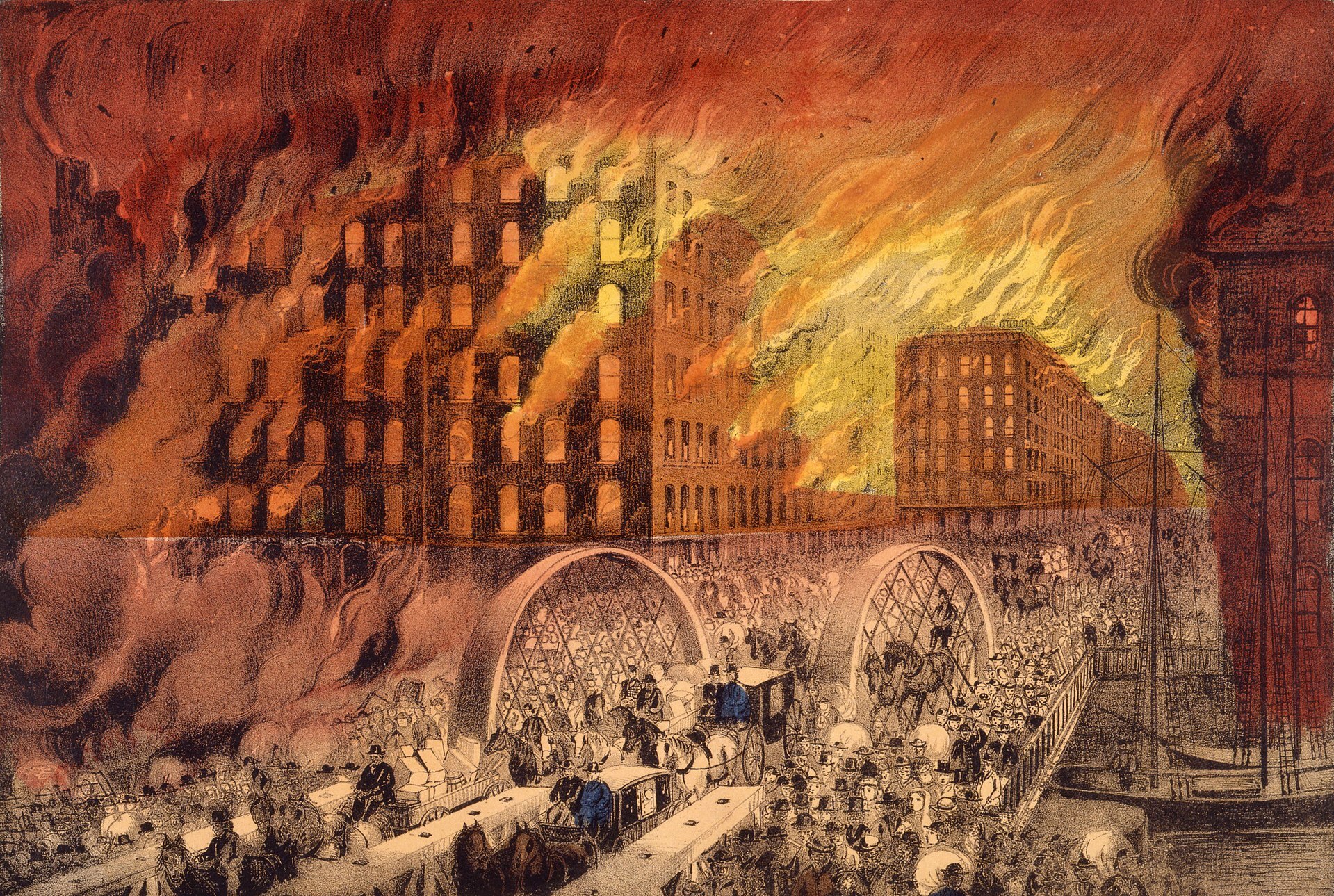
The fire spread, whipsawing from building to building, trapping sleeping residents living in the rented rooms in the upper floors above the stores. Many of these residents were creatures of the night who reserved the airless, whiskey-stained cubicles by the hour to entertain gentlemen clients. They were forced to jump from rooftop to rooftop to avoid the advancing wall of flames.
After what seemed to be a hellish eternity, the first of the volunteer brigades arrived on the scene, by which time the conflagration was well out of control, and the sidewalls of many of the buildings were collapsing. It was noted on the editorial page of the Chicago Times the following afternoon that the conduct of the firemen contributed to the tragedy that left eighteen people dead, many more homeless, and half a million dollars in commercial damage. “We account for the disappointment by the unusual amount of drunkenness and rowdyism in which the firemen indulged. Simultaneously with the work of the engines, the drinking commenced and long before the time for cool and energetic action had passed, scores of men in firemen’s garb were too far gone to know whether they were really at a fire or wedding. Of course there was disorder, fighting, rowdyism, and ill-directed and abortive effort because where whiskey is, there good sense is not.”
Others, who were not a party to the shenanigans of hooligans, displayed uncommon valor in the face of death. John Dickey, a twenty-six-year-old bachelor who lived with his parents at 118 Monroe Street, charged into Edward Hempstead’s wholesale grocery store at 115 Water Street with hose in hand. He was caught by a falling wall and crushed. His lifeless form was dragged from the ruins of the store and returned to his mother’s tired embrace within an hour of the sounding of the first general alarm.
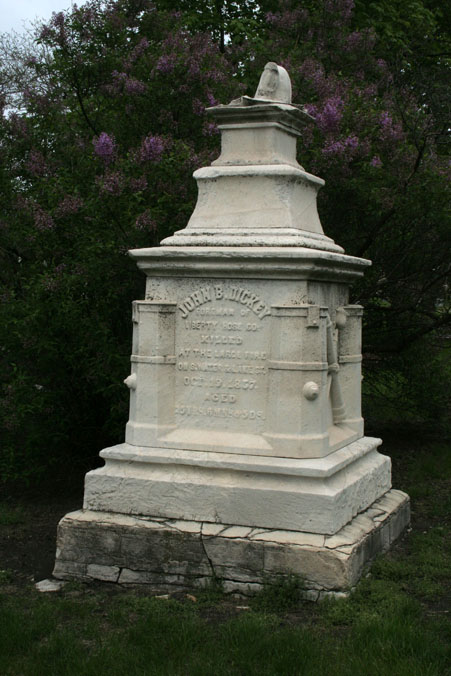
John Dickey’s grave in Chicago’s Graceland Cemetery
By sunset the entire block was flattened, and the grisly search for human remains entombed beneath the embers and ruins had begun. It was noted with disgust and revulsion by the Chicago Tribune that “a gang of a hundred boys of all sizes from the urchin of ten summers to the loafer of twenty… were down on their bellies clawing through the dirt and among the hot bricks and charred beams in search of unburned property. When one of them would find a quantity of articles a half-dozen others would set upon him and divide it among themselves. When a body would be removed a score would make a rush for the hole to dig and root, scramble and quarrel, brawl and curse. We could not help but think as we turned away from this scene of depravity, what awful neglect of family government and moral training must exist in the households of which those lads and young men belonged.”
Nearly twenty thousand people jammed the court house square at Randolph and Clark on October 23 to pay final homage to the eighteen fallen volunteer-brigade men and others whose remains were accounted for in the tragedy. Businesses were closed for the day, and black crepe bunting was hung from the rooftops and windows of the city. The procession passed by the scene of devastation, as the solemn strings of a dead march and the ringing of the courthouse bell filled the air. Throngs of weeping women lined the sidewalks.
In the days that followed, coroners’ inquests were held behind the closed doors of the courthouse, and countless rumors and accusations into the nature of the catastrophe circulated through the city. A “dissolute female” quarreling with her paramour over “the price of her shame” in his private fifth-floor room at 113 South Water was held to account. The woman swore that if she was not paid the agreed-upon sum she would set fire to the lodging house. According to one contemporary account, she ignited the man’s bed with a candle, driving them both from the room.
The hue and cry was raised in the editorial pages for the common council to follow the lead of Boston and other New England cities and permanently abolish the volunteer fire brigades creating havoc in the streets in favor of a trained citywide force paid for their service to the community.
The scandal accompanying the big fire that long-ago afternoon resulted in the formation of the Citizen’s Fire Brigade of Chicago on November 19, 1857. Less than a year later, on August 2, 1858, the first paid fire department took to the streets with the latest equipment. The engine house was headquartered on LaSalle Street where City Hall now stands. At great expense, steam engines and the fire-alarm telegraph were purchased by the city to combat the menace of fire.
Reflecting on the terrible tragedy, the Tribune expressed a commonly held sentiment: “Let us hope that God in His mercy will spare us another exhibition so fraught with the utmost human misery.” But of course, the greater fire tragedy lay nearly fourteen years in the future, when once again this terrible sorrow would revisit the people of Chicago.
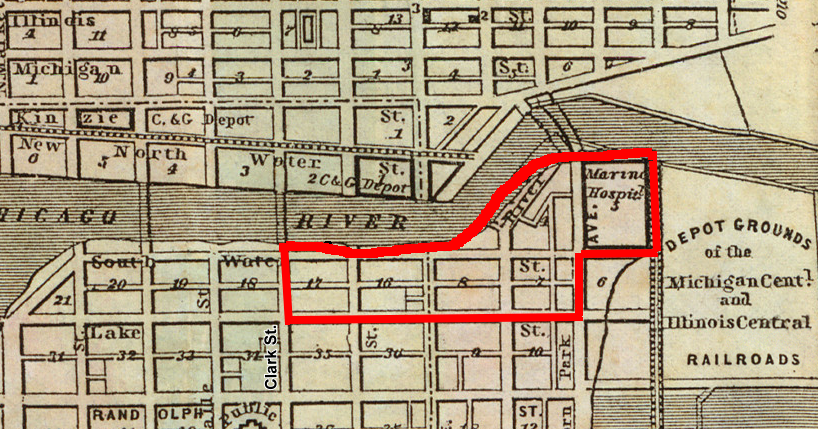
The extent of the fire of 1857
Culled from: Return Again to the Scene of the Crime
Brain Du Jour!
Here’s another excerpt from Malformed: Forgotten Brains of the Texas State Mental Hospital.
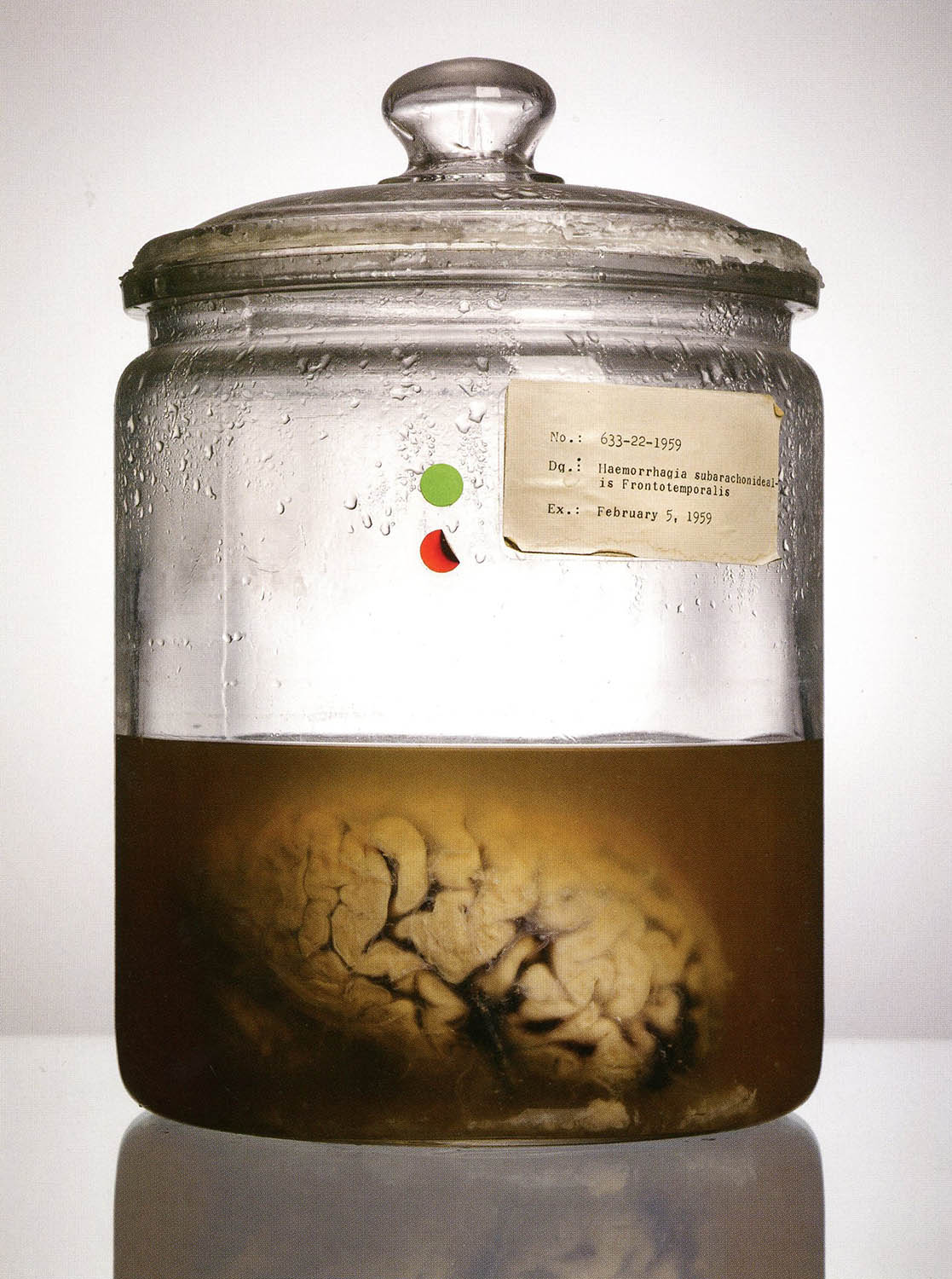
633-22-1959
Study No. 83: Haemorrhagia subarachonidealis Frontotemporalis,
02/05/59
Visible evidence of a brain hemorrhage.