Category Archives: Art

Morbid Fact Du Jour for January 6, 2015

Today’s Hopeless Yet Truly Morbid Fact!

Between February, 1864 and April, 1865 it is estimated that 45,000 Union prisoners were confined in the Confederate stockade, Camp Sumter, near Anderson Station, Georgia, forever to be remembered as Andersonville. Of that number, approximately 25,000 men survived their prison experience and returned home to tell their tale of suffering. It is unknown how many survivors, with their health and lives shattered, died as a direct result of their captivity after returning to civilian life. Close to 13,000 Union soldiers did “give up the ghost” at Andersonville, and it was the ghost of Andersonville that haunted the survivors for the rest of their lives.

The following is an excerpt from the account of Private George Weiser, who arrived in Andersonville on May 25, 1864.

“In July and August we had about six thousand sick men in the prison, about three thousand of whom were almost helpless and dying. The dead averaged about one hundred a day and one day we had two hundred and four deaths. Every day the dead were carried out to the dead house by four of his friends. We had a sick call every day at ten o’clock. This call was at the gate where the doctor would come in and look at the sick. I will explain the sick call: At ten o’clock a drummer boy would come in near the gate to beat the drum, about three thousand of the sick would then start for the gate and about three hundred would hold out to reach there, the rest of the men would all give out before they got near the gate and they would hear, ‘the sick call is over’ and they had to get back to their shanties the best they could.

“A great many of these men had their friends to help them; these too would start to answer the sick call. Each one would have three or four friends who would pick them up and start for the gate; some of these were carried in blankets, some on sticks of wood and some on shoulders of their friends, each party trying to rush their man in ahead of the other.  Some of these would run into each other, throw down their men and fight for the right of way. Very often when the fight was over one or the other of the sick men would be dead. This surely was a sad sight. About three hundred would reach the gate, and carried up in this way, it took a long time to reach there for our motion was very slow, we had been so reduced that we could not move fast.

“The sick are at the gate near the dead-line – that is all that were able to get there – about six or seven hundred and these hope to get medicine; two doctors come in and look at them, pick out three or four and send them to the hospital, the doctors then give a little red root or a few pills to about fifty of the sick men, and then the doctor says ‘that’s all we can do’ and tell the men to come again to-morrow, then the men are taken back to their holes and shanties again disappointed and dying.

“Sometimes the sick would be waiting for the doctor and word would come that he would not be in today, and some of the men would give up all hope and die.”

Culled from: Andersonville Giving Up the Ghost: Diaries & Recollections of the Prisoners.


Ghastly: Winter 2014 Car Crash Edition!

Thoughts that I had upon watching the following video of Russian car crashes:

1) I guess I won’t drive to the coffee shop in the slush after all.
2) Now I know what it’s like to die in a car crash.
3) Do all Russians have dashboard cams?

So I did a little quick research and per Wikipedia, yeah, those Russians love their dashboard cams:

“Dashcams are widespread in Russia as a form of surveillance, additional evidence in court, and as a guard against police corruption and insurance fraud. They have been called ‘ubiquitous’ and ‘an on-line obsession’, and are so prevalent that dashcam footage was the most common footage of the 2013 Chelyabinsk meteor, which was documented from a dozen angles. Thousands of videos showing automobile crashes, close calls, and attempts at insurance fraud have been uploaded to video sharing websites like YouTube, an oft-gruesome genre which has generated its own Russian lexicon[6] such as:
слабоумие и отвага (slaboumiye i otvaga): ‘Courage and dementia’
железобетонное очко (zhelezobetonnoye ochko): ‘Anus of Reinforced Concrete’ (i.e. ‘one whose anus is made of reinforced concrete”, an honorific for an especially skilled driver reacting adequately to an emergency situation).'”

Anus Of Reinforced Concrete:  Your metal band name.

Okay, here’s the video.  Remember, be careful out there!  Don’t drive like a Russian!
Morbid Fact Du Jour for December 27, 2014

Today’s Anatomical Yet Truly Morbid Fact!

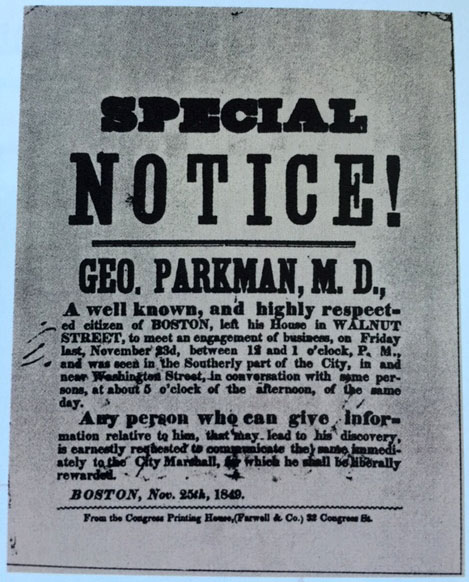
Dr. John Webster was the Professor of Chemistry at Harvard Medical College in 1849 when he borrowed $438 from a fellow doctor, John Parkman. Growing impatient for the repayment of the loan, Parkman called at Webster’s rooms on Friday, November 25. Parkman was never seen alive again. Two days later his wife reported him missing, and reward noticed were posted all over the area.

The first evidence that murder had been committed was found by a college janitor named Ephraim Littlefield. He had noticed that on the day when Parkman was known to have disappeared, Webster’s laboratory door had been locked, but the wall against which the laboratory’s assay oven was situated felt hot to the touch. When this was put to Webster, he claimed to have been conducting experiments. He then attracted further suspicion by offering the janitor a Thanksgiving turkey.

Littlefield persuaded his wife to keep watch for Webster while he hammered a hole through the laboratory wall. To his horror, he saw through the hole two parts of a human leg and a pelvis. He alerted the police, whose subsequent search of the laboratory yielded a human torso and more than one hundred and fifty bones and body fragments.

A team of university anthropological experts was called in to solve the anatomical jigsaw puzzle, and they found the pieces belonged to man roughly five feet ten inches tall and aged between fifty and sixty years old.

Parkman had been sixty years old and six feet tall and further evidence in the shape of a set of dentures was found in the furnace. These were compared with the dental records and a cast kept by Parkman’s dentist. The result was a perfect match, and Webster was convicted of murder and sentenced to death.

Culled from: Hidden Evidence: Forty True Crimes and How Forensic Science Helped Solve Them


Creepy Curio Du Jour!

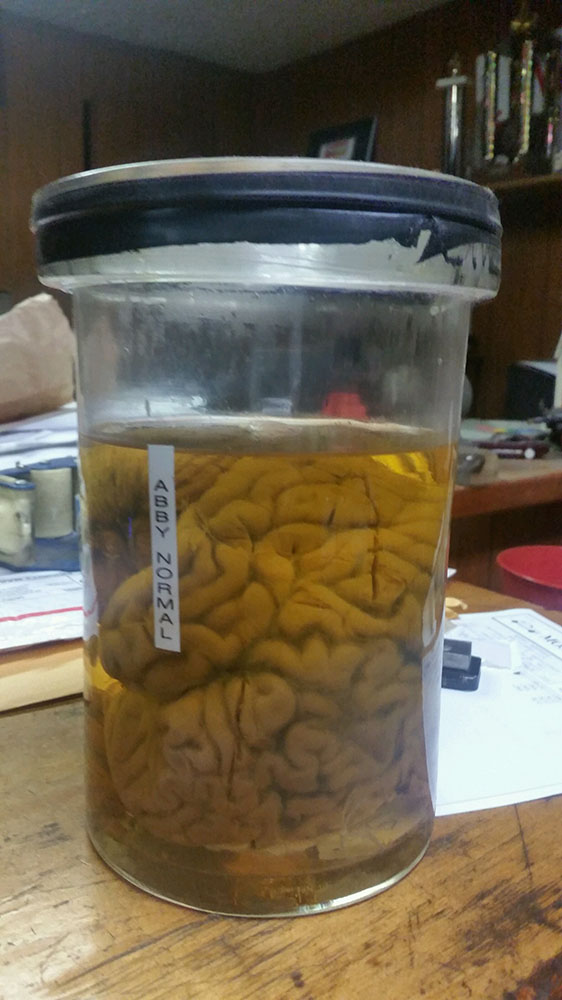
Of course, we all wish we had a brain in a jar that we could put on our curio cabinet.  And, wouldn’t you know it?  Jack actually does!

“I received a call one day from a friend who does estate sales for a living. He wanted to know if I wanted some human body parts because he believed that trafficking in those would land him in jail. I assured him they were referring to parts recently removed from live people, but he still wanted no part of what he found. I received multiple jars of various and sundry creatures. My favorite of course was this brain. They were taken from an estate of a woman who taught brain surgery at UCSF many years ago. This really can’t be classified as Hazmat or Toxic waste, but it still fits the display. (Well maybe BioHazard?)

“PS:  I put Abbynormal on the jar!”

(Do you have a creepy curio you’d like to share?  Send it to the Comtesse!)


Atrocious Artwork!

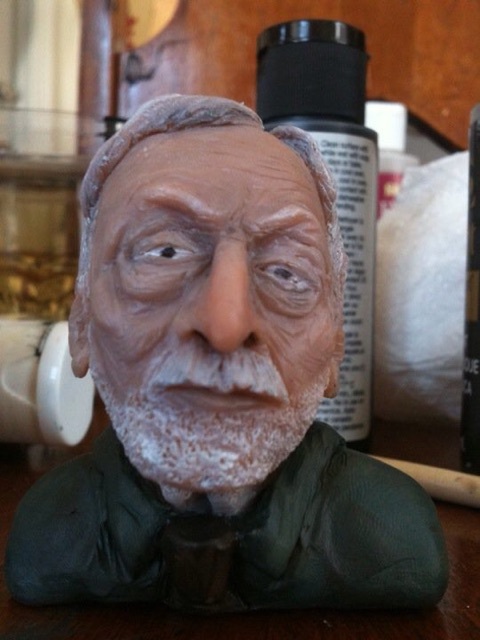
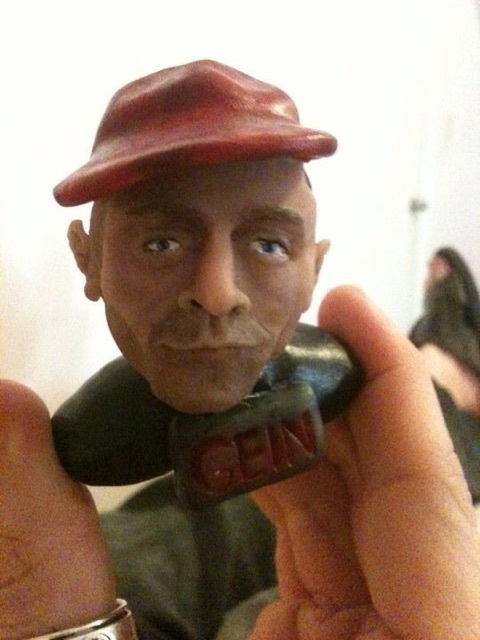
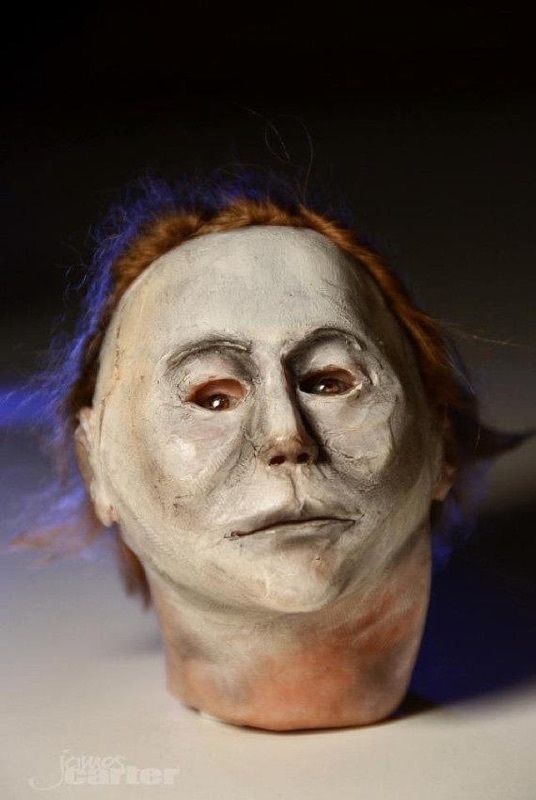
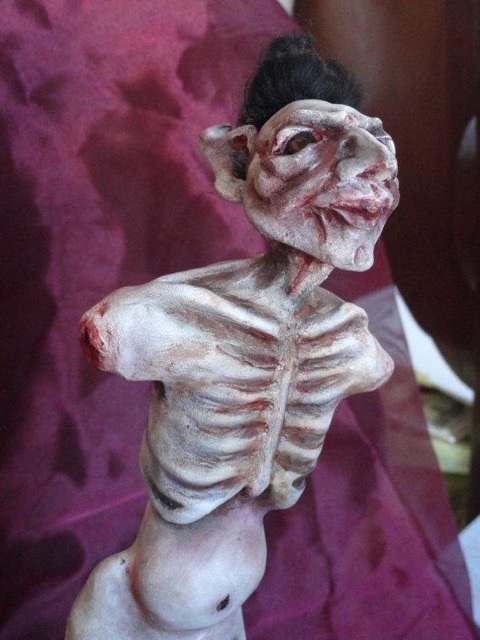
Steve wrote to tell me about his friend Jen Lewis who specializes in sculptures of serial killers.  Of course, such a worthy hobby must not go unrecognized!  Here are a few of her masterpieces.  Her Etsy page is currently devoid of morbidity, but I’m sure if you contact her directly at dezr04@yahoo.com to commission a serial killer, she’d be more than happy to oblige.


Albert Fish


Ed Gein


Ummmmm…  Leatherface?  Not sure, actually… but creepy!


And one more creepy thing for the road!

Morbid Fact Du Jour for December 23, 2014

Today’s Urine-Soaked Yet Truly Morbid Fact!

In city streets clogged with automobiles, the vision of a horse and buggy produces strong nostalgia. A century ago it produced a different feeling – distress, owing to the horse for what he dropped and to the buggy for spreading it.

Of the three million horses in American cities at the beginning of the twentieth century, New York had some 150,000, the healthier ones each producing between twenty and twenty-five pounds of manure a day. These dumplings were numerous on every street, attracting swarms of flies and radiating a powerful stench. The ambiance was further debased by the presence on almost every block of stables filled with urine-saturated hay.

During dry spells the pounding traffic refined the manure to dust, which blew “from the pavement as a sharp, piercing powder, to cover our clothes, ruin our furniture and blow up into our nostrils.”

The 15,000 horses of Rochester, N.Y., produced enough manure in 1900 to cover an acre of ground with a layer 175 feet high. This steadily increasing production caused the more pessimistic observers to fear that American cities would disappear like Pompeii – but not under ashes. The timely arrival of the horseless carriage prevented this, of course. It was widely hoped that the age of polluted air was coming to a close, that cities at long last would be healthier, cleaner, quieter places to live. But as Proudhon once observed, “Human history has a great propensity for surprises.”

Culled from: The Good Old Days – They Were Terrible! by Otto L. Bettmann

Here’s a photo of New York City in 1881.  Imagine those flowing Victorian gowns walking over that?


European DeSpair, Part Four: Nineteen Thirty-Six

I finally finished the fourth installment in my series of travelogues for my trip to Europe last summer.  In this episode, we visit the crumbling 1936 Olympic Village, where Jesse Owens and co. stayed, practiced, and ate.  And the Comtesse makes an enormous morbid blunder – one for which she will be eternally remorseful. Be kind… her remorse is punishment enough!


Fetus Du Jour!

Here’s another 1930’s fetus that I photographed at the Museum of Science and Industry. Much like the mood of these poor little guys as they get closer to birth, my newsletter’s membership has plunged the longer I keep subjecting you to fetus photos.  And just like this guy I sit in a dark room and wonder what it can possibly mean?

Morbid Fact Du Jour for December 22, 2014

Today’s Moral Yet Truly Morbid Fact!

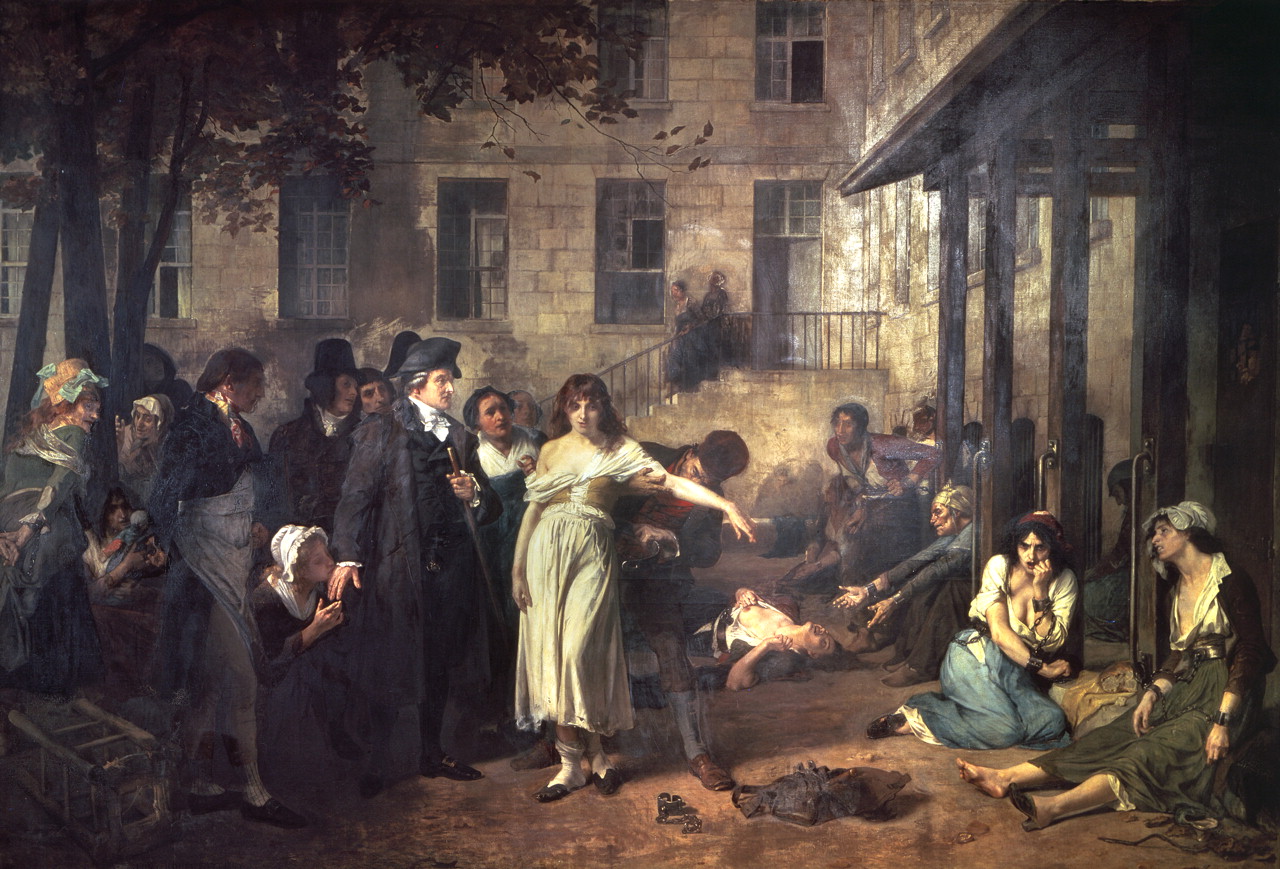
Philippe Pinel was an enlightened French doctor to whom the Revolutionary government had handed the keys of Paris’s most notorious hellhole, the Bicetre Asylum, in 1792. Pinel was a failed rural practitioner who had devoted himself to the study of mental illness after a friend suffered a nervous breakdown, fled into a forest, and was devoured by wolves. “The Bicetre,” wrote historian Albert Deutsch, “owned a questionable distinction: it ranked with the worst asylums in the world. There the patients, or rather the inmates, were loaded down with chains and shackled to floors and walls with irons, at the mercy of cruel attendants armed with whips and the authority to use them freely.” (Terrorizing mental patients, in the hopes of “waking” them from madness, was common all over Europe. One German asylum lowered patients into a dungeon filled with snakes. Even England’s King George III was beaten by an attendant during one of his asylum stays.) Pinel’s first act, immortalized in a famous painting by Robert Fleury that shows a patient kissing his hand in gratitude, was to strike the chains off fifty-three of the filthy, bedraggled “beasts” that had been remanded to his care. Most of them proved to be quite harmless. Their previously violent behavior had mimicked the violence visited upon them by their keepers. Pinel introduced elementary hygiene, humane living conditions, and occupational therapies as substitutes for the leg irons, whippings, and brutal beatings that were the norm in European and American asylums. The same year in England, a Quaker named William Tuke founded the York Retreat for the mentally disturbed, a manor house so named “to convey the idea of what such an institution should be, namely, a place in which the unhappy might obtain a refuge; a quiet haven in which the shattered bark might find the means of reparation and safety.” The new movement had a name: moral treatment.

Culled from: Gracefully Insane


Grim Pin Du Jour!


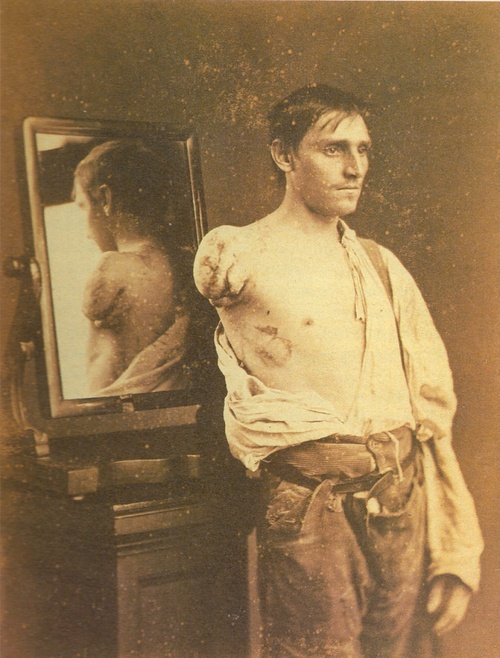
I found this handsome civil war amputee on Pinterest.  Culled from the early Burns Archive collection Masterpieces of Medical Photography.


Fetus Du Jour!

And here’s another preserved 1930’s fetus I photographed at the Museum of Science and Industry.  As I said yesterday, as they get older, they get grimmer!  Check out this guy (or girl?  I can’t really tell). Talk about old before his/her time!

Morbid Fact Du Jour for December 21, 2014

Today’s Icy Hot Yet Truly Morbid Fact!

In 1893, the city of Chicago hosted the World’s Columbian Exposition, a world’s fair belatedly commemorating the 400th anniversary of Christopher Columbus’s discovery of North America.  The fairgrounds were situated on the city’s south side six miles south of the Loop and spread over a 700-acre tract of land abutting Lake Michigan in Jackson Park. Frederick Law Olmsted, one of America’s foremost landscape architects, transformed the sandy, swampy land into a wonderful setting of lagoons and gardens that would host exhibits from 60 countries and more than 200 buildings. The fair cost the city $30 million and drew 27 million visitors during its six-month run. It turned a 10% profit. Two prominent Chicago architects, John Wellborn Root and Daniel Burnham, were selected to design the fair’s buildings. After Root died of pneumonia in 1891, Burnham decided to emulate classical Greek and Roman styles in his designs. Each building was built of wood and covered with “staff,” a fibrous plaster substance that gave the look and feel of white marble. Thus the “White City” as it became known, appeared to be built of stone. The grand effect was further heightened at night when electric lights were played against the building’s exteriors, illuminating the “marble”.

In addition to the stately show buildings, the White City housed restaurants, cafes, and sanitation and support facilities. One of the largest of the utility buildings was the fair’s cold-storage warehouse. Dubbed the “greatest refrigerator on earth” because of its mammoth size, the six-story white terra cotta building at 64th Street and Stony Island Avenue had its own ice-skating rink and measured 130 feet wide by 255 feet long. And though not officially a part of the fair itself, the warehouse had been built specifically to store all perishable food items used by the fair’s food vendors and to manufacture ice.

The cold storage warehouse appeared to be a sturdy, well-built structure, but it did have one fatal design flaw.  Its iron chimney, fitted at its base to a series of boilers, was 200 feet high, and because it was considered unsightly and clashed with the beauty of the surrounding buildings, a large wooden tower, topped with an ornate cupola, was built to enclose the chimney and hide it from view. Herein lay the problem. The cupola had been built several feet about the chimney opening creating a dangerous fire hazard. The chimney was insulated by firebrick for only the first 70 feet; the remaining 130 feet were left completely open and unprotected inside the tower. Though the architect’s plan had called for installation of a cast-iron thimble to extend the chimney above the cupola to protect it from the hot upward airflow, cost prevented it from being built.

This danger should have raised the concern of fire officials, especially after flames broke out inside the tower on June 17, although it was quickly put out by firefighters from the Columbian Exposition Fire Brigade.  On July 10, the firefighters were called back to the cold storage building when another fire broke out inside the wooden tower. This time, however, the flames would not be so easily tamed. Led by their captain, James Fitzpatrick, more than 20 men rushed to the top, climbing interior stairs that took them to platforms above the hot metal smokestack. Using ropes, the men hauled up their equipment, including hose and a portable ladder. A crowd began to gather. Just then hot coals started falling onto a lower platform below the firefighters, sparking a secondary fire that quickly burned upward. When it burst through the tower it cut off escape for the firefighters above.

The flames traveled quickly up the wooden tower, directly toward the firefighters trapped 200 feet above the street. To compound the situation, the water pressure in the hose line was severely inadequate, the pumps below unable to overcome the extreme height of the tower.

The stranded firefighters were left with just one option: they could tie off their hoseline and try sliding down it to safety. Though burned in the process, two managed to escape this way, to the cheers of the crowds below. When a third man followed their lead, he plunged to his death after the hose burned in half. A few others slid down a rope to the ground, but several more were trapped above when the rope burned as well. The remaining firefighters opted for jumping or falling off the ledge. The more than 40,000 spectators watched in shocked disbelief as the firefighters fell to their deaths. It took two hours for the 30 responding fire companies to put out the warehouse fire. Another three days would pass before rescuers recovered the last of the 12 dead firefighters, including Captain Fitzpatrick, whose body had broken through the roof and was buried in the debris. Fitzpatrick had survived the fall but died a short time afterward. Five other firefighters were severely injured, and one was crippled for life.  Of the dead, four were Chicago Fire Department members and eight were with the exposition’s fire brigade. Two cold storage employees and one electrician working in the building had also been killed.

The tragedy, of course, marred the world’s fair. Once again the Garden City was unable to protect itself from, or avoid being upstaged by, its greatest foe: fire.

Culled from: Great Chicago Fires: Historic Blazes That Shaped a City

Of course, I’m sure many of you know all about the Columbian Exposition by way of Erik Larson’s brilliant book The Devil in the White City.  I decided to take a trip to Oak Woods Cemetery the other day to see the monument to the cold storage firefighters and take some photos of the remnants of the White City.  Of course, as usual, I ended up getting quite sidetracked and I thought I’d share all the ways a Comtesse can get sidetracked whilst undertaking a simple task like photographing a couple of locations in Chicago.  Now, here’s my day on the South Side…


Wretched Recommendation!

When I saw that Joe had sent me a note about a book with the word ‘Müt­ter’ in the title, I lazily thought to myself, “Been there, read that, got it on my bookshelf”.  Luckily, I read his missive closer and realized that, no, this isn’t just another collection of photographs from the Müt­ter Museum (as glorious as those books always are); this is actually a book about the man behind the morbidly magnificent museum himself – Dr. Müt­ter!  And judging by the reviews on Amazon, it looks to be an excellent book – and it’s going on my ‘To Read’ list immediately! Thank you, Joe!

Dr. Mutter’s Marvels: A True Tale of Intrigue and Innovation at the Dawn of Modern Medicine

Here’s the Amazon blurb:

“A mesmerizing biography of the brilliant and eccentric medical innovator who revolutionized American surgery and founded the country’s most famous museum of medical oddities

“Imagine undergoing an operation without anesthesia performed by a surgeon who refuses to sterilize his tools—or even wash his hands. This was the world of medicine when Thomas Dent Mütter began his trailblazing career as a plastic surgeon in Philadelphia during the middle of the nineteenth century.

“Although he died at just forty-eight, Mütter was an audacious medical innovator who pioneered the use of ether as anesthesia, the sterilization of surgical tools, and a compassion-based vision for helping the severely deformed, which clashed spectacularly with the sentiments of his time.

“Brilliant, outspoken, and brazenly handsome, Mütter was flamboyant in every aspect of his life. He wore pink silk suits to perform surgery, added an umlaut to his last name just because he could, and amassed an immense collection of medical oddities that would later form the basis of Philadelphia’s Mütter Museum.

“Award-winning writer Cristin O’Keefe Aptowicz vividly chronicles how Mütter’s efforts helped establish Philadelphia as a global mecca for medical innovation—despite intense resistance from his numerous rivals. (Foremost among them: Charles D. Meigs, an influential obstetrician who loathed Mütter’s ‘overly’ modern medical opinions.) In the narrative spirit of The Devil in the White City, Dr. Mütter’s Marvels interweaves an eye-opening portrait of nineteenth-century medicine with the riveting biography of a man once described as the ‘P. T. Barnum of the surgery room.'”

More Monstrous Medical recommendations can be found at the Library Eclectica.


Fetus Du Jour!

Here’s another preserved 1930’s fetus that I photographed at the Museum of Science and Industry last week. You’ll note that as the fetuses get closer to birth, they start to look increasingly cynical. This one’s just picking its nose and watching its invisible watch. You think you’re bored NOW? Try staring at the same dark womb 24 hours a day – without a cell phone!

Morbid Fact Du Jour for December 20, 2014

Today’s Acquitted Yet Truly Morbid Fact!

In the early hours of March 23, 1928 in Gladbeck, Germany a youth named Helmut Daube was found dying in the street; his throat had been cut and his genitals slashed off. The police soon discovered that Daube’s closest friend was his fellow-student Hussmann; when they went to Hussmann’s house, they discovered that his shoes had been recently washed, and showed traces of blood. His clothes were also blood-stained. Hussmann had completely dominated Daube, and the two had been lovers; but recently Daube had realized that he preferred girls and had tried to break away.

At first Hussmann claimed the blood was that of a cat he had killed, but Paul Uhlenhuth’s recently developed blood test quickly revealed that it was human blood. Hussmann then changed his story and said he had had a nosebleed. The forensic laboratory at Bonn demonstrated that this was also impossible, for the blood on the shoes was type A – Daube’s group – while Hussmann was type 0.

The feeling of the court was that, while they were not convinced of Hussmann’s innocence, they were by no means happy about convicting him on what, to them, amounted to purely circumstantial evidence, so Hussmann was acquitted. But the case drew wide attention to the use of testing for blood groups in criminal cases. Since that time, many criminals have been hanged on the evidence of a dried blood-spot on a wooden floor.


Helmut Daube. Nicole Simpson and Ron Goldman know just how he felt.  

Culled from: Crimes and Punishment: The Illustrated Crime Encyclopedia, Volume 6


Ghastly!

I’ve featured this video about Japan’s Suicide Forest Aokigahara before but I just revisited it and was reminded what a strangely moving and beautiful work of art it is.  If you haven’t watched it, please take twenty minutes to reflect on life and death at the foot of Mt. Fuji.  You’ll be glad you did.  Oh, and it’s not particularly graphic either.  (Thank you to Joseph for sending me the link.)

Suicide Forest


Fetus Du Jour!

Here’s another preserved fetus from the 1930’s that I photographed at the Museum of Science and Industry last week. I call this one: Eternal Meditation.

Morbid Fact Du Jour for December 19, 2014

Today’s Incinerated Yet Truly Morbid Fact!

On September 1, 1894 a huge firestorm, fed by drought conditions and dry debris left behind by lumber companies, destroyed the town of Hinckley, Minnesota, killing over 418 people. After the fire, Dr. D.W. Cowan, coroner of Pine County, was one of the first on the scene. After rescuing survivors and administering temporary medical care to those who needed it, he turned his attention to his official duties as coroner. Many factors impeded the recovery, identification and burial of the dead.  First, the bodies were scattered over a large area, and locating them was difficult. Then, the September weather was hot, and decomposition set in rapidly rendering the work of burial particularly distasteful. Undertakers Frank Webber of Pine City, in charge of burial at Hinckley, advised that after a few days the bodies “must be buried where found. It will be impoosslbe to move them as they are literally falling to pieces.” Search parties worked from sun-up to dark to inter the dead as quickly as possible, but some bodies were not found until months later. In one case remains were found and identified four years later.

In Hinckley, a few horses, wagons and hayracks found unburned, along with others shipped in, were used to transport the dead to the cemetery. Volunteer crews scoured the areas near the town where people might have fled for shelter. In the swamp north of the Grindstone River ninety-six bodies were recovered, piled on the wagons and brought to the cemetery. The procession to the burial ground one mile east of town was a somber one. Here a few “fortunate” deceased were placed in ready-made coffins shipped in, others were given hastily-built wooden boxes, but most were buried en masse in four long trenches. Those deceased who had family members or friends among the living in town were buried in private graves.

Culled from: From the Ashes: The Story of the Hinckley Fire of 1894


Hinckley searching party at ruins of cabin in the woods.


Searching party finding an entire family.

As I’ve mentioned recently, I took a trip to the fun-filled Hinckley Fire Museum a few years back – here’s my travelogue.

Great Fire!


Morbid Link Du Jour!

I’m not an embalmer (I know, saying those words makes me sad too), but this seems to be a reliable enough article.  In any event, it makes for an entertaining read!  Thanks to beth60best for sending it my way.

10 Horrible Myths and Misconceptions About Embalming


Fetus Du Jour!

Here’s another preserved 1930’s fetus that I photographed at the Museum of Science and Industry last week.  I call this one: Adrift.

Morbid Fact Du Jour for December 18, 2014

Today’s Undeclared Yet Truly Morbid Fact!

In 1933, the Japanese army invaded China.  What they thought would be a “3 month war” continued for eight years.  In addition to the ruthless Chinese general Chiang Kai-shek, who commanded immense armies and had Anglo-American financial and technical support in his fight against the Japanese, Japan also faced the twentieth century’s greatest guerrilla leader, the wily Mao Tse-tung, who himself controlled part of China, commanded large forces, and enjoyed the support of the peasants.

With Chiang’s forces, the Japanese faced a traditional army of uniformed soldiers carrying out traditional operations. But Japanese army strategists had no appreciation for the strength of Mao’s brilliant guerrilla tactics. Whereas the Japanese Army pursued a ruthless policy of slaughter known as the “Three Alls” (“Kill All, Loot All, Burn All”), Mao insisted on decorous “rules” when dealing with the Chinese peasants:

All actions are subject to command.
Do not steal from the people.
Be neither selfish nor unjust.
Replace the door when you leave the house.
Roll up the bedding on which you have slept.
Be courteous.
Be honest in your transactions.
Return what you borrow.
Replace what you break.
Do not bathe in the presence of women.
Do not without authority search those you arrest.

The Japanese Spirit Warriors soon became frustrated with the “unfair” tactics of the guerrillas in their midst. “Massacres of civilians were routine,” one soldier later recalled. “They cooperated with the enemy, sheltered them in their houses, gave them information. We viewed them as the enemy. During combat all villagers went into hiding. We pilfered anything useful from their houses or, in winter, burned them for firewood. If anyone was found wandering about, we captured and killed them. Spies! This was war.”

Countries avoid a declaration of war so they may claim “the laws and customs of war did not apply and need not be observed.” Japan never declared war on China. Instead, the fighting was euphemized as an “incident”. Chinese troops were not “soldiers” but “bandits”  One of the customs of war Japan was able to flout in this “incident” against “bandits” was acknowledgement that captured Chinese soldiers were prisoners of war. A 1933 army infantry textbook assured IJA officers that when they took prisoners, “If you kill them there will be no repercussions.”  In a 1937 directive, the army vice chief stated: “In the present situation in order to wage total war in China, the empire will neither apply, nor act in accordance with, all the concrete articles of the Treaty Concerning the Laws and Customs of Land Warfare and Other Treaties Concerning the Laws and Regulations of Belligerency.”  The same directive ordered “staff officers in China to stop using the term ‘prisoner of war.’” As Pulitzer Prize-winning historian Herb Bix pointed out, Hirohito himself “supported the policy of withholding a declaration of war against China and ratified and personally endorsed the decision to remove the constraints of international law on the treatment of Chinese prisoners of war.” Thus Chinese soldiers taken in battle were “denied the status of prisoners of war upon the same pretext and many of them were massacred, tortured, or drafted into Japanese labor camps.”

Culled from: Flyboys


Morbid Trinket Du Jour!

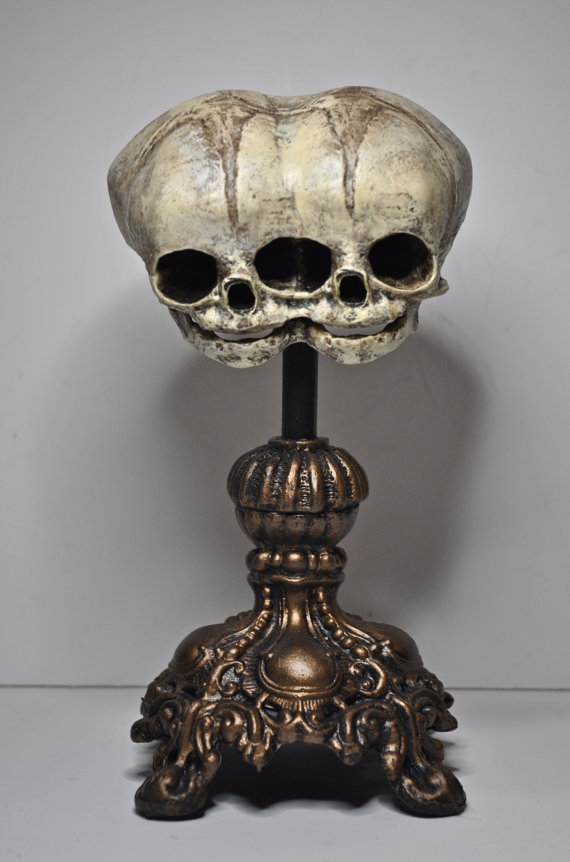
Okay, so it’s not a REAL conjoined fetus skull… but it’s the next best thing and I think it would look fabulous on my bookshelf.  (One day maybe I’ll have a real house with more than just bookshelves for furniture, and then I can say something like, “It would look splendid on my escritoire” or something.)  Anyway, it would make a fine last-minute gift for that hard-to-shop-for aunt, don’t you think?

Available from the ever-marvelous Gorey Details.


Fetus Du Jour!

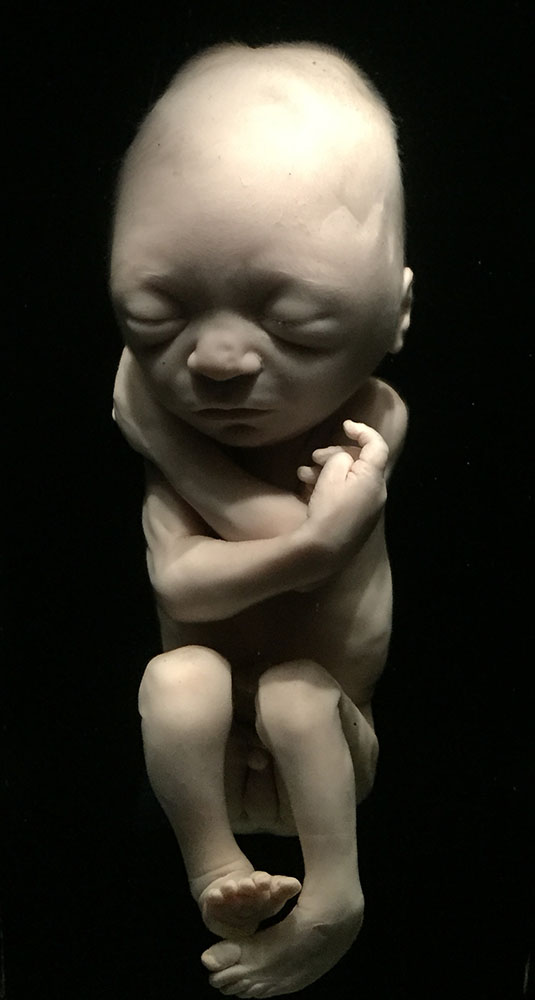
So last week a friend who had never been to Chicago visited and I made it my duty to show her the town. Of course, that meant going to some of the “touristy” places like the Museum of Science and Industry. Since Body Worlds wasn’t in town (the only reason I’d ever gone there before), I wasn’t expecting to see anything particularly morbid, so I was delighted to find a huge collection of fetuses on display.  The ranged in development from blastocyst to full-term and they were collected in the 1930s (supposedly from “natural causes”).  I only had my iPhone with me, but I still tried to capture some of the glory of these little suspended animations.  Check out this eyeless little guy!

Morbid Fact Du Jour for December 17, 2014

Today’s Frightful Yet Truly Morbid Fact!

Excerpt from The First Guidebook to Prisons and Concentration Camps of the Soviet Union by Avraham Shifrin (1980):

PSYCHIATRIC PRISONS IN LENINGRAD

Psychiatric Hospital No. 6
Twenty-five people are confined to a single room in this psychiatric prison, and walks are not permitted. “Patients” are subjected to beatings by the hospital attendants. Lev Konin, one of the inmates here (1978), has informed us that, as a means of punishment, the prisoners are bound in a wet straight jacket and then tied to a bed. When the straight jacket dries, it compresses the body with frightful force. Two sadistic physicians here are named Tsvetkov and Bobrova.

Culled from:  The First Guidebook to Prisons and Concentration Camps of the Soviet Union by Avraham Shifrin

We have a similar punishment here in America: it’s called a drunk guy in tight Levi’s falling asleep in a tub.


Boredom Killer Du Jour!

Bored and blue with nothing to do?  Then why not read the New South Wales coroner reports? They are quite interesting, indeed!  Detailed accounts of everything from childhood morbid obesity to struck by bus, to self-inflicted gunshot, to “violent and unnatural death” of a homeless person.  A morbid thanks to Angela for sending them my way!

Coronial Findings


Fetography!

So last week a friend who had never been to Chicago visited and I made it my duty to show her the town. Of course, that meant going to some of the “touristy” places like the Museum of Science and Industry. Since Body Worlds wasn’t in town (the only reason I’d ever gone there before), I wasn’t expecting to see anything particularly morbid, so I was delighted to find a huge collection of fetuses on display.  The ranged in development from blastocyst to full-term and they were collected in the 1930s (supposedly from “natural causes”).  I only had my iPhone with me, but I still tried to capture some of the glory of these little suspended animations.  I thought I’d share my favorites over the course of the next few newsletters.

Look – twins!!!  What shall we name them?

Morbid Fact Du Jour for December 8, 2014

Today’s Famous For Fifteen Minutes Yet Truly Morbid Fact!

The FBI’s Ten Most Wanted list has been a household word for over sixty
years. Fugitives featured on it (there are sometimes more than ten at a
time) have included such diverse and well-known figures as Angela Davis,
Andrew Cunanan, Whitey Bulger, Eric Rudolph and Willie Sutton.

Sutton, known as the Actor for his skill in disguising himself, became
famous for his carefully planned bank robberies and clever prison escapes.
On March 20, 1950, he became only the 11th fugitive added to the Ten Most
Wanted List, which had only been created the week before. He remained on the
lam till February of 1952, when a young salesman named Arnold Schuster
spotted him on the subway, recognized him from his wanted poster, and turned
him in. Sutton was capture without incident and spent nearly 20 years in
prison.

Arnold Schuster became a minor celebrity, giving interviews and even
appearing on the TV show “I’ve Got a Secret.” Unfortunately, he didn’t get
to enjoy his fame very long: just a few weeks later he was murdered outside
his New York City home, shot twice in the groin and twice through the eyes.
More than 300 suspects were considered, ranging from friends of Sutton to
members of the Mafia. Eventually, the finger of suspicion pointed to one
Freddy Tenuto, a mob hit man who would himself be on the Ten Most Wanted
list for twelve years.

According to information gathered, Lord High Executioner Albert Anastasia
flew into a fit of rage upon seeing Arnold Schuster being interviewed on TV.
He screamed “I can’t stand squealers! Hit that guy!” whereupon, apparently,
Tenuto did just that.

Anastasia had no connection to Willie Sutton, and the senseless murder of a
“civilian” hastened Anastasia’s slide into disfavor among his fellow
mobsters. He would be assassinated in a barbershop five years later.
Freddy Tenuto was never found, and his name was removed from the list in
1964, when the FBI received credible information that he himself had been
murdered by his own associates.

Arnold Schuster’s family sued the city of New York, charging that they had
failed to properly protect him, though he’d never asked for any protection.
The city eventually settled with the family to the tune of $4000, a
handsome sum in those days.

Culled from: Wikipedia
Submitted by: Aimee

Tip to would-be informants: don’t get bitten by the fame bug. The person you
informed on might not even be your biggest danger. – Aimee

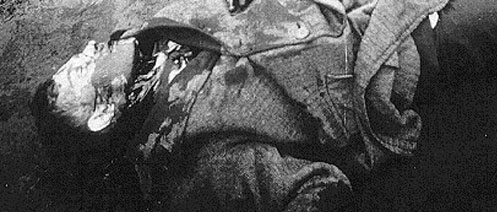
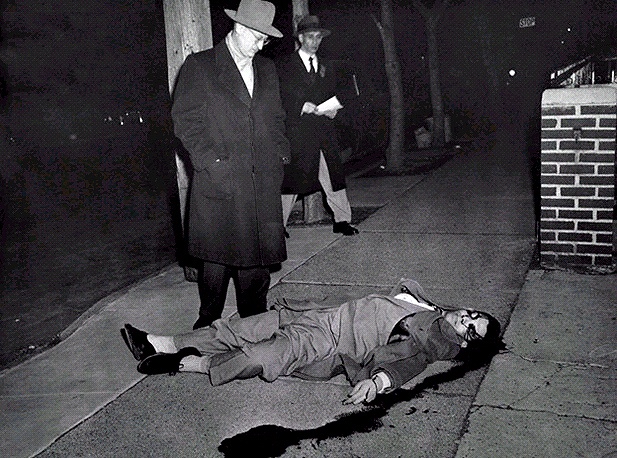
Here’s Arnold Schuster after he met his untimely demise:

And here’s handsome, ruthless, and doomed Freddy Tenuto:

And we saw what happened to Anastasia with the December 4, 2014 Morbid Fact Du Jour.


Aghast!

Lissa wrote to suggest a website for us:

“Your recent posting of mug shots from Death Scenes (what a fantastic book) has been most enjoyable, and your comment of today stating you like to look at mug shots on the Trib site when bored reminded me of a local site I enjoy perusing every now & then – the Cook County Medical Examiner’s list of Unidentified Persons!  Often just a sketch of the person, sometimes you come across a really great photo, like my current fave here. My only complaint is that they never photograph the decomp ones!!! Enjoy!”

Thank you, Lissa.  I’d have to agree with you about the decomposed ones.  Alas!


Japanese Ghost Paintings

On the December 3, 2014 Morbid Fact I mentioned that I’d love to see the Japanese ghost paintings hung up by the people in Takonoma.  Cheryl wrote me to recommend some links on ghost paintings – not necessarily related to Takonoma, but very cool indeed.

“Please enjoy these links…..

“A book on the ghost paintings to purchase: Night Parade of Dead Souls: Japanese Ghost Paintings

“A website with quite a few lovely images: 19th Century Ghost Scrolls

“And Google’s collection of images.”