Today’s Ubiquitous Yet Truly Morbid Fact!
The authors of 100,000,000 Guinea Pigs, Arthur Kallet and F. J. Schlink of the Consumer’s Research Union, devoted a large section of their book to a worst-case cosmetic: depilatory creams that contained the metallic element thallium. It was no secret that thallium was poisonous; it was the main ingredient in a number of pesticides. Yet cosmetics makers used it anyway, insisting that it was safe in small doses and advertising its amazing ability to remove unwanted hair from the face—and anywhere else on the body that a woman might desire.
The depilatory creams had created a small but significant epidemic in the early 1930s, fully recounted in the Journal of American Medical Association. A woman had applied the cream to her chin and ended up almost completely bald, barring about one hundred hairs forming “a fringe on the back of her neck.” A woman in Minnesota had used the cream on her upper lip and ended up hospitalized, her hair coming out in clumps, her legs unable to support her. A woman in Maine had lost her vision. “Could there be lead in the cream?” her doctor wrote to ask AMA experts, saying that her other symptoms—including severe nausea—reminded him of acute lead poisoning, which could cause the corneas to become opaque.
Kallet and Schlink issued repeated warnings against thallium-based creams, which they said were, of all poisons, “one of the most deadly known,” and urged consumers to lobby their congressmen for better regulation of such compounds. The AMA had been campaigning against such products for years. Due to the lack of government regulation, it had created its own Bureau of Investigation, which analyzed numerous brands and warned repeatedly that thallium creams were a “menace to public health.”
But women bought the beauty products anyway. Women’s magazines, such as Vogue, carried advertisements extolling the potions’ ability to remove unsightly hair and lend a beautiful pale luster to skin. After all, these ubiquitous poisons worked as advertised. Tetraethyl lead did solve engine knocks; carbon monoxide did provide an inexpensive and reliable fuel; cyanide did help neatly fix clear photographic images on film.
And thallium, as promised, did cause hair to painlessly fall out, did make it disappear like snow on an unexpectedly warm morning.
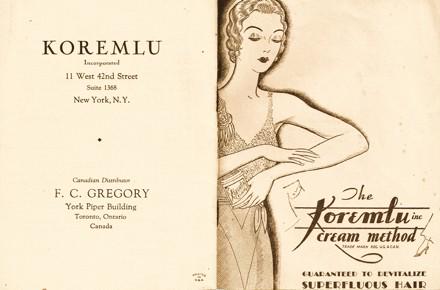
Koremlu: Thallium-based depilatory cream
Culled from: The Poisoner’s Handbook
Nagasaki Photo Du Jour!
Yosuke Yamahata photographed the aftermath of the atomic bombing of Nagasaki on August 10, 1945. Here’s one of his haunting images from the book Nagasaki Journey: The Photographs of Yosuke Yamahata, August 10, 1945.

Andersonville Prisoner Diary Entry Du Jour!
This is the continuation of the 1864 diary of Andersonville prisoner Private George A. Hitchcock (see the archived version for all entries up until now).
Here’s today’s entry:
September 26th. Roll-call; and all men not in line were deprived of their rations. Prisoners who came in from Sherman say that the special exchange is true, but no general exchange. The chief quartermaster has been inspecting us. Wonder how he likes the looks!
Culled from: Andersonville: Giving Up the Ghost