Today’s High Velocity Yet Truly Morbid Fact!
The wounds suffered by soldiers in the American Civil War were appalling in both incidence and severity. The high numbers of wounds were attributed to the advancement of destructive weapons with a lag in the advancement of fighting tactics. Officers felt that despite the ability to amass firepower, they still required a massed assault in formation to defeat entrenched positions of the enemy. The minié ball, a relatively new development, increased the severity of injuries tremendously because it could rapidly dissipate energy into the surrounding body tissues. Fired from a rifled musket, these large .58 caliber soft-lead bullets would deform and tumble on impact, causing large wounds. The minié ball had a high velocity for the period, 950 feet per second, and was deadly at 200-300 yards. A surgeon in the Army of the Tennessee wrote, “The shattering, splintering, and splitting of a long bone by the impact of a minié or Enfield ball were, in many instances, both remarkable and frightful…” Dr. E. L. Howard of the Army of Northern Virginia commented, “… wounds of bony structures, inflicted by this missile, are characterized by extensive fissuring and comminution, such as was rarely, if ever seen, when the old smoothbore musket was the weapon of the soldier.”
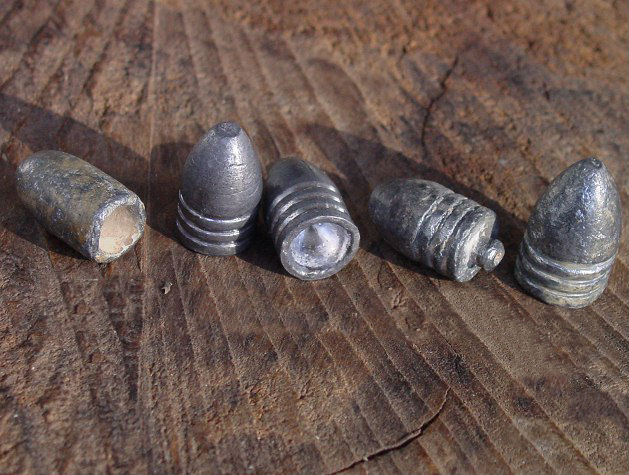
Those wicked minié balls.
Culled from: Orthopaedic Injuries of the Civil War: An Atlas of Orthopaedic Injuries and Treatments During the Civil War
