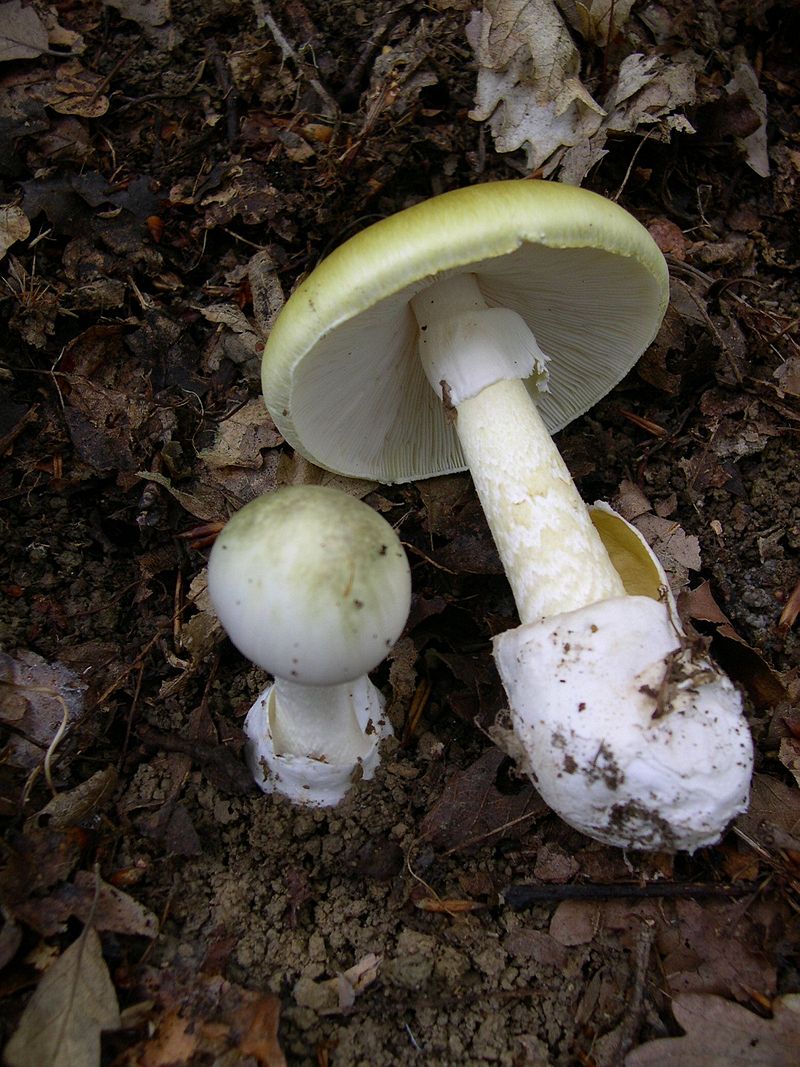
| Amanita phalloides, commonly known as the death cap, is a deadly poisonous basidiomycete fungus, one of many in the genus Amanita. Widely distributed across Europe, A. phalloides forms ectomycorrhizas [a symbiotic association between the roots of a fungus and a vascular plant – Botanist DeSpair] with various broadleaved trees. In some cases, the death cap has been introduced to new regions with the cultivation of non-native species of oak, chestnut, and pine. The large fruiting bodies (mushrooms) appear in summer and autumn; the caps are generally greenish in color, with a white stipe and gills.
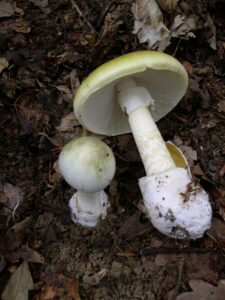
These toxic mushrooms resemble several edible species (most notably caesar’s mushroom and the straw mushroom) commonly consumed by humans, increasing the risk of accidental poisoning. A. phalloides is one of the most poisonous of all known toadstools. It has been involved in the majority of human deaths from mushroom poisoning, possibly including the deaths of Roman Emperor Claudius in AD 54 and Holy Roman Emperor Charles VI in 1740. Pope Clement VII died in 1534 after eating this mushroom. It has been the subject of much research, and many of its biologically active agents have been isolated. The principal toxic constituent is α-amanitin, which damages the liver and kidneys, often fatally.
Culled from: Wikipedia
Generously submitted by: Robert Scott
And it looks so innocent, doesn’t it? |

I watched the Clint Eastwood movie, “The Beguiled,” when I was about eight. Ever since then, I will not eat mushrooms. Irrational, yes, but I can probably cross mushroom/toadstool poisoning off my list of potential causes of death.