Today’s Eradicated Yet Truly Morbid Fact!
The world’s most dangerous “prisoner” is the smallpox virus, and it is held inside two padlocked freezers in a secure room at the U.S. Centers for Disease Control and Prevention in Atlanta. Some 450 samples of the virus in neatly labeled, half-inch plastic vials are arrayed on metal racks and immersed in a bath of liquid nitrogen that keeps them deep-frozen at -95 degrees Fahrenheit. Access to the smallpox repository requires two sets of keys controlled by different people; closed-circuit television cameras and electronic alarm systems maintain continuous surveillance. A second set of smallpox virus stocks lies in a similar vault at a Russian laboratory in Siberia.
The scientific name for the smallpox virus is variola, the diminutive of the Latin word varius (spotted) or varus(pimple). Consisting of little more than a set of genetic instructions in a long ribbon of DNA, coiled up inside a biscuit-shaped protein shell, the variola virus cannot grow or metabolize and has no means of locomotion. Its sole function is self-replication, which it accomplishes by entering human cells and commandeering their biochemical machinery to church out more virus particles. When variolaexisted in the wild, it came in two distinct varieties: Variola major caused a serious disease that killed between 10 percent and 30 percent of its victims, whereas variola minor gave rise to a much milder illness called alastrim, with a case mortality rate of less than 1 percent. Because the two types of smallpox virus produced similar symptoms, it is not known why one was so much more lethal than the other.
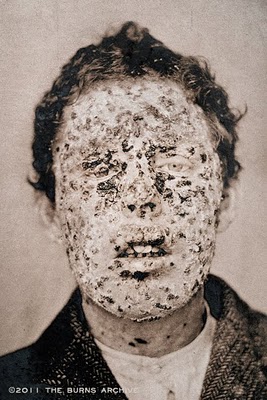
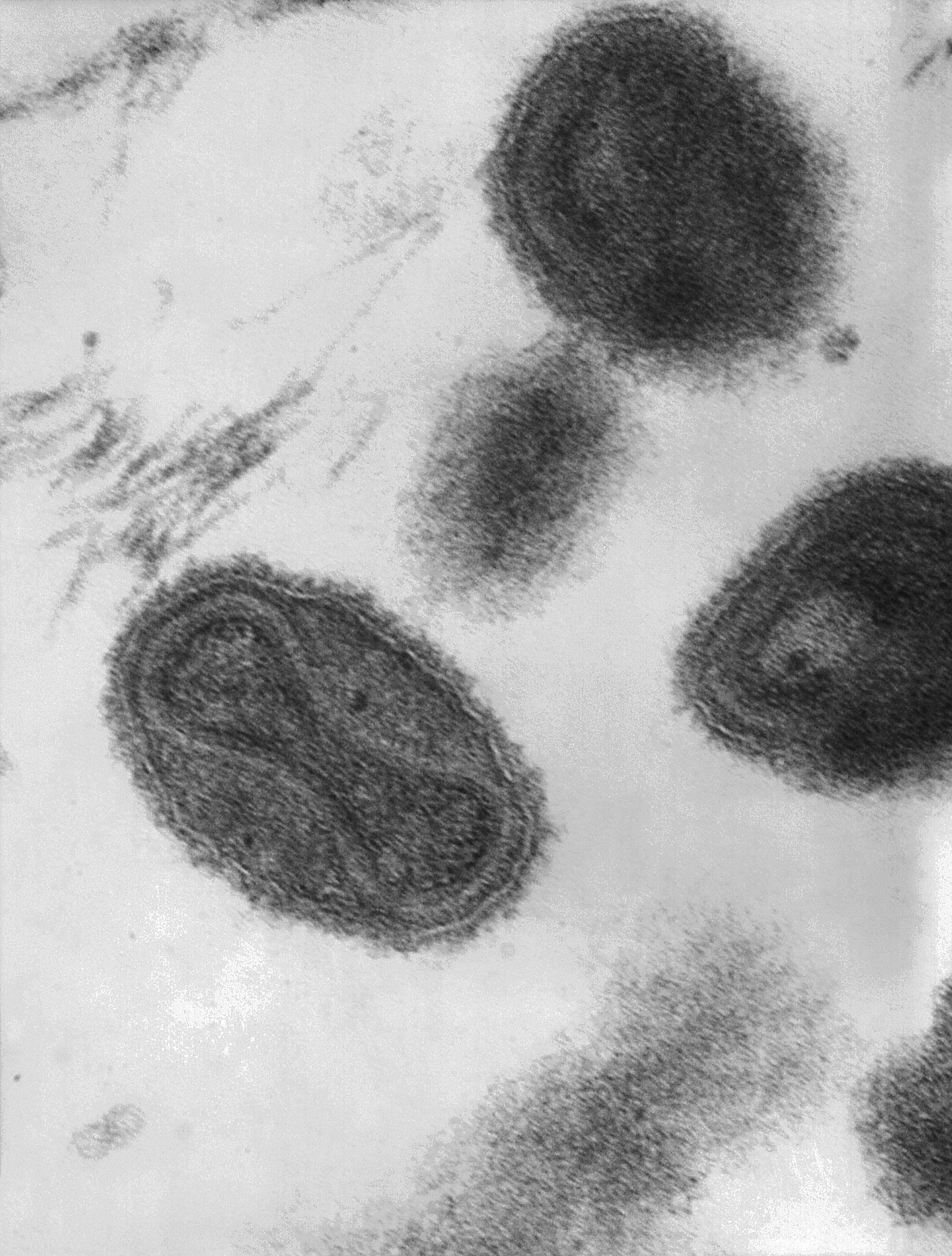 Now confined to a few laboratory freezers, variola major once rampaged through the human species and caused the most feared of deadly scourges. After a two-week incubation period, smallpox racked the body with high fever, headache, backache, and nausea, and then peppered the face, trunk, limbs, mouth, and throat with hideous, pus-filled boils. Patients with the infection were in agony – their skin felt as if it was being consumed by fire, and although they were tormented by thirst, lesions in the mouth and throat made it excruciating to swallow. The odor of a smallpox ward was oppressive: The rash gave off a sweetish, pungent smell reminiscent of rotting flesh. For those who survived, the disease ran its course in a few weeks. Pustule formation concluded on days eight to ten of the illness, after which the boils scabbed over and were gradually reabsorbed. On days fifteen to twenty, the crusty dry scabs separated and fell off, leaving depigmented areas of skin that later turned into ugly, pitted scars.
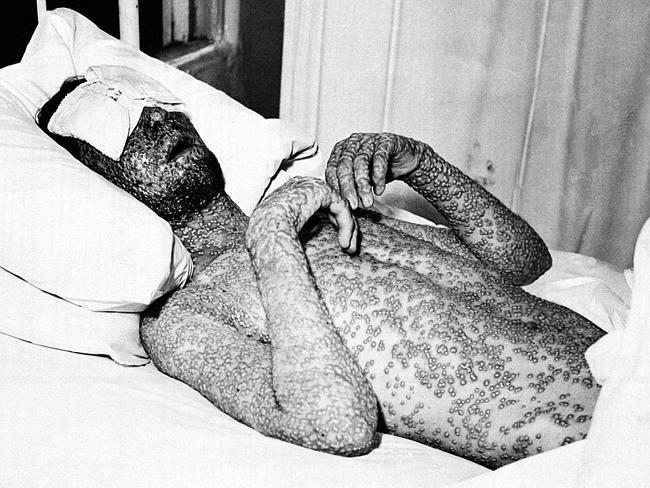
Even as smallpox victims were suffering the torments of the disease, they were spreading it to others. Lesions in the patient’s mouth and throat shed millions of virus particles into the saliva and mucus, so that talking or sneezing expelled virus-laden droplets that floated in the air and could be inhaled. The virus was also present in patients’ urine and in pus from unhealed skin lesions. When clothing and bed linens contaminated with dried pus were handled, virus particles could be resuspended in the air, so that laundry workers who washed the sheets and blankets of smallpox patients were at great risk of infection. The corpses of smallpox victims were also dangerously contaminated and could spread the disease to undertakers or to family members who prepared a loved one’s body for ritual burial.
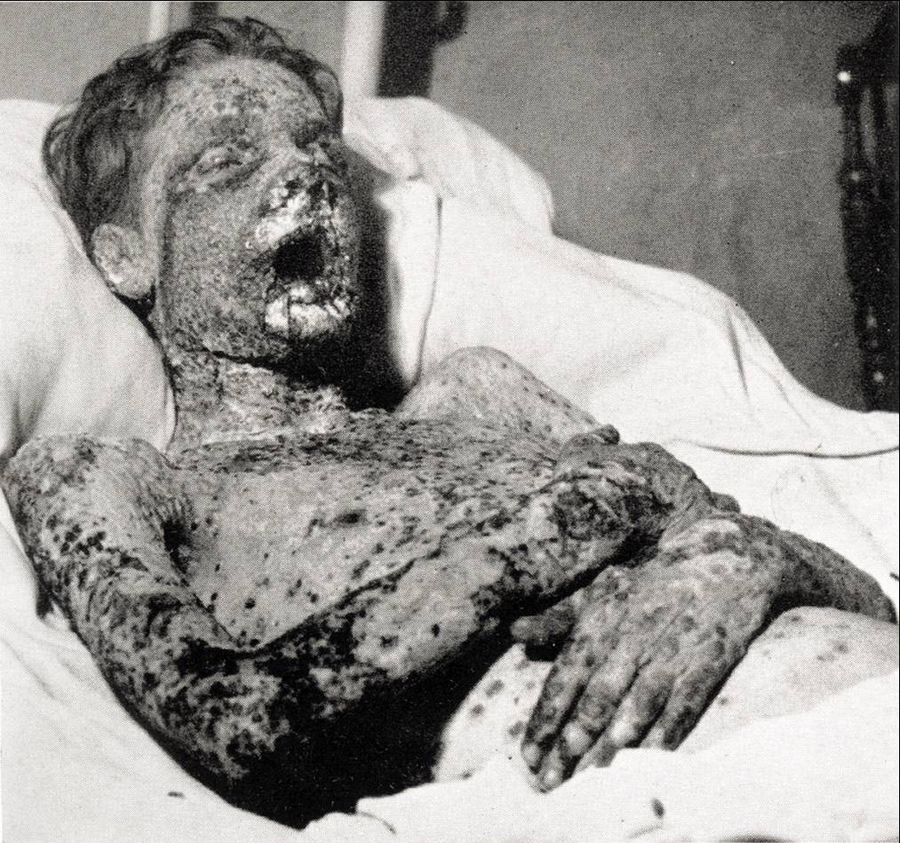
Over the course of human history, smallpox claimed hundreds of millions of lives, far more than plague and all the wars of the twentieth century combined. Although those lucky enough to survive a bout with smallpox acquired lifelong immunity, they usually suffered some type of permanent damage. Nearly all were disfigured with pockmarks, and one in ten was rendered partially or completely blind. In addition, smallpox significantly increased the risk of miscarriage in pregnant women.
As recently as 1967, the disease sickened between two million and fifteen million people each year in forty-three countries and caused an estimated two million deaths. On May 8, 1980, however, the World Health Organization (WHO) declared that humanity had finally been freed from the torments of smallpox, the culmination of a global campaign lasting more than a decade and employing up to 150,000 health workers at various times. The conquest of smallpox – the first infectious disease to have been eradicated from nature by human effort, was among the greatest medical achievements of the twentieth century.
Culled from: Scourge: The Once and Future Threat of Smallpox

Two thoughts:
1) Aren’t viruses weird? A little container of DNA with no life of its own that invades our cells and forces them to reproduce the virus? It’s the stuff of horror movies, literally! I remember an instructor at college suggesting that they could have floated to earth from outer space and it doesn’t seem that far-fetched. A lot of viruses even look like lunar landing modules!
2) Aren’t vaccines wonderful? Would the anti-vaxxers prefer us to still have smallpox around destroying millions of lives every year?
Arcane Excerpts: Cynical Homophobic Ex-Cop Edition
The following nonsense is culled from the introduction to The Sexual Criminal: A Psychoanalytical Study
“In a world where living has become most complex, where nerves are keyed to a higher pitch; where spiritual values have been entirely forgotten; where religion has been displaced by a pseudo-intellectual and pseudo-scientific conglomeration of half-baked superficialities which individuals are pleased to call their ‘philosophies of life’; in a world where there are no ethics except that of ‘not getting caught’; where there is no set principle of right and wrong, where children are brought into the world and educated according to the principle that a child should be permitted to express its own personality without restriction; where discipline and self-restraint and consideration for the rights of others are neglected as old-fashioned and too difficult; in a world where the philosophy that asserts that ‘I’ll try anything once’ is considered a satisfactory attitude for the young and inquiring mind; in a world where there is too little religion and too much idle time; there has developed a startling and dangerous increase in sex perversion.
“Sex perversion is obviously on the rise. It is obviously the result of unhealthy living conditions. It is, in itself, a symptom of social and economic and moral disorder, just as pimples appearing upon the face are symptoms of blood and lymphatic disorders. Sex perversion is not the effect of a single cause or state; not itself the case of any particular effect. It is simply symptomatic of a combination of varied and complicated disorders. With very few exceptions the sex pervert is not the result of heredity, nor of organic imbalance. He presents a psychiatric and a psychological problem rather than a surgical or endocrinological one.
“Sex perversion, of course, includes many types which manifest themselves in the form of homosexuality, exhibitionism, and so on down through the categories, until we reach the dangerous sado-masochist whose frequent terminal outbursts direct the attention of the world to the fact that sex perverts do exist. Then the mangled form of some child or woman focuses the public’s attention upon the work of this particular type of sex pervert.
“The sex pervert, in his more innocuous form, is too frequently regarded as merely a ‘queer’ individual who never hurts anyone but himself. All too often we lose sight of the fact that the homosexual is an inveterate seducer of the young of both sexes, and that he presents a social problem because he is not content with being degenerate himself,; he must have degenerate companions, and is ever seeking for younger victims.”
Okay, so maybe the last woman I dated was 19 years younger than me… but she *was* nearly 30! Give me break!