Today’s Shackled Yet Truly Morbid Fact!
Although a few chiefs sold their own subjects, household slaves, or criminals, most African slaves were prisoners captured in tribal wars or kidnapped by slave raiders. After their capture, the Africans were tied together by a rope and then marched hundreds of miles while suffering from thirst, hunger, and exhaustion. Consequently, many either died along the way or were reduced to a very weak and emaciated condition by the time they reached the sea coast. On the coast, the Africans were made to jump up and down, had fingers poked in their mouths and their genital organs handled by a doctor. Those chosen by the Europeans were then branded.
Taken on board ship, the naked Africans were shackled together on bare wooden boards in the hold, and packed so tightly that they could not sit upright. During the dreaded Mid-Passage (a trip of from three weeks to more than three months) the slaves were let out of the hold twice daily for meals and exercise, and women and children were often permitted to spend a great deal of time on deck. The foul and poisonous air of the hold, extreme heat, men lying for hours in their own defecation, with blood and mucus covering the floor, caused a great deal of sickness. Mortality from undernourishment and disease was about 16 percent. The first few weeks of the trip was the most traumatic experience for the Africans. A number of them went insane and many became so despondent that they gave up the will to live. Slaves in the latter condition were described as having the “fixed melancholy.”
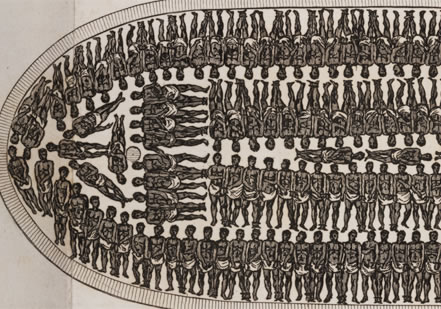
Africans were, not however, totally immobilized by shock. Often they committed suicide (especially while still on the African coast) by drowning, or refusing food or medicine, rather than accept enslavement. One captain made it all the way to the West Indies before the Africans began a mass suicide attempt. He asserted that he:
“thought all our troubles of this Voyage was over; but on the contrary I might say that the Dangers rest on the Borders of Security. On the 14th of March we found a great deal of Discontent among the Slaves, particularly the Men, which continued till the 16th about Five o’Clock in the Evening, when to our great Amazement about an hundred Men Slaves jump’d over board, and it was with great Difficulty we sav’d so many as we did; out of the whole we lost 33 of as good Men Slaves as we had on board, who would not endeavor to save themselves, but resolv’d to die, and sunk directly down. Many more of them were taken up almost drown’d, some of them died since.”
Culled from: The Slave Community: Plantation Life in the Antebellum South

‘Till Death Do Us Part
The following is culled from Sleeping Beauty II: Grief, Bereavement and the Family in Memorial Photography.
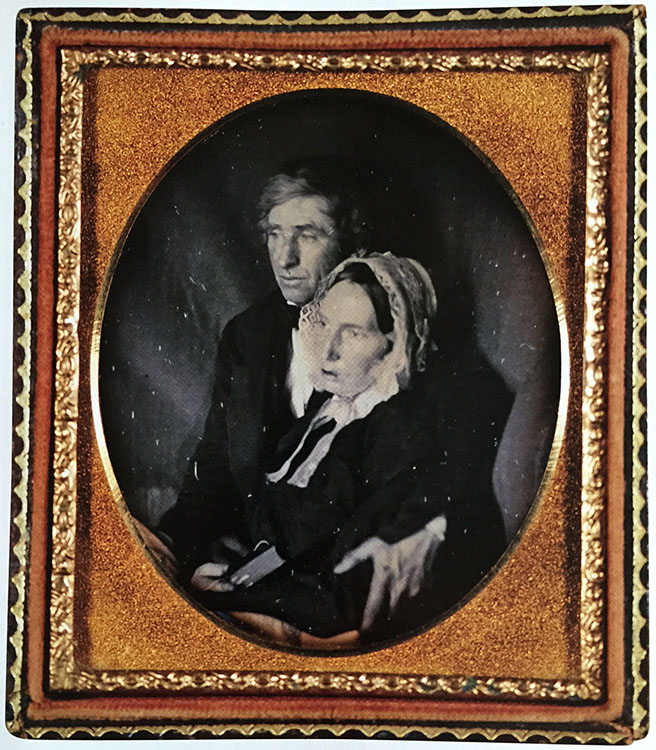
MAN HOLDING DEAD WIFE, ‘TILL DEATH DO US PART’
Pennsylvania/New Jersey Family
Daguerreotype 1/6 Plate, Circa 1845
“The loving bond between husband and wife is rarely depicted as poignantly as in this photograph. This dead woman is firmly held by her husband in their last worldly embrace. Having exchanged vows before photography was discovered, this image serves as the only visual document of their marriage. It is a visual presentation of the marriage vow ‘Till death do us part.’
“This daguerreotype may be considered an extremely unusual representation of the posthumous mourning photograph – depicting the dead as if still living. Here, the husband enters the deathbed scenario to hold his wife as if she is alive. Her facial expression, demeanor and the bible in his hand tell the true status.”