Today’s Suspenseful Yet Truly Morbid Fact!
The men of the early 20th-century motor press sometimes referred to the 13th circuit of an automobile racecourse as “the hoodoo lap,” not because more bad stuff happened then, but because they fervently wished it would. Coming at that point, a wreck would play nicely into the tabloid trope that superstitions are not to be flouted, and it would give a long car race some much-needed narrative cord. And so it was on May 30, 1911, as several dozen reporters leaned forward anxiously to watch the 40-car field for the first-ever Indianapolis 500-mile race power past the starting line for the 12th time and roar yet again into turn one.
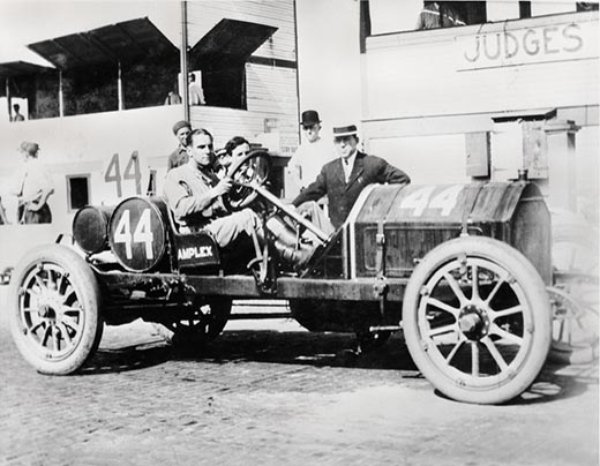
Right on cue, the No. 44 Amplex, a bright red car driven by Arthur Greiner and traveling in mid-pack, lost a tire, though accounts vary as to which. The bare wooden wheel hit the bricks hard, causing Greiner’s auto to swerve crazily and veer into the infield, where it plowed through tall meadow grass and began a somersault, only to stop in mid-maneuver, so that it stood straight up, balancing on its steaming grill. The 27-year-old Greiner was flipped from the cockpit like a shucked oyster, with the steering wheel somehow still in his mitts. Riding mechanic Sam Dickson, meanwhile, remained more or less in his bucket seat, one hand planted on the dashboard, the other clutching a leather side-handle, his only restraining device. This was the sort of heart-stopping moment that only auto racing could provide. If the car fell backward, returning to its three remaining tires, he might get nothing worse than a jolt. But if it fell forward, it would drive Dickson’s head into the ground like a tent spike. The crowd fell silent. Dickson tensed. The Amplex rocked on its radiator.
Sensing disaster, scores of spectators began surging over the fence that separated the track apron from the homestretch. This was a common occurrence in the wake of a potentially fatal accident. So eager were some men, women and children to get a closer look that they would risk their own lives by running across a track teeming with racing machines.
In real time, the upended Amplex couldn’t have taken more than a few seconds to fall. And when it did, it fell forward, killing Dickson. As Robert Louis Stevenson once wrote: “There is indeed one element in human destiny that not blindness itself can controvert: whatever else we are intended to do, we are not intended to succeed; failure is the fate allotted.” Dickson’s body was taken with dispatch to the Speedway hospital tent and the race continued without interruption, with the drivers swerving around spectators unable to control their morbid curiosity.
Culled from: Smithsonian
Generously submitted by: Kristen
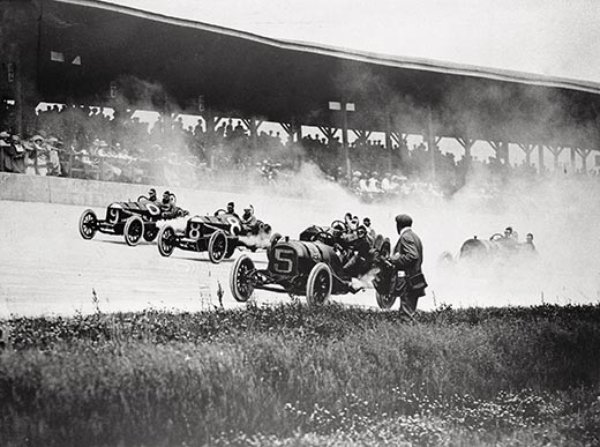
Here’s a photo from the first Indy 500:
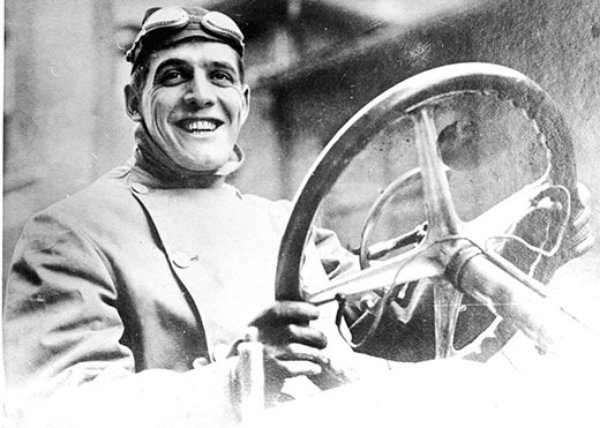
Here’s driver Arthur Greiner, who survived the crash – smiling for now, but not for long (as you’ll see below):
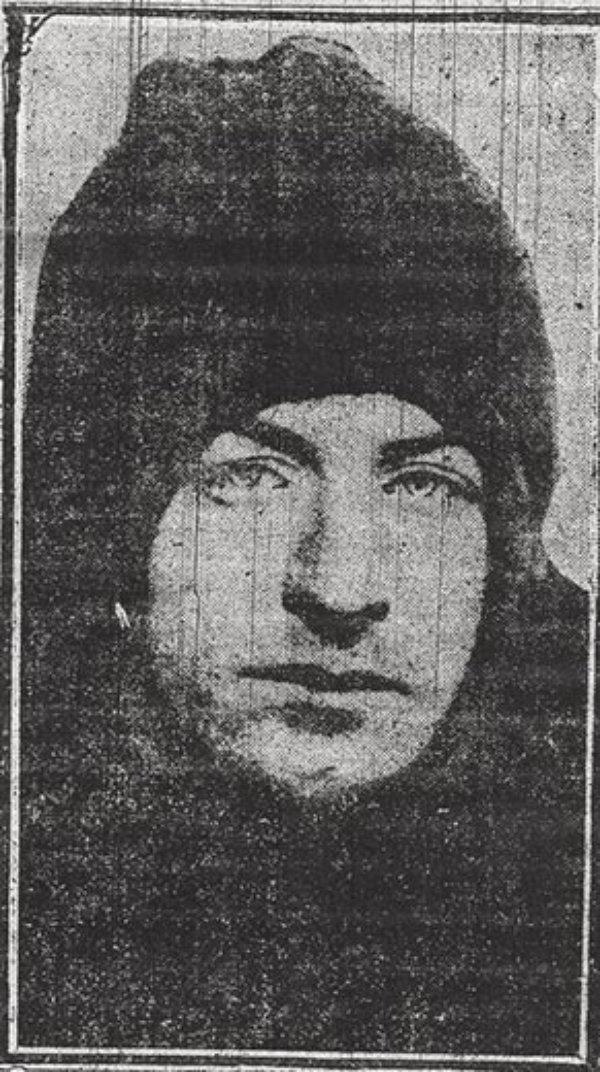
And here’s ill-fated mechanic Sam Dickson – looking none-too-happy about his fate:
And here’s the “cursed” Amplex:
Incidentally, I noticed that the driver Arthur Greiner died quite young (1917) and wondered if he had died in a car crash. His Wikipedia page displayed his obituary, which showed the cause of death to be far more interesting:
Chicago Tribune (IL) – May 25, 1917 GREINER DIES IN SANITARIUM Deceased Name: Arthur W. Greiner Arthur W. Greiner, conspicuous for several years as an automobile driver and “man about town,” died yesterday in a Milwaukee sanitarium. He had been seriously ill for several months, following a nervous breakdown. The collapse came when he and Mrs. Greiner were living at the Edgewater Beach hotel. In the hope of recovering his health Mr. Greiner ‘s relatives caused his removal to the Milwaukee sanitarium, but he sank gradually. The body will be brought to Chicago and the funeral held tomorrow from the Greiner family residence at 1930 Lincoln avenue. Mr. Greiner was less than 34 years old. Chicago Tribune (IL) Date: May 25, 1917
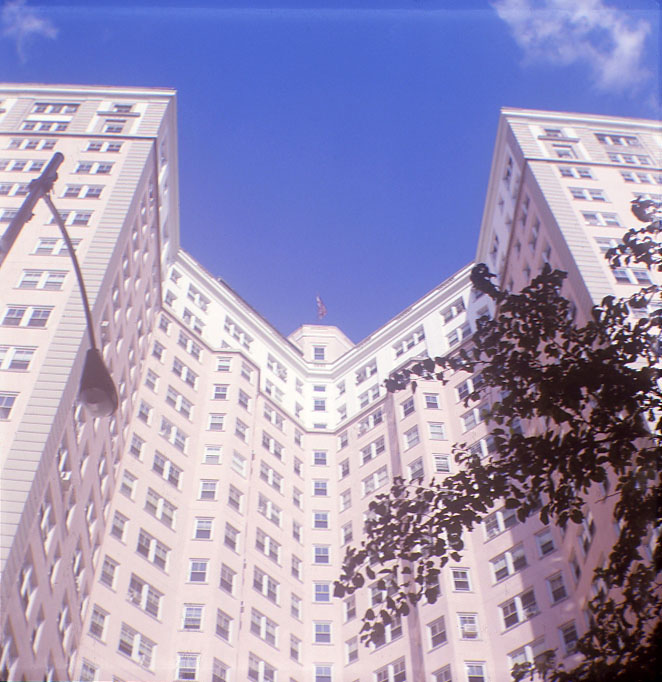
Incidentally, the former Edgewater Beach Hotel (now a condo building) isn’t too far away from me. Here’s a photo I took of it with a Brownie Hawkeye Flash vintage camera a few years ago:
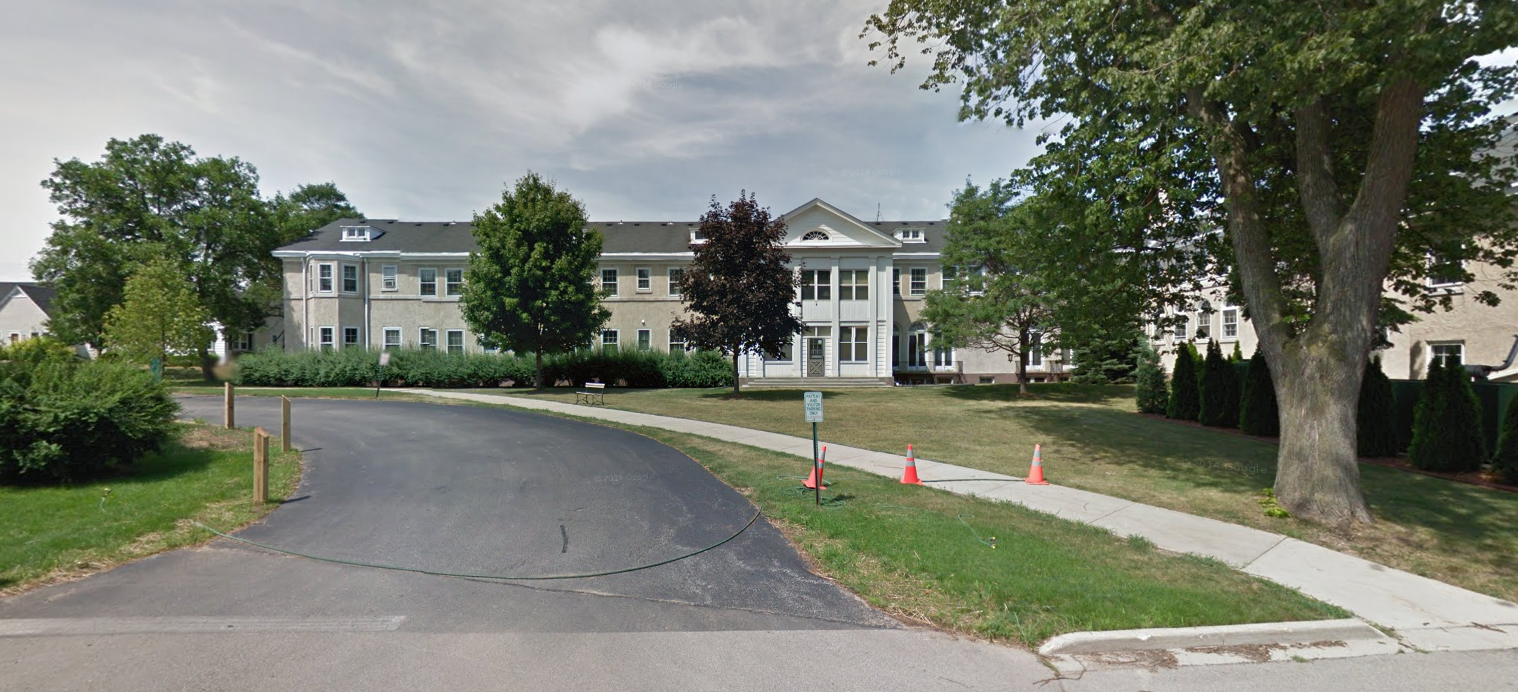
And I see that the Milwaukee Sanitarium still exists – and is now part of Aurora Health Care. I grabbed a screen shot from Google Maps and see that it has apparently been uglified considerably from its heyday:
Tangents – The Comtesse lives for them.
I have to thank you. Because of your syphilis post, I spent an hour searching: advanced syphilis, tertiary syphilis, hutchinson’s teeth and congenital syphilis. Fascinating.
Lord Elgin, the rich guy who “liberated” the Parthenon marbles from Greece and sold them to the British Museum, was an unofficial member of the No-Nose Club. By some accounts, he sometimes covered the hole in his face with a leather prosthetic.
Lord Byron wrote a not-very-nice piece about him, comparing his face to the noseless statues he had pillaged.