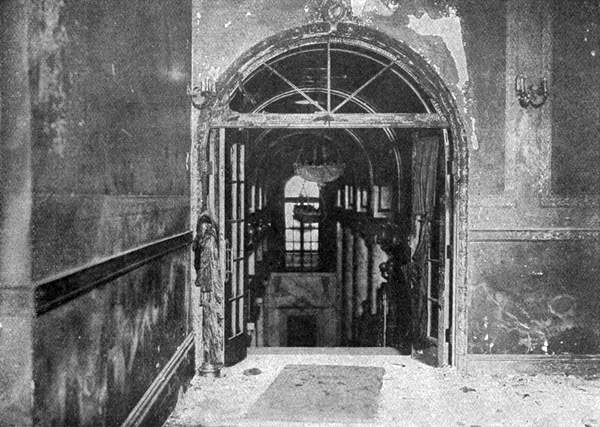
Today we continue the tragic story of the Iroquois Theater fire of December 30, 1903. As you may recall, the fire had just turned into a raging inferno. The crowd’s fate was doomed when the “fireproof” asbestos curtain caught on something about twenty feet above the stage, thus ensuring that there was just enough space for fire to shoot through when the backstage doors were opened, allowing oxygen to superheat the flames like a blow torch. Let’s see what happens next with…
Today’s Silent Yet Truly Morbid Fact!
The scene outside the theater was unsuspecting and normal. Most accounts say the fire had been burning for at least 15 minutes before a faint wisp of smoke was noticed by passers-by. Because there was no fire alarm box located outside the theater’s front doors, someone ran around the corner to turn in an alarm at the nearby firehouse of Engine Co. 13. When the first firefighters pulled up moments later in their horse-driven steamers, hose carts, and aerial ladders, they thought it was a false alarm.
That changed quickly when they had difficulty getting into the auditorium because so many bodies were stacked up at the doors. “Pull a third alarm,” yelled Fire Marshall Bill Musham, who had responded from his nearby city hall office. The men tore at the bodies with pike poles, pulling them down and peeling them off one another, clearing enough room to climb over. Once inside, they stretched their hoselines through the side doors or directly over the stacks of bodies. It took only ten minutes to douse the remaining flames because the intense heat had already burned up most of the combustibles. As the firefighters made their way further into the darkness of the charred interior, they were met by silence and the stench of burned bodies. “If there is any living person in here, groan or make a sound.”
No one did.
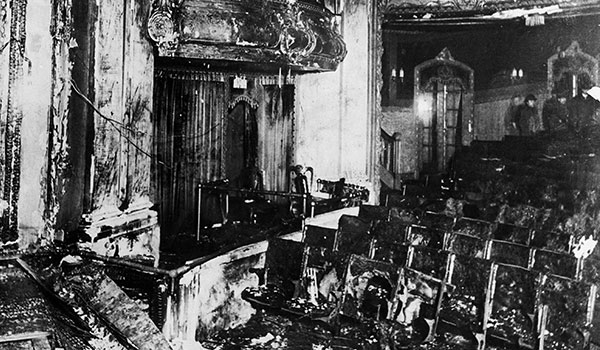
The gallery and upper balconies had sustained the greatest loss of life. Here, the fleeing patrons had run up against locked doors that blocked access to the stairways. Firefighters found 200 bodies stacked ten high and a score deep. At the very top of the auditorium the audience had fought so fiercely to escape that they ripped the iron railings from the balconies, leaping upon the people below. Death, mainly from asphyxiation, came quickly to those who made it into the hallways and back aisles. But those caught in the auditorium were burned to death. Those who made it to the fire escape door behind the top balcony found the iron staircase missing. In its place was a railed platform that led not to safety but to a 100-foot-drop to the narrow cobblestone alley below.
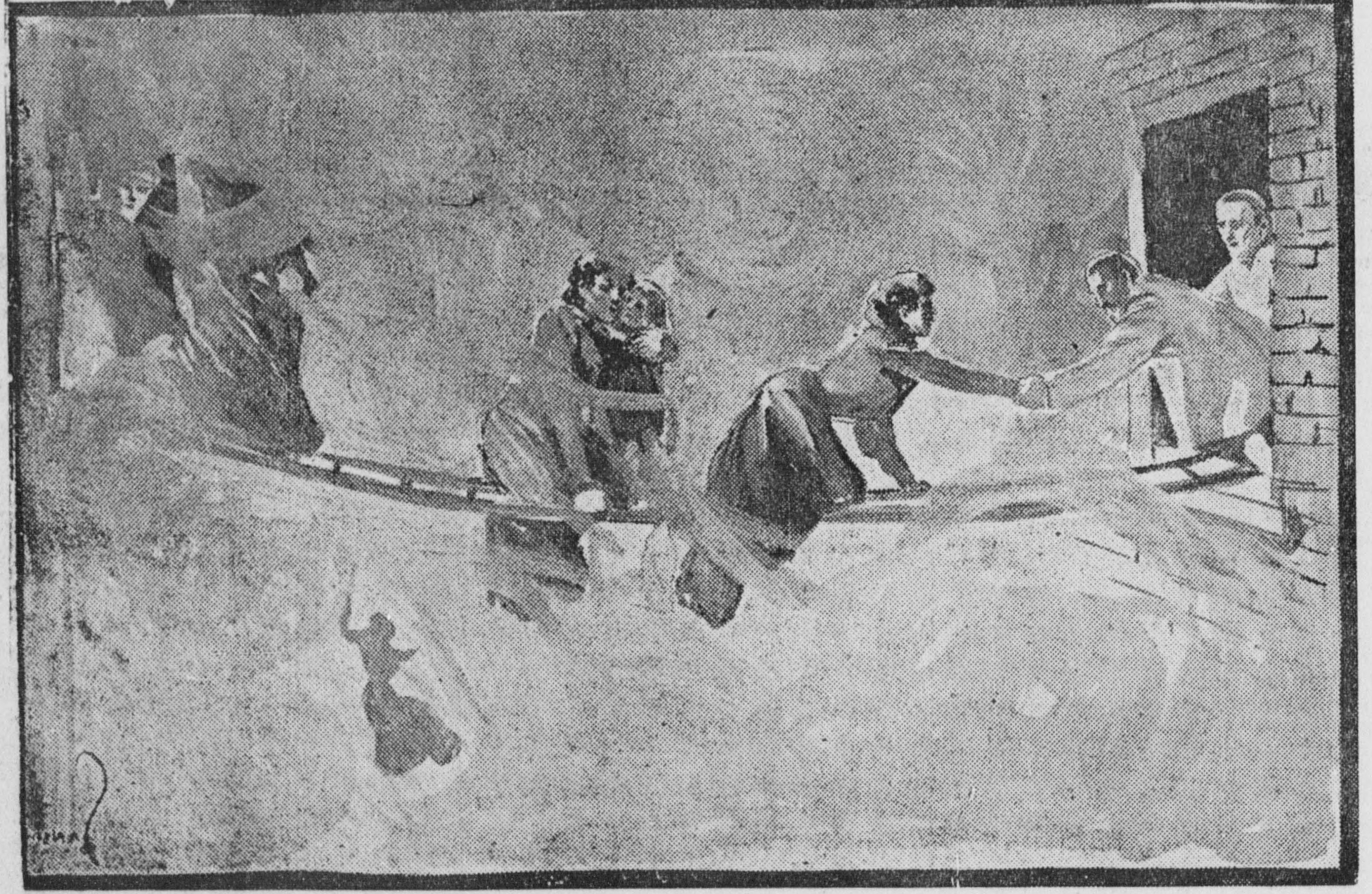
Across the alley behind the theater, painters were cleaning up from an earlier and unrelated fire in a building occupied by Northwestern University’s dental school. When they saw what was happening in the theater, they reacted quickly, erecting a makeshift bridge of long painting ladders and wooden planks that they extended across the alley to the fire escape ledge. Reports vary as to how many it saved. One says 12 people crawled to safety, but that at least seven others fell to their deaths. Other accounts say scores jumped or were pushed off the ledge. Regardless of which is true, newspapers later dubbed the narrow area behind the theater “Death Alley” because of the 125 bodies found piled there – either from falling or being stacked there by firemen.
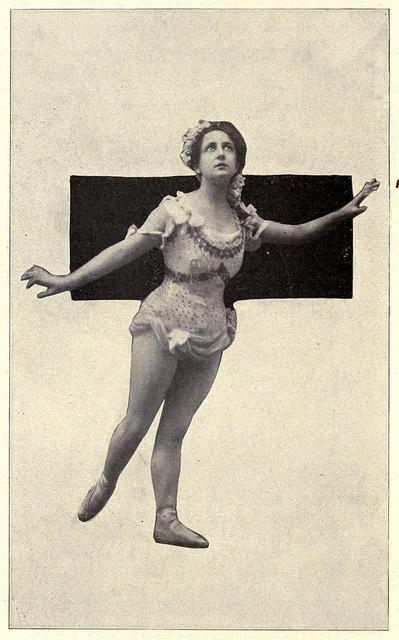
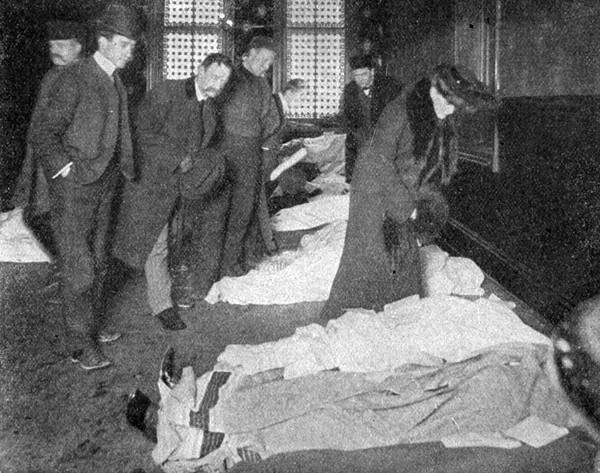
As the afternoon turned to early evening, bodies were removed from the theater at the rate of four a minute. The dead were covered with sheets and lined up on the sidewalk or taken into nearby stores where temporary morgues had been set up, including Marshall Field’s around the corner on State Street. The victims came from 13 states and 86 cities. Chicago’s 300 dead included 102 school children and 39 teachers. All but one of the 348 members of the Bluebeard Company escaped. The exception was Miss Nellie Reed, the principal of the flying ballet. When the fire erupted in the loft, she got caught on a tight wire and was badly burned. She died later in Cook County Hospital.
The next day, newspapers devoted full pages to lists of known dead and injured. A total of 572 had died, some of whom were never identified. Another 250 were injured of whom 30 would succumb in the following weeks. The heart-breaking toll included 212 children.
Culled from: Great Chicago Fires: Historic Blazes That Shaped a City
Here’s a photo of the doomed Miss Nellie Reed:
Here’s a photo of the dead laid out for identification:
Here’s a photo of the main exit from the first balcony – where the greatest loss of life occurred: