Today’s Dreadful Yet Truly Morbid Fact!
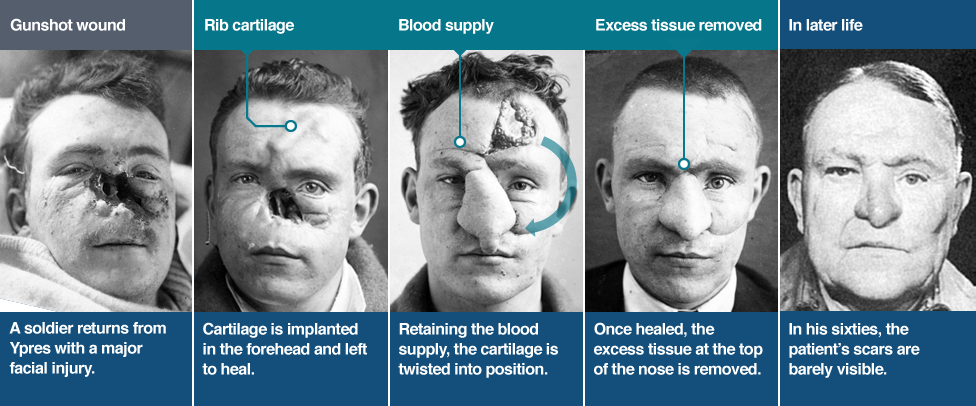
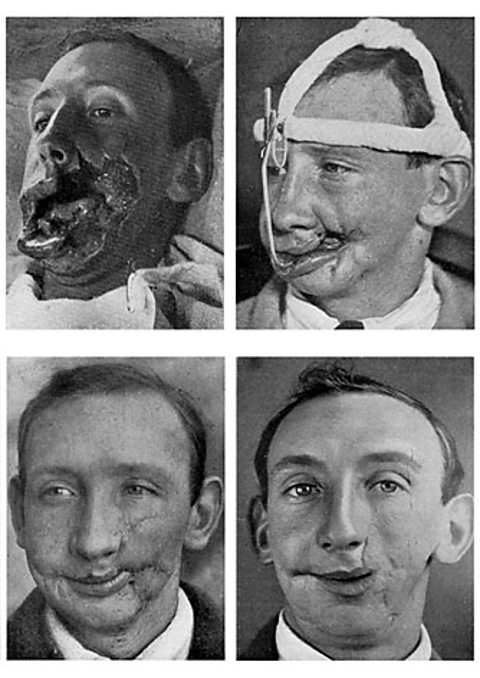
Today we continue the story of World War I veterans coping with horrific, disfiguring facial wounds:
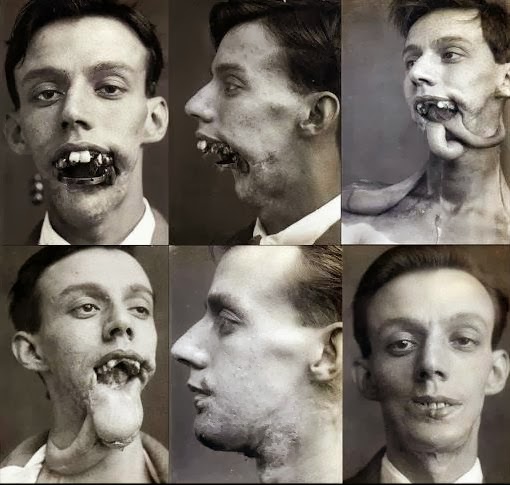
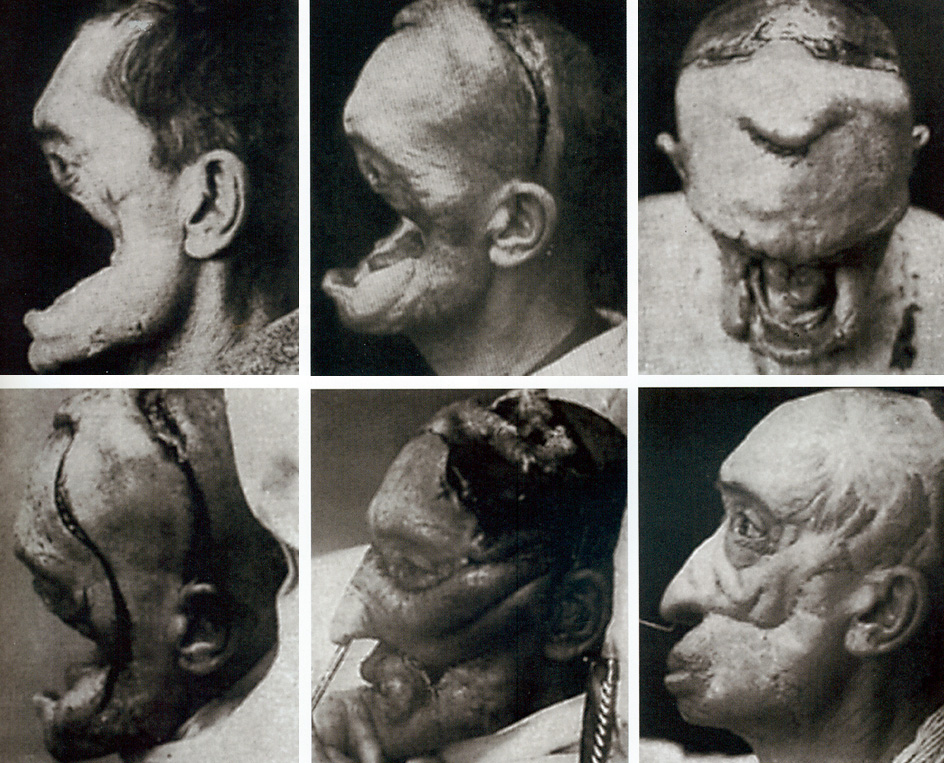
The apocalyptic Battle of the Somme in 1916 – when newspapers had to print not just columns but whole pages of casualties – spurred the British military to open a hospital for facial injuries on a dairy farm in Kent. The head surgeon there, a part-time painter, had seen how slapdash plastic surgery could be: he’d once encountered a young man in a POW camp who had hair growing on his nose because someone had grafted skin from his scalp onto his face. Determined to end such practices, the surgeon emphasized the aesthetics of facial reconstruction, even demanding multiple surgeries to get things right. In all, the Kent hospital performed eleven thousand surgeries on five thousand British soldiers, and often tended them for months between operations. Some victims could swallow only liquids, so the farm also raised chickens and cows and fed the men an eggnog slurry for protein. As part of their rehabilitation, some soldiers tended the animals, while others learned trades such as making toys, repairing clocks, or hairdressing. Many of the men formed deep friendships with their fellow “gargoyles,” while others, being soldiers, also flirted with whatever women happened by. The boldest patients won their nurses as wives, and one exhilarated female visitor declared that “men without noses are very beautiful – like antique marbles.”
Not everyone was so broad-minded. The soldiers felt safe enough while in the wards to tease each other, even call each other ugly; but they always wore red ties and cornflower-blue jackets when visiting the nearest village, to warn people off from a distance. Shopkeepers wouldn’t sell the men liquor because some became unhinged when drunk, and outsiders dreaded eating with them because their food sometimes reappeared through extra holes when they chewed and swallowed. Some hospitals forbade the men mirrors, and when released from the safe cocoon of the facial ward, many patients killed themselves. Others found work in a new industry, enjoying long hours of dark solitude as cinema projectionists. And some of the direst cases, those that surgeons couldn’t salvage, sought out American sculptress Anna Coleman Ladd, who opened up a prosthetic mask studio in 1918 in London.
[To be continued…]
Here are some examples of World War I reconstructive surgery:
Halloween Cometh!
More vintage Halloween fun!