Today’s Extraordinarily Devastating Yet Truly Morbid Fact!
The homeland of the Bubonic plague is generally thought to have been along the Himalayan borderlands between India and China where it was (and is) perpetuated in rodent populations. But it is generally believed that in the sixth century plague somehow escaped the Asian confines of its cradle and marched westward to slaughter the peoples of the Middle East, North Africa, the Roman Empire and western Europe. It was from Justinian, then Emperor of the eastern portion of the Roman Empire, that the plague took its name.
Just as Rome and its Empire had not been built in a day, the Empire had not fallen apart in a day. But it had come apart – cloven into Latin and Greek halves. Although there were numerous reasons for this, two of the more important were assaults by the Germanic kingdoms of western Europe, on the one hand, and devastating onslaughts of pestilence, on the other. This is not to imply that Rome had been especially salubrious prior to this point. Malaria seems to have been ubiquitous, and numerous other diseases frequently hammered the Empire. The Roman historian Livy (59 BC-AD 17) recorded many epidemics during the Republican period and 30,000 people were said to have died in Rome during an epidemic of AD 65. But the plagues that struck the Empire during the second and third centuries were extraordinarily devastating. This was most probably because they were new diseases, against which the population was immunologically defenseless, and, unfortunately for all those vulnerable people, they were also protracted plagues. The first – the so-called Antonine plague – hit the Roman Empire between AD 165 and 180, apparently reaching the Mediterranean with troops returning from the Parthian Wars in Mesopotamia. (Rumor had it that a too-enthusiastic soldier breaking open a casket in the temple of Apollo at Seleucia had released the pestilence.)
The returning soldiers had doubtless been exposed in Mesopotamia to any number of illnesses and the Antonine plague may have been comprised of several of them. However, August Hirsch, the nineteenth-century German epidemiologist and historian, voiced his strong suspicion that, regardless of the number of intertwined illnesses, by far the most important one was smallpox (or a disease ancestral to it), making its first European appearance. Whatever the identity of the pestilence it was so extraordinarily lethal that it was credited with killing between one-third and half of the people in affected areas. A mournful chronicler wrote (apparently with little exaggeration), that everywhere there was desolation. Towns were empty, fields unworked, and estates deserted. [Is it wrong that I sometimes daydream about this happening in modern times, so that I could afford a house in Chicago and have abundant urban exploration material? You don’t have to answer that…I already know! – The Bad Comtesse] In fact, it was this pestilential outbreak that is said by historians to have initiated the general decline in the population of the Mediterranean which continued for several centuries.
Such a decline was surely hastened by the second wave of pestilence. This one washed over the Roman world in 251 and did not fully abate until 266. Again, there are few clues to its identity, though the American historian William McNeill speculates that perhaps this plague, in tandem with its predecessor, announced the arrival of both smallpox and measles in Europe. In any event, this epidemic was at least as deadly as the Antonine plague and at its height it is believed 5,000 people a day were dying in Rome.
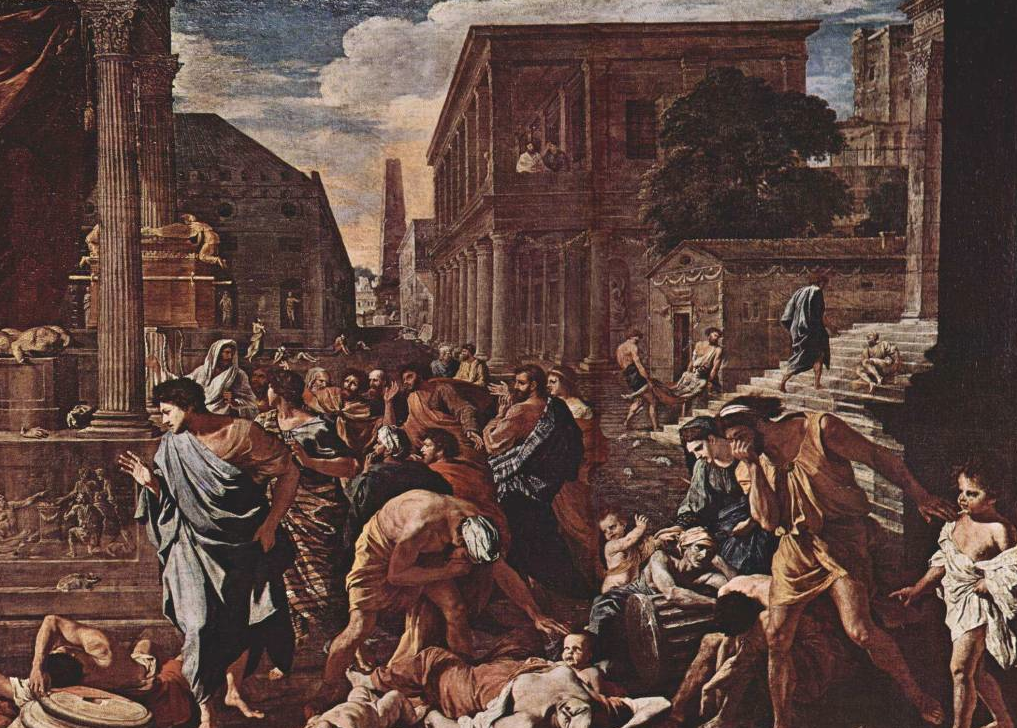
The Plague of Justinian: Them was rotten days!
Culled from: Plague, Pox and Pestilence
Trippin’ (and Settin’ Off Booby Traps) Down Memory Lane
Recently I mentioned the Morbid Fact Du Jour is now 20 years old – and the very first fact I ever posted was about New York’s infamous recluses, the Collyer Brothers:
August 1, 1996
On March 21, 1947 police were called to the home of New York City’s most famous recluses, the Collyer brothers (Homer and Langley), to investigate a possible dead body. When there was no response they kicked open the front door to find an ocean of debris – old newspapers piled to the ceiling along with sundry other precious things – which made the downstairs impassable. They used a ladder to access the second floor and eventually came across the body of Homer Collyer, who was blind and paralysed and relied completely upon his brother Langley for support and subsistence. It turned out that the paranoid pack rat Langley had constructed many booby traps from his debris around the house and one day he had accidentally set one of them and buried himself under a huge pile of trash; Homer consequently starved to death. It took police three weeks to find his body – after removing 120 tons of trash from the house. (Another warning to pack rats!)
Well, Eleanor pointed me towards the sweet stench emanating from the Daily Mail’s photo gallery of the Collyer’s house. I would give my left leg and right kidney to be able to time travel back to explore that glorious mess of a mansion. They even found a skeleton!
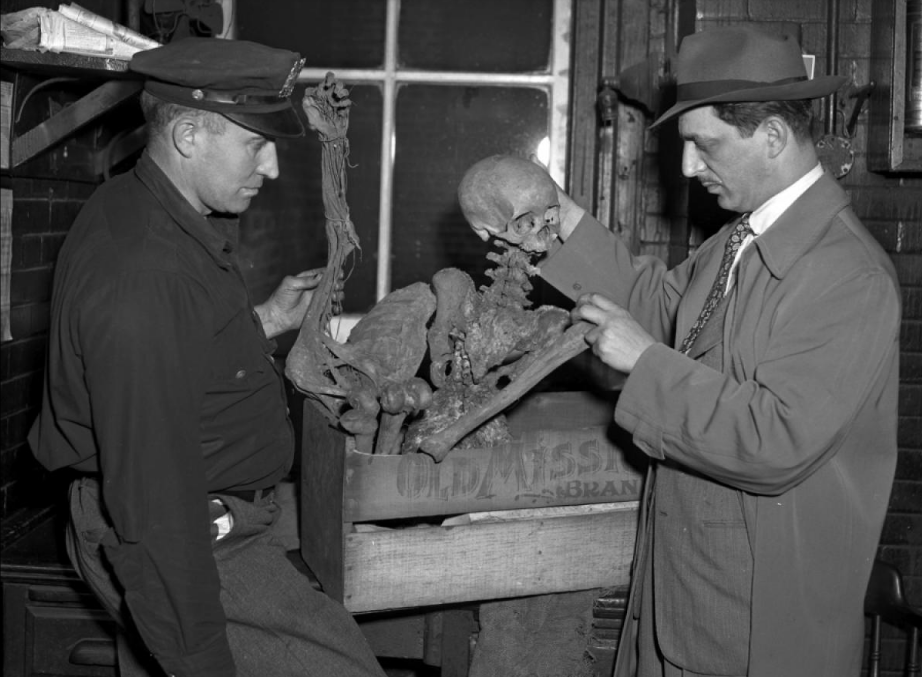
Inside the Collyer Brownstone: The Story of Harlem’s Hermits and Their Hoarding