It occurs to me that I haven’t indulged my Mt. Everest obsession for a bit. So why not journey back to Everest with…
Today’s Entombed Yet Truly Morbid Fact!
Climbers of Mt. Everest first viewed the Khumbu Icefall from the Nepal side in 1950, the year that Dr. Charles Houston joined the first group of foreigners to visit Khumbu. The group’s journals, he said, consisted largely of superlatives expressing Khumbu’s beauty and grandeur. But their glimpse of the Icefall itself was sobering. “For a long time we looked at the terrible icefall coming out of the Western Cwm, and decided that the approach would be very dangerous and difficult, perhaps impossible.” This maze of crevasses, seracs, and ice blocks the size of apartment buildings had claimed more lives than any other part of the mountain. Avalanches routinely thunder down from the Lhotse wall and Everest’s Southwest Face, and wash over the glacier; chunks of ice weighing hundreds of tons shift and tumble without warning; seemingly bottomless crevasses open and close, albeit more slowly. Looking up at the Khumbu Icefall from Base Camp, one feels about to be deluged by a tidal wave of gigantic ice cubes.
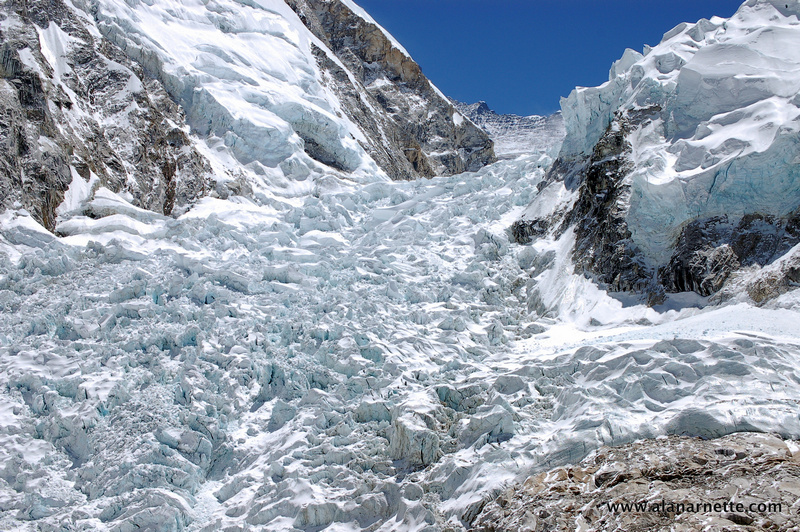
Ice Ice Baby!
The 1963 American Everest expedition, sponsored in part by the National Geographic Society, experienced the first death of a foreign climber on the Nepal side of Everest. Dr. Gil Roberts was leading the second rope through the Khumbu Icefall, 10 yards behind the climbers ahead, when a 30-foot freestanding wall of ice fell over and entombed his good friend Jake Breitenbach. Gil was partly buried, but freed himself and began digging out others.
With great emotion, Gil had to cut the rope that led to Jake, hopelessly buried beneath the serac. Then, as he helped the injured survivors descend through the Icefall, he heard a cry that sounded nearly human. It was a gorak, the bird believed to be the auspicious bearer of human souls, flying up from a crevice in the ice next to them.
Jake’s body emerged from the Khumbu Glacier in 1970, and a fellow team member, Barry Bishop, took him for burial on the ridge beyond Tengboche.
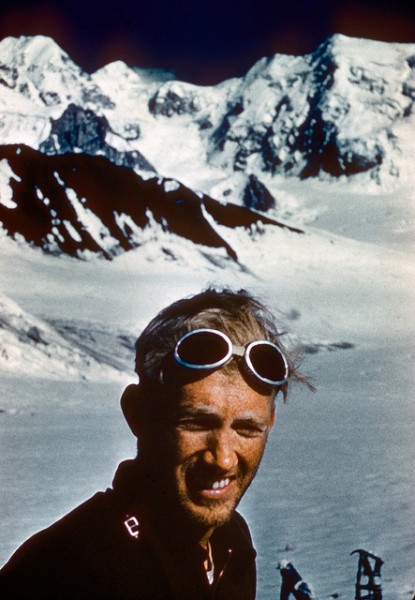
The Ill-fated Jake Breitenbach
Bishop had summited with the ’63 expedition, and later served for many years on the National Geographic Society’s Committee for Research and Exploration. He and his son Brent were the first American father and son to both summit Everest. In 1995 Bishop died in a car accident en route to receive an award from the American Himalayan Foundation honoring this achievement. At Tengboche, some of Bishop’s ashes are now buried alongside Jack Breitenbach.
Culled from: Everest: Mountain Without Mercy
Cranio-Facial Reconstruction Du Jour!
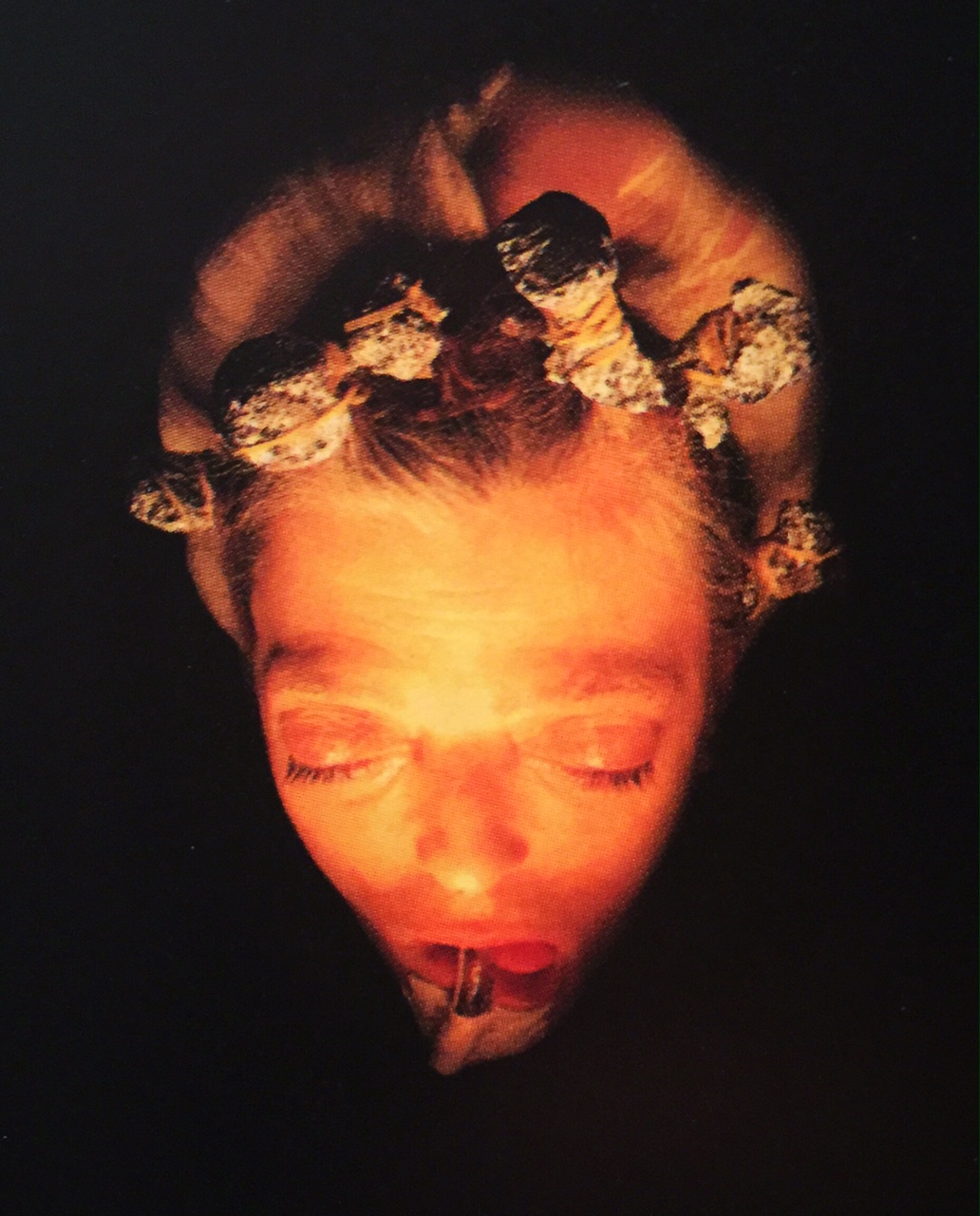
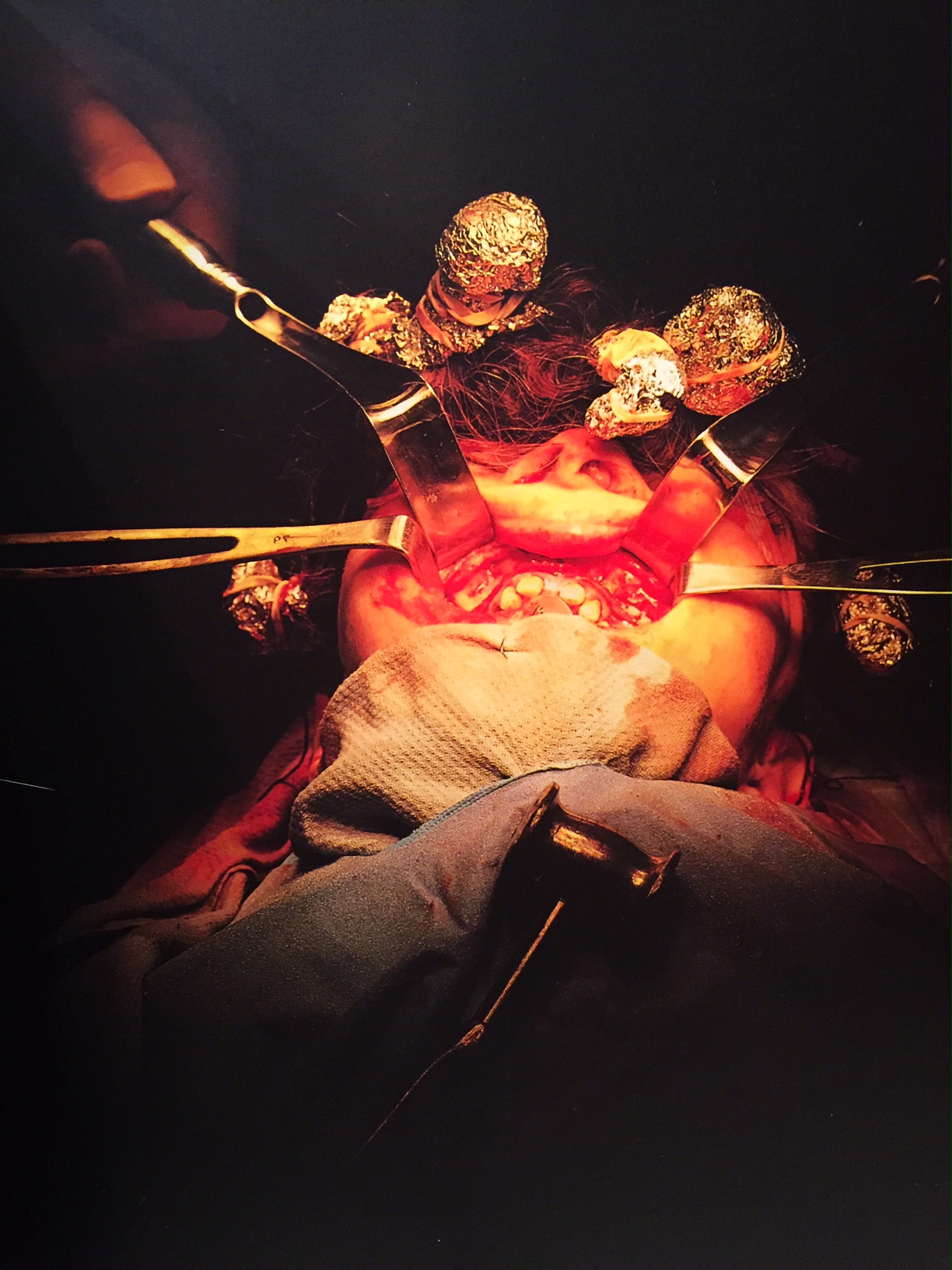
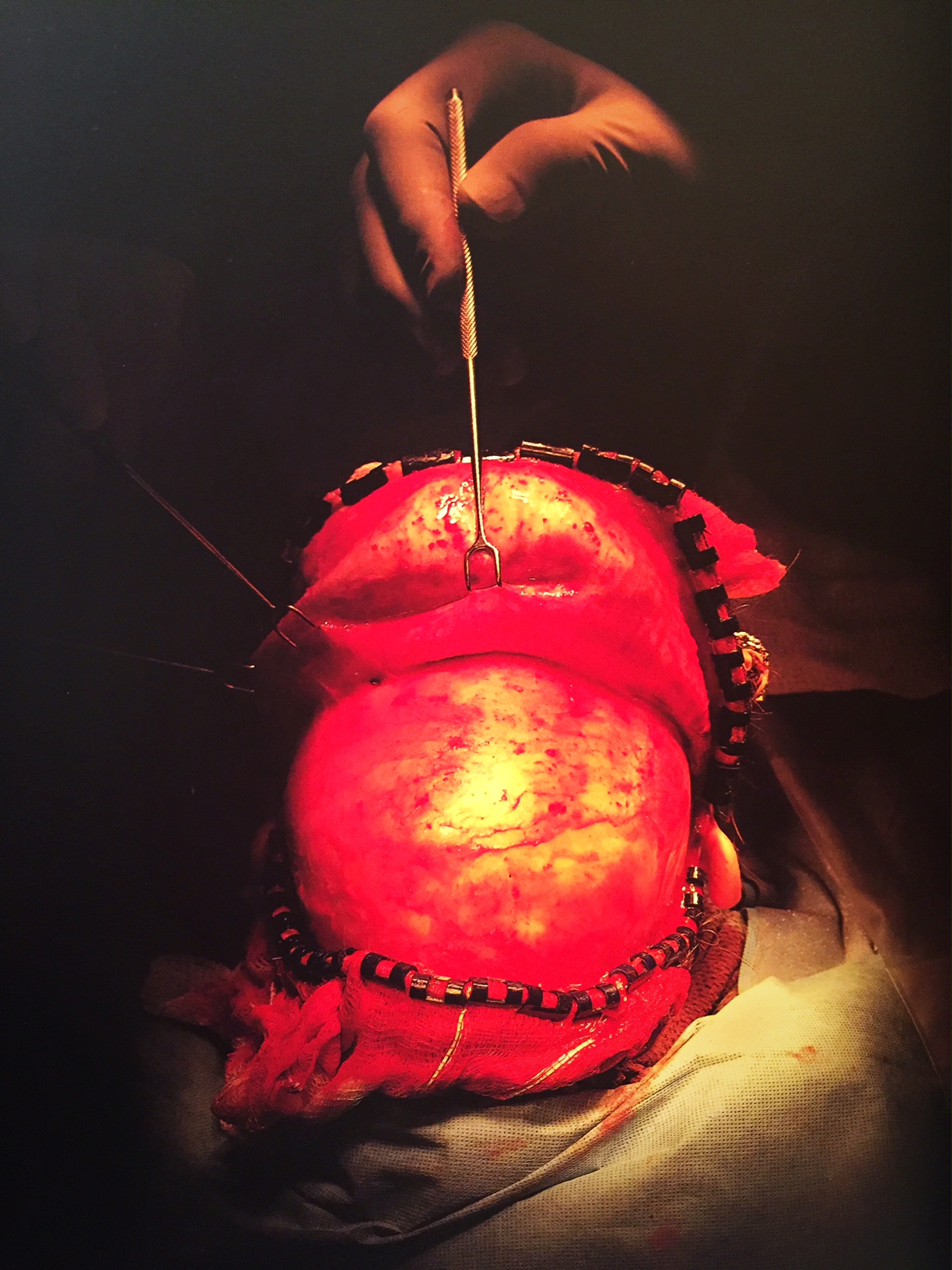
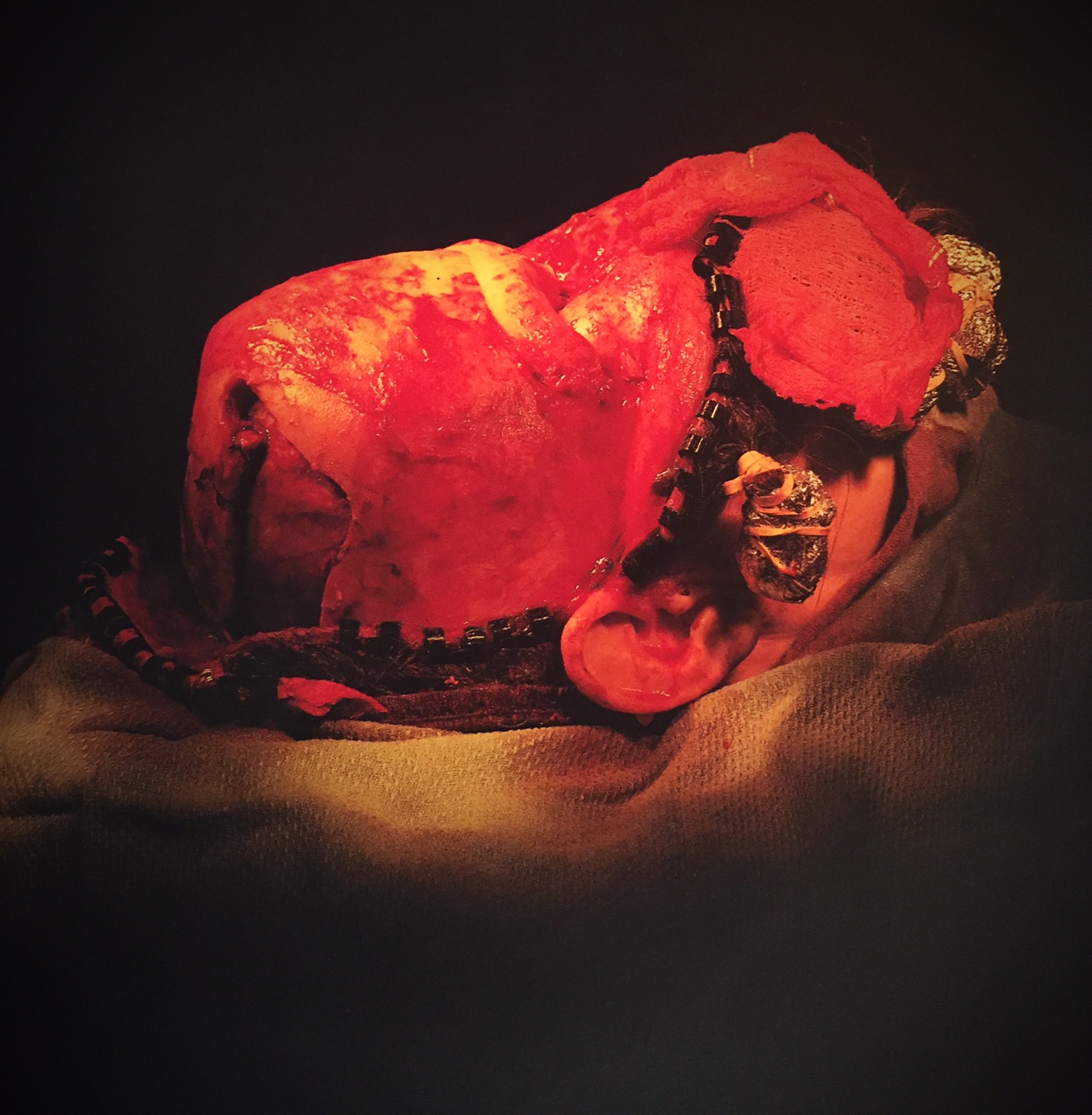
The Sacred Heart: An Atlas of the Body Seen Through Invasive Surgery is a book of surgery photographs taken by Max Aguilera-Hellweg. The images are powerful, beautiful, and at times cringe-inducing. Here’s a collection of photos from a surgery.
Cranio-facial Reconstruction
This forty-one-year-old woman was born with Crouzon’s syndrome [Soon to be starring in a Malady of the Month! – DeSpair], a hereditary birth defect in which the five bones of the cranium grown irregularly – too fast, too slow, or not at all – creating a deformed, if not shrunken, skull and face. Because of the reduced growth of the bones of the orbits, the patient’s eyes bulged out and appeared to operate independently of one another. A CT scan showing the profile of the skull revealed the top of the head rising like a ski jump, then falling off at a sheer 90-degree angle at the top of the brow, so that the common curvature of the forehead was missing. The front of the face was flat, with no visible cheek bones.
Before the procedure, to spare the patient the indignity and embarrassment of having her hair shorn, the surgeon rolled up the hair with rubber bands and put tinfoil over the rolls to keep them away from the surgical field. “It’s one of the small things we do,” the surgeon said. He next made an ear-to-ear incision into the scalp that would be hidden in the hairline. Instead of continuing the incision through the skin of the face, the lower half of the operation was done through the patient’s mouth. Alternately peeling back the face and putting it back on, to confirm his progress, the surgeon restructured the bone and gave the patient a new face.