Today’s Ravenous Yet Truly Morbid Fact!
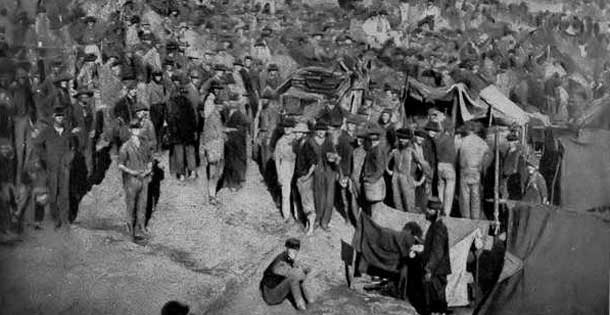
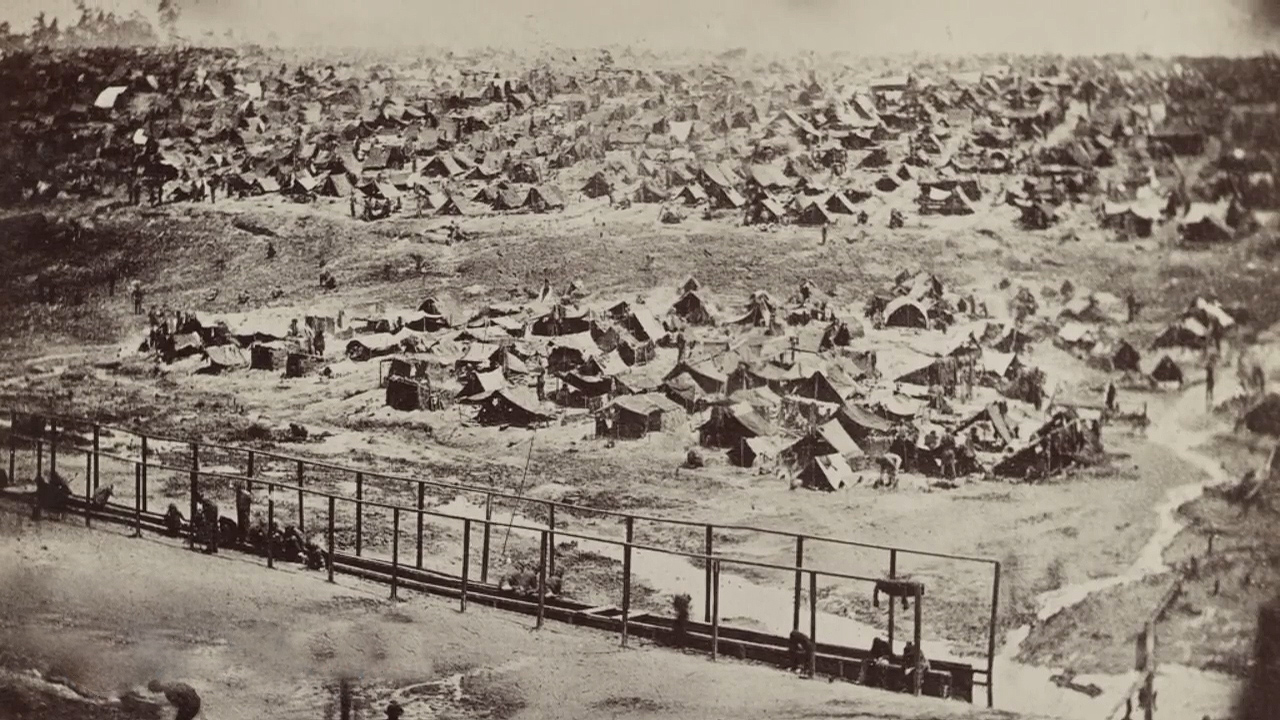
Between February, 1864 and April, 1865 it is estimated that 45,000 Union prisoners were confined in the Confederate stockade, Camp Sumter, near Anderson Station, Georgia, forever to be remembered as Andersonville. Of that number, approximately 25,000 men survived their prison experience and returned home to tell their tale of suffering. It is unknown how many survivors, with their health and lives shattered, died as a direct result of their captivity after returning to civilian life. Close to 13,000 Union soldiers did “give up the ghost” at Andersonville, and it was the ghost of Andersonville that haunted the survivors for the rest of their lives.
The following is the account of John Simmons alias John Hall, Company C, 49th New York Infantry, Sixth Corps, age 20, who enlisted on September 20, 1861 and was captured at Spotsylvania Court House, May 12, 1864:
Before we entered the stockade we were searched, and anything that could be found upon us of value was taken from us – money, clothes, shoes, knives, and the like. In some instances, money, watches, etc., were passed slyly down the line, to another prisoner, and perhaps recovered by the owner after he had been through the searching ordeal and had gotten inside the stockade.
My Sergeant was John Freelove, of the 2d Vt., and it was his duty to draw rations, for which he received two rations for himself. About every two weeks, or longer, we might get a piece of bacon or beef, about half the length of two fingers and about as wide and thick. If we got a small bone in our meat, soup was made with it, keeping it until the next day, then crack it and cook it again with our corn meal, making a mighty weak kind of soup, without salt. Once in two weeks a half pint of small white beans was given us. The filthiness and repulsiveness of what I saw men eat is not to be uttered or written for civilized ears and eyes. Men, because of craving of hunger, ate anything they could get. they would beg and cry, night and day, for more to eat, and many a poor fellow became crazy from hunger and exposure. One day when the gate was open, as the wagon passed out with dead bodies, a black dog ran in, and in a moment a hundred men were after him, and those who could not rise from the ground struck at him as he passed. He lived only a few moments. He was literally torn to shreds, and some did not wait to cook his flesh, but ate it raw. Every bone was eagerly sought by starving men. My own hunger at this time I can not describe. The sights I beheld no one would believe, unless they had seen them for themselves. Men would tear the hair from their heads and howl like madmen, as many of them were, and fall to the ground, never to rise again. Many there were whom it was dangerous to be near, for fear of being injured or bitten by them.
Water becoming very scarce, wells or holes were dug, the men using anything they could find that would throw up dirt. A little water was now and then obtained in this way, its quality but little better than that which came from the stream. Some holes that were dug served another purpose especially those as near the dead line as we dared to dig. At night from the holes a drench was dug toward the stockade for the purpose of tunneling out. I assisted in one of these, and we had gotten beyond the stockade, when one of our fellow-prisoners informed the rebel Quartermaster. His compensation was a plug of tobacco. The informer lost his tobacco and was made to run the gantlet, while each fellow-prisoner gave him a kick. He received such usage that he nearly died. He was removed by the rebel Quartermaster, and we never saw him again.
The first sight to a new prisoner as he came into the pen caused him at once to be thoroughly disheartened, and I saw many soon after they came in, sit down, and it seemed to me they never rose up again, but sat there moaning and crying until they died; and then they were carried out and thrown in the trench, never to be heard of again by us or by their friends at home.
Culled from: Andersonville Giving Up the Ghost: Diaries & Recollections of the Prisoners
Poor dog made a really bad decision.
Post-Mortem Photo Du Jour
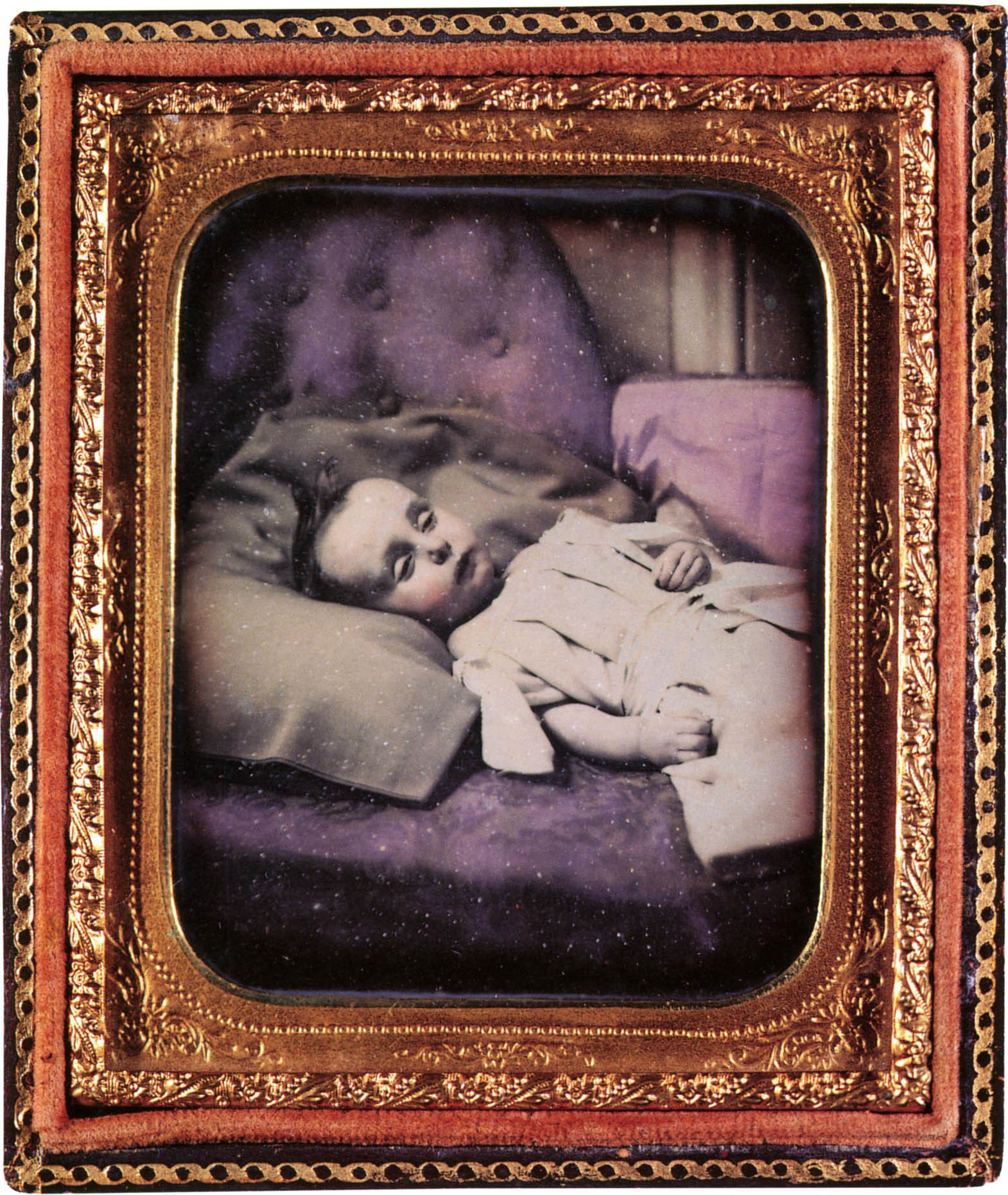
LITTLE GIRL ON A PURPLE COUCH
William Snell, Salem, Massachusetts
Daguerreotype 1/6 Plate, Tinted, Circa 1854
In order to make the deathbed setting seem softer and less horrific, parents often had the daguerreotypes tinted. The delicate colors, especially faint blush to the child’s cheeks, created an attractive tableau. This buffer against the harsh reality of the child’s state helped the parents with their loss. In the early photographic era, selective tinting and the use of flowers or a child’s favorite object was the primary means of adornment of postmortem photographs. By the 1880s, beautifying the coffin or deathbed scene came into vogue. Flowers, wreaths, veils, candles, doves and other items adorned the deceased. By the end of the century, the ‘Sleeping Beauty’ tableau had become common. Hand coloring postmortem photographs became popular again in the 1920s.
Culled from: Sleeping Beauty II: Grief, Bereavement, and the Family in Memorial Photography