Today’s Disfigured Yet Truly Morbid Fact!
The pervasive impact of smallpox on human cultures around the globe was reflected in the widespread practice of worshiping gods, goddesses, and patron saints associated with the disease. Europeans throughout the Middle Ages revered St. Nicaise, a fifth-century bishop of Rheims who survived smallpox through holy practices as year before his martyrdom at the hands of the Huns. In Japan, a picture of Tametomo, a twelfth-century hero who killed a smallpox demon, was hung in the rooms of smallpox victims to aid their recovery. In West Africa, the Yoruba and neighboring tribes worshiped a smallpox deity called Sopona, and in Brazil, the god Omolou held sway over the disease. In China, Buddhists, Taoists, and Confucians alike revered the smallpox goddess T’ou-Shen Niang-Niang, and in northern India, Hindus erected numerous shrines and temples in honor of Shitala Mata.
One reason for the pervasive sense of fatalism and mystery about smallpox was that once a person contracted the disease, no effective treatment was available. Until the mid-nineteenth century, the sources of smallpox were variously ascribed to angry gods, noxious gases seeping from the earth, or imbalances of body humors. The causative agent of the disease was given the generic name virus, from the Latin word meaning “a poisonous force,” but its true nature remained unknown. Rhazes, a Persian-born physician who lived in Baghdad around A.D. 910, was the first to distinguish the rash of smallpox from that of measles. He speculated incorrectly, however, that the human body harbored seedlike agents called “ferments” that were expelled through the skin to cause the pus-filled boils.
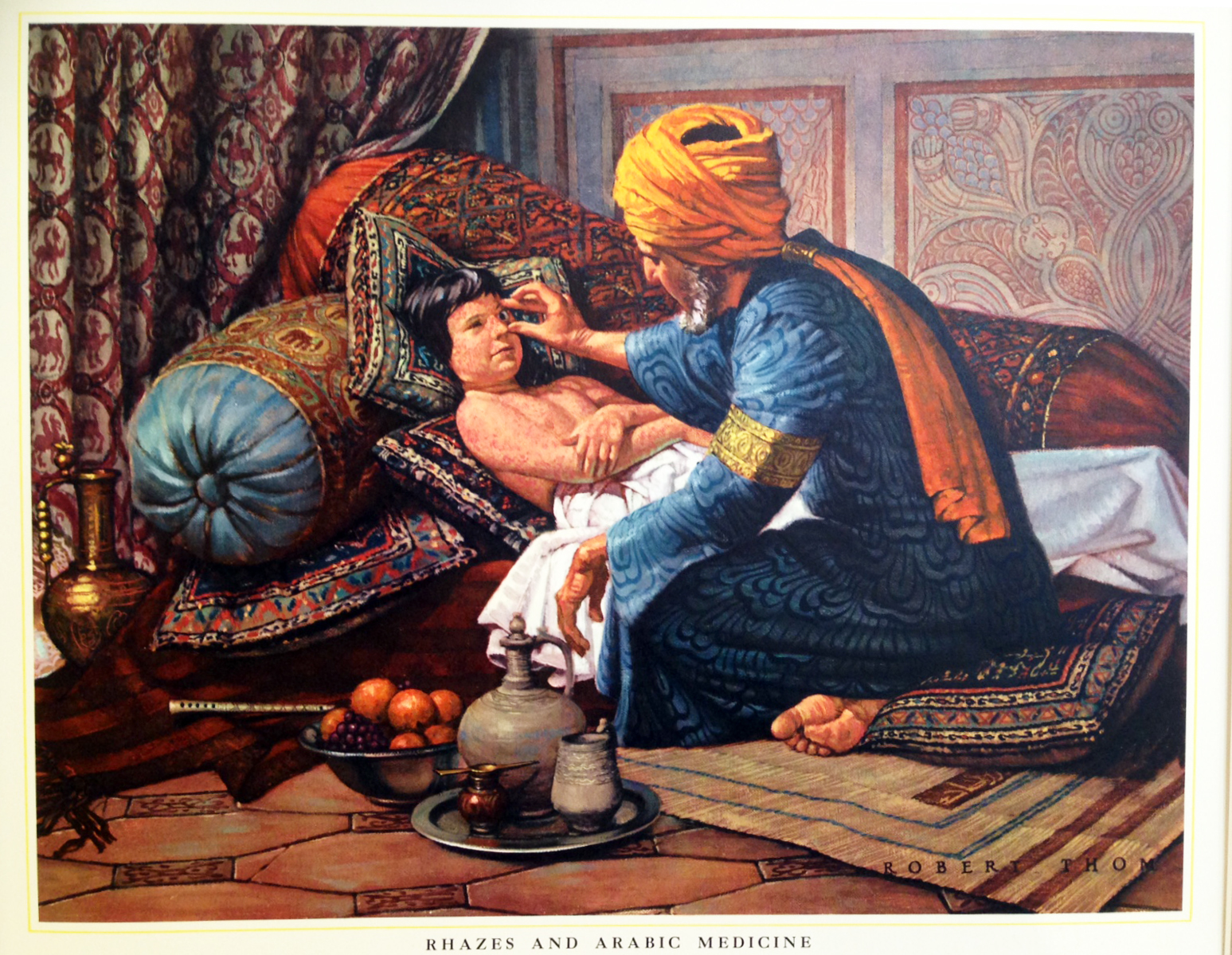
Rhazes recommended treating smallpox patients by bleeding them to the point of fainting and then exposing them to intense heat. Other popular folk remedies included palm oil, powdered horse excrement, and purgatives. One peculiar belief, originating in Japan in the tenth century and spreading to Europe in the twelfth century, was that the color red had therapeutic benefits because it served to excited the blood and bring the infection to the surface. Smallpox patients were accordingly wrapped in red blankets, dressed in red clothes, illuminated with red lamps, and had their rooms draped with red curtains. When Queen Elizabeth I of England contracted smallpox in October 1562, at the age of twenty-nine, her doctors cloaked her in a red blanket and placed her close to a roaring fire. The queen managed to survive the disease and died at the ripe old age of seventy, having ruled England for forty-five years. But her bout with smallpox left her bald and with disfiguring facial scars, and for the rest of her life she wore a red wig and heavy makeup.

“Call me morbid, call me pale…” – Queen Elizabeth I
Culled from: Scourge: The Once and Future Threat of Smallpox
Garretdom!
I was perusing the March 27, 1873 issue of The Wilmington (Ohio) Journal and I learned something shocking:

Also, can you imagine if modern newspapers used such artistic license in describing criminals? I can!
