Today’s False and Scandalous Yet Truly Morbid Fact!
Printed in The Pennsylvania Gazette, February 15, 1737/8
Dr. Evan Jones, “chymist” at the Golden Paracelsus’ Head in Philadelphia, had a simple-minded apprentice Daniel Rees, who thought he wanted to be a Mason. With several cronies, one a renegade Mason, Jones, thinking to have some agreeable sport, set up a burlesque initiation ceremony, complete with scandalous oath of allegiance to Satan. One John Tackerbury was responsible for the ceremony; John Remington, a lawyer, wrote the oath. In the garden of Jones’s house young Rees was “initiated” with meaningless, ludicrous, and obscene signs and ceremonies, pledging his loyalty to the Prince of Darkness, and drinking from a “sacramental” cup, which contained a strong purgative; “after which one of the Company indecently discovered his Posteriors, to which the Lad … was led to kiss, as a Book to swear upon.” Jones and Remington enjoyed repeating their account of the affair. Franklin heard it, laughed heartily, and asked for a copy of the oath, which he showed and read to various friends in the ensuing days.
The “initiation” had been such fun that Jones invited a number of people to watch Rees receive another “degree” in Freemasonry on the evening of June 13, in the cellar of his (Jones’s) house. One Sullivan, dressed in a cow’s hide with horns, impersonated the devil. Through the bluish flames of a bowl of brandy, which the doctor lighted, the faces of those officiating appeared ghastly and hideous. Young Rees seems to have regarded the performance too stolidly for the amusement of his audience. Jones, to make things livelier and more frightening, raised the flaming bowl and, grimacing through the haze, approached the boy. Suddenly he threw, or accidentally spilled, the burning spirits, and Daniel Rees died of his burns two days later.
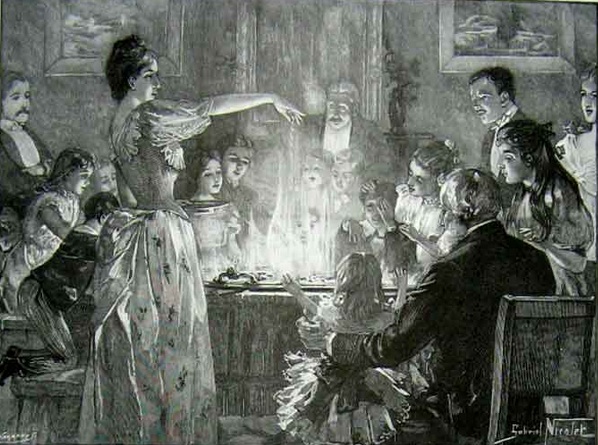
A depiction of the game “Snap-Dragon” with a burning bowl of brandy
The news spread rapidly. The Masons immediately disavowed any connection with it or the participants. Franklin reported what he knew to the authorities. A coroner’s inquest found it only an unfortunate accident, but the grand jury, receiving evidence that Jones had thrown the spirits willfully, indicted him, Remington, and Tackerbury for murder. Andrew Bradford used the opportunity to attack the Masons: on August 4 the American Weekly Mercury printed an unfriendly article from a London journal.
At the trial in January 1738 Franklin appeared as a witness for the prosecution. Jones and Remington were found guilty of manslaughter; the first was burned in the hand and released; the latter was granted a limited pardon; while Tackerbury was acquitted. In a report of the attorney general’s pleading, a writer in the Pennsylvania Gazette, February 7, declared that the act that killed Rees was murder and should have been punished as such. To these strictures “C.D.” replied in the Mercury, February 14, reviewing the testimony at the trial and particularly calling attention to Franklin’s conduct. Franklin, he said, had read the blasphemous oath several days before the fatal June 13 and “was pleased to express his Approbation thereof by a most hearty Laughter, and in friendship desired to have the further perusal of it; which in several Companies he diverted himself with the Reading of, and being informed how D.R. had been initiated in the Garden, he candidly saluted him by the name of Brother, and to encourage him in it gave him a Sign, as they term it, and congratulated him on being admitted into the Brotherhood, and desired to have Notice to be present at the Diversion of Snap-Dragon.” To these charges Franklin replied in his own defense in the Gazette, February 15.
Some very false and scandalous Aspersions being thrown on me in the Mercury of Yesterday, with regard to Dr. Jones’s Affair, I find my self obliged to set that Matter in a true Light.
Sometime in June last, Mr. Danby, Mr. Alrihs, and my self were appointed by the Court of Common-Pleas, as Auditors to settle an Affair, between Dr. Jones and Armstrong Smith, then depending in said Court. We met accordingly at a Tavern in Market-Street on the Saturday Morning before the Tragedy was acted in the Doctor’s Cellar. Dr. Jones appeared, and R——-n as his Attorney, but Smith could not readily be found. While we waited for Smith, in order to hear both Parties together; the Doctor and R—–n began to entertain us with an Account of some Diversion they had lately had with the Dr’s. Apprentice, who being desirous of being made a Free-Mason, they had persuaded him they could make him one, and accordingly had taught him several ridiculous Signs, Words and Ceremonies, of which he was very fond. Tis true I laugh’d (and perhaps heartily, as my Manner is) at the Beginning of their Relation, but when they came to those Circumstances of their giving him a violent Purge, leading him to kiss T’s Posteriors, and administring to him the diabolical Oath which R——n read to us, I grew indeed serious, as I suppose the most merry Man (not enclin’d to Mischief) would on such an Occasion. Nor did any one of the Company, except the Doctor and R——n themselves, seem in the least pleas’d with the Affair, but the contrary. Mr. Danby in particular said, That if they had done such Things in England they would be prosecuted. Mr. Alrichs, That he did not believe they could stand by it. And my self, That when the Young Man came to know how he had been impos’d on, he would never forgive them. But the Doctor and R——-n went on to tell us, that they design’d to have yet some further Diversion, on pretence of raising him to a higher Degree in Masonry. Re——n said it was intended to introduce him blindfold and stripp’d into a Room where the Company being each provided with a Rod or Switch should chastize him smartly; which the Doctor oppos’d, and said He had a better Invention; they would have a Game at Snap-Dragon in a Dark Cellar, where some Figures should be dress’d up, that by the pale Light of Burning Brandy would appear horrible and frighten him d—–bly. Soon after which Discourse the young Man himself coming in to speak with his Master, the Doctor pointed at me, and said to him, Daniel, that Gentleman is a Free-Mason; make a Sign to him. Which whether he did or not, I cannot tell; for I was so far from encouraging him in the Delusion, or taking him by the Hand, or calling him Brother, and welcoming him into the Fraternity, as is said, that I turned my Head to avoid seeing him make his pretended Sign, and look’d out of the Window into the Garden: And all those Circumstances, with that of my desiring to have Notice that I might be present at the Snap-Dragon, are absolutely false and groundless. I was acquainted with, and had a Respect for the young Lad’s Father, and thought it a Pity his Son should be so impos’d upon, and therefore follow’d the Lad down Stairs to the Door when he went out, with a Design to call him back and give him a Hint of the Imposition; but he was gone out of sight and I never saw him afterwards; for the Monday Night following, the Affair in the Cellar was transacted which prov’d his Death. As to the Paper or Oath, I did desire R——n when he had read it to let me see it; and finding it a Piece of a very extraordinary Nature, I told him I was desirous to shew it to some of my Acquaintance, and so put it in my Pocket. I communicated it to one, who mention’d it to others, and so many People flock’d to my House for a Sight of it, that it grew troublesome, and therefore when the Mayor sent for it, I was glad of the Opportunity to be discharg’d from it. Nor do I yet conceive that it was my Duty to conceal or destroy it. And being subpena’d on the Tryal as a Witness for the King, I appear’d and gave my Evidence fully, freely and impartially, as I think it becomes an honest Man to do. And I may call every one to whom I read that Paper, to witness, that I always accompanied it with Expressions of Detestation. This being the true State of the Case, I think I may reasonably hope, that I am so well known in this City, where I have liv’d near 14 Years, as that the false and malicious Insinuations contain’d in the Mercury, will not do the Injury to my Reputation that seems intended.
B. Franklin

Would I lie to you?
Culled from: Founders Online
Thanks to Marco McClean for the suggestion.
Sing Sing Prisoner Du Jour!
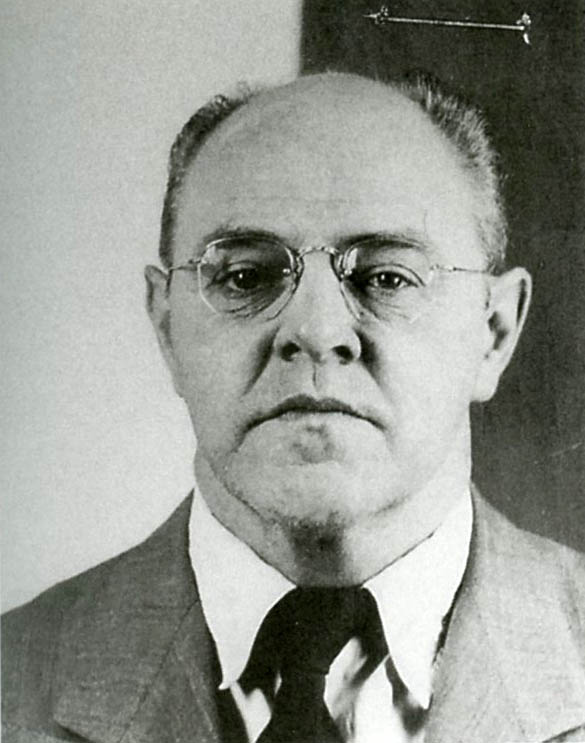
NAME: Edward Kelly
NUMBER: 111-412
BORN: 8-31-99 (Rennsselaer)
AGE: 52
OCCUPATION: Machinist
MARITAL: Divorced
CRIME: Shot stranger Elouise McHugh with rifle on Main Street, Kingston, broad daylight
CLAIMS: Lost control
JUDGE: John Cashin, Ulster County
SENTENCED: 9-29-50
RECIEVED: 10-2-50
EXECUTED: 10-30-52
After his initial death sentence was overturned on appeal and a new trial was ordered, Kelly wrote this letter to the warden on June 12, 1951, as he was being discharged:
Dear Sir:
Due to the fact that I’m leaving the “Death House,” I cannot say I have any regrets, nor will I recommend it to any one, but I can inform them that, if they are ever unfortunate enough to go to Sing Sing, they will be very well treated. I had no fault to find with anything or anybody during my stay, every reasonable request was granted. The entire staff of the prison are a credit to New York State. The Officers and Guards are as fine a group of men as you could find anywhere. “Dick” and “Freddie” go about their duties as if they had a part interest in the place, always helpful and ready with a word of cheer if needed. I enjoyed “Terry’s” homelike meals. It would certainly be a pleasure to meet everybody, including yourself, under different circumstances. I extend my best wishes to all. But I hope I never come back.
Sincerely,
Edward H. Kelly
109-821
Kelly was reconvicted, sentenced again to death, and returned to the death house on November 28, 1951. He was given a new number, 111-412, and ultimately was executed on October 30, 1952.
Culled from: Condemned: Inside the Sing Sing Death House
You really buried the lede with this one. Not till the very end of this (lengthy) piece do we learn that the “Franklin” who laughed at the bullying of the poor kid was Ben Franklin. (I almost didn’t get that far.)