Today’s Ignorant, Weary and Complaining Yet Truly Morbid Fact!
In late 19th Century New York City the tenement was the breeding ground of crime. Journalist Colonel Thomas Knox wrote, “Ignorant, weary and complaining wives, cross and hungry husbands, wild and ungoverned children, are continually at war with each other. The young criminal is the product almost exclusively of these training-schools of vice and crime in the worst tenement-house districts.” Against much of the common wisdom of the day, Knox asserted that necessity, more than any other cause, drove people to crime. “If one suffers from cold and hunger, and can neither buy nor beg food, fuel, and clothing, he must perforce steal it, for necessity is a master of human action.”
Want, hunger, and the threat of violence were all constants for those who lived in a tenement. In such circumstances stealing food or coal became not only understandable but even a laudable means of scraping by. “Petty thievery by boys and girls who are not taught to discriminate between right and wrong, who are, in fact, led to believe it a virtue to steal in order to provide themselves and parents with comforts impossible to obtain otherwise, is a matter of course among the poorest classes.”
Tenements not only bred and fostered crime, they were the very headquarters and clubhouses of New York’s criminal element. For contemporary observers among New York’s “better” classes, the term “den of thieves” might have been designed for the tenement house. The dark, twisting passages and numberless small rooms led many writer to describe tenements as warrens, lairs, or rookeries. These references to the feral animalistic character of the tenements’ inhabitants reflected the fears and prejudices of the middle and upper classes.
For Americans with Victorian sensibilities, tales of families with young girls letting the second bedroom to strange men, or of several members of a single family sharing the same bed, fed the impression that tenements were dens of sin and wickedness. The tenements themselves were often used as brothels as well as safe havens for criminals of all sorts. “The various ‘gangs’ that have infested the city and given the police force no end of trouble for many years,” Knox wrote, “are found in the densely populated districts. The tenement-houses afford them excellent hiding-places, and from them the gangs are recruited when a police raid has temporarily decreased their ranks and sent many of them to penal institutions.”
In fact during Teddy Roosevelt’s reign as police commissioner several of these gangs had been arrested while working in or preying on the tenements. One gang had been caught after terrorizing New York with a string of fires set in tenements to bilk insurance companies. In August 1896, several members of the gang were still on trial for murder, after one of the fires they set at a tenement on Suffolk Street killed a four-year-old girl.
With the central airshaft in many tenements allowing even the smallest fire to spread quickly between floors, a fire intended to destroy only a business or personal belongings could very easily consume an entire building and its inhabitants. On that day, August 5, the seventy residents of a tenement on Fifty-Sixth Street were considering moving out of their building because the night before, the *second* fire in a week had been set by an unknown person, who had soaked the wood with kerosene. Attempts to flee via the fire escape had been hindered by the boxes and barrels stored there. “My youngest child is only six weeks old,” Mrs. John Lyons told a reporter, “but she has already passed through two fires. There are few infants with such a record.” The arsonist was never caught.
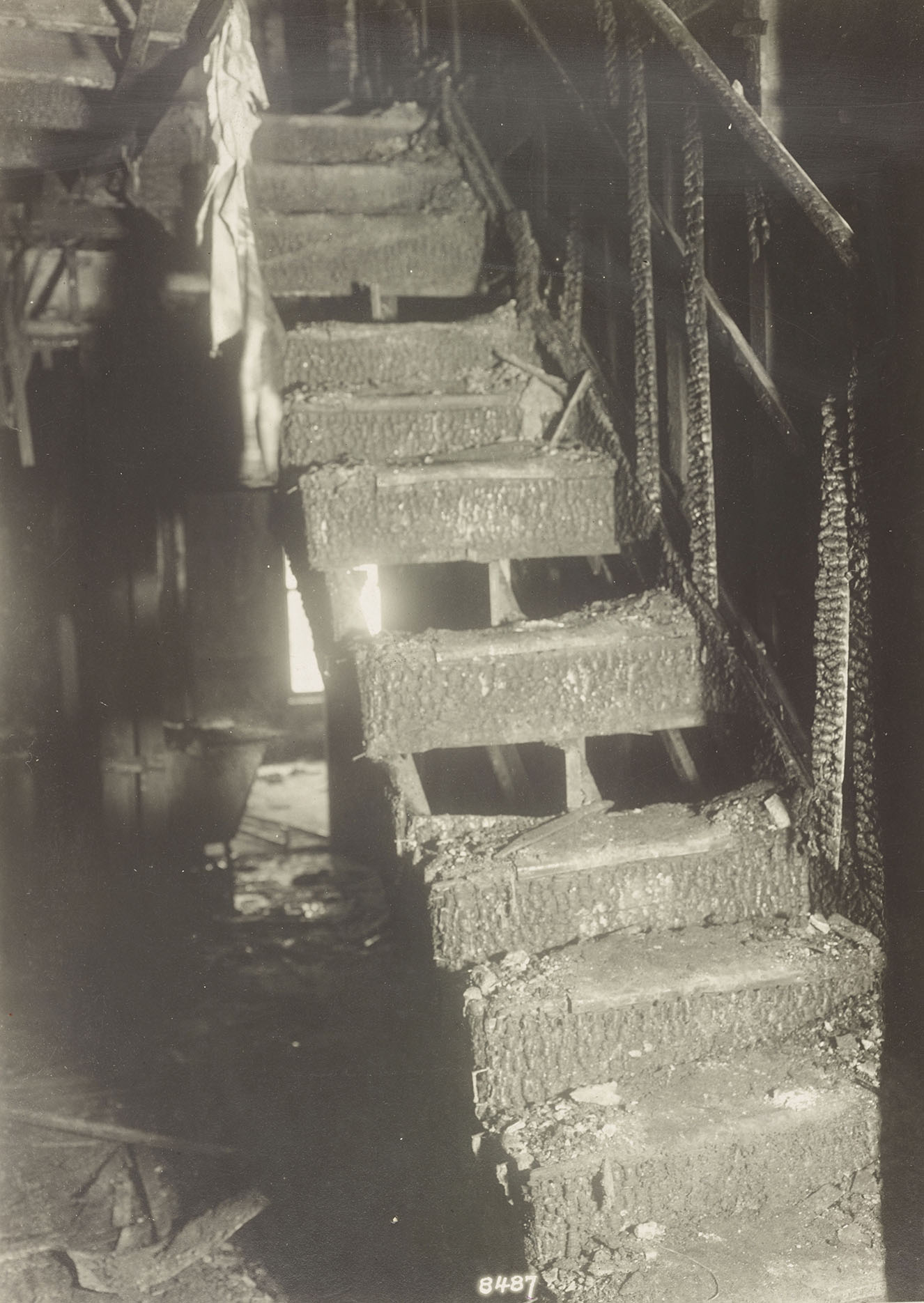
Burnt stairwell of a tenement building destroyed by a fatal fire.
Culled from: Hot Time in the Old Town
Follow-Up Du Jour!
So you may recall that a couple of facts ago I featured the tale of dastardly murderer William Henry Theodore Durrant. I found this delightful tidbit in Harold Schechter’s Bestial: The Savage Trail of a True American Monster and I just had to share:
Immediately after the hanging, the prisoner’s corpse was placed in an open coffin and carried into a waiting room. Durrant’s formerly handsome face was a ghastly sight – skin blackened, eyes bulging, tongue jutting grotesquely from his gaping lips.
When his parents arrived to claim the body, a prison official as a gesture of courtesy, asked if they might not care for some tea. Mr. and Mrs. Durrant leapt at the offer whereupon a tray, loaded not only with tea but with a compete roast-beef-and-potato dinner, was brought into the room.
Then, with their dead child’s body stretched out only a few feet away, Theodore’s parents sad down to enjoy their midday repast. Even the convict who had carried in the tray shook his head in disgust when he overheard Mrs. Durrant ask her husband for a second helping of beef.
Fortified by their meal, Durrant’s parents were now faced with a dilemma: how to dispose of their son’s corpse. Public detestation of Durrant was so intense that no cemetery would accept him. His parents were finally forced to transport the remains to Los Angeles for cremation.
Sing Sing Prisoner Du Jour!
NAME: Frederick Wood aka Killer
NUMBER: 128-751
BORN: 10-29-11 (Vermont)
OCCUPATION: Salesman
CRIME: Killed John Rescigno with bottle, killed Frederick Sees with shovel
CLAIMS: Says he hates homosexuals
RAP SHEET: Extensive criminal history, served previous sentence for murder; history of suicide attempts
SENTENCED: 12-7-61
EXECUTED: 3-21-63
From a transcript of Wood’s interview with teh Lunacy Commission, December 18, 1962:
Question: Is there any way we can help you?
Answer: Let me burn.
After spurning lawyers’ efforts to save his life, Wood went to his death on March 21, 1963.
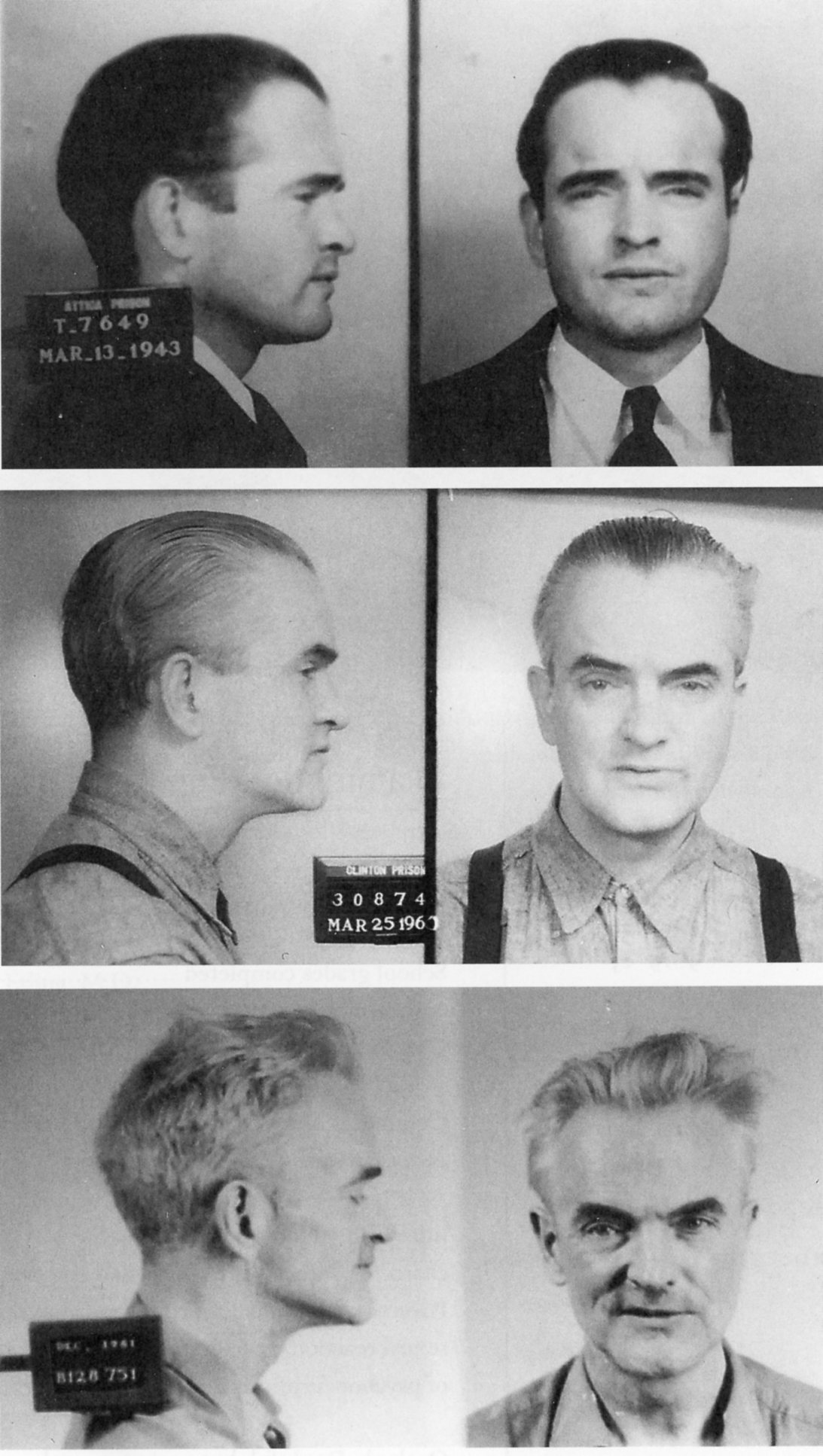
The prison aging of Frederick Wood: March 13, 1943 (top; March 25, 1960 (middle); and December 8, 1961 (bottom).
Culled from: Condemned: Inside the Sing Sing Death House