Today’s Noisome Yet Truly Morbid Fact!
At the turn of the 20th century Pittsburgh and its environs along the Monongahela Valley boasted some 14,000 chimneys (most of them belonging to iron and steel plants) that provided a 24-hour barrage of soot, ashes and glowing embers. A Hungarian visitor, Count Vay de Vaya, described it as “a noisome vomit, killing everything that grows – trees, grass, and flowers.” Workers were hardly able to breathe in this atmosphere “worthy of Satan himself”.
Thousands, moreover, were compelled to live close to these factories – in drab, unpainted shanties with smoke belching right through the windows, the backyards thick with mud and strewn with beer kegs and rubbish. No attempt was made to separate industry and human habitation. On the contrary, companies welcomed such proximity because it enabled them to exert tighter control over the workers.
Merely keeping clean became a problem in Pittsburgh – even for the middle class that lived apart from the industrial sections. Around 1900 the residents spent $1,500,000 on extra laundry work and $750,000 a year for extra general cleaning, according to Chamber of Commerce figures. Cincinnati had similar problems. People’s hands and faces were constantly grimy, clean collars quickly acquired a thin layer of soot, and the bituminous coal dust gave clothes hung out in the weekly wash a permanent yellow tinge.
But Pittsburghers were not to be daunted. They pronounced the city “one of the healthiest in the United States… People work so hard here they don’t notice the smoke.”
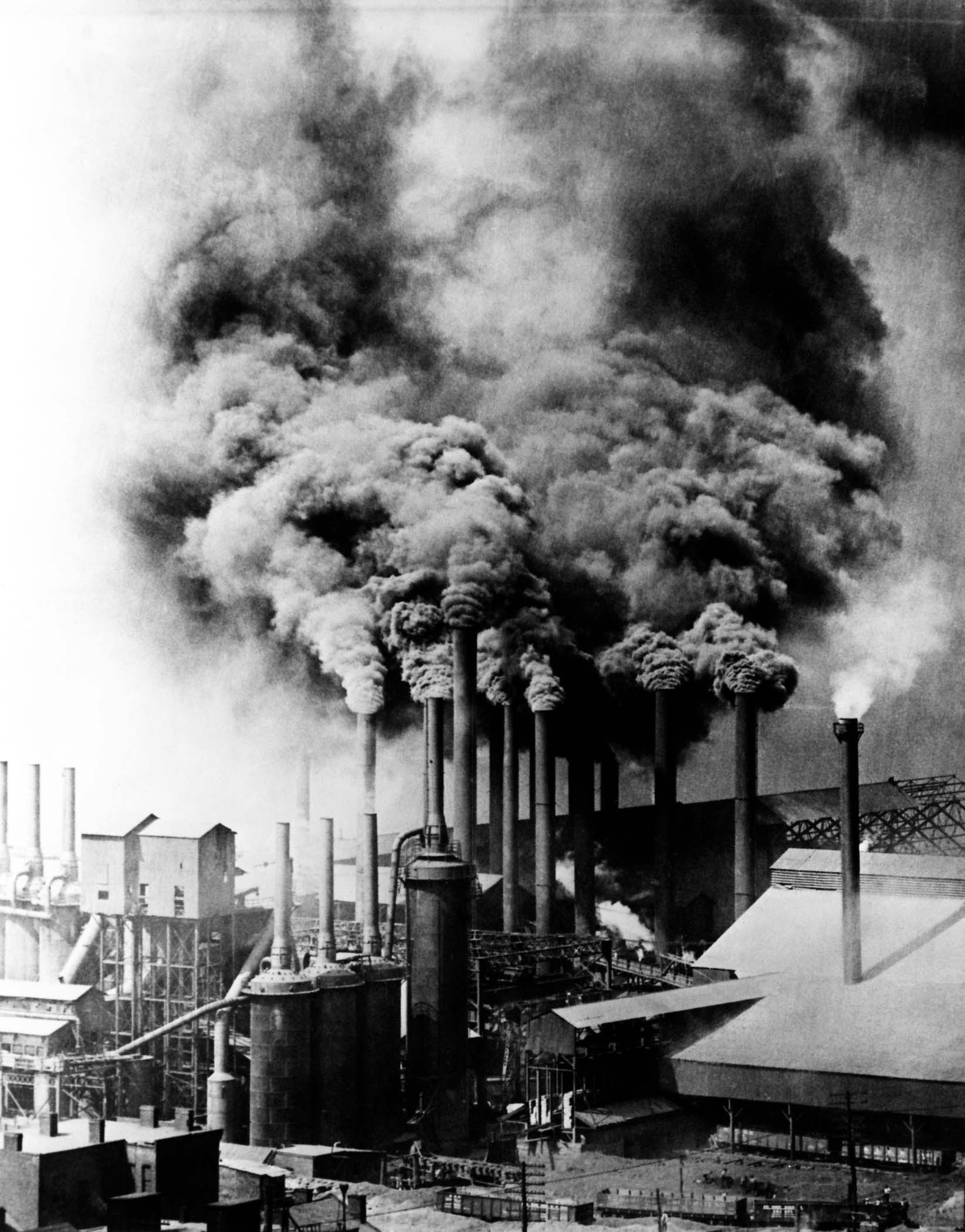
Just a little healthy smoke!
Culled from: The Good Old Days, They Were Terrible
Weegee Du Jour!
Weegee was the pseudonym of Arthur Fellig (June 12, 1899 – December 26, 1968), a photographer and photojournalist, known for his stark black and white street photography. Weegee worked in Manhattan, New York City’s Lower East Side as a press photographer during the 1930s and ’40s, and he developed his signature style by following the city’s emergency services and documenting their activity. Much of his work depicted unflinchingly realistic scenes of urban life, crime, injury and death.
Here’s a photo from the book Weegee’s New York: Photographs, 1935-1960
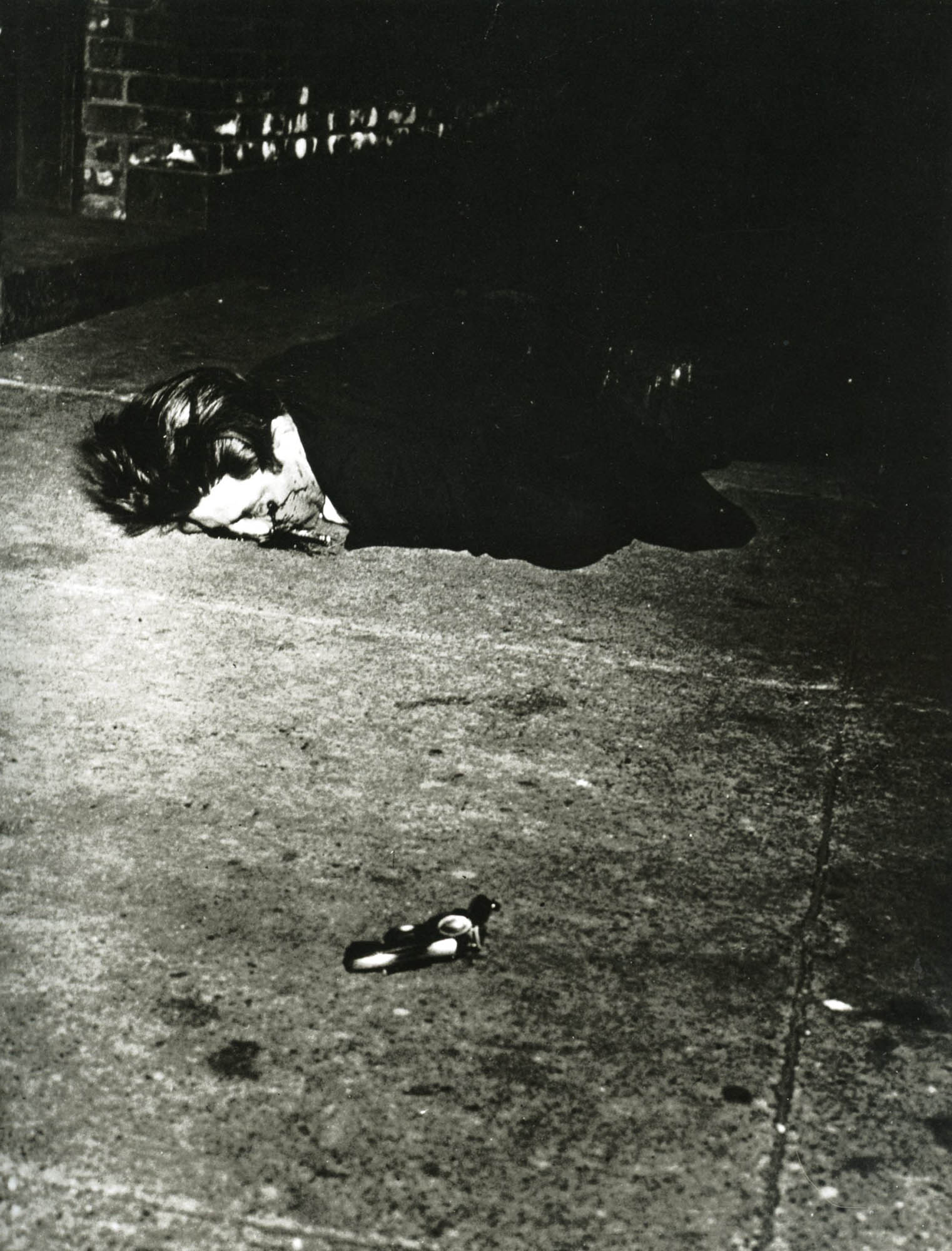
Corpse with Revolver, 1940