Today’s Heartrending Yet Truly Morbid Fact!
Account of the death of Private Amos P. Sweet, Company H, 150th Pennsylvania Infantry, 2nd Brigade, 3rd Division, 1st Corps, during the American Civil War Battle of Gettysburg.
The Peter Myers house on West High Street in Gettysburg was a busy place for many weeks during and after the battle. The family cared for about a dozen wounded U.S. soldiers; one of which, Private Sweet, was injured on July 1 in the right leg. After the leg was amputated, he was cared for in the Myers house until his death on July 15. One of Myers’ daughters, Elizabeth, expressed her feelings on his death:
He had been with us several days and had become very fond of my little sisters. Very frequently they sang for him. His favorite was “There is No Name So Sweet on Earth,” at that time a popular Sunday School hymn. He suffered from indigestion, and one night in his restlessness, the bandages became loose. It was after midnight; the nurse, tired out, had fallen asleep, and before we could find a surgeon he was so weakened by loss of blood that he died the next morning. A few days later his wife came. She was young and had never been away from home. When she heard of her husband being wounded, she started for Gettysburg, leaving a babe that he had never seen. She did not know of his death until she came to us, and her grief was heartrending.
Elizabeth Myers, who married Henry F. Stewart, the brother of a soldier, said in 1870 that Sweet’s last words were, “Tell my wife I am going home.” Her narrative continued: “That midnight death scene I shall never forget. Myself and Alexander Stewart’s father (who had arrived in the meantime) stood by his bed, the old man with tears in his eyes, exclaimed, ‘Oh, had it been but God’s will that I could have stood by my son’s death bed.'”
Private Sweet is now buried in the National Cemetery only a mile or so southeast of where he died.
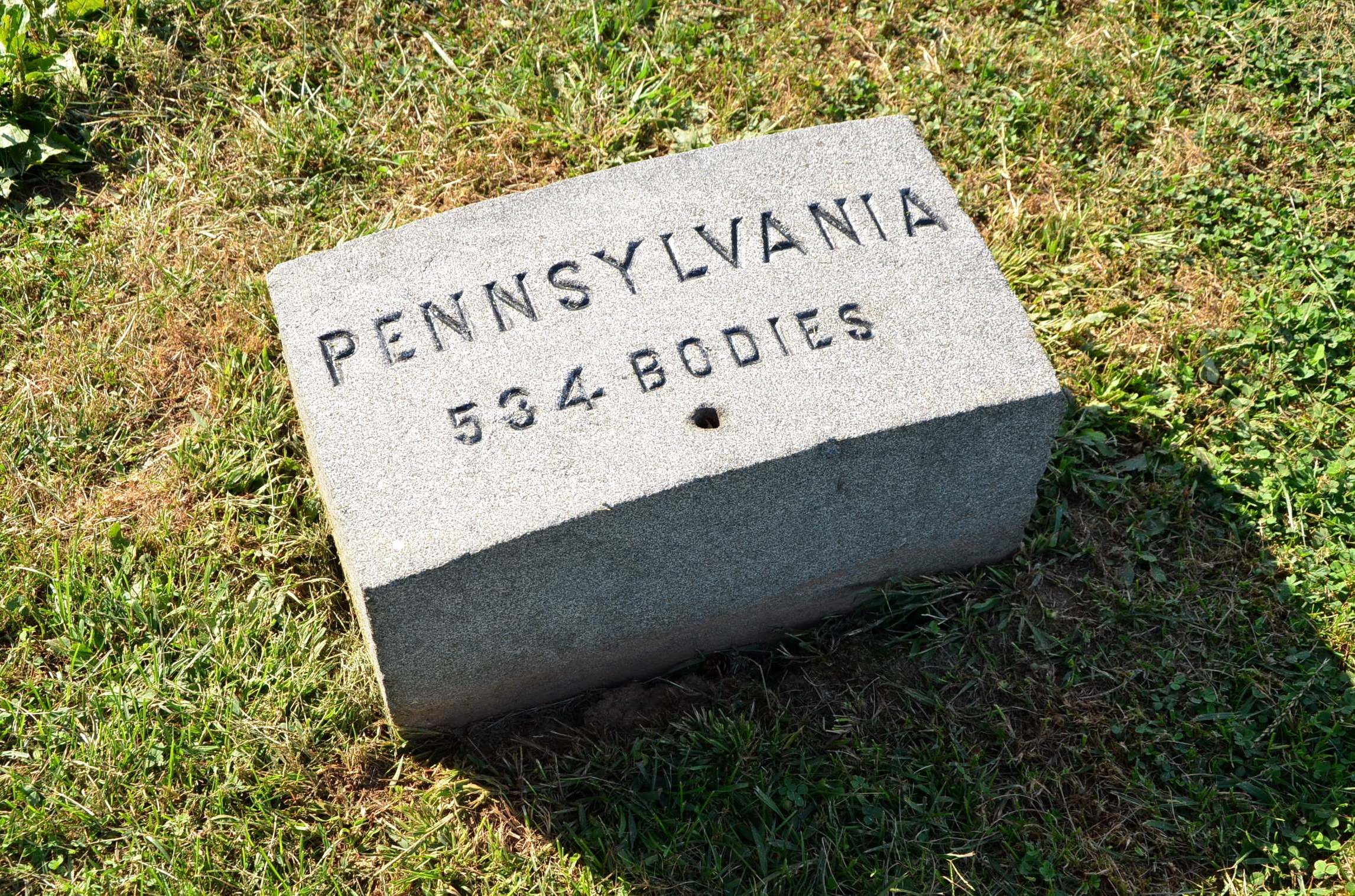
Private Sweet’s final resting spot – from Find-a-Grave.
Culled from: Killed In Action: Eyewitness Accounts of the Last Moments of 100 Union Soldiers Who Died at Gettysburg
Weegee Du Jour!
Weegee was the pseudonym of Arthur Fellig (June 12, 1899 – December 26, 1968), a photographer and photojournalist, known for his stark black and white street photography. Weegee worked in Manhattan, New York City’s Lower East Side as a press photographer during the 1930s and ’40s, and he developed his signature style by following the city’s emergency services and documenting their activity. Much of his work depicted unflinchingly realistic scenes of urban life, crime, injury and death.
Here’s a photo from the book Weegee’s New York: Photographs, 1935-1960
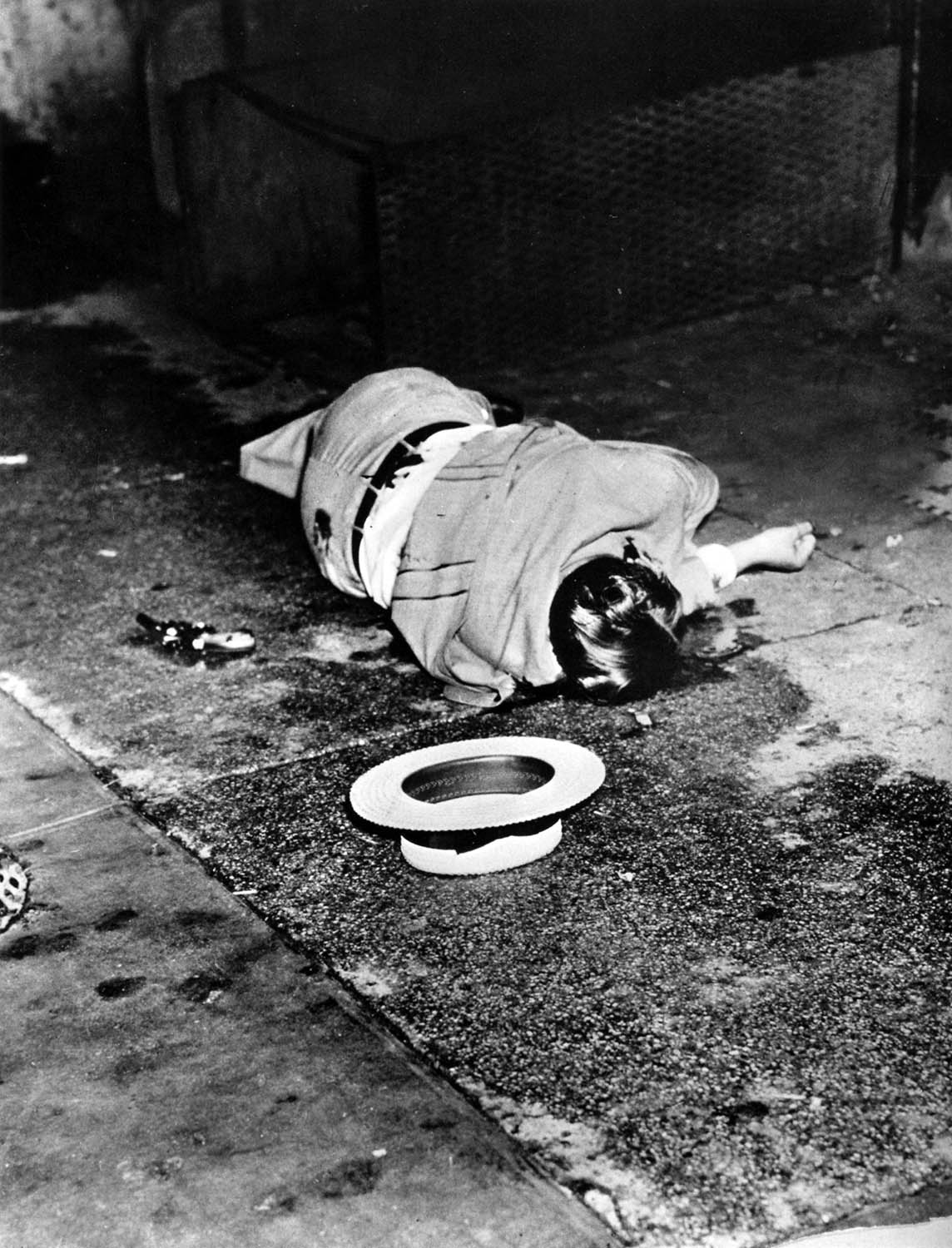
Corpse with Revolver
It’s a small thing, but at least he didn’t die completely alone; he was being cared for by kind people who did their best for him under impossible circumstances.